
Approximation is not the same as guessing. It is a controlled decision about how much precision is useful, how much uncertainty remains and what range of values is consistent with the information given.
For Punggol students, this becomes increasingly important as Mathematics meets measurement, Science, data and modelling. A rounded value may look simple, but strong students understand what was lost when the rounding happened.
Every rounded number represents an interval
If a length is given as 12 cm to the nearest centimetre, the true value is not exactly 12. It lies within a range around 12. That range is the beginning of error-bound thinking.
Bounds turn approximation back into structure
Lower and upper bounds tell us the smallest and largest possible values consistent with the stated accuracy. This lets students reason about worst-case and best-case outcomes rather than pretending an approximate measurement is exact.
Significant figures and decimal places answer different questions
Decimal places control location after the decimal point. Significant figures control how many meaningful digits are retained. Students should decide which convention fits the question instead of treating the two as interchangeable.
Why early rounding can damage later work
If several calculations follow, rounding too soon can compound error. A good rule is to keep more accuracy internally and round only when the question asks for the final form.
This connects naturally to Surds and Exact Values — Why Precision Matters Before You Press Decimal.
Approximation belongs beside modelling
Real measurements are rarely perfectly exact. A model may use measured lengths, times, temperatures or rates, each with uncertainty. Good mathematical judgement therefore includes knowing when a numerical answer should be treated as approximate.
A bounds routine
- Identify the stated degree of accuracy.
- Translate it into lower and upper bounds.
- Carry the bounds through the required operation.
- Use the correct extreme combination for the quantity being asked.
- State the final range clearly.
- Check whether the answer is physically or contextually reasonable.
Common mistakes
- Treating a rounded measurement as exact.
- Using the wrong half-unit when forming bounds.
- Rounding intermediate values too early.
- Confusing significant figures with decimal places.
- Giving more apparent precision than the data supports.
Punggol gives a practical context
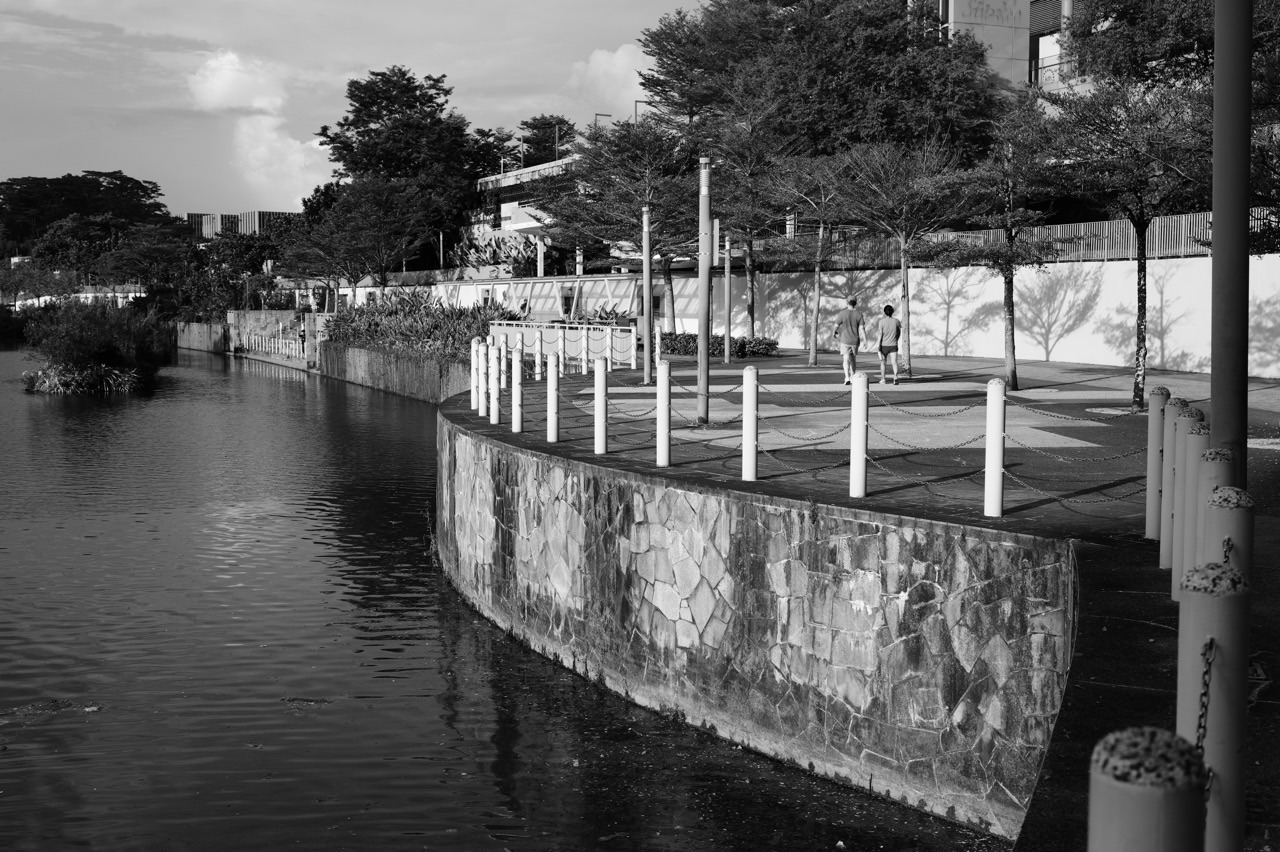
Travel time, walking distance, water depth and construction measurement are all quantities that can be measured only to some practical precision. A Waterway path photograph fits this article because real spaces remind students that measured Mathematics always has a tolerance.
Continue through the wider eduKate Punggol ecosystem
- Mathematics Tuition at eduKatePunggol
- Punggol Mathematics Reading Library
- Additional Mathematics Tuition in Punggol
- Additional Mathematics Article Index
- The Secondary Pathway
- Science Tuition at eduKatePunggol
- eduKatePunggol Atlas
Approximation is disciplined uncertainty. Bounds, significant figures and controlled rounding teach students that a number can be useful without pretending to be perfectly exact.


