
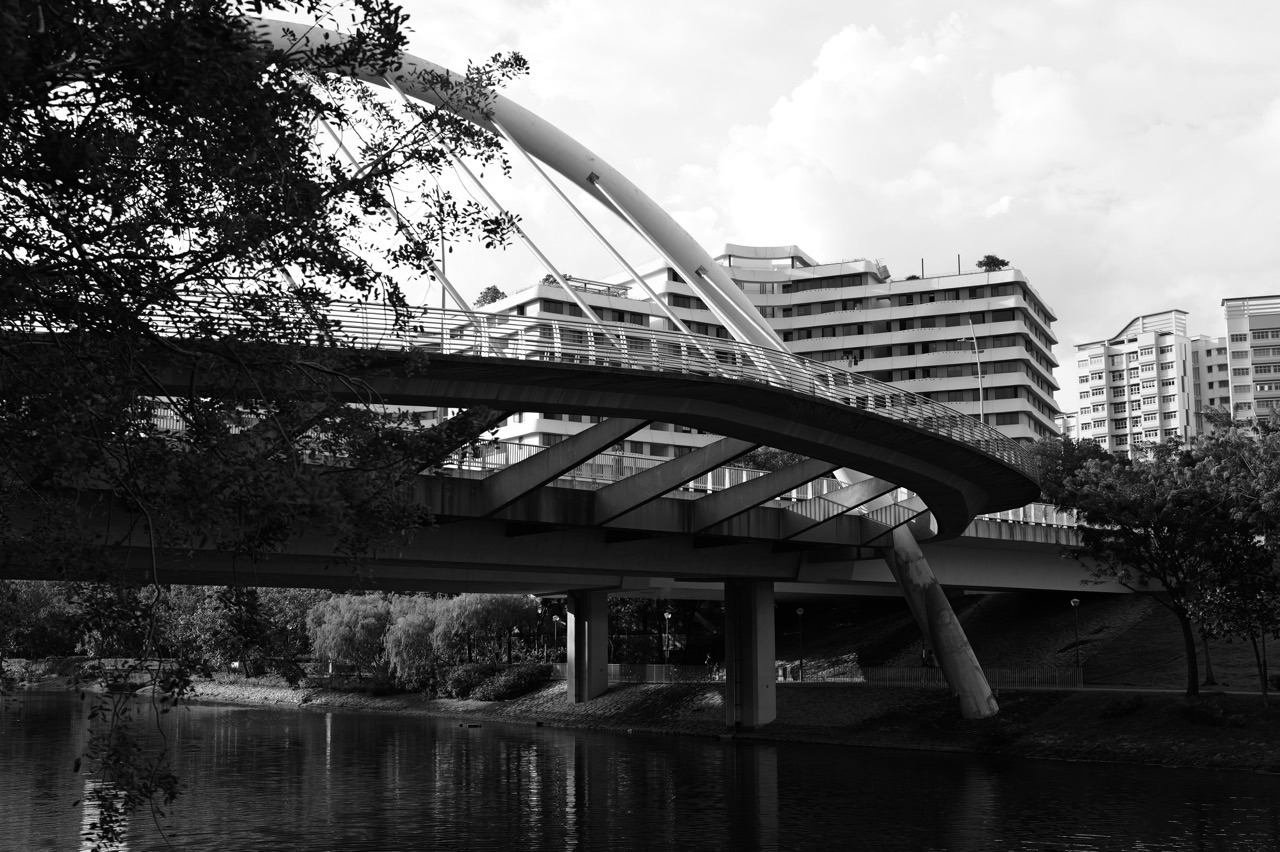
Punggol has its own soundscape.
A train approaches. A bicycle bell rings. Voices reflect under a bridge. Traffic produces a low background hum. Birds call from greenery. Footsteps sound different on concrete, metal and sheltered walkways.
All of these experiences can become a route into wave Science.
This article continues the Journey of Learning Advanced Science in Punggol by using familiar sounds to build ideas about vibration, frequency, wavelength, reflection, resonance and measurement.
Sound Begins With Vibration
Sound is produced when a source vibrates and causes surrounding particles to oscillate. The disturbance transfers energy through the medium.
This gives students a useful distinction: particles in the air move back and forth locally, while the sound energy travels away from the source.
Pitch and Loudness Are Different
Students often mix up pitch and loudness because both change what we hear.
- Pitch is mainly related to frequency.
- Loudness is related to the amplitude and intensity of the sound reaching the listener.
- A sound can be high-pitched but quiet.
- A sound can be low-pitched but loud.
Keeping these dimensions separate is a basic but important piece of wave reasoning.
Echoes Make Reflection Audible
Under bridges, near hard walls or inside large spaces, students may notice reflected sound.
An echo occurs when reflected sound reaches the listener after enough delay to be distinguished from the original sound.
This immediately connects sound to distance and speed. The sound travels to the reflecting surface and back, so the total travel distance is twice the one-way distance.
Why Some Spaces Sound Different
Hard, smooth surfaces tend to reflect more sound. Softer or more irregular materials may absorb or scatter more.
This is why sound behaves differently under a concrete bridge, beside vegetation, inside a furnished room or across an open space.
The built environment therefore becomes part of wave behaviour.
Noise Is a Measurement Problem Too
We often describe places as noisy or quiet, but scientifically we can measure sound level.
A phone app may offer a rough estimate, while professional sound-level meters provide more reliable measurements. Either way, students should understand that device quality, distance, background conditions and microphone placement affect the reading.
This is the same evidence discipline used in other experiments.
Frequency and Moving Sources
When a sound source moves relative to an observer, the observed frequency can change. Students meet this more formally in the Doppler effect.
A familiar transport environment makes the idea easier to imagine: the sound from a moving source may be perceived differently as it approaches and then recedes.
For the advanced extension, see Doppler Effect — Frequency Shift, Moving Sources, Sound, Light and Measurement.
Resonance: When a System Responds Strongly
Many objects have natural frequencies at which they respond more strongly to periodic forcing.
Resonance appears in musical instruments, structures, machines and electronic systems. It is one of the most beautiful examples of how repeated input can accumulate into a large response.
Students do not need advanced mathematics at first. They simply need the idea that timing matters.
The Mathematics of Waves
Wave Science gradually introduces several mathematical relationships:
- frequency and period,
- wave speed, frequency and wavelength,
- distance and travel time,
- intensity and distance,
- graphs of displacement against time or position.
The stronger the student’s ratio and graph skills, the easier these relationships become.
A Safe Local Sound Investigation
- Choose one fixed location.
- Measure or estimate sound level at several distances from a source where safe and appropriate.
- Keep the device orientation consistent.
- Record time and background conditions.
- Repeat readings.
- Graph sound level against distance.
- Discuss why real results may not match an ideal model exactly.
The student learns that urban sound is affected by reflections, barriers, multiple sources and changing background noise.
Sound Links Physics to Biology
Sound becomes Biology when we ask how the ear detects vibration and how the nervous system turns signals into perception.
That is another reminder that Advanced Science becomes richer when the subject boundaries reconnect.
Sound Links Physics to Engineering
Station announcements, headphones, speakers, microphones and noise-control materials all depend on wave behaviour.
The student can therefore move naturally from school Physics into engineering design.
How eduKate Can Teach Sound Through Punggol
A tutor can begin with a familiar place—a bridge, station or sheltered walkway—and ask students to predict what sound should do there.
Then the student moves from observation to model: source vibration, wave transmission, reflection, absorption and measurement.
Continue the Journey
- Previous: Biodiversity and Ecology in Punggol.
- Next: Materials and Structures — Concrete, Steel, Corrosion and Weathering.
- Then: Human Biology and Exercise.
- Return to the Punggol Science Tuition hub.
Once a student learns wave Science, Punggol no longer only looks different from place to place. It sounds different for reasons the learner can begin to explain.
Browse more learning guides
Use the Punggol Science article index to find another topic, or return to Learning Routes to choose a subject or school-year guide.


