
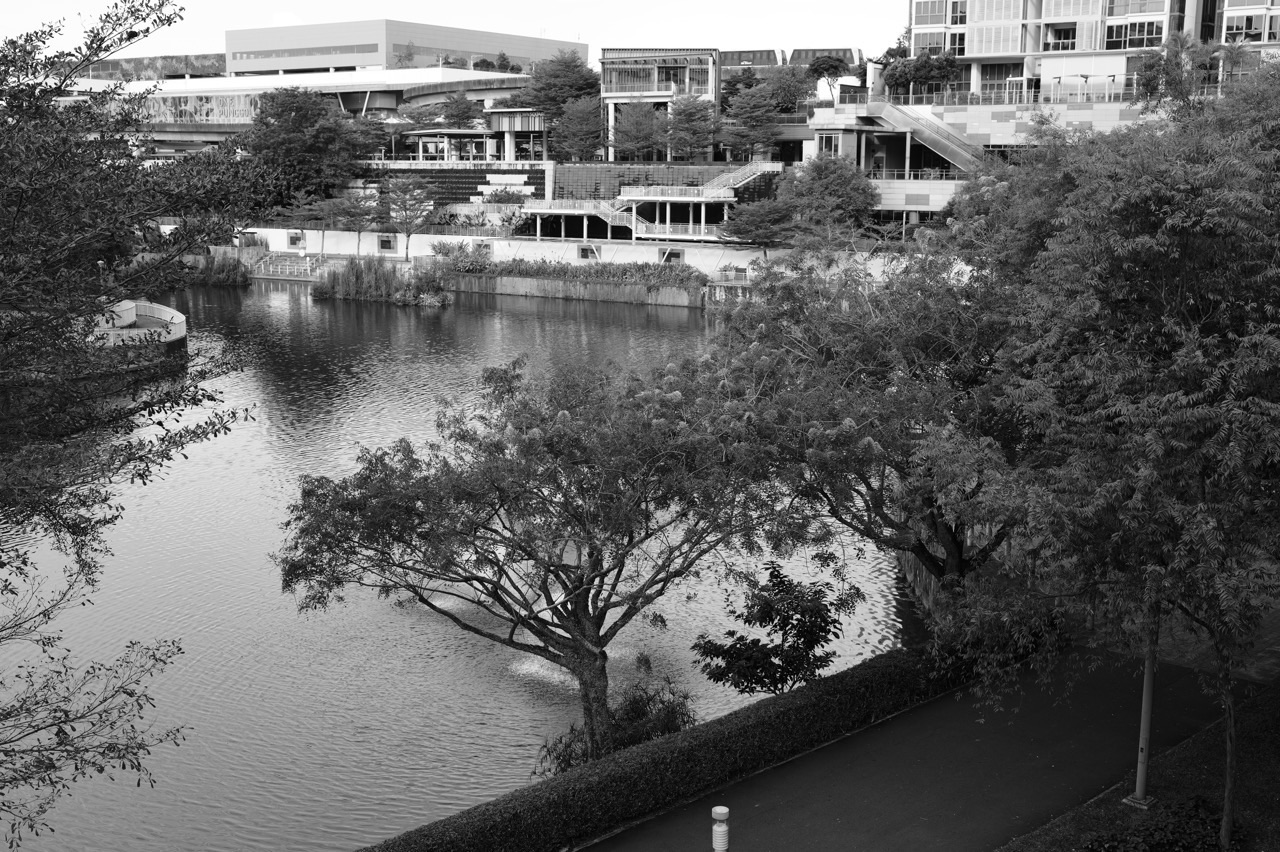
Water and air are both fluids.
That simple idea connects Punggol Waterway, rainfall, ventilation, floating objects, pressure, pumps and even blood circulation.
This article continues the Journey of Learning Advanced Science in Punggol by using fluid Science to connect Physics, Biology and engineering.
For the local starting point, see Punggol Waterway as a Living Laboratory.
Pressure Is Force Spread Over Area
Pressure tells us how concentrated a force is over a surface.
The same force acting over a smaller area produces a greater pressure.
Fluids Exert Pressure
Liquids and gases exert pressure on the surfaces around them.
For liquids, pressure generally increases with depth because there is more fluid above.
Buoyancy Comes From Pressure Differences
A submerged object experiences pressure from the surrounding fluid.
Because pressure is generally greater at greater depth, the upward force on the lower surface can exceed the downward force on the upper surface.
The result is an upward buoyant force.
Floating Depends on Force Balance
An object floats when the upward buoyant force balances its weight.
Whether something floats depends on the object’s overall density and the density of the fluid, not simply whether the material feels “heavy”.
Flow Speed Changes With Geometry
When fluid moves through channels or pipes, cross-sectional area, pressure difference, friction and viscosity influence the flow.
Students can see a simplified version in drainage channels: narrow sections, slopes and obstacles can change how water moves.
Hydraulics Multiply Force
Hydraulic systems use an enclosed fluid to transmit pressure.
A force applied over one area can create a different force at another area while conserving energy overall.
Air Is a Fluid Too
Airflow around buildings, bicycles and vehicles follows fluid principles.
Pressure, speed, drag and turbulence all become important.
Fluid Science Appears in Biology
Blood flows through vessels. Air moves through respiratory passages. Water moves through plant tissues.
Biology repeatedly depends on pressure differences and flow resistance.
A Simple Water-Flow Investigation
- Use a safe channel or prepared classroom setup.
- Measure a fixed travel distance.
- Release a floating marker or use a controlled flow indicator.
- Time several trials.
- Change one condition such as slope or channel width.
- Compare average times.
- Explain the pattern using flow and resistance.
Students should understand that surface speed may not equal the average speed throughout the entire fluid.
Fluid Models Have Limits
Real fluid behaviour can become complicated.
Turbulence, viscosity, changing geometry and multiple flows can make simple equations less accurate.
That is not a failure of Science. It is a reminder that models have domains of usefulness.
See Model Thinking — From Simple Diagrams to Complex Scientific Systems.
Continue the Journey
- Previous: Energy Transformations in Punggol.
- Next: Cells to Organ Systems — Specialisation and Transport.
- Then: Data and Scientific Uncertainty.
- Return to the Punggol Science Tuition hub.
Fluids connect the town around us to the body within us. Waterways, air, blood and plant transport all become easier to understand once pressure and flow are part of the same model.
Browse more learning guides
Use the Punggol Science article index to find another topic, or return to Learning Routes to choose a subject or school-year guide.


