
Science becomes much more connected when students learn to follow matter through cycles.
Water moves between air, land, living things and waterways. Carbon moves through photosynthesis, respiration, food chains and decomposition. Nitrogen moves through soil, organisms and microbial processes.
The atoms keep moving even when the organisms and places change.
This article continues the Journey of Learning Advanced Science in Punggol by connecting Punggol ecosystems to the cycles that keep matter circulating.
Cycles Are About Conservation
Matter is not continually created from nothing inside an ecosystem.
Atoms move between reservoirs and are rearranged into different molecules.
This connects Biology to Chemistry and to the broader conservation ideas of Science.
The Water Cycle Connects Atmosphere, Land and Life
- Evaporation transfers liquid water into water vapour.
- Condensation forms droplets.
- Precipitation returns water to the surface.
- Infiltration moves water into soil.
- Runoff carries water across surfaces.
- Transpiration moves water through plants into the atmosphere.
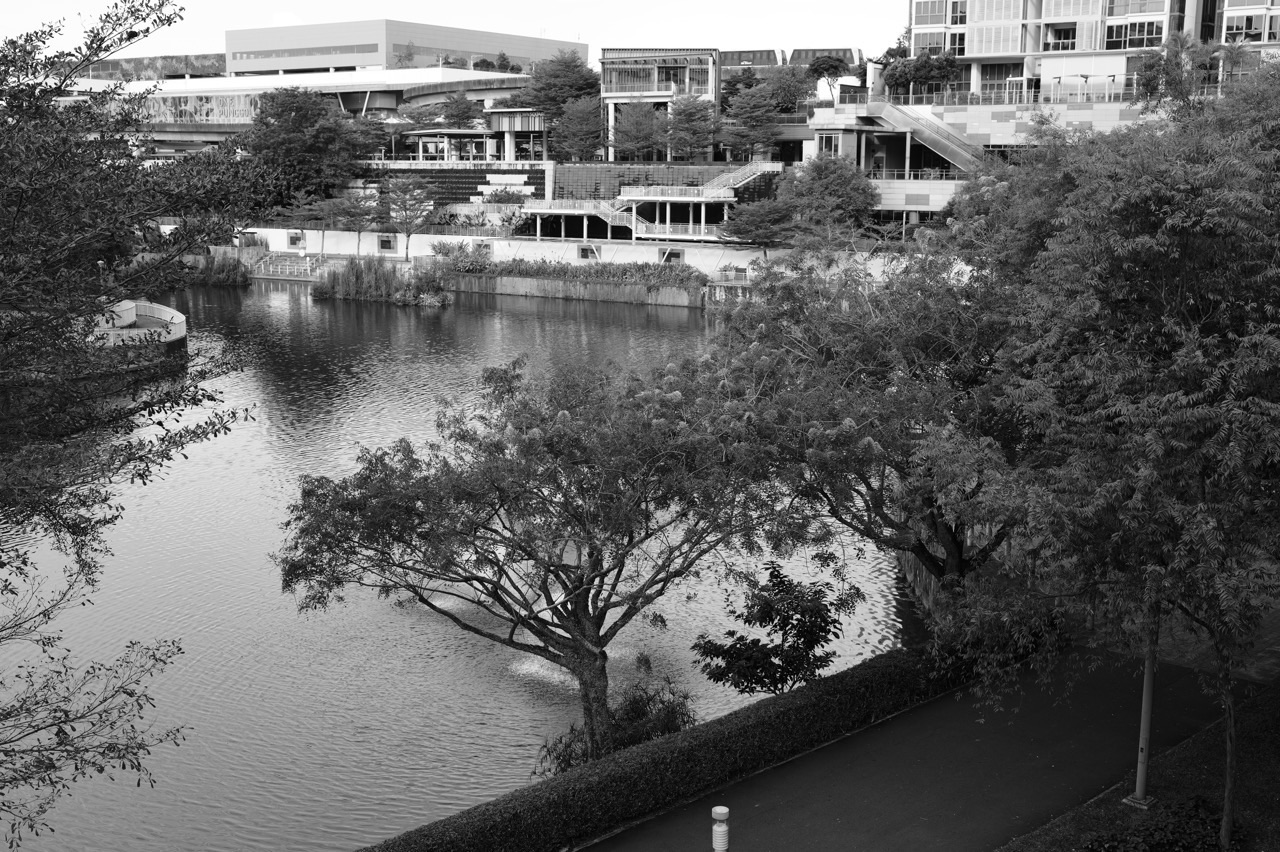
Punggol Waterway makes this cycle locally visible. See Punggol Waterway as a Living Laboratory.
The Carbon Cycle Links Energy and Matter
Plants take in carbon dioxide during photosynthesis and build carbon-containing organic molecules.
Animals obtain carbon through food. Respiration returns carbon dioxide to the atmosphere or water. Decomposition returns carbon compounds and nutrients to the environment.
Carbon therefore moves through both living and non-living parts of the system.
Nitrogen Is Essential but Chemically Tricky
Nitrogen is needed for proteins and nucleic acids, but atmospheric nitrogen gas is not directly usable by most organisms.
Microorganisms help convert nitrogen between chemical forms that can move through soil, plants, animals and decomposers.
This is where ecology meets microbiology.
Decomposition Closes the Loop
Without decomposition, nutrients would remain trapped in dead organisms and waste.
Microorganisms break complex material into simpler forms, allowing nutrients to return to soil and water.
That connects directly to the Biodiversity and Ecology branch.
Cycles Interact
The cycles are not independent.
Water movement affects nutrient transport. Plant growth affects carbon uptake. Microbial activity depends on moisture and temperature. Human activity can change several cycles at once.
This is why environmental Science becomes a systems problem.
A Punggol Cycle Map
| Local feature | Cycle connection |
| Waterway | water movement, dissolved nutrients, carbon exchange |
| Park vegetation | photosynthesis, transpiration, nutrient uptake |
| Soil | water storage, nitrogen transformation, decomposition |
| Food web | carbon and nutrient transfer |
| Rainfall | water input and nutrient movement |
Human Activity Can Change Cycle Rates
Fertiliser use, combustion, land-cover change and waste management can all alter natural cycling rates.
The important question is often not whether a cycle exists, but whether one pathway has been accelerated or weakened.
Cycles Teach Timescale
Some transfers happen in minutes. Others take seasons, decades or longer.
Students should learn to ask not only where matter moves, but how quickly.
A Strong Cycle Explanation
- Name the matter being tracked.
- Identify the reservoir or location.
- Name the process moving it.
- State the new form or location.
- Connect the process to the next part of the cycle.
How eduKate Can Teach Cycles
A tutor can use one Punggol scene containing water, plants and soil and ask the student to trace water, carbon and nitrogen separately.
The same landscape suddenly reveals three overlapping scientific cycles.
Continue the Journey
- Previous: Waves and Communication in Punggol.
- Next: Measurement — Units, Calibration, Sensors, Precision and Accuracy.
- Earlier: Biodiversity and Ecology in Punggol.
- Return to the Punggol Science Tuition hub.
Cycles teach a deep scientific idea: the world changes continuously, but matter also persists and moves through connected pathways.


