
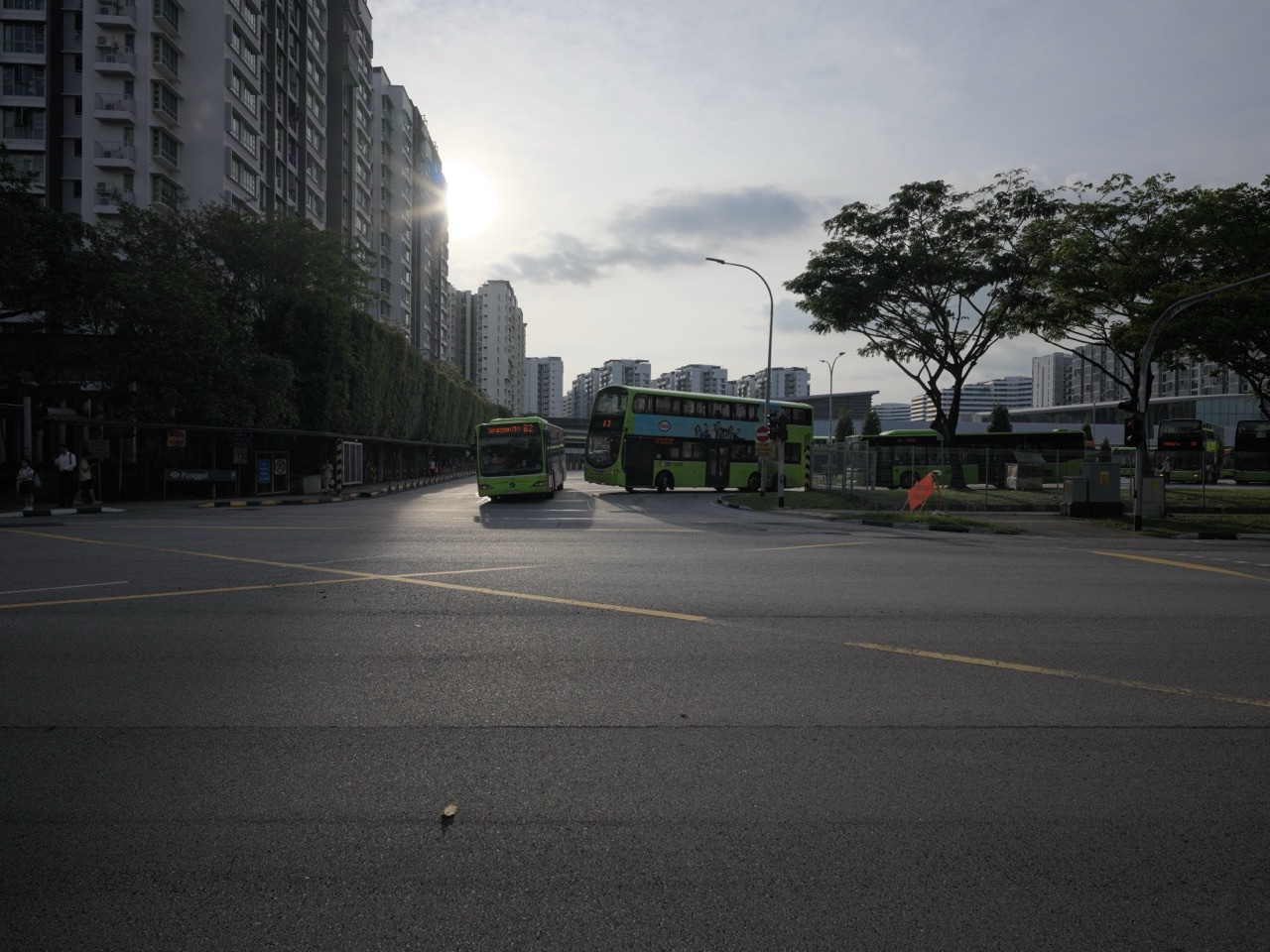
A family handover looks simple until three people are moving on three different clocks. School ends. A parent is still at work. A grandparent may be waiting. A sibling finishes CCA later. Tuition starts at a fixed time. The child is somewhere between a school gate, an LRT station, Punggol MRT, Punggol Coast, a bus stop or a familiar public place.
Punggol families solve this every day, often without naming the system. But once a child begins travelling more independently, the quality of that handover matters. “Meet me outside” is not enough. “Wait near the MRT” is not enough. A good pickup point must be clear, repeatable and easy to recover when one person is late.
This guide is not about creating fear around ordinary travel. It is about reducing ambiguity. The best handover is usually boring: everyone knows the exact place, the expected time, the backup and who owns the next move.
The pickup point is part of the route
Families often plan the child’s journey to a neighbourhood or station and then treat the final meeting point as a small detail. In practice, the last fifty metres can create the most confusion.
A school may have more than one gate. A mall may have several entrances. An MRT station may connect to multiple buildings. A bus interchange may have more than one obvious waiting area. A child and parent can both be “at Punggol MRT” and still not be together.
The pickup point therefore needs the same precision as the destination.
Name the place in a way a child can repeat
A good meeting instruction should survive a phone call. If the child had to tell another trusted adult where they were, could they say it clearly?
Use a stable public landmark, entrance, station exit or designated waiting area rather than a vague phrase. The child should be able to identify it without relying on one temporary shop display or a parent’s live location dot.
Our Punggol Wayfinding for Families guide develops this idea more broadly: landmarks are useful when they answer a route question.
School-gate handovers need release-time realism
The official dismissal time is not always the time the child reaches the gate. Packing, teacher instructions, a crowded staircase, a friend conversation or a delayed class can shift the actual handover.
Parents should therefore avoid designing a pickup that requires minute-perfect release. A small buffer makes the system calmer. If the adult arrives first, the adult waits. If the child arrives first, the child knows exactly where to wait.
The handover becomes stressful when both people move around trying to find one another.
Do not change the meeting point while both people are moving
A common coordination failure is live improvisation. The parent is driving or on the MRT. The child is walking. One person says “go to the other exit”. The other person changes direction. Messages cross. Both arrive at different places.
For ordinary delays, hold the agreed point. Change it only when there is a clear reason and both sides have confirmed the new plan.
Stability beats cleverness.
Punggol MRT is a strong anchor but not a single point
Punggol MRT is a useful family anchor because it connects the North East Line, Punggol LRT, bus services, Waterway Point and the wider town-centre cluster. But that density is exactly why families should define the meetup precisely.
“Meet at Punggol MRT” is a zone. The family still needs the actual point within that zone.
For older students, Punggol MRT can support a more flexible handover: the child may be allowed to wait within an agreed central area or move to a nearby library or meal point. Younger children usually benefit from one fixed place.
Punggol Coast creates a second major handover anchor
Punggol Coast MRT and the adjacent bus-interchange and mall cluster create another strong meeting point in northern Punggol. This is especially useful for families connected to Northshore, SIT, Punggol Digital District or the newer northern residential areas.
As with Punggol MRT, do not confuse a large hub with one exact meeting point. Define the entrance, level or public landmark that matters to your family.
Our Punggol Town Centre vs Punggol Coast guide compares how the two hubs work for different family jobs.
LRT handovers work best when the child knows station order
If a child is meeting an adult at an LRT station, the station name alone is not the whole skill. The child should know what came before, what comes next and whether the journey is still plausible.
This matters because the Punggol LRT system is loop-based. A student who understands the loop can recover from a small error more calmly than a student who only memorised “get off when the app says so”.
The live Punggol LRT for Students guide builds that station-order skill directly.
The handover should include the child’s next task
A pickup is not complete when the child sees the parent. What happens next matters. Is the family going home? To tuition? To dinner? To collect a sibling? To the library?
If the child knows the next task, they can prepare before the adult arrives. Pack the school bag. Refill water. Use the toilet. Finish eating. Put away devices. This reduces the time lost after the handover.
The best waiting point matches the delay
If the adult is five minutes late, the child may simply stay at the fixed point. If the delay becomes forty minutes, a different agreed plan may make sense: library, mall, community hub or another stable public place appropriate to the child’s age and independence.
The family can define this in advance. “If I am more than twenty minutes late, go to the agreed indoor point and message me.” That is clearer than improvising under pressure.
Our Punggol Waiting Places for Families guide explains how to match short and long gaps to different kinds of waiting.
Weather should not erase the handover plan
Heavy rain creates a predictable problem: the usual outdoor point becomes uncomfortable or crowded. A good family plan therefore has a wet-weather equivalent nearby.
The wet-weather point should be just as specific as the normal point. Everyone should know when the switch applies. If lightning risk or severe weather changes the journey materially, safety takes priority over preserving the original timetable.
See Punggol Weather for Families for the normal-route, rain-route and weather-hold model.
The parent should not carry all the coordination forever
When children are young, adults own almost everything: departure, route, phone, pickup and timing. As children grow, the handover should gradually shift responsibility.
The child can begin by naming the meeting point. Later, the child checks the time. Later still, the child sends a useful message if something changes. Eventually, the student may no longer need a pickup at all on familiar routes.
The goal is not independence as early as possible. It is reliable capability before support is removed.
Primary 1 to Primary 3: one point, one adult, one backup
For younger children, keep the handover simple. One normal meeting point. One clearly identified adult. One backup if that adult is delayed or unavailable.
A younger child should not have to choose among several exits or interpret a stream of changing instructions. Simplicity reduces cognitive load and makes it easier to notice when something is not as expected.
Primary 4 to Primary 6: add time and communication
Older primary students can take on more. They can recognise the correct location, check the agreed time, send a message, wait in the correct place and explain clearly if a delay occurs.
This is a useful stage for teaching practical location language: station name, exit, building, floor, landmark, direction of travel. “I am here” is weak communication. “I am at the agreed point beside this landmark” is much more useful.
Our Punggol Location Language for Students guide develops that communication skill directly.
Secondary school: move from pickup to rendezvous
By secondary school, some handovers become rendezvous rather than pickups. The student may travel independently from school and meet the family later for dinner, tuition, an appointment or the journey home.
The standard changes. Can the student choose a sensible route, arrive within a realistic window, communicate changes and avoid making the rest of the family guess where they are?
This is not only transport independence. It is social coordination.
Sibling handovers need one family anchor
When siblings finish at different times, moving the whole family between multiple school gates can become inefficient. A stable family anchor can sometimes simplify the system: one child travels to the anchor while the parent collects or waits for the other.
The correct anchor depends on age, route and family comfort. It might be home, a library, a mall or a transport hub. The important point is that the family chooses deliberately rather than improvising every afternoon.
Our two-children handover guide looks at this coordination problem in narrative form.
Working parents should protect the final ten minutes
A parent commuting home may have an accurate train estimate but still need time to exit the station, cross the mall, reach the pickup point and perhaps buy dinner. The child waiting should not be given the train-arrival time as if it were the meetup time.
Protect the final ten minutes. Door-to-door time matters more than vehicle time.
The phone should support the plan, not replace it
Live location, messaging and calls are useful. But technology should sit on top of a plan the child already understands. Phones can lose signal, run low on battery or create ambiguous location information in large complexes.
The resilient system is: know the point, know the time, know the backup, then use the phone to confirm.
Do not punish ordinary small delays with chaotic rerouting
A five-minute school delay should not trigger three calls and two changes of meeting point. Families become more reliable when small deviations are absorbed by a stable system.
The purpose of the plan is not to make everyone perfectly punctual. It is to make ordinary imperfection manageable.
A six-part Punggol handover card
| Field | Family decision |
|---|---|
| Normal point | Exact stable meeting place |
| Expected window | Realistic arrival range, not one ideal minute |
| Wet-weather point | Nearby sheltered equivalent |
| Delay threshold | When the child changes from waiting to the backup plan |
| Next task | Home, tuition, dinner, sibling pickup or other fixed destination |
| Communication | Who messages whom and what useful information is needed |
Test the handover before the high-pressure day
If a child will need a new route after CCA, do not make the first attempt on the day the parent has an important work meeting and tuition begins immediately afterward. Walk the route once. Identify the meeting point. Let the child explain the plan back.
Rehearsal turns an instruction into capability.
A good handover reduces parent messaging
When the system is unclear, the phone fills with “where are you?”, “which exit?”, “I’m outside”, “outside where?” A well-designed handover reduces those messages because both sides share the same model.
Less messaging is not the main goal. It is evidence that the family coordination system has become easier to run.
Frequently asked questions
Should parents always collect younger children from school?
That depends on age, school arrangements, route, family circumstances and demonstrated capability. The important principle is gradual handover rather than an abrupt jump from full supervision to full independence.
Is Punggol MRT a good family meeting point?
It can be, because it is highly connected. But define the exact point within the larger station-and-mall area so both parent and child mean the same place.
What if the parent is late?
Use an agreed waiting and backup plan appropriate to the child. Avoid changing the meeting point repeatedly while both people are moving.
When is a child ready for more independent handovers?
Look for repeated route knowledge, clear communication, reliable time awareness and calm recovery from small changes. Independence should follow demonstrated control.
Five handover failures worth repairing before they become habits
Failure 1: the family has a destination but no meeting point
“Waterway Point” or “Punggol MRT” tells everyone the zone but not the actual rendezvous. Repair it by naming one stable point inside the zone. The point should be easy for the child to describe and easy for the adult to approach.
Failure 2: every delay creates a new instruction
When a parent is ten minutes late, the child is told to move. Then traffic changes and the parent moves again. The solution is a delay threshold. Small delays keep the normal plan. Only larger delays activate the backup.
Failure 3: the child knows the route but not the language
A student may travel correctly yet be unable to explain their location. Practise useful descriptions: station, exit, building, level, landmark and direction. Clear location language turns the child from a passive passenger into a participant in the family system.
Failure 4: wet weather destroys the normal pickup
If everyone crowds under the nearest shelter when rain begins, the meeting point may become ambiguous. Choose the wet-weather equivalent before the storm. It should be nearby, substantial and understood by both sides.
Failure 5: the parent never fades support
A child who has successfully managed the same familiar handover for months may be ready to own the next small step: checking the time, sending the arrival message or walking the final segment. Support should reduce when capability becomes reliable, not simply because the child reaches a birthday.
The family does not need to redesign every pickup. Pick the handover that creates the most repeated confusion and make that one boringly clear. Reliability grows from stable small systems.
The quiet standard
Family logistics become easier when the handover stops being a daily negotiation. In a town with multiple transport nodes, school gates, malls, libraries and changing routes, clarity is a form of kindness.
A good Punggol pickup point is not the cleverest place on the map. It is the place the child can find, name, wait at and leave from with confidence.
For related school-day and family guides, return to the Punggol Education & Town-Life Article Index.


