
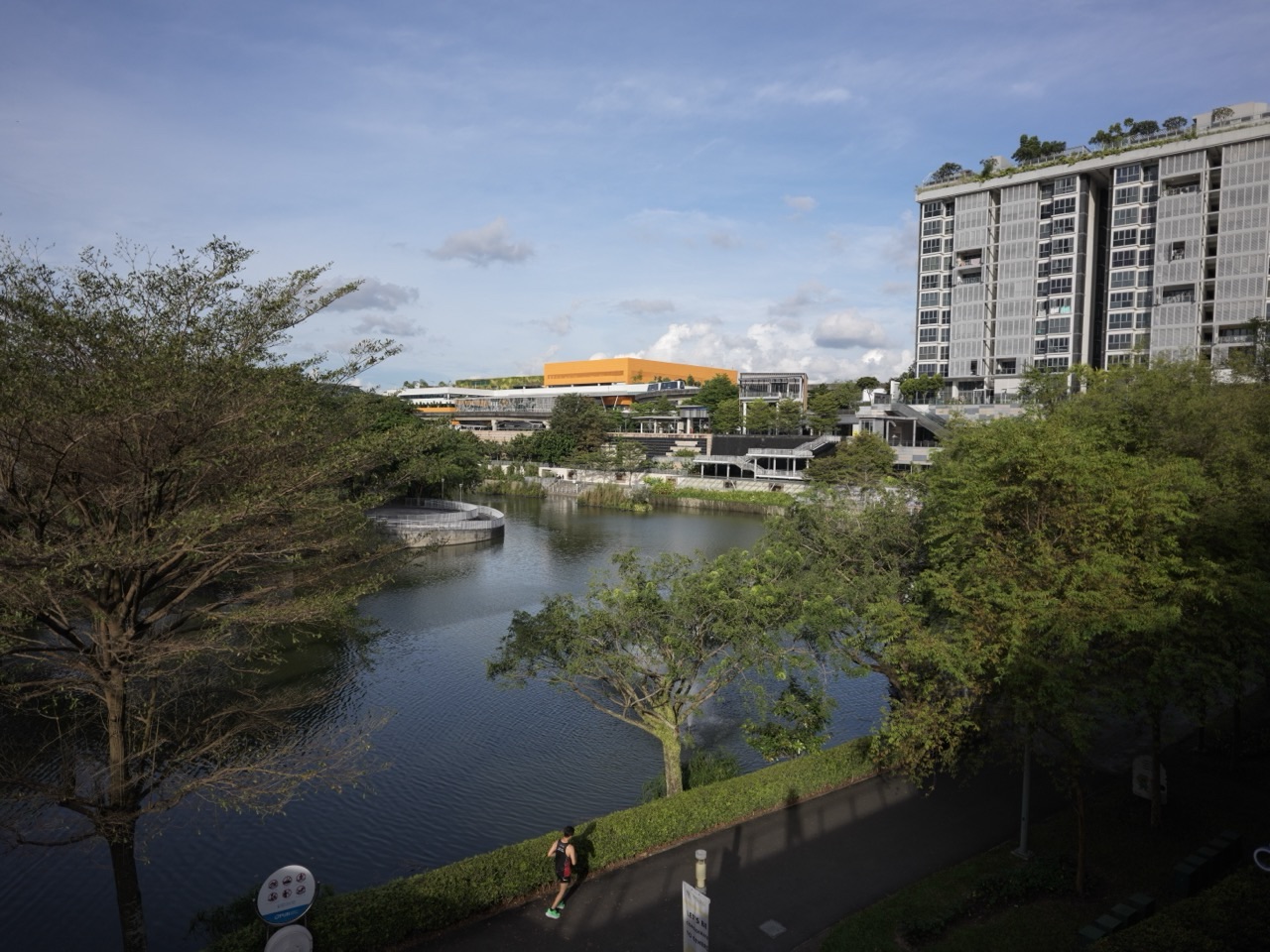

Science tuition in Punggol can use something students feel every day but often do not measure carefully: wind. Along Punggol Waterway and the park-connector network, families move between open waterfront stretches, tree-lined sections, bridges and more sheltered spaces. NParks even describes the Waterway as a place where visitors can enjoy the breeze while walking or cycling. That everyday experience can become a disciplined Science investigation once the student defines what “windier” means and uses a repeatable method.
Parents searching for Punggol Science tuition, wind Science investigation, Primary Science forces, PSLE Science fair test, Secondary Science weather or fieldwork measurement can use this page as a study/reference route. The central learning job is to separate sensation from measurement. “It feels windier here” is an observation. “The average measured wind speed was higher here across repeated readings” is a stronger scientific claim.
This page does not claim an eduKate outdoor class, weather station or environmental-monitoring service. Families should use normal public areas, avoid obstructing cyclists or pedestrians, and use handheld devices only when doing so is safe. The official public-space context can be checked through NParks — Punggol Waterway and NParks — Punggol Waterway Park.
First Define “Windier”
Wind can be described using several different variables:
- wind speed — how fast air is moving;
- wind direction — the direction from which the wind is coming;
- gustiness — how much the speed changes over short periods;
- frequency of movement — for example, how often a lightweight ribbon moves during a fixed observation period;
- human sensation — whether a place feels breezy, calm or uncomfortable.
These should not be mixed together. A place may feel cooler because of air movement even if the measured air temperature is similar to another location. This is one reason field investigations are useful: the student learns that different variables can change at the same time without being identical.
Primary 3–4: Observe Wind Without Measuring It Yet
Younger students can begin with visible indicators:
- leaves moving;
- grass bending;
- water surface rippling;
- a hanging ribbon changing direction;
- hair or clothing moving;
- flags or lightweight signs responding to air movement.
The child should record only what is seen. “Leaves moved continuously for thirty seconds” is stronger than “the wind was strong”. The first sentence describes evidence; the second adds an interpretation.
Primary 5–6: Build a Fair Comparison
A useful upper-Primary question is: “During repeated two-minute observations, does an open waterfront location show more air movement than a sheltered location?”
If the family has a safe handheld anemometer, it can be used. If not, the child can use a simple observational scale, but that scale must be defined before the comparison begins.
- same observation duration;
- same device or observational scale;
- similar height above the ground;
- observations taken close enough in time that weather has not changed completely;
- several repeated readings rather than one.
The purpose is not to prove that all open spaces are always windier. It is to compare two sampled conditions with a method that another person could understand.
Wind Direction Needs Its Own Method
Direction is not the same as speed. A simple wind vane or ribbon can show changing direction, while a compass helps the student record orientation. The student should be clear whether “north” means the wind is moving toward north or coming from north. Meteorological convention describes wind by the direction it comes from.
This is a useful language lesson as well as a Science lesson: definitions control the meaning of the data.
Worked Example: Open Versus Sheltered
A student records six wind-speed readings at an open location and six at a nearby sheltered location. The open location has the higher mean.
Weak conclusion: “Open areas are windier.”
Better conclusion: “The open location had a higher mean measured wind speed during our sampled periods. Buildings, vegetation, local geometry and changing weather may have influenced the difference.”
The second answer is more scientific because it reports the evidence and keeps the generalisation bounded.
Worked Example: A Gust Changes the Average
Suppose one of six readings is much higher than the others because of a brief gust. Should the student delete it?
Not automatically. A gust is part of the real wind environment. The student can report the mean, range and unusual high value. If the investigation is about typical conditions, the report can state that the gust increased the average. If the investigation is about maximum observed wind, the gust may be the most relevant observation.
Secondary Science: Add Buildings, Trees and Flow Around Obstacles
Older students can reason about why local wind conditions change. Airflow can be affected by:
- building orientation;
- gaps between blocks;
- tree belts;
- open water;
- bridges;
- local terrain;
- temporary weather conditions.
The student should not assume one factor caused the observed pattern unless the investigation isolates it. Real urban airflow is a system with multiple interacting variables.
Wind and Thermal Comfort Are Related but Not Identical
Moving air can change how warm a person feels because it affects heat transfer from the body and the evaporation of sweat. But perceived comfort is not the same as air temperature. This links naturally to the existing Shade and Temperature investigation.
A good report therefore keeps separate columns for measured air temperature, wind measurement and subjective comfort if all three are recorded.
A Repeatable Field Table
| Location | Time | Reading 1 | Reading 2 | Reading 3 | Direction | Context |
|---|---|---|---|---|---|---|
| Open | ___ | ___ | ___ | ___ | ___ | cloud / rain / crowd |
| Sheltered | ___ | ___ | ___ | ___ | ___ | cloud / rain / crowd |
How This Connects to School Science
- Primary: forces, observation, fair comparison and data recording.
- PSLE: variables, repeated measurements, data interpretation and cautious conclusions.
- Secondary: fluid movement, energy transfer, weather variables, sampling, averages and uncertainty.
What Parents Can Ask
- What did you actually measure?
- Which variable changed?
- Which variables may also have changed?
- How many readings did you take?
- What would make the comparison stronger?
- What claim is too strong for the data?
These questions help without supplying the conclusion.
Study/Reference Boundary
This page is a Science study/reference owner. It does not claim an eduKate weather-monitoring programme, wind survey or outdoor fieldwork class.
Continue through Field Investigation Report, Shade and Temperature and Punggol Science Inquiry.
Wind becomes Science when “it feels breezy” is replaced by a defined variable, repeated observation and a conclusion that acknowledges the geometry and weather around the measurement.
Continue Through the Science System
Continue Through the Science System
Explore the Punggol Science reading library for related guides.


