
PSLE Situational Writing tuition in Punggol should train a Primary 6 learner to understand a situation, identify purpose, audience and context, select the required information, organise it clearly and write in an appropriate register. In the official 2026 PSLE English format, Situational Writing is Part 1 of Paper 1 and is worth 14 marks. It shares a total Paper 1 duration of 1 hour 10 minutes with Continuous Writing.
SEAB describes the task as a short functional piece such as a letter, email or report written to suit the purpose, audience and context of the given situation. That means strong tuition should not reduce Situational Writing to a memorised template. The child must be able to read the task, decide what the reader needs, choose the right tone and cover the required content accurately.
This page is the tuition-specific owner for PSLE Situational Writing in Punggol. It routes into Primary 6 PSLE English Tuition, PSLE English Tuition, and the broader Paper 1 owner in this batch. Parents can verify the current examination structure through SEAB’s 2026 PSLE format.
Situational Writing is a reading task before it becomes a writing task
Students often lose marks before drafting because they misread the role, audience or purpose. Tuition should therefore teach the child to extract the task requirements first.
- Writer: Who am I in this situation?
- Audience: Who will read this?
- Purpose: Why am I writing?
- Context: What situation has created the need to write?
- Content: What information must be included?
- Register: How formal, warm, persuasive or neutral should the language be?
Content fulfilment comes before decoration
A polished piece can still underperform if required content is omitted. Tuition should train students to identify compulsory points before thinking about vocabulary or sentence variety.
| Weak script signal | Likely cause | Tuition response |
|---|---|---|
| Misses one required point | Weak task extraction | Checklist before drafting |
| Tone feels inappropriate | Audience not represented clearly | Compare formal and informal versions |
| Writing is long but unfocused | Poor content prioritisation | Plan by purpose |
| Format is correct but response is weak | Template dependence | Fresh situations with varied purposes |
| Language sounds forced | Register mismatch | Natural phrase-level rewriting |
Register should fit the relationship
A message to a friend should not sound like a report to a school authority, and a formal request should not sound casual. Tuition should teach register through contrast: same idea, different audience.
The deeper register route is Vocabulary and Register.
Organisation should make the reader’s job easy
The best sequence depends on purpose. A request may need context before the ask. A report may group observations before recommendations. A message may foreground the most urgent information first.
Primary 5: build flexible functional writing early
Primary 5 is a useful year to practise different writing situations without turning them into exam templates. The child should learn to recognise purpose, audience and required content across varied tasks.
Primary 6: calibrate task fulfilment and time
By Primary 6, the learner should be able to identify the situation quickly, make a compact plan and draft without depending on the tutor to tell them the tone or paragraph order.
Use Primary 6 Final English Calibration.
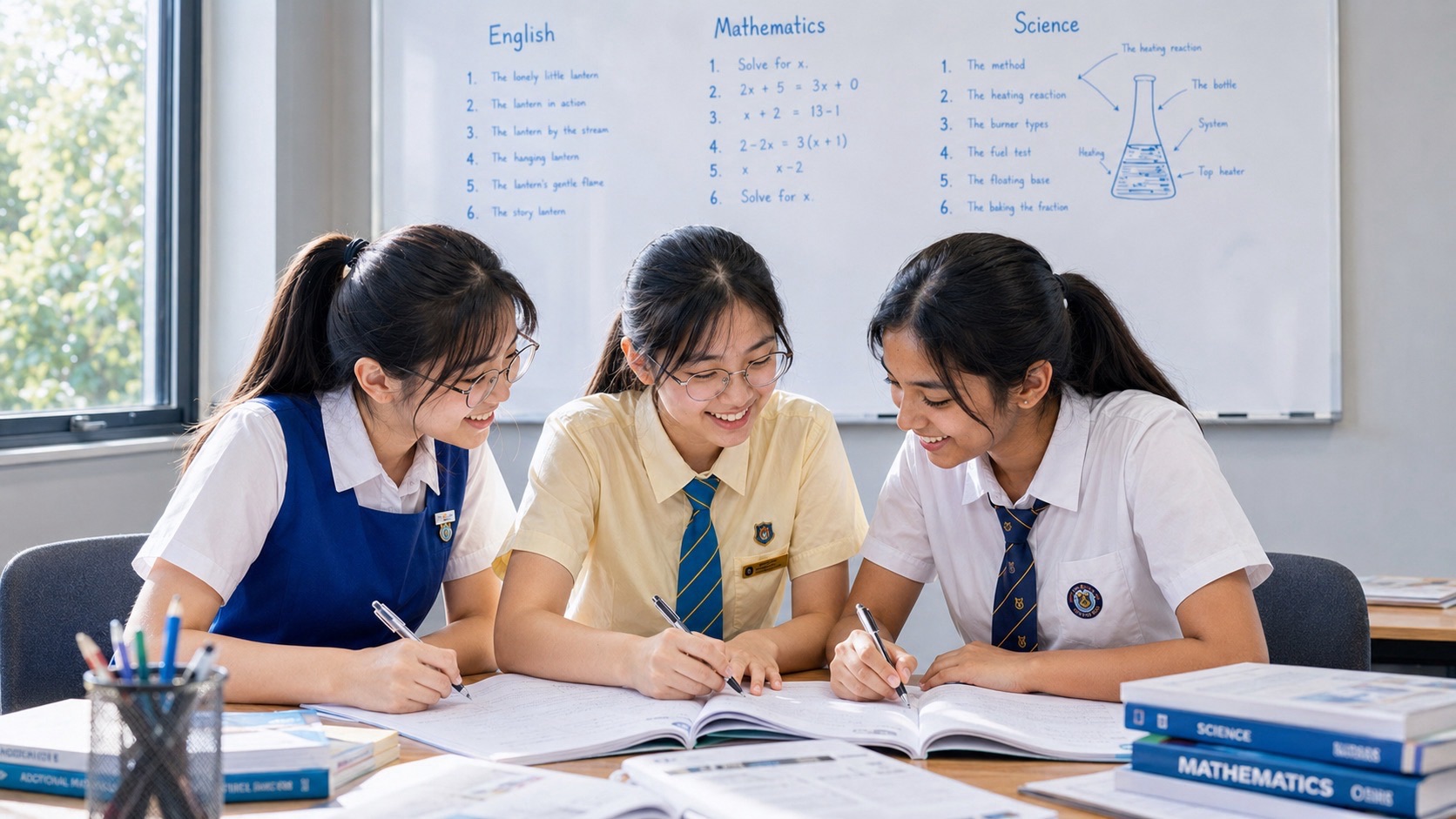
What a 3-pax Situational Writing lesson can reveal
Three learners may read the same task and prioritise different details. Comparing their decisions makes task interpretation visible before each child writes independently.
Parent checklist for PSLE Situational Writing tuition
- Can the child identify purpose, audience and context independently?
- Are all required content points included?
- Does the tone fit the reader?
- Can the student organise information logically?
- Can the learner handle unfamiliar situations without a memorised template?
- Can the task be completed efficiently enough to protect time for Continuous Writing?
- Are tutor prompts decreasing?
PSLE Situational Writing tuition is working when the learner can read the situation, decide what the reader needs and produce a complete, appropriate response without waiting for a template to tell them what to do.


