
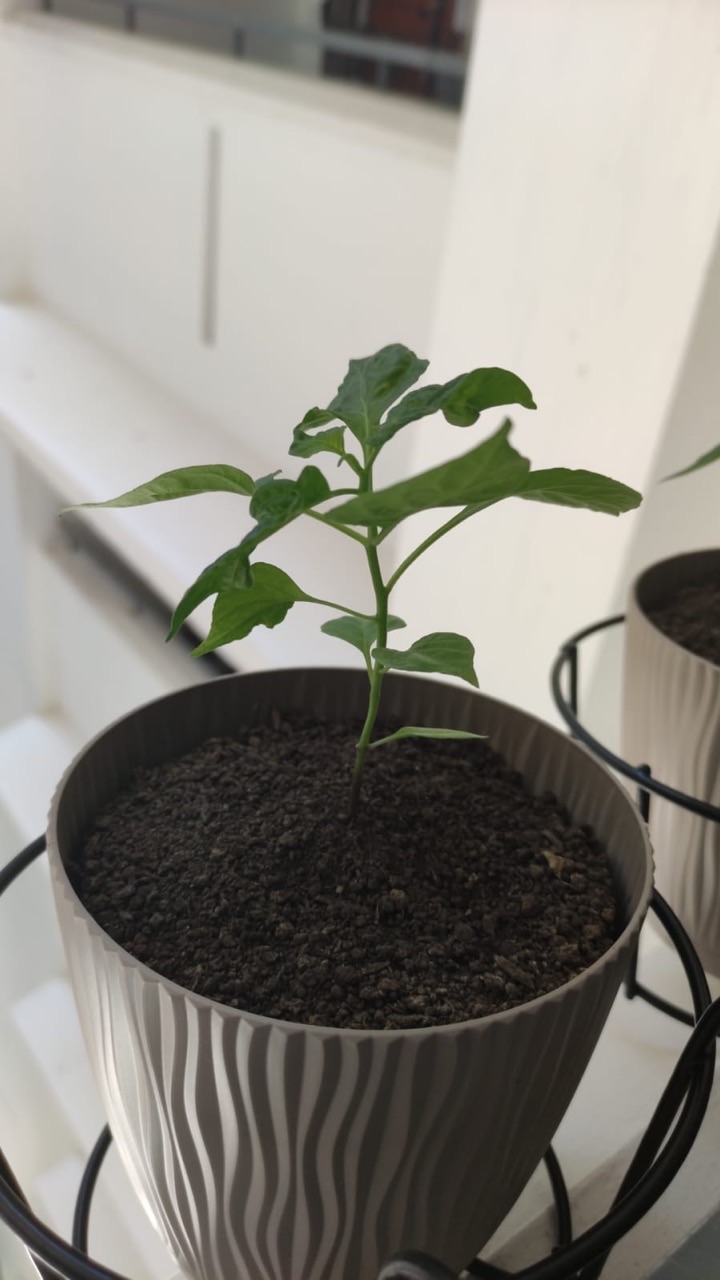
Education in Punggol can begin with a pot, a seed and the need to wait. Gardening gives children repeated contact with living systems that do not respond instantly to effort. Water too much, too little, place a plant in the wrong light or neglect it for several days, and the result appears gradually.
For families interested in Punggol education, Science, observation and practical responsibility, even a small balcony plant or community garden visit can become a useful learning environment. Children can observe change, keep records, form hypotheses and learn that care is a repeated process rather than a one-time action.
The value does not depend on producing perfect plants. The learning often comes from trying to understand why they thrive or fail.
1. Plants Make Slow Change Visible
A plant changes over days and weeks. Children have to remember what it looked like before to notice growth.
This makes gardening a natural context for observation and record-keeping.
2. Observation Comes Before Explanation
Leaves are yellowing. Soil feels dry. Growth leans toward one direction. Before guessing why, the child can describe what is actually visible.
This is good Science practice in miniature.
3. Variables Appear Naturally
Light, water, soil, temperature, pot size and pests can all affect a plant. Children learn that several variables may operate at once.
One change at a time is easier to interpret than changing everything at once.
4. Gardening Teaches Patience
The result of today’s care may not be visible today. This is delayed feedback.
Children learn to continue a routine because the process matters even before the outcome is obvious.
5. Responsibility Has a Living Consequence
A plant depends on repeated care. Missing one day may not matter. Repeated neglect does.
This makes routine meaningful without needing an adult to manufacture a consequence.
6. Measurement Can Be Added Lightly
Children can measure plant height, count leaves, record watering dates or compare growth across weeks.
The numbers become evidence rather than decoration.
7. A Garden Journal Can Join Science and English
A short note—what changed, what was done, what might happen next—turns observation into language.
This gives the child practice describing evidence precisely.
8. Failure Is Useful
Plants sometimes fail despite effort. That creates a real troubleshooting problem. Was the watering wrong? Was there enough light? Was the plant suitable for the location?
The child learns that living systems are not perfectly controllable.
9. Gardening Connects Food to Biology
Herbs or edible plants make the connection especially clear. Food is not only something purchased. It comes from biological growth under specific conditions.
10. Community Gardens Add Social Learning
Shared gardens require rules, cooperation and respect for other people’s work. Children can see that even a small patch of greenery may be maintained collectively.
That turns care into a community process.
11. Start Small
One hardy plant is enough. A large setup can create more maintenance than learning.
The child should experience responsibility at a scale the family can sustain.
12. Avoid Doing Every Rescue Yourself
If the plant begins to decline, ask the child what has been observed and what might be tried. The adult can guide without immediately taking over.
13. A Simple Gardening Learning Loop
- Observe.
- Record.
- Form a possible explanation.
- Change one thing where practical.
- Wait.
- Observe again.
14. Education in Punggol Can Grow Slowly
Children live in a world of fast feedback. Plants teach another rhythm. Care is repeated. Growth is gradual. Evidence accumulates slowly.
That makes gardening a small but powerful lesson in Science, patience and stewardship.
Continue Through eduKatePunggol
- Contents & Learning Routes
- Teach Patience Without Lectures
- Punggol Science Inquiry
- Cooking Is a Classroom
Explore the Punggol Education & Town-Life reading library for related guides.


