
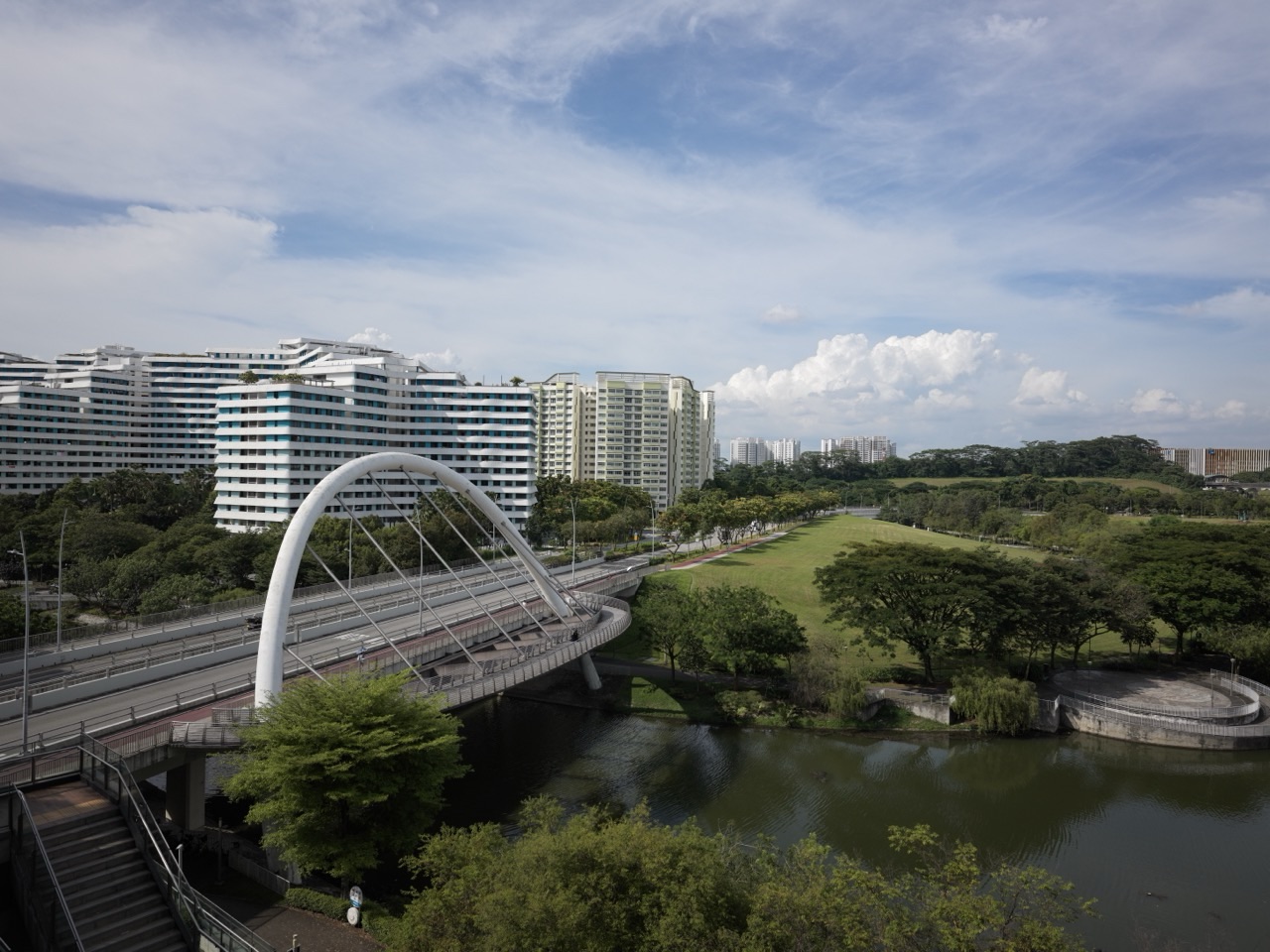

Science tuition in Punggol can use the town’s real biodiversity to teach one of the most important scientific habits: how to sample a living system without pretending a short observation tells the whole story. NParks identifies Punggol Waterway Park and the Punggol Park Connector as habitats where students may encounter birds and other wildlife, including species such as the Yellow-vented Bulbul, Black-naped Oriole, Long-tailed Parakeet, Grey Heron, Little Egret and Collared Kingfisher.
Parents searching for Punggol Science tuition, biodiversity Science, Primary Science habitats, PSLE Science application, Secondary Science ecology or fieldwork sampling can use this page as a study/reference route. The goal is not to build a complete species list. It is to teach how repeated counts, consistent rules and honest limitations turn a casual nature walk into scientific evidence.
This page does not claim an eduKate biodiversity walk or field-trip service. Families should remain on public paths, avoid disturbing wildlife and follow NParks guidance.
Why Biodiversity Needs Sampling
A student cannot usually count every organism in a park. Scientists therefore use samples. A sample is useful only when the method is clear enough for someone else to understand what was counted and what was missed.
Primary 3–4: Start With Careful Categories
- Count only organisms you can identify consistently.
- Use broad categories if species-level identification is uncertain.
- Record what was seen, not what was expected.
- Do not chase, touch or feed wildlife.
For example, a child might record “bird”, “butterfly” and “dragonfly” rather than guessing a species name.
Primary 5–6: Make the Comparison Fair
Suppose the student asks whether more birds are seen near dense vegetation than near open water. A fairer comparison would keep several things similar:
- same observation duration;
- similar time of day;
- same counting rule;
- similar weather where practical;
- same rule for avoiding double-counting.
This is fieldwork, so conditions cannot be perfectly controlled. That limitation should be stated, not hidden.
Secondary Science: Add Repetition and Sampling Error
One ten-minute count can be misleading. Birds move. Butterflies disappear when conditions change. People may temporarily disturb a location. Repeated samples help students distinguish a stable pattern from chance variation.
Worked Example: One Count Is Not a Population Estimate
A student sees six birds at Point A and two at Point B.
Weak conclusion: “Point A has three times as many birds.”
Better conclusion: “More birds were observed at Point A during this observation period. Repeated counts are needed before making a stronger claim about the two locations.”
A Safe Public-Space Method
- Choose two legal public observation points.
- Observe for the same fixed duration.
- Use the same categories at both points.
- Record weather, time and obvious disturbance.
- Repeat the count on another occasion if practical.
- Compare the results.
- State the limitation.
What NParks Says About the Local Setting
NParks describes Punggol Waterway Park as supporting aquatic plants, birds and other biodiversity, and the Punggol Park Connector as a reservoir-side route where birds including Grey Heron, Little Egret and Collared Kingfisher can be observed.
Official sources: NParks — Punggol Waterway Park and NParks — Punggol Park Connector.
How This Connects to School Science
- Primary: diversity, classification, habitats, observation and fair comparison.
- PSLE: evidence, variables, conclusions and unfamiliar contexts.
- Secondary: ecology, sampling, variation, uncertainty and observational studies.
Study/Reference Boundary
This is a Science study/reference owner. It does not claim an eduKate biodiversity field trip or wildlife programme. Use public paths and current NParks guidance.
Continue through Punggol Science Inquiry and Field Investigation Report.
The scientific skill is not merely spotting wildlife. It is knowing what was counted, how it was counted and how strong a conclusion the sample allows.
Continue Through the Science System
Explore the Punggol Science reading library for related guides.


