
Microorganisms and immunity become easier when students separate three questions: what the infectious agent is, how it causes harm, and how the body responds. In Punggol Secondary Biology, bacteria, viruses, fungi, pathogens, immune responses and vaccines are often taught as separate vocabulary. A stronger model treats infection as an interaction between a microorganism and a host defence system.
Parents searching for bacteria vs viruses, microorganisms, immune system, antibodies, vaccines, innate and adaptive immunity or Secondary Biology disease are often trying to help a student distinguish categories that sound similar. CDC’s current immune-health guidance describes the immune system as a network of cells, tissues and organs that protects against viruses, bacteria and other harmful agents, while its vaccination guidance explains that vaccines train the body to recognise specific disease-causing organisms or their components.
This upgraded Science Improvements In Punggol owner connects to Cells, Tissues, Organs and Organ Systems, Homeostasis and Feedback and Human Body Systems Working Together.
The infection-and-immunity reasoning system
- Identify the microorganism or pathogen.
- Identify how it enters the body.
- Identify how it reproduces or causes damage.
- Identify first-line barriers.
- Identify innate immune responses.
- Identify adaptive immune responses where relevant.
- Decide whether antibiotics, antivirals or vaccines are relevant.
- Check for misconceptions about resistance and immunity.
Microorganisms are not automatically harmful
Microorganisms include bacteria, fungi, protozoa and microscopic algae, among others. Many are harmless or beneficial. Some help digestion, recycle nutrients, make foods, produce medicines or support ecosystems.
A pathogen is a disease-causing agent. Not every microorganism is a pathogen.
Bacteria are living cells
Bacteria are single-celled prokaryotic organisms. They have cell membranes, cytoplasm, ribosomes and genetic material, but no membrane-bound nucleus.
Many bacteria reproduce by binary fission. Under suitable conditions, populations can grow quickly.
Viruses are not cells
Viruses consist of genetic material inside a protein coat, sometimes with a lipid envelope. They do not carry out independent cellular metabolism and reproduce only by using host-cell machinery.
This is why antibiotics that target bacterial structures or processes do not treat viral infections.
Bacteria and viruses damage hosts differently
Bacterial disease can result from tissue invasion, toxins or inflammatory responses. Viral disease often results from viruses entering host cells, redirecting cellular machinery and damaging or killing infected cells.
The exact mechanism varies by pathogen, so students should avoid the generic statement “germs attack the body.”
First-line barriers keep pathogens out
- skin forms a physical barrier;
- mucus can trap particles and microorganisms;
- cilia help move trapped material from airways;
- stomach acid creates hostile conditions for many swallowed microbes;
- tears and secretions contain antimicrobial substances.
These defences act before a specific adaptive response is needed.
Innate immunity responds rapidly
The innate immune system responds to broad signs of infection or tissue damage. Phagocytic cells can engulf pathogens, inflammatory responses recruit immune activity, and several chemical defence systems act quickly.
Khan Academy’s immunology resources describe this as non-specific or innate defence, including barriers and phagocytes.
Adaptive immunity is more specific
Adaptive immunity uses lymphocytes that recognise specific molecular features. B cells can develop into cells that produce antibodies, while T cells perform several roles including helping coordinate immune responses and destroying infected cells.
Adaptive immunity generally develops more slowly on first exposure but can create immunological memory.
Antibodies are specific proteins
Antibodies bind to particular antigens. This specificity helps the immune system recognise and neutralise pathogens or mark them for destruction.
Students should not describe antibodies as cells. They are proteins produced by specialised immune cells.
Vaccines prepare adaptive immunity
Vaccines expose the immune system to a harmless or controlled representation of a pathogen or key antigen so that immune memory can develop without the risks of the full disease.
CDC’s current vaccination guidance explains that vaccine-induced active immunity trains the body to recognise specific disease-causing organisms and generally lasts longer than passive antibody protection.
Vaccination does not mean infection is impossible
Immune protection is not always absolute. Vaccines can reduce the probability of infection, severe disease, complications or transmission depending on the pathogen and vaccine.
Students should therefore distinguish reduced risk from guaranteed prevention.
Antibiotics target bacteria, not viruses
Antibiotics interfere with bacterial processes such as cell-wall synthesis, protein synthesis or DNA replication. Viruses lack many of those bacterial targets.
Using antibiotics for viral infections does not cure the virus and can contribute to antibiotic resistance by placing selection pressure on bacterial populations.
Antibiotic resistance is evolution in action
Within a bacterial population, some cells may carry mutations or genes that reduce antibiotic effectiveness. Antibiotic treatment kills susceptible bacteria more readily, leaving resistant bacteria to survive and reproduce.
The bacteria become resistant; the patient’s body does not “get used to the antibiotic” in the same way.
Transmission routes matter
- respiratory droplets or aerosols;
- direct contact;
- contaminated food or water;
- blood or bodily fluids;
- vectors such as mosquitoes;
- contaminated surfaces in some situations.
Prevention strategies should match the transmission pathway rather than rely on one generic “stay clean” rule.
Disease symptoms can come from pathogen damage and immune response
Fever, swelling, fatigue and other symptoms can reflect both direct pathogen effects and the body’s immune response. The relationship is therefore more complex than “the microbe causes every symptom directly.”
Secondary G1, G2 and G3: disease becomes a systems topic
Secondary Biology can connect microorganisms to cell biology, immunity, genetics, evolution and public health. Different subject levels require different detail, but the common framework remains pathogen → transmission → damage → defence → memory/prevention.
A 30-minute microorganisms-and-immunity drill
- Classify examples as bacterium, virus, fungus or other microorganism.
- Compare bacterial and viral structure.
- Choose one transmission route.
- Identify one barrier defence.
- Identify one innate response.
- Identify one adaptive response.
- Explain antibody specificity.
- Explain why antibiotics do not treat viruses.
- Explain how antibiotic resistance can spread.
Common microbiology misconceptions
- all microorganisms are harmful;
- viruses are small bacteria;
- antibiotics kill viruses;
- antibodies are immune cells;
- vaccines cure an infection already underway;
- vaccination guarantees infection is impossible;
- the human body becomes antibiotic-resistant;
- innate immunity is completely non-specific in every molecular detail;
- every symptom is caused directly by pathogen damage.
How to diagnose an immunity error
If bacteria and viruses are mixed, repair structure and reproduction. If antibiotic questions fail, identify the drug target. If vaccines and antibodies are confused, separate antigen exposure, immune memory and passive antibody protection. If disease-spread questions fail, map transmission route before proposing prevention.
When Science tuition in Punggol adds value
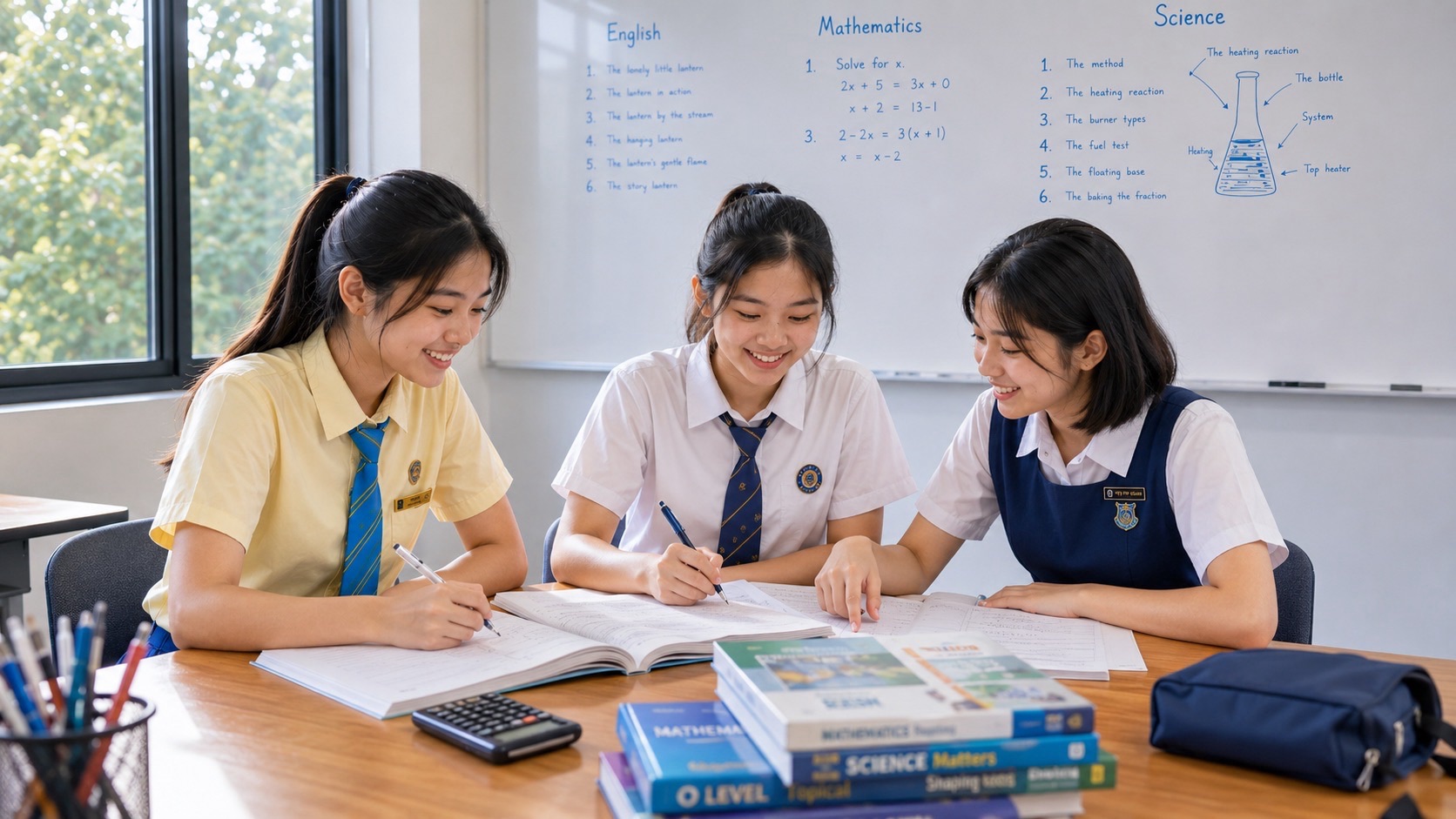
Microbiology improves when students compare mechanisms rather than memorise disease lists. In eduKate Punggol’s three-student Science tutorials, one learner can analyse the pathogen, another the immune response and another the prevention strategy, allowing the tutor to see whether the weak link is cell biology, immunity or evidence reasoning.
Parents can review Science Tuition Punggol, Secondary 3 Biology Tuition Punggol, or the Science Article Index.
Conclusion: infection is an interaction, not a vocabulary list
Bacteria, viruses and other pathogens differ in structure and reproduction. The body uses barriers, innate responses and adaptive immunity to defend itself. Vaccines train specific immune memory; antibiotics target bacteria, not viruses. Once students connect those mechanisms, infection and immunity become one coherent biological system.
Explore the Punggol Science reading library for related guides.


