
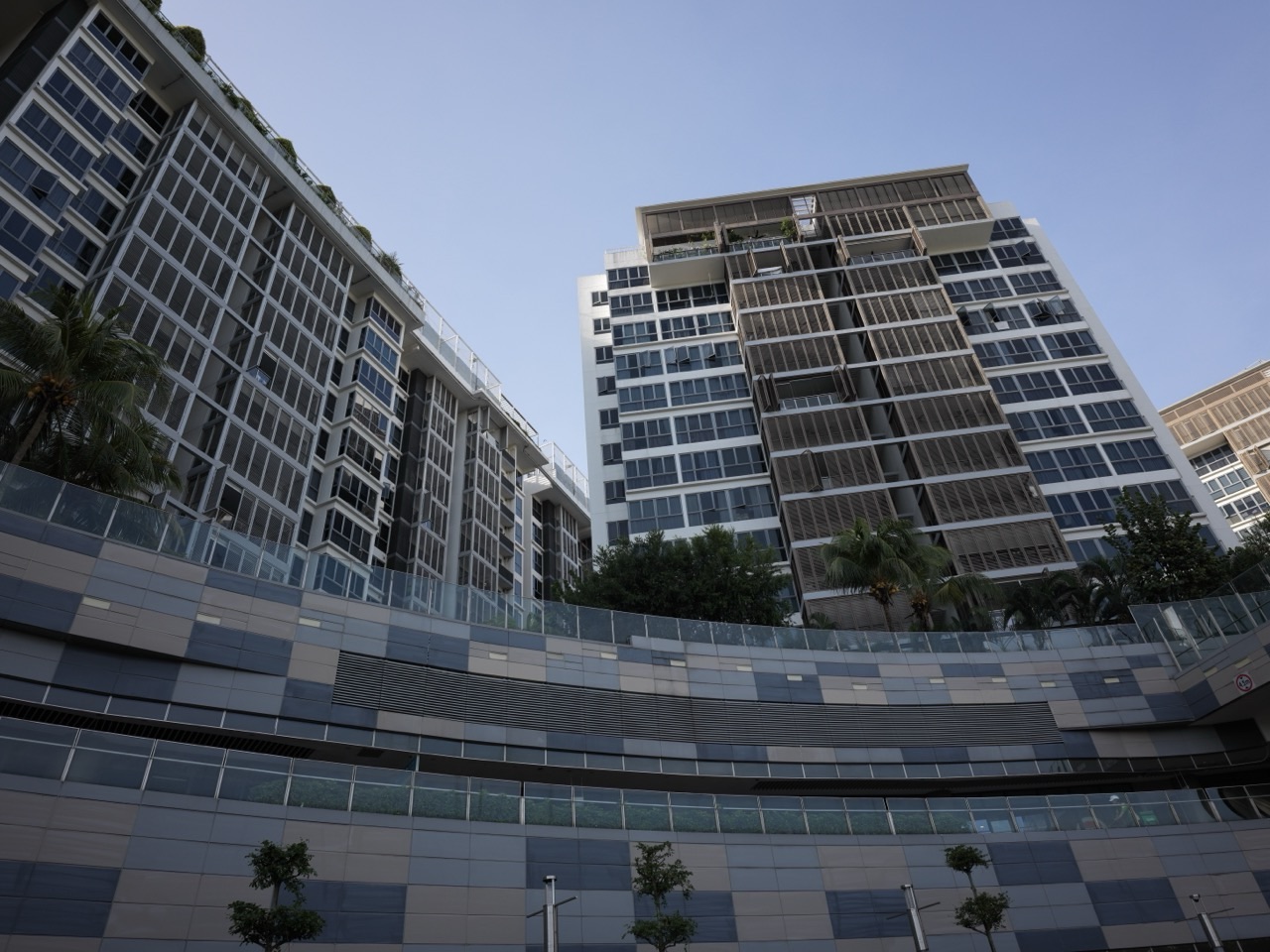
Families living around Waterway Cascadia and Watertown searching for English tuition in Punggol sit close to two different but connected parts of the town’s education geography: residential clusters along Punggol Way and the Punggol Central transport-and-retail core. That makes local access relatively convenient, but the educational question remains much more specific. A child may need reading foundations, comprehension repair, composition development, PSLE calibration or Secondary English at G1, G2 or G3.
Waterway Cascadia is a residential cluster along Punggol Way, while Watertown is integrated into the Punggol Central town-centre environment beside the MRT/LRT and Waterway Point. For tuition planning, the shared advantage is access to a central Punggol route. But proximity alone cannot diagnose whether the child’s real issue is reading fluency, vocabulary, grammar transfer, evidence use, writing structure, oral development or examination execution.
This page is the micro-location English route for Waterway Cascadia and Watertown. It sits under the canonical English Tuition at eduKatePunggol owner and connects into the estate-wide eduKatePunggol Atlas V2.3. It also complements the broader Punggol Central & Waterway Point English guide without duplicating it: this page focuses on residential-to-town-centre routing and the family-week decision.
Residential convenience should translate into learning capacity
Families near Waterway Cascadia or Watertown can often reach central Punggol without the time penalty of a cross-island commute. That recovered time has educational value only if it is used well. A shorter route can preserve reading, homework, dinner and sleep. It can also make weekly attendance more reliable.
Parents should therefore judge tuition by the whole system:
- Is the class close enough to be sustainable?
- Is the learning target specific enough to justify the class?
- Is the 3-pax group well matched?
- Does the child still have time for independent reading?
- Does progress appear outside tuition?
Primary 1–2: protect fluency, vocabulary and sentence growth
Lower-primary learners need repeated contact with English more than they need large volumes of difficult material. Reading, phonics where needed, vocabulary, spelling, sentence construction and oral language should become progressively easier and more automatic.
A central Punggol tuition route can be helpful because the child spends less of the evening travelling. But the saved time should not immediately be filled with more worksheets. Independent reading and normal recovery still matter.
Use Primary 1 English Tuition and Primary 2 English Tuition for the year-level owners.
Primary 3–4: identify whether the problem is access, reasoning or expression
Upper-primary preparation begins before Primary 5. Primary 3 and Primary 4 are where reading becomes more academic, comprehension requires more inference and writing starts demanding greater organisation.
| Observed problem | What tuition should test |
|---|---|
| Child reads accurately but cannot explain the passage | Meaning integration and vocabulary |
| Child finds evidence but still loses marks | Question scope and answer expression |
| Composition is imaginative but confusing | Causality and paragraph structure |
| Grammar drills are strong but writing is inaccurate | Transfer under production load |
| Homework needs constant parent supervision | Task-start and self-regulation |
Use Primary 3 English Tuition and Primary 4 English Tuition.
Primary 5: build a measurable PSLE runway
Primary 5 is the year to turn recurring mistakes into a training plan. The child should gradually build stronger reading stamina, vocabulary retrieval, inference, composition relevance, grammar transfer, oral development and timed-section control.
The point is not to make Primary 5 look like Primary 6. It is to enter Primary 6 with fewer hidden weaknesses.
Use Primary 5 PSLE Runway for Comprehension, Composition and Oral.
Primary 6: use central convenience to protect final-year capacity
In Primary 6, travel time becomes especially visible because the child is balancing English with Mathematics, Science, Mother Tongue and school assessments. A central Punggol route can preserve time, but the teaching should also become more selective.
Recent school scripts and prelims should determine whether the main problem is knowledge, retrieval, interpretation, expression or execution. The final plan should prioritise recurring, high-impact and repairable losses.
Use Primary 6 PSLE English Tuition, PSLE English Tuition and Prelims to PSLE Final English Calibration.
Secondary English: central location does not mean one generic class
Secondary students need year-level and subject-level alignment. The class should know whether the student is in Secondary 1, 2, 3 or 4, and whether English is being taken at G1, G2 or G3.
Watertown and Waterway Cascadia families should use the home-to-tuition handoff intelligently
One advantage of living close to the Punggol town-centre network is that tuition can fit more naturally into the route between school, home and family errands. The danger is overscheduling because the class feels easy to reach.
Convenience should reduce friction, not increase total tuition load automatically. The child still needs unscheduled capacity for reading, consolidation and recovery.
3-pax: central convenience still requires strong matching
eduKatePunggol teaches in groups of three students. The class should be matched by year, English subject level, reading access, writing demand, pace and independence. Small size does not remove the need for compatibility.
Use How Should a 3-Pax English Class Be Matched?.
A Waterway Cascadia / Watertown parent checklist
- What exact English weakness are we solving?
- Is the child in the correct Primary or Secondary route?
- Is the class matched for pace and support needs?
- Does central convenience preserve the rest of the week?
- Is independent reading still protected?
- Does the tutor test fresh transfer?
- Are prompts decreasing?
- Can tuition frequency reduce when the learner stabilises?
Local route: Waterway Cascadia and Watertown into the wider English system
Use this page for the Waterway Cascadia/Watertown local decision, English Tuition at eduKatePunggol for the broad owner, Punggol Central & Waterway Point for the adjacent town-centre cluster, and the Punggol Atlas for estate-wide navigation.
The local advantage is strongest when it makes both the journey and the diagnosis shorter. A family should be able to move quickly from “English tuition near home” to “this is the exact English capability we are repairing, this class fits, and this is the evidence we expect to see.”
Explore the Punggol English reading library for related guides.


