
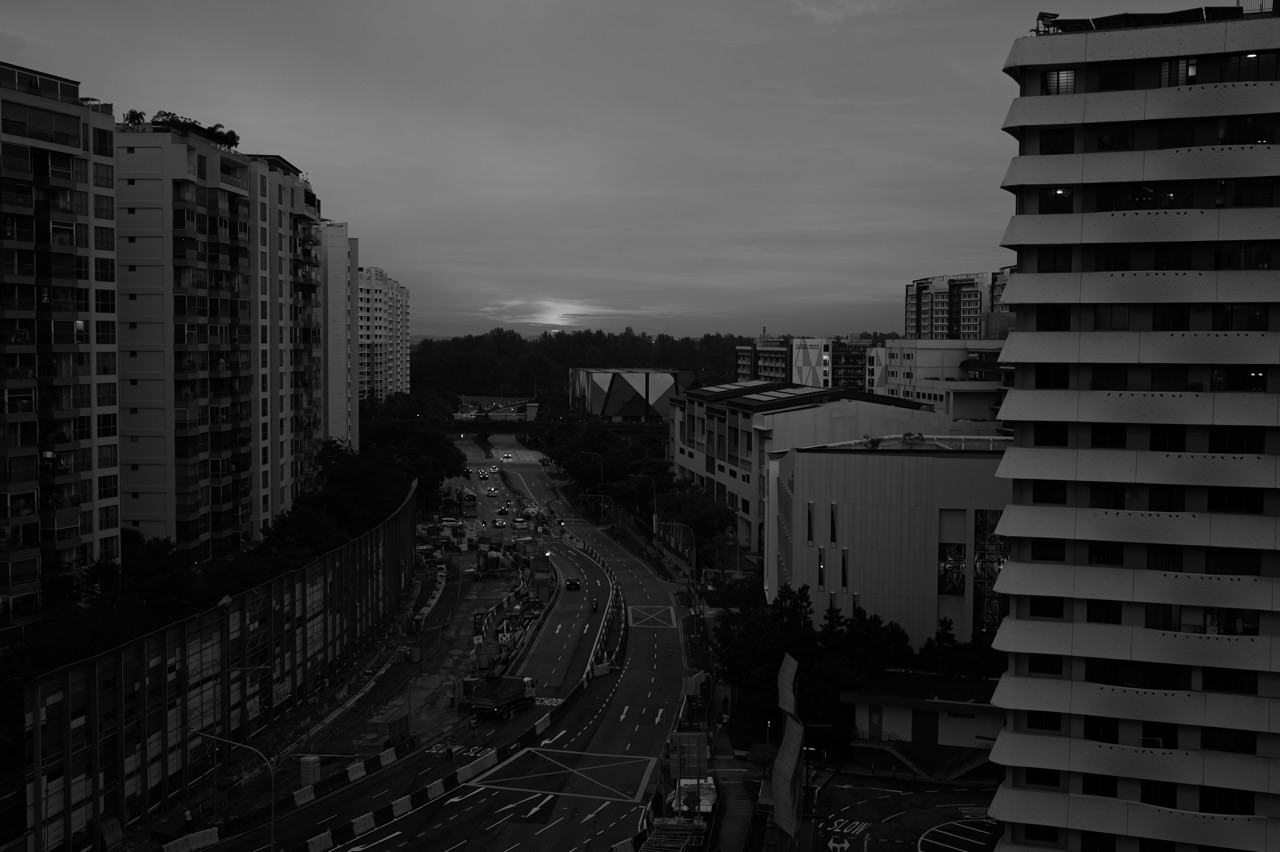
Families around Sentul Crescent and SAFRA Punggol searching for English tuition in Punggol often organise their week around school, CCA, enrichment, family activities and the central Punggol transport network. SAFRA Punggol is at 9 Sentul Crescent, making Sentul Crescent a recognisable family landmark. But a useful English tuition decision should go beyond location: the child may need lower-primary literacy, upper-primary comprehension and composition, PSLE calibration, or Secondary English at G1, G2 or G3.
The local advantage of a Sentul Crescent/SAFRA Punggol route is practical familiarity. Families may already move through this part of the estate for activities and recreation. That can reduce friction when tuition is also within the broader Punggol network. Yet convenience only matters when the teaching fit is strong. A nearby class should still be able to distinguish a reading problem from a vocabulary problem, an inference problem from an answer-expression problem, and a writing problem from a grammar-transfer problem.
This page is the micro-location English route for Sentul Crescent and SAFRA Punggol. It sits under the canonical English Tuition at eduKatePunggol owner and connects into the estate-wide eduKatePunggol Atlas V2.3. Families who want to verify the landmark can use the official SAFRA Punggol page.
Sentul Crescent families should treat tuition as part of the weekly capacity plan
A child’s English performance is affected by more than curriculum. Attention, fatigue, travel, homework load and sleep all matter. A class placed after an already demanding day may produce weaker learning even when the tutor is competent.
- Does the child arrive alert enough to read and write?
- Will homework still fit after tuition?
- Is independent reading protected?
- Does the class solve a clearly defined English problem?
- Is the 3-pax group correctly matched?
Primary 1–2: the foundation should become more automatic
Lower-primary English should gradually require less conscious effort. Reading common words, following instructions, spelling familiar patterns and writing complete sentences should become increasingly stable.
Parents should watch whether support is actually fading. If the child gets correct answers only when the adult supplies every next step, the apparent performance may be stronger than the independent capability.
Use Primary 1 English Tuition and Primary 2 English Tuition for the year-level routes.
Primary 3–4: the child must begin carrying more meaning independently
Primary 3 and Primary 4 widen the language load. Reading supports Science and denser school instructions. Comprehension becomes more inferential. Composition requires stronger planning and paragraph control. Grammar has to survive while the child is managing more ideas at once.
| What parents see | What tuition should test |
|---|---|
| Child reads fast but understands poorly | Meaning integration and vocabulary |
| Child understands but writes weak answers | Expression and sentence control |
| Composition has no clear turning point | Planning and causality |
| Grammar is strong only in drills | Transfer under load |
| Homework requires constant adult supervision | Independence and self-regulation |
Use Primary 3 English Tuition and Primary 4 English Tuition.
Primary 5–6: build, then calibrate
Primary 5 should build a durable PSLE runway. Primary 6 should increasingly calibrate from school evidence. The teaching focus therefore changes across the two years.
Primary 5 needs reading stamina, vocabulary retrieval, inference, answer precision, composition relevance, grammar transfer and oral development. Primary 6 needs a sharper error budget: which few weaknesses still cause recurring mark loss under timed conditions?
Use Primary 5 PSLE Runway and Primary 6 Final English Calibration.
Secondary English: route by year and subject level
Secondary English widens into more mature reading, functional writing, tone, viewpoint, register and independent response. Under Full Subject-Based Banding, tuition should also align to the English subject level the student is actually taking.
SAFRA Punggol as a family landmark changes the logistics, not the curriculum
SAFRA Punggol is a familiar family activity node at 9 Sentul Crescent. For tuition planning, that can make Sentul Crescent a useful way to think about the weekly route. Families may already be coordinating swimming, enrichment, recreation or other activities nearby.
The danger is stacking too much into the same day simply because everything feels geographically convenient. English still needs attention. A child moving directly from a demanding activity into a writing-heavy class may arrive physically present but cognitively depleted.
3-pax: keep the learner visible even inside a busy family schedule
eduKatePunggol uses three-student classes because the tutor can observe individual reasoning and writing while still using peer contrast. The group should be matched by year, subject level, reading access, writing demand, pace and independence.
Use How Should a 3-Pax English Class Be Matched?.
A Sentul Crescent / SAFRA Punggol parent checklist
- What exact English weakness are we trying to repair?
- Is the proposed class aligned to the correct year and G-level?
- Does the child arrive with enough attention to learn?
- Are family activities creating hidden overload?
- Is independent reading protected?
- Does tuition use school evidence intelligently?
- Can the learner transfer the skill to fresh work?
- Are tutor prompts decreasing?
Local route: Sentul Crescent and SAFRA Punggol into the wider English system
Use this page for the Sentul Crescent/SAFRA Punggol local decision, English Tuition at eduKatePunggol for the broad owner, the relevant Primary and Secondary pages for year-level support, and the Punggol Atlas for estate-wide navigation.
The local page should help families use a familiar landmark without mistaking familiarity for fit. The right English tuition decision still comes down to diagnosis, compatible grouping, sustainable scheduling, transfer and increasing independence.


