
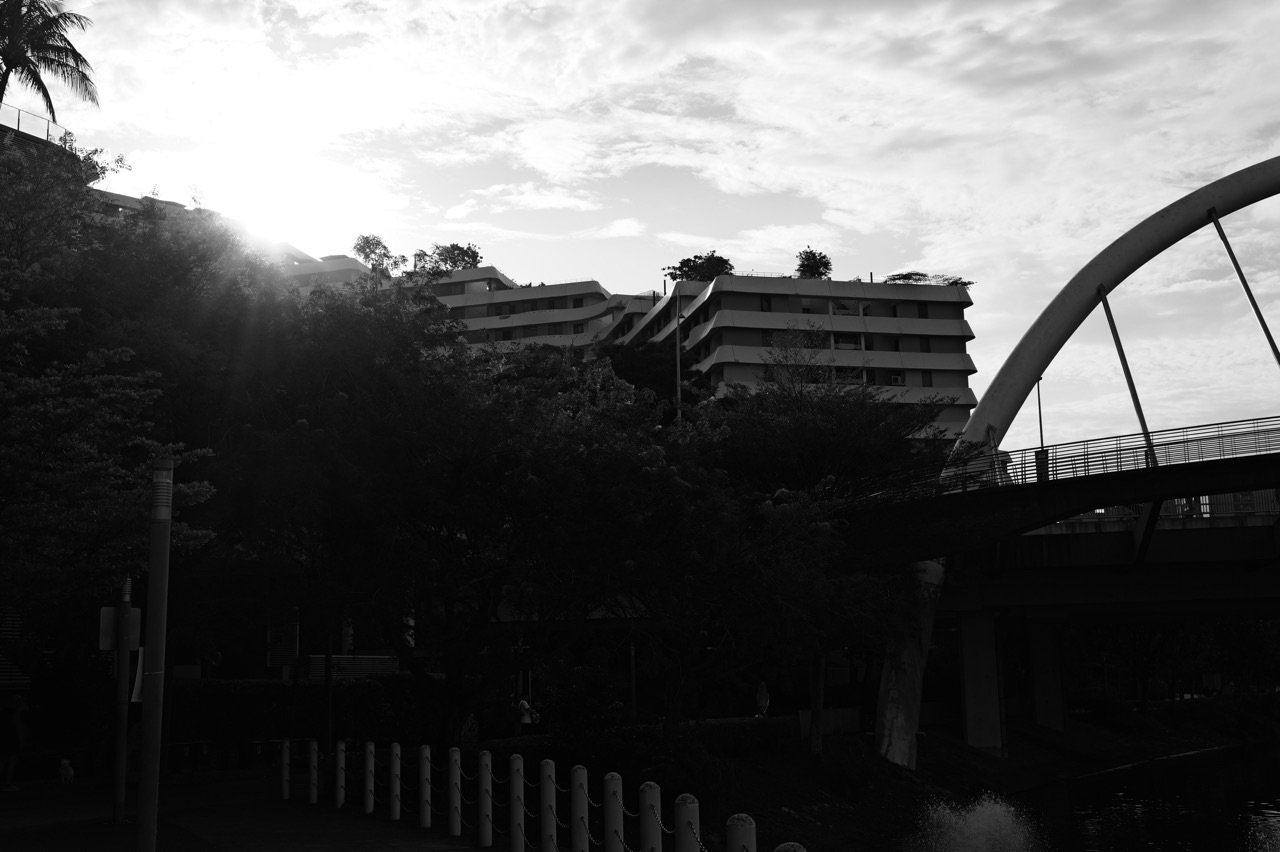
Families around Edgefield Walk and Punggol Field Walk searching for English tuition in Punggol are already inside a dense education corridor, but that does not make the tuition decision simple. The child may need Primary reading foundations, upper-primary comprehension and composition, PSLE English calibration, or Secondary support at G1, G2 or G3. A useful local page should therefore do more than name nearby roads. It should route families into the correct stage, diagnosis and class fit.
Edgefield Walk and Punggol Field Walk are established Punggol residential road names, and both sit within the wider Punggol Field/Edgefield learning area. That makes them appropriate as a more granular micro-location layer beneath the broader Punggol Field & Edgefield English guide. The purpose here is not to compete with that owner. It is to catch road-level local intent and route it back into the same coherent English system.
The canonical English owner remains English Tuition at eduKatePunggol, while the estate-wide map remains eduKatePunggol Atlas V2.3. This page narrows the question to families whose home-school-tuition week is built around Edgefield Walk and Punggol Field Walk.
Road-level convenience is useful only when the learning fit is right
A tuition decision should not be made from distance alone. The child’s weekly capacity matters, but so does the educational mechanism. A short route to a mismatched class can still create poor outcomes. A slightly longer route to a much better fit can be worthwhile.
- What stage is the child in?
- What is the first unstable English capability?
- Can the class teach that capability at the correct level?
- Can the child sustain the route after school or CCA?
- Does the programme reduce dependence over time?
Primary 1–2: build literacy access before upper-primary pressure
Lower-primary English still depends on fluent access to print, growing vocabulary, spelling, sentence construction and oral language. A child who reads slowly may appear weak in comprehension because too much attention is spent on word recognition. A child who speaks clearly but writes fragments may need sentence construction rather than harder comprehension.
Use Primary 1 English Tuition and Primary 2 English Tuition for the year-level routes.
Primary 3–4: read to learn, infer carefully, write coherently
Primary 3 and Primary 4 place more demand on reading, vocabulary and writing. Science begins asking the child to process more formal language. Comprehension questions increasingly require relationships rather than simple copying. Composition needs paragraph purpose and causal structure.
| Observed problem | What the tutor should test |
|---|---|
| Child reads but cannot retell | Meaning integration |
| Child finds the clue but writes a vague answer | Answer scope and expression |
| Composition jumps between events | Causality and paragraphing |
| Grammar errors appear only in writing | Transfer under cognitive load |
| Homework requires constant prompting | Task-start and independence |
Use Primary 3 English Tuition and Primary 4 English Tuition.
Primary 5: repair before the final-year calendar becomes expensive
Primary 5 should be used to identify the child’s recurring error families before Primary 6 compresses the timetable. The strongest tuition plan is not the one with the most papers. It is the one where repeated errors become less frequent and skills survive new contexts.
Use Primary 5 PSLE Runway for Comprehension, Composition and Oral.
Primary 6: use recent school evidence to allocate time
By Primary 6, especially after prelims, tuition should become increasingly selective. The tutor should classify the reason behind the lost mark: knowledge, retrieval, interpretation, expression or execution.
That classification determines whether the student needs teaching, retrieval, answer construction, timing or recovery work.
Use Primary 6 PSLE English Tuition, PSLE English Tuition and Prelims to PSLE Final English Calibration.
Secondary English: route by year, G-level and actual weakness
Secondary school widens the language environment. Students meet more abstract vocabulary, wider text purposes, functional writing, tone, viewpoint and stronger expectations of independence. Under Full Subject-Based Banding, the English subject level also matters.
Edgefield Walk and Punggol Field Walk: use local access to protect reading and rest
Families in this cluster are already within the wider Punggol Field/Edgefield zone, so the local advantage is not simply distance. It is the possibility of a more efficient home-school-tuition handoff.
Recovered time matters because English still needs practice outside tuition. Reading, vocabulary retrieval, revision and sleep all contribute to performance. The local route should give time back to those processes rather than encouraging unnecessary extra lessons.
3-pax: compare answers without losing the individual
eduKatePunggol uses three-student classes. The format allows the tutor to compare different reasoning paths while still seeing each learner’s writing, reading and error profile.
The class must still be matched carefully by year, subject level, reading access, writing demand, pace and independence. Use How Should a 3-Pax English Class Be Matched?.
A road-cluster parent checklist
- What exact English capability is unstable?
- Is the child in the correct stage and G-level?
- Does the class match the learner’s reading and writing demand?
- Can the child sustain the weekly route without fatigue?
- Is independent reading protected?
- Does tuition use school scripts diagnostically?
- Can the learner apply feedback on fresh tasks?
- Are prompts reducing over time?
Local route: Edgefield Walk and Punggol Field Walk into the wider English system
Use this page for the road-level Edgefield Walk/Punggol Field Walk decision, the broader Punggol Field & Edgefield guide for the adjacent district owner, English Tuition at eduKatePunggol for the canonical owner, and the Punggol Atlas for estate-wide navigation.
The road-level owner exists to make local discovery more precise without creating a competing curriculum. Families enter through the place they know, then move immediately into the same diagnostic, stage-based and independence-focused English system.
Explore the Punggol English reading library for related guides.


