
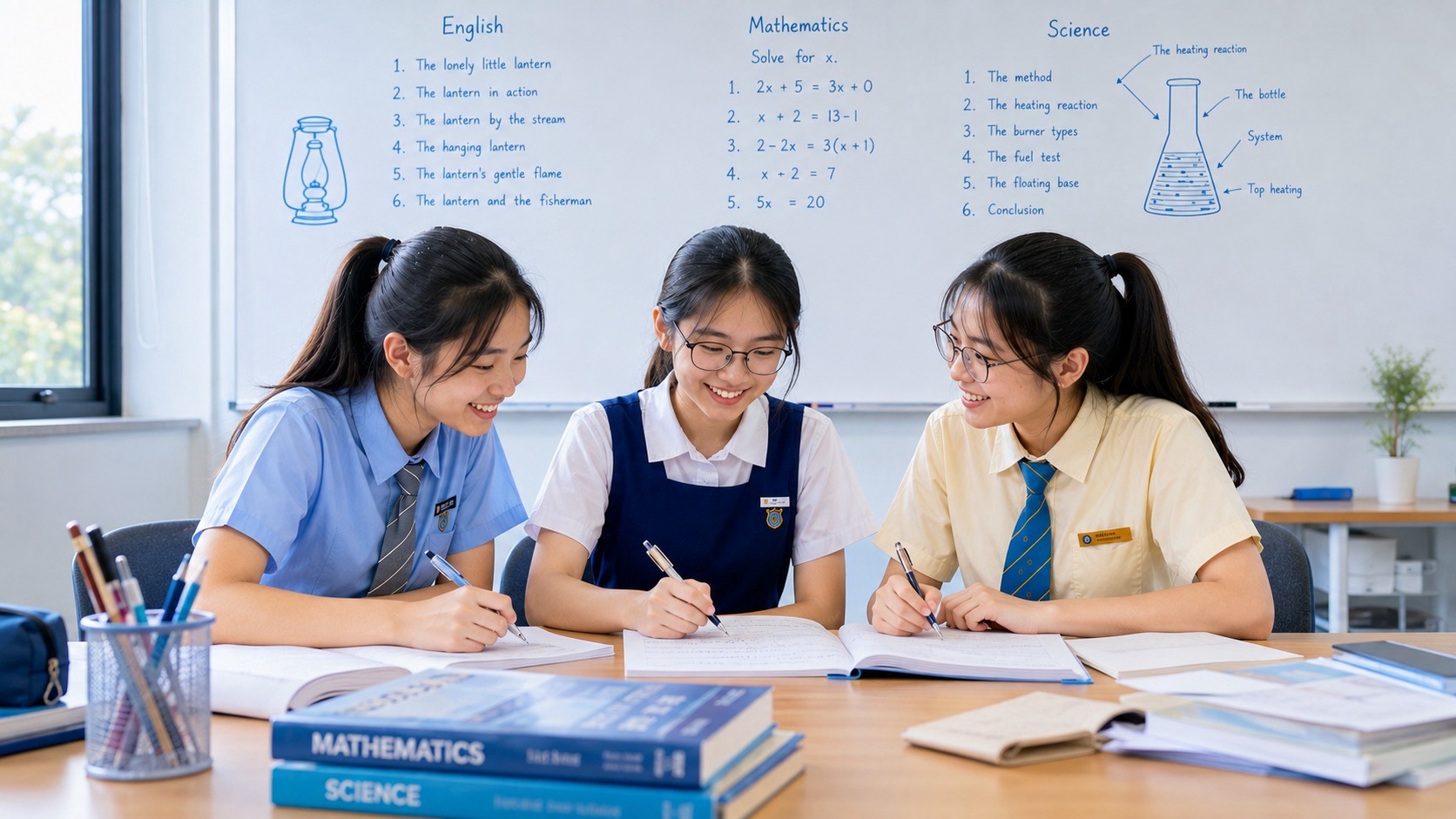
A three-student English class should not operate identically for a Primary 2 child and a Secondary 3 student. The value of the small group changes as learners gain reading stamina, language control and independence.
This legacy Clementi English Tuition for Pri and Sec page now owns one job: how small-group mechanics should change from Primary to Secondary. It does not claim a current eduKate branch in Clementi through this page; families should verify actual teaching location, timing and availability directly.
| Stage | Small-group job |
|---|---|
| P1–P2 | Frequent reading, speaking, task-initiation and sentence turns |
| P3–P4 | Compare reasoning, evidence and paragraph choices |
| P5–P6 | Different prompt levels, individual repair queues, timed transfer |
| Secondary | Compare interpretations, arguments and independent writing decisions |
Younger Learners Need More Turn Density
Reading aloud, oral sentences, short written responses and task routines benefit from frequent observable turns. The tutor should protect quiet learners from simply following the fastest peer.
Upper Primary Needs Differentiated Scaffolds
Students can share the same text while receiving different evidence questions, grammar prompts or writing checks. The tutor should fade support as transfer improves.
Secondary Needs More Independent Comparison
Older students can debate interpretations, compare argument quality and critique evidence. The tutor intervenes less often but at a deeper level: assumptions, logic, precision, structure and judgement.
Small Group Should Produce More Independence, Not More Tutor Dependence
- everyone attempts before discussion;
- peer reasoning is compared, not copied;
- prompt levels decrease;
- fresh individual work verifies ownership;
- the tutor becomes less central as capability rises.
For Clementi Families
Confirm the actual current eduKate teaching location, timetable and availability directly. The right small-group design is not only about group size—it is about whether the class mechanics match the learner’s developmental stage.


