
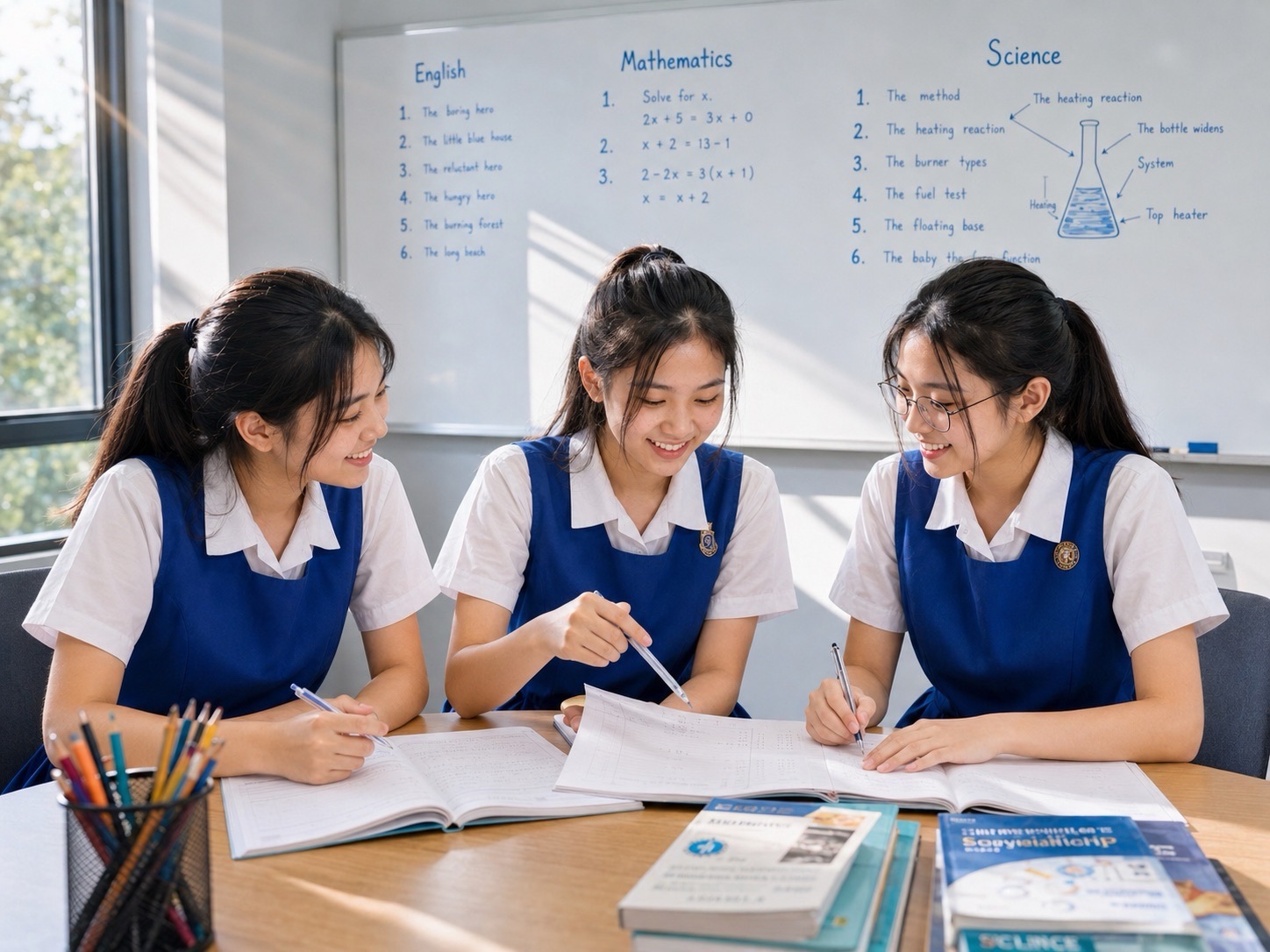
A vocabulary word is not truly part of a student’s writing until it can be retrieved and used naturally in a new composition. Memorising impressive words can raise recognition, but forced vocabulary often makes Primary writing less precise rather than more sophisticated.
This page has one job: help families around Greendale Primary move vocabulary from lists into accurate, natural composition language across Primary 3–6.
Independence note: eduKatePunggol is an independent tuition provider. This page is for families searching around Greendale Primary and does not imply affiliation with, endorsement by or representation of Greendale Primary School.
For current programme information, continue to Primary English Tuition in Punggol. This legacy school-area page now owns vocabulary-to-composition transfer.
Recognition is not retrieval
A student may understand a word on a vocabulary worksheet but fail to use it while writing. Writing requires retrieval under pressure: the student must remember the word, judge whether it fits and place it correctly in a sentence.
- Recognition: “I know what this word means when I see it.”
- Recall: “I can produce the word when prompted.”
- Transfer: “I can choose the word naturally in a new composition.”
Creative-writing vocabulary work should move through all three stages.
Teach words in meaning families
Words are easier to use when they belong to a meaningful scene or concept.
- fear: uneasy, apprehensive, startled, alarmed;
- movement: dart, weave, stumble, retreat;
- speech: whisper, mutter, exclaim, plead;
- crowds: jostle, surge, gather, disperse;
- relief: exhale, relax, steady, brighten.
The student should also learn the differences between nearby words. “Startled” and “terrified” are not interchangeable.
The four questions before using a “good word”
- Does it mean what I think it means?
- Does it fit the situation?
- Is the word form correct?
- Would a simpler word be more precise?
These questions protect students from vocabulary decoration.
Collocation matters
Words have preferred neighbours. A student may know a definition but combine the word unnaturally.
- make a decision, not “do a decision”;
- heavy rain, not usually “strong rain”;
- deeply relieved can work; “strongly relieved” usually sounds less natural;
- burst into tears is more natural than inventing a direct translation from another phrase.
Reading helps students absorb these combinations. Vocabulary tuition should not exist apart from texts.
Use the word in three different contexts
After teaching a word, test flexibility.
- sentence about school;
- sentence about a family or public situation;
- sentence inside a short fictional scene.
If the word only works in the original model sentence, the student may have memorised the phrase rather than learned the word.
Vocabulary should improve verbs before adjectives
Primary writers often chase descriptive adjectives. Strong verbs can improve writing more efficiently.
- walked quickly → hurried;
- looked around nervously → scanned;
- moved through the crowd → weaved;
- said quietly → whispered;
- held tightly → clutched.
A precise verb carries action and tone without requiring extra decoration.
Build a personal usable bank, not an endless master list
Students can maintain a small active vocabulary bank containing words they are currently trying to use.
- word;
- plain meaning;
- one natural phrase;
- one original sentence;
- date last retrieved;
- later composition where it was used.
When a word becomes reliable, move it out of the active list. Keep the active load manageable.
Use reading as the main vocabulary laboratory
Stories and informational texts show how words behave in context.
- What feeling does this word add?
- What simpler word could replace it?
- Why did the writer choose this one?
- What words appear around it?
- Could the student use it in another scene?
This moves vocabulary learning from definition to language judgement.
Do not force vocabulary quotas into compositions
A rule such as “use ten advanced words” can cause unnatural writing. A better challenge is “use two or three new words only if they improve precision”.
Quality of selection matters more than count.
Vocabulary revision should be delayed
Immediate recall is useful but weak evidence. Revisit words after several days and weeks.
- definition → word;
- word → own sentence;
- scene → choose a fitting word;
- composition → retrieve without list;
- editing → replace an imprecise word.
Different retrieval directions make the knowledge more flexible.
P3–P6 vocabulary progression
- P3: clear action and emotion words used correctly.
- P4: wider verbs, cause/consequence and more specific setting vocabulary.
- P5: nuance, collocation and tone.
- P6: retrieve precise language quickly under composition and oral conditions.
The goal is increasing control, not simply harder lists each year.
Current PSLE writing context
For 2026 PSLE English Language 0001, Continuous Writing requires at least 150 words on a given topic and is based on at least one of three provided pictures. Vocabulary supports the task, but relevance, development and overall language control remain essential.
Official reference: 2026 PSLE English Language syllabus.
What a 3-pax vocabulary-to-writing lesson can do
eduKatePunggol’s current model is up to three students, typically for 1.5 hours.
- all students meet the same word in a text;
- each explains meaning in plain English;
- each writes a different sentence;
- the group compares naturalness;
- the word disappears from view;
- students later retrieve it in an original composition.
Peer examples widen understanding without becoming lines to copy.
When tuition may help
- the child memorises lists but cannot retrieve words in writing;
- advanced words are used inaccurately;
- writing repeats basic verbs constantly;
- vocabulary feels unnatural or over-decorated;
- the student needs more feedback on nuance and collocation;
- reading vocabulary is not becoming productive language.
A student who reads widely and naturally acquires usable vocabulary may not need separate vocabulary tuition. Regular reading and discussion can be highly effective.
Progress receipts
- new words reappear without prompting;
- misuse decreases;
- verbs become more precise;
- the active vocabulary bank turns over;
- students reject words that do not fit;
- composition language becomes richer without sounding forced.
Continue to current Primary English tuition
For current class information, continue to Primary English Tuition in Punggol.
About this rebuilt legacy page
The original Greendale-area page was a near-identical creative-writing advertisement with a 2–5-grade improvement claim. This 2026 update removes that claim and gives the URL a distinct language job: moving vocabulary from lists into natural, transferable composition use.


