
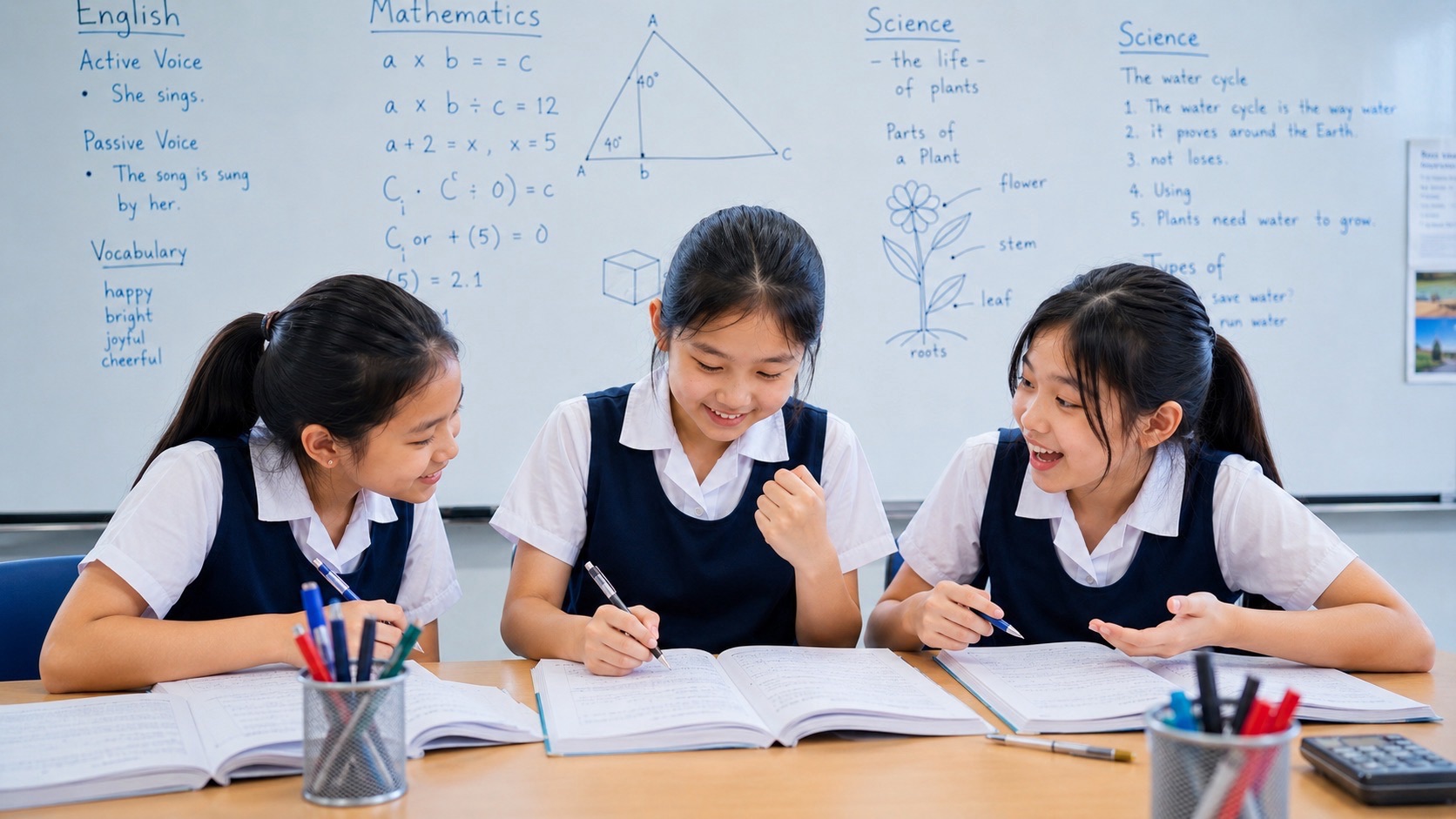
How Children Build a Mental Model of a Story While Reading
Understanding a story is not the same as remembering a sequence of sentences.
As children read, they build an internal model of what is happening: who the characters are, what they want, where events are taking place, what caused what, what has changed, and what remains uncertain.
Strong comprehension depends on keeping that model accurate enough to update as the story develops.
Quick Read
- Readers build a situation model, not just a memory of sentences.
- Character goals help organise actions.
- Setting creates opportunities and constraints.
- Causal chains make events coherent.
- Pronoun and reference tracking keeps people and objects stable.
- Inference fills gaps only when evidence supports it.
- Good readers revise their interpretation when new evidence changes the story.
- Summarising tests whether the important structure has been preserved.
One-sentence answer: children understand stories more deeply when they continuously build, check and update an internal model of characters, goals, causes, settings and consequences.
1. Identify the Current Situation
At any point in a story, the reader should have some sense of:
- who is present;
- where they are;
- what is happening;
- what the main character currently knows;
- what problem or goal is active.
If those elements become unclear, later events become harder to interpret.
2. Track Character Goals
Characters act for reasons.
When a reader knows what a character wants, actions become easier to interpret:
- What is the character trying to achieve?
- What are they trying to avoid?
- Has the goal changed?
- Does another character have a competing goal?
Goal tracking helps children move beyond “what happened” towards “why it happened”.
3. Treat Setting as a Constraint System
Setting is not only descriptive background.
A crowded train, dark staircase, locked room or school assembly changes what characters can see, do, hear or risk.
Strong readers ask how the setting affects the possible actions.
4. Build the Causal Chain
Stories become coherent when events connect through cause and consequence.
- Something happens.
- A character interprets it.
- The character acts.
- The action changes the situation.
- A new problem or opportunity appears.
Readers who remember events but not their causal links often struggle with inference and summary.
5. Track Reference
Stories constantly use pronouns and shortened references because repeating every noun would sound unnatural.
Children need to know what he, she, they, it, the decision or that moment points back to.
When reference is lost, the mental model starts attaching actions to the wrong people or objects.
6. Infer Carefully
Stories rarely state every motive, feeling or connection directly.
Readers infer by combining textual clues with reasonable world knowledge.
The useful question is:
What evidence makes this interpretation more likely than the alternatives?
7. Predict as a Test, Not a Guess
Prediction is useful when it makes the reader test the current model.
- What is likely to happen next?
- What evidence supports that?
- What would have to change for another outcome to occur?
The value comes when the reader later compares the prediction with what actually happened.
8. Update When New Evidence Arrives
Good readers are willing to revise their understanding.
A character who first seems rude may later be revealed as frightened. A suspicious object may turn out to be harmless. A narrator may misunderstand an event.
Comprehension is dynamic. The mental model should change when the evidence changes.
9. Distinguish Text From Reader Addition
Readers naturally bring experience and knowledge to a story.
That helps comprehension, but it can also create unsupported assumptions.
- What did the text actually tell me?
- What did I infer?
- What did I merely imagine because it seemed plausible?
10. Summarise the Structure, Not Every Detail
A strong summary preserves the important causal movement.
- main character or situation;
- central goal or problem;
- important turning point;
- main consequence;
- outcome.
If a summary includes every small event, the reader may not yet know which details matter most.
11. Theme Comes After the Story Model
Theme should emerge from patterns across character, conflict, consequence and resolution.
It is usually more productive to ask what repeatedly matters in the story than to force a moral message onto it.
A Story-Model Table
| Component | Reader question |
|---|---|
| Character | Who matters here? |
| Goal | What do they want? |
| Setting | What does the environment permit or constrain? |
| Cause | Why did this happen? |
| Consequence | What changed because of it? |
| Inference | What can I conclude from the evidence? |
| Update | What new information changes my earlier view? |
How This Develops Across Primary School
Primary 1–2: track basic sequence, characters, simple goals and clear cause-and-effect.
Primary 3–4: manage longer causal chains, infer motives, track reference and distinguish main events from details.
Primary 5–6: handle ambiguity, shifting perspectives, implicit motives, more complex themes and evidence-based interpretation.
How a Three-Student Class Helps
Three students can read the same story and build slightly different interpretations.
The tutor can ask each learner to identify the evidence behind their model, then compare which interpretation best accounts for the whole text.
This teaches comprehension as model-building rather than answer hunting.
What Parents Can Do
- Ask what the character wants.
- Ask what changed after an important event.
- Ask which detail supports an inference.
- Pause after a new revelation and ask whether the earlier interpretation still works.
- Ask for a short summary focused on the main causal chain.
Related exam guide: How to Read PSLE English Comprehension Clearly.
Frequently Asked Questions
Is comprehension mainly remembering details?
No. Details matter, but deeper comprehension depends on how those details connect into a coherent model.
Should children make predictions while reading?
Yes, when predictions are tied to evidence and later checked against the text.
A Story Exists in the Reader Twice
Once as words on the page.
Again as the world those words allow the reader to reconstruct.





