
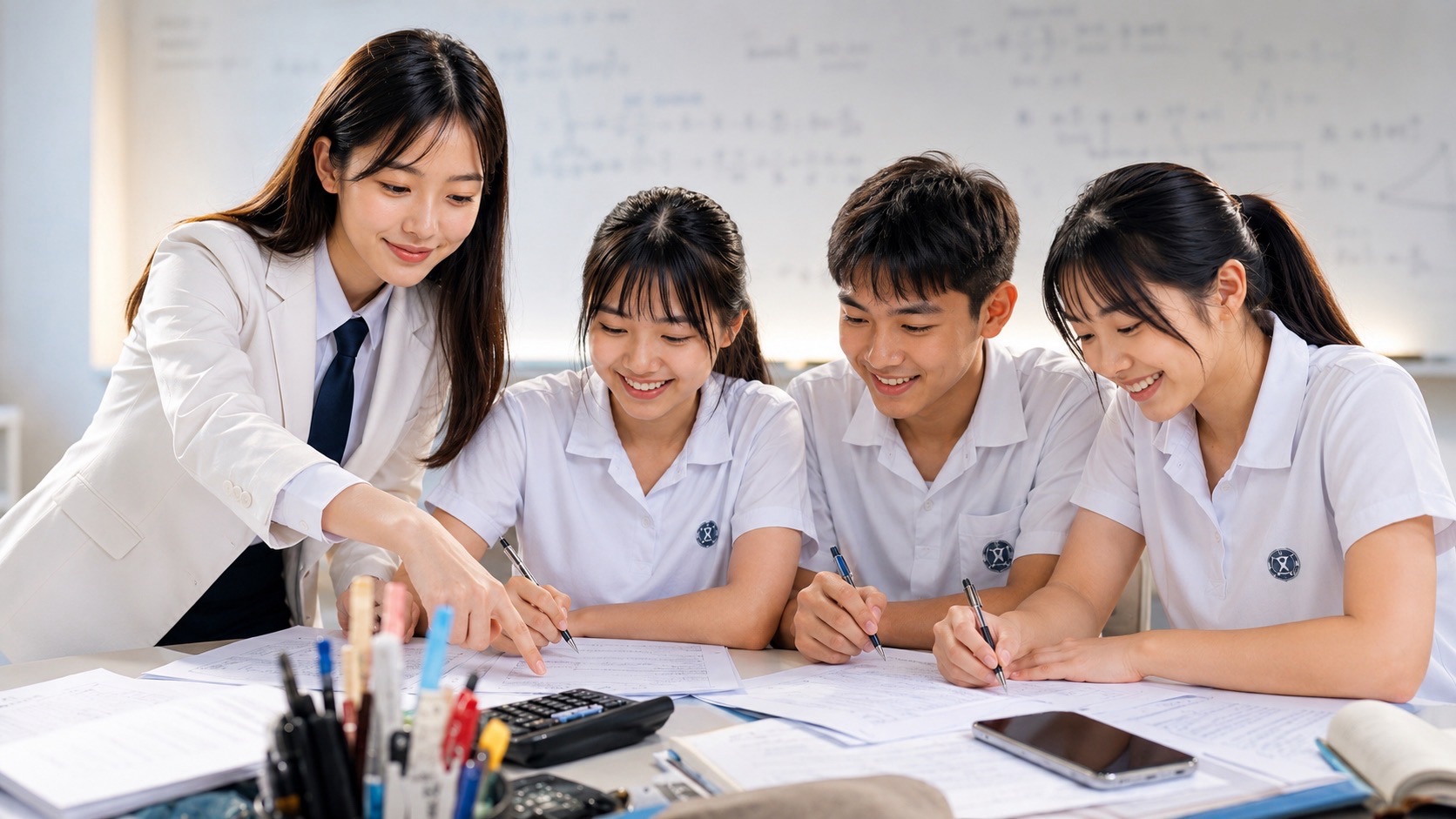
Punggol Mathematics Tutor for Primary 6 Examinations
A Punggol Mathematics Tutor for Primary 6 Examinations helps students consolidate six years of Primary Mathematics, repair lingering weak areas, strengthen exam technique, and become more stable, confident, and accurate for the demands of the Primary 6 school year and PSLE-level assessment.
What is a Punggol Mathematics Tutor for Primary 6 Examinations?
A Punggol Mathematics Tutor for Primary 6 Examinations is a Mathematics tutor who supports Primary 6 students in the final examination phase of Primary School, especially during the year when performance pressure, topic consolidation, and exam readiness become much more important.
At this stage, tuition is not just about learning new content. It is also about:
- consolidating core topics
- fixing repeated weak areas
- improving speed and accuracy
- handling exam-format questions
- reducing panic under pressure
- preparing the student for major assessments
Primary 6 is a high-stakes year because the student is no longer only learning topic by topic. The student must now bring many topics together and use them under time conditions.
That is why a good Mathematics Tutor becomes important.
What problem are parents facing with Primary Mathematics?
Parents often see the symptoms first: homework takes too long, marks fall, confidence drops, or PSLE feels too close. Select your child’s level and the closest parent concern. This guide helps show what may be happening underneath, and how eduKate Punggol Mathematics tuition can help from Primary 1 to PSLE.
This is a parent clarity map. It helps separate emotion from evidence, so the next step is not panic, blame or more random worksheets, but proper diagnosis and targeted repair.
Parent fog is common when the marks do not explain the real problem.
At Primary 5, parents may see the marks falling but not know whether the cause is fractions, ratio, word problems, careless mistakes, timing, confidence or exam technique.
The child studies, but the result does not move. The mistakes look different each time, so it is hard to know what to fix first.
The visible score may be hiding several layers: weak concepts, poor working habits, weak word-problem translation, time pressure or low confidence.
We look at the child’s actual working, mistakes and topic gaps, then separate the problem into foundation repair, topic teaching, exam practice or confidence rebuilding.
Do not only ask for more papers. First find out where the marks are leaking, then repair that specific skill.
We help parents turn worry into a plan. Once the problem is visible, the child can be taught, corrected, practised and guided towards stronger Mathematics performance.
Why Primary 6 Mathematics Feels Different
Primary 6 Mathematics often feels heavier than earlier years because the student is carrying both current learning and accumulated backlog at the same time.
A Primary 6 student may face:
- current school topics
- revision of older topics
- weighted assessment pressure
- timed practice demands
- more complex problem-solving
- emotional stress linked to PSLE and school expectations
This means the student is not just solving Mathematics questions. The student is also managing mental load, time pressure, and performance anxiety.
A strong tutor helps reduce that instability.
The Real Purpose of Primary 6 Mathematics Tuition
The real purpose of Primary 6 Mathematics Tuition is not only to push more assessment papers.
The deeper purpose is to help the student become examination-stable.
That means the student should be able to:
- recognise the topic being tested
- choose the correct method
- organise working clearly
- avoid repeated careless mistakes
- manage time across the paper
- remain calm enough to think
A student who is examination-stable usually performs much more consistently than a student who only memorises methods without control.
Why Parents in Punggol Look for a Primary 6 Mathematics Tutor
Parents usually look for a Primary 6 Mathematics Tutor in Punggol because they notice one or more of the following:
1. The child’s marks are unstable
The child may score well sometimes and poorly at other times.
2. Word problems are still too difficult
The child may handle short questions but struggle badly when the question becomes longer or more layered.
3. Careless mistakes keep happening
Even when the child knows the topic, marks are lost through poor reading, rushed execution, missing units, or incomplete steps.
4. The child panics in tests
Some students can do homework but collapse under timed conditions.
5. PSLE is approaching
Parents want a more structured preparation system for the examination year.
6. Earlier gaps were never fully repaired
Old weaknesses in fractions, ratio, decimals, percentage, speed, geometry, or model-based reasoning often resurface in Primary 6.
This is why Primary 6 tuition often becomes both a repair system and a performance system.
What a Good Primary 6 Mathematics Tutor Should Actually Do
A good tutor at this level should not simply assign more work.
A strong Primary 6 Mathematics Tutor should do six things well.
1. Diagnose topic weakness precisely
The tutor must identify whether the problem is concept weakness, method weakness, reading weakness, or exam-condition weakness.
2. Rebuild weak foundations quickly and properly
At Primary 6, there is limited time. Repair must be targeted and efficient.
3. Teach stable methods
Students must know how to solve recurring question types with a clear working process.
4. Train exam handling
The student must learn how to allocate time, pace the paper, and manage question difficulty.
5. Reduce careless error patterns
Repeated mistakes should be tracked and corrected until they decline.
6. Build calm confidence
Confidence at this level must come from competence, not reassurance alone.
The Main Challenges in Primary 6 Mathematics Examinations
Primary 6 examination Mathematics usually becomes difficult in a few predictable ways.
1. Multi-step problem solving
Students may know individual operations but fail when several ideas must be combined in one problem.
2. Question interpretation
Many students lose marks not because they cannot calculate, but because they do not fully understand what the question is asking.
3. Time pressure
Even capable students may rush, skip steps, or misread information under exam conditions.
4. Topic integration
Primary 6 often requires students to use knowledge from several previous levels together.
5. Emotional instability
Stress can reduce working memory, attention, and decision quality during a paper.
A good tutor helps the student deal with all five.
Key Areas Often Requiring Support in Primary 6 Mathematics
Although each student is different, common weak areas include:
- fractions
- decimals
- percentage
- ratio
- speed
- area and perimeter
- volume
- angles and geometry
- model drawing
- multi-step word problems
- heuristics and problem-solving structure
- paper timing and checking habits
A tutor who understands Primary 6 well should be able to detect which of these areas is causing the student’s performance to drop.
Primary 6 Mathematics Tuition as a Repair-and-Conditioning System
At this stage, tuition should work as a structured cycle.
Step 1: Detect
Find out what is truly weak.
Step 2: Repair
Rebuild the missing concept or method.
Step 3: Stabilise
Use guided repetition until the method becomes more reliable.
Step 4: Transfer
Train the student to recognise the same idea across different question formats.
Step 5: Condition
Prepare the student to use the method under timed exam conditions.
Step 6: Refine
Reduce careless mistakes, improve pacing, and strengthen checking behaviour.
This is how tuition becomes useful in the examination year.
Negative, Neutral, and Positive States in Primary 6 Examination Mathematics
A good way to understand the Primary 6 journey is through three broad states.
Negative State
In the negative state, the student is struggling and unstable.
Typical signs:
- fear of Mathematics
- confusion during revision
- inability to finish papers
- repeated careless mistakes
- weak problem-solving structure
- emotional breakdown during tests
- low or falling marks
At this stage, the first job of tuition is to stop decline.
Neutral State
In the neutral state, the student is stabilising but not yet strong.
Typical signs:
- better understanding of topics
- some methods are working
- test performance is more consistent
- difficult questions still cause hesitation
- timing may still be weak
At this stage, tuition should strengthen consistency.
Positive State
In the positive state, the student becomes more examination-ready.
Typical signs:
- stronger concept clarity
- more reliable methods
- better pacing
- reduced error rate
- improved confidence
- calmer handling of harder questions
At this stage, tuition becomes an optimisation system, not just a rescue system.
What Makes Primary 6 Mathematics Tuition Different from Earlier Primary Levels
Primary 6 tuition is different because the student is no longer just building foundations. The student is now under compression.
That means:
- less time remains for slow repair
- more topics must work together
- school assessments matter more
- examination format matters more
- emotional stability matters more
- accuracy and speed both matter together
Earlier tuition may focus more on concept introduction. Primary 6 tuition must balance concept repair, revision, conditioning, and performance control.
The Role of a Tutor Before Major Examinations
Before major examinations, a tutor should help the student do the following:
Consolidate core topics
The student should not enter examinations with unresolved major gaps.
Practise with purpose
Practice should not be random. It should target actual weaknesses.
Learn paper strategy
The student should know when to move on, when to return, and how to pace effort.
Train checking habits
Checking must be taught as a process, not just a last-minute instruction.
Stay emotionally steady
The student should not be overloaded with panic-based pressure.
Good exam preparation is structured, not chaotic.
Common Types of Primary 6 Students Who Need a Tutor
1. The weak-foundation student
This student still has old gaps from earlier levels.
2. The unstable performer
This student has some ability but performs inconsistently.
3. The careless student
This student knows more than the marks show, but throws marks away.
4. The anxious student
This student becomes mentally blocked during tests.
5. The strong student aiming higher
This student wants sharper performance and better handling of difficult questions.
The tutor’s approach should differ for each profile.
What Parents Should Look for in a Punggol Mathematics Tutor for Primary 6
Parents should look for a tutor who can do more than explain answers.
Important qualities include:
- strong understanding of Primary 6 and examination demands
- clear and patient explanation
- ability to diagnose error patterns
- ability to teach method clearly
- strong awareness of pacing and exam readiness
- structured revision approach
- confidence-building grounded in actual improvement
A good tutor helps the student become more stable, not just more busy.
Why Local Punggol Support Can Matter
For Primary 6 students, fatigue matters. Travel time, school load, homework, and revision pressure all add up.
A nearby Punggol Mathematics Tutor can help make support more sustainable because:
- travel burden is lower
- regular attendance is easier
- weekly rhythm is easier to maintain
- revision support becomes more consistent
Convenience is not enough by itself, but when combined with strong teaching, it helps students stay on track in a demanding year.
How can eduKate help your child from Primary 1 to PSLE Mathematics?
Primary Mathematics is not only about doing more worksheets. A child needs the right foundation, the right correction, the right problem-solving method and the right examination habits. Select your child’s level and the type of help needed to see how eduKate Punggol Mathematics tuition supports the learning journey from Primary 1 to PSLE.
We first look at the child’s actual working, topic gaps, habits and examination behaviour. Then we decide whether the child needs rebuilding, catching up, keeping up, stretching or PSLE execution training.
eduKate builds the Mathematics foundation before the child is overloaded.
At Primary 5, foundation gaps become more visible because ratio, percentage, speed, volume, algebra and complex word problems depend on earlier skills. eduKate helps by finding the weak layer and rebuilding it before PSLE pressure becomes heavier.
We check number sense, operations, fractions, problem-solving steps, working layout and whether the child understands the method or only memorises it.
We teach the topic clearly from concept to method, then move into guided examples, independent practice and correction.
The student begins to see Mathematics as a route: read the question, identify the structure, choose the method, show working and check the answer.
Parents get a clearer picture of whether the child needs foundation repair, exam practice, confidence rebuilding or higher-level challenge.
We help students catch up, keep up and move ahead. The goal is not to throw more work at the child blindly, but to make the missing skill visible, repair it, practise it and turn it into stronger marks.
How Parents Can Support Primary 6 Mathematics Tuition at Home
Parents do not need to create a pressure chamber at home. They can help more by creating stable support.
Useful home support includes:
- maintaining a regular study routine
- making sure corrections are completed
- helping the child sleep and rest properly
- avoiding panic speech before exams
- encouraging calm consistency
- watching for emotional overload
The goal is not to make the child fear Mathematics more. The goal is to help the child become more secure.
The Deeper Aim: Examination Readiness with Mathematical Stability
The deeper aim of a Primary 6 Mathematics Tutor is to help the student become stable enough to carry Mathematics well into the next stage.
That means:
- better concept ownership
- more reliable working habits
- stronger question interpretation
- lower panic during exams
- clearer method execution
- higher readiness for Secondary Mathematics later on
Primary 6 is not just an ending. It is also a transition point.
A student who finishes Primary 6 with weak, shaky Mathematics often carries those weaknesses forward. A student who becomes stable now has a stronger next step.
Conclusion: Punggol Mathematics Tutor for Primary 6 Examinations
A Punggol Mathematics Tutor for Primary 6 Examinations should help students do more than just practise harder.
The tutor should help the student repair old gaps, organise methods clearly, reduce careless mistakes, improve exam handling, and become more emotionally steady under assessment pressure.
For some students, this is a rescue year. For others, it is a sharpening year. For many, it is both.
When done well, Primary 6 Mathematics Tuition becomes a structured pathway from weak or unstable performance toward stronger examination readiness, stronger confidence, and a more secure transition into the next academic stage.
Almost-Code Block
ARTICLE_TITLE: Punggol Mathematics Tutor for Primary 6 ExaminationsARTICLE_TYPE: Service + Examination Preparation GuideTARGET_AUDIENCE: Parents of Primary 6 students in PunggolPRIMARY_TOPIC: Primary 6 Mathematics TutorLOCATION_NODE: PunggolEXAM_STAGE: Primary 6 / PSLE-year preparationCORE_DEFINITION:A Punggol Mathematics Tutor for Primary 6 Examinations is a tutor who helps Primary 6 students consolidate Mathematics knowledge, repair weak areas, strengthen exam method, reduce careless errors, and become more stable for major examinations.CORE_FUNCTION:Accumulated gaps + exam pressure -> diagnosis -> targeted repair -> method stabilisation -> exam conditioning -> stronger confidence -> better examination readinessWHY_PRIMARY_6_IS_DIFFERENT:- Final primary school year- Topic consolidation required- PSLE / exam pressure rises- Time pressure becomes more important- Older topic gaps resurface- Emotional stability matters moreMAIN_PARENT_SEARCH_REASONS:1. Child’s marks are unstable2. Word problems remain weak3. Careless mistakes repeat4. Child panics during tests5. Examinations are approaching6. Foundation from earlier years is incompletePRIMARY_6_TUTOR_MAIN_ROLES:1. Diagnose weak areas precisely2. Repair weak foundations efficiently3. Teach stable solving methods4. Train exam pacing and handling5. Reduce repeated error patterns6. Build confidence through competenceCOMMON_PRIMARY_6_WEAK_AREAS:- Fractions- Decimals- Percentage- Ratio- Speed- Area and perimeter- Volume- Geometry- Model drawing- Multi-step word problems- Problem-solving heuristics- Time management during papersREPAIR_AND_CONDITIONING_LOOP:1. Detect2. Repair3. Stabilise4. Transfer5. Condition6. RefineNEGATIVE_NEUTRAL_POSITIVE_LATTICE:NEGATIVE:- Confusion high- Fear of Mathematics rising- Poor timing- Error rate high- Marks unstable or fallingNEUTRAL:- Understanding improving- Methods partially stable- Timing still inconsistent- Confidence recoveringPOSITIVE:- Topic handling stronger- Method stability higher- Better pacing- Reduced careless mistakes- Calmer exam behaviour- Stronger examination readinessSTUDENT_TYPES:TYPE_1: Weak-foundation studentTYPE_2: Unstable performerTYPE_3: Careless studentTYPE_4: Anxious studentTYPE_5: Strong student seeking sharper performanceWHAT_TUTORS_SHOULD_TEACH_BEFORE_EXAMS:- Topic consolidation- Purposeful revision- Paper strategy- Checking habits- Calm exam handling- Efficient method selectionPARENT_SUPPORT_AT_HOME:- Maintain steady routine- Complete corrections- Reduce panic speech- Support proper rest- Encourage calm, consistent effort- Watch for overloadMAIN_OUTCOME:A Punggol Mathematics Tutor for Primary 6 Examinations should help students move from weak or unstable performance toward stronger conceptual clarity, more reliable methods, reduced error rates, better exam handling, and greater readiness for Primary 6 major assessments.SEARCH_INTENT_MATCH:- Punggol Mathematics Tutor Primary 6- Primary 6 Math Tuition Punggol- P6 Math Tutor Punggol- Punggol PSLE Math Tutor- Primary 6 Mathematics Examinations Tutor Punggol- Punggol Math Tuition for Primary 6CLOSING_LINE:A strong Primary 6 Mathematics Tutor does not only prepare a child for the next exam. A strong tutor helps the child become mathematically steadier under pressure and better prepared for the next stage of learning.
The Punggol Mathematics Tutor: A Proven Method for Primary 6 Exam Success
Article Summary
- The Punggol Mathematics Tutor offers specialized teaching for Primary 6 examinations.
- Improving math skills, preparing effectively, and strategizing learning are essential steps for success.
- Uncover the reasons behind the effectiveness of the Punggol approach.
- Learn about international resources and references for further support.
1. What is PSLE Mathematics Exam?PSLE, or Primary School Leaving Examination, is a standardized national examination in Singapore that is administered by the Ministry of Education. The Mathematics component assesses the mathematical skills and knowledge students have gained at the end of their primary school education.
2. What areas does the PSLE Mathematics Exam cover?The PSLE Mathematics Exam assesses pupils on topics like whole numbers, fractions, decimals, percentages, ratio, speed, geometry, statistics, and algebra. It involves both problem-solving and computation skills.
3. How can my child start preparing for the PSLE Mathematics Exam?Begin by understanding the exam format and syllabus. Ensure your child is familiar with all the topics that are tested. Regular practice, concept clarification, problem-solving techniques, and revision are the keys to effective preparation.
4. What are some easy tips to improve PSLE Mathematics Exam scores?Improving PSLE Mathematics scores involves understanding mathematical concepts, regular practice, using appropriate problem-solving strategies, checking answers, and managing time effectively during the exam.
5. How can my child improve his/her problem-solving skills for the PSLE Mathematics Exam?Problem-solving skills can be improved by understanding the problem, devising a plan to solve it, executing the plan, and revising it as necessary. Practice with various types of problems, and discussing strategies and solutions with teachers or tutors can also help.
6. What resources can my child use to practice for the PSLE Mathematics Exam?There are several resources available, including textbooks, past year papers, mock exam papers, and online resources like educational websites, online quizzes, and interactive games.
7. How important is time management in the PSLE Mathematics Exam?Time management is crucial. It allows the child to allocate appropriate time to each question, ensuring that all questions are attempted, and there is enough time to check the answers before the exam ends.
8. How can my child check his/her answers effectively in the PSLE Mathematics Exam?Encourage your child to review all the steps in their calculation, and re-read the question to ensure they’ve correctly understood what’s being asked. If time allows, they can try solving the problem a different way to confirm their answer.
9. What’s the importance of understanding mathematical concepts for the PSLE Mathematics Exam?Understanding mathematical concepts allows a student to apply these concepts to different types of problems. It’s not enough to memorize formulas; students should also understand why a particular solution or method works.
10. How can I support my child’s PSLE Mathematics Exam preparation at home?Create a conducive learning environment, ensure a regular study schedule, encourage breaks, provide moral support, and reinforce the importance of a balanced diet and enough sleep. Also, engage in productive discussions about the concepts your child is learning.
11. Can hiring a tutor improve my child’s PSLE Mathematics scores?A tutor can provide personalized attention and address specific learning needs that may be hard for a teacher in a large class to attend to. However, a tutor is not a magic bullet; the child must still be committed to learning and practicing.
12. How can online learning resources help improve PSLE Mathematics scores?Online resources provide interactive, engaging learning experiences. They offer self-paced learning, instant feedback, and a variety of practice questions which can improve understanding and retention of mathematical concepts.
13. Can solving past year papers help my child perform better in the PSLE Mathematics Exam?Solving past year papers can help students understand the exam format, get a feel for the types of questions asked, and improve their time management skills.
14. What are some common mistakes students make in the PSLE Mathematics Exam?Common mistakes include misreading the question, careless errors in calculation, not showing all steps in the working, not checking answers, and poor time management.
15. What is the role of mental math in the PSLE Mathematics Exam?Mental math helps in quick calculations, saving valuable time during the exam. Practice mental math regularly to improve speed and accuracy.
16. How can problem-solving heuristics help in the PSLE Mathematics Exam?Problem-solving heuristics, like drawing a diagram or making a systematic list, can help students understand and solve complex problems. Familiarize your child with different heuristics and when to use them.
17. How early should my child start preparing for the PSLE Mathematics Exam?Preparation should ideally start from the beginning of the final primary school year. This gives ample time for revision and practice, and for addressing any areas of weakness.
18. How can my child deal with exam stress for PSLE Mathematics?Encourage regular breaks, relaxation exercises, and enough sleep. Remind your child that it’s normal to feel a bit stressed, and that it’s just one exam – it doesn’t define their entire academic future.
19. Are there any effective revision strategies for the PSLE Mathematics Exam?Effective revision strategies include regular practice, focusing on areas of weakness, solving past year papers, using flashcards for formulas, and explaining concepts to others to reinforce understanding.
20. Should my child memorize formulas for the PSLE Mathematics Exam?While it’s necessary to know the formulas, understanding when and how to apply them is equally important. Encourage your child to understand the logic behind each formula rather than just memorizing it.
Introduction: Your Key to Improvement with Punggol Mathematics Tutor
Mathematics is not just about numbers; it’s about understanding the language of logic. This is why choosing the right tutor is crucial. In Punggol, a distinct approach to Primary 6 mathematics tutoring has been transforming the way students grasp math concepts. The Punggol Mathematics Tutor, with its unique teaching methodologies, offers an impressive platform for students to improve their mathematical skills and ace their Primary 6 examinations.

Why Punggol Mathematics Tutor?
The Punggol Mathematics Tutor is much more than a conventional teaching method. It is a holistic solution designed to address each child’s learning needs. Here are the reasons why this approach has proven successful:
Personalized Learning: The Punggol Mathematics Tutor recognizes that each student has a different learning style and pace. Lessons are tailored to suit the individual needs of each student, making learning more enjoyable and less stressful.
Conceptual Understanding: Instead of focusing on rote learning, the Punggol approach emphasizes understanding mathematical concepts. This lays a strong foundation for students and promotes long-term retention of knowledge.
Problem-Solving Skills: Real-life problems often require logical reasoning, and that’s what the Punggol Mathematics Tutor encourages. Students learn how to solve problems systematically and logically.
Regular Assessment: Frequent tests and quizzes are conducted to monitor student’s progress, understand their areas of improvement, and adjust teaching methods accordingly.
How to Prepare with Punggol Mathematics Tutor
Preparation is key when it comes to acing your Primary 6 exams. Here’s how the Punggol Mathematics Tutor helps you prepare:
Establish a Routine: Regular sessions provide students with a structured learning environment, helping them to manage their time effectively and stay focused.
Practice: Regular problem-solving and exercises reinforce mathematical concepts. This practice is crucial in ensuring that students can apply what they’ve learned effectively.
Review and Revise: The Punggol Mathematics Tutor emphasizes the importance of revising what you’ve learned. Reviewing lessons and exercises reinforces the concepts and helps retain them for a longer duration.
Enhancing Your Learning Experience
The Punggol Mathematics Tutor offers more than just classroom learning. Here are some strategies to enhance your learning experience:
Online Resources: The Punggol Mathematics Tutor provides online resources for additional practice and concept reinforcement. These resources can be accessed anytime, providing students with flexibility and convenience.
Study Groups: Collaborative learning is encouraged, with the formation of study groups. Here, students can learn from each other, solve problems collectively, and increase their understanding of mathematical concepts.
Parental Involvement: The Punggol Mathematics Tutor believes that parental involvement can greatly benefit a child’s learning. Regular updates are provided to parents regarding their child’s progress and ways they can support their child at home.
Relevant International Resources
In addition to local resources, a number of international websites can supplement your learning journey. These websites offer a wide range of learning materials and interactive activities:
- Khan Academy: This international platform provides free, world-class education for anyone, anywhere. It offers interactive exercises and instructional videos in a variety of topics.
- IXL: IXL offers comprehensive, standards-aligned math practice for all grades. It offers a personalized learning experience that adapts to the learner’s level and helps them master new concepts.
- Math is Fun: This website makes math enjoyable with fun and interactive games and activities. It covers a wide range of mathematical topics.
- Wolfram Mathworld: As one of the most comprehensive and interactive mathematics resources on the web, this site is ideal for students seeking in-depth knowledge.
In summary, the Punggol Mathematics Tutor offers a unique and comprehensive approach to learning that prepares students effectively for their Primary 6 examinations. By focusing on understanding mathematical concepts, improving problem-solving skills, and providing regular assessments, students can significantly improve their math performance and gain confidence in their abilities.





