What Primary English Should Prepare a Child to Do Next
A good Primary English education should do more than help a child finish the current worksheet.
It should make the next stage of learning more manageable.
That means preparing students for denser texts, less scaffolding, longer writing, unfamiliar questions, more independent study and the transition into Secondary English.
Quick Read
- Future readiness is not a prediction of future success.
- The useful question is whether today’s learning makes tomorrow’s tasks easier to enter.
- Upper Primary students need increasing independence, reading stamina and writing control.
- They should learn to handle unfamiliar material rather than only rehearsed question types.
- Oral explanation is important because it reveals whether understanding can be organised and communicated.
- Secondary 1 readiness depends on transferable foundations, not premature Secondary worksheets.
One-sentence answer: Primary English should leave a child able to understand increasingly complex language, organise ideas, communicate clearly and approach unfamiliar work with less adult support.
Read More Demanding Texts
As children progress, texts become longer and less explicit.
- track ideas across paragraphs;
- infer from evidence;
- distinguish important from supporting detail;
- notice tone and purpose;
- work out unfamiliar vocabulary from context;
- hold enough information in mind to connect distant parts of a text.
A child who can only answer when information is stated directly will find the next stage increasingly difficult.
Write for Longer Without Losing Control
Longer writing is not simply more sentences.
Students need to sustain relevance, sequence ideas, manage paragraphs, vary sentence structure, choose vocabulary deliberately and revise when the draft does not work.
The aim is controlled development rather than decorative language.
Explain an Answer, Not Merely Give It
Explanation is a useful bridge between Primary and Secondary learning.
When students explain why they chose an interpretation, why evidence supports it or why one sentence is clearer than another, teachers can see whether the underlying reasoning is sound.
Handle Unfamiliar Questions
Preparation becomes fragile when every task looks like the practice sheet.
Students should encounter controlled novelty:
- a familiar skill in an unfamiliar text;
- a new topic using known vocabulary strategies;
- a question phrased differently;
- a writing prompt that cannot be answered with a memorised plot;
- a follow-up oral question they did not rehearse.
Work With Less Scaffolding
Support is useful when it enables learning. It becomes a problem when the learner cannot perform without it.
A healthy progression moves from demonstration to guided practice, lighter prompting and finally independent execution.
Use Feedback on the Next Task
Correction is incomplete if the same error returns unchanged.
Students should increasingly be able to take feedback from one composition, comprehension exercise or oral response and use it when the surface details change.
Build Vocabulary That Can Travel
Useful vocabulary is not a list remembered for Friday’s test.
Students should recognise words across texts, understand shades of meaning, retrieve them when speaking and use them accurately in new writing.
Develop Reading Stamina
Secondary study asks students to process more language across subjects.
Primary preparation should therefore include sustained reading—not only short extracts designed around one question.
Learn to Manage Time
Students eventually need to decide how long to spend planning, reading, answering and checking.
Time management should develop after the method is understood. Speeding up a weak method merely produces errors faster.
Primary 1–2: Build Reliable Basics
Children need secure reading, sentence-level expression, basic listening routines, oral confidence and enough vocabulary to participate meaningfully in class.
Primary 3–4: Expand the Range
Students should begin handling longer texts, inference, paragraph organisation, richer vocabulary, more independent correction and explanation of their reasoning.
Primary 5–6: Prepare for Independence
The work becomes less about acquiring isolated basics and more about coordinating them under complexity and time pressure.
- read without needing every word explained;
- plan writing independently;
- select evidence;
- respond to unfamiliar questions;
- revise strategically;
- explain decisions.
What Secondary 1 Changes
Secondary English generally expects students to deal with more sophisticated texts, perspectives and writing purposes. Teachers also expect greater responsibility for organising work and applying prior learning.
The best preparation is therefore not to rush Primary students through Secondary worksheets. It is to make their Primary foundations sufficiently strong and transferable that they can learn the new material when it arrives.
A Parent Readiness Check
| Question | Readiness signal |
|---|---|
| Can my child read independently? | Can sustain meaning through a reasonably demanding text |
| Can my child explain answers? | Uses evidence or reasoning rather than guessing |
| Can my child write independently? | Can plan, draft and make useful revisions |
| Can my child use feedback? | Improvement appears in a later task |
| Can my child handle novelty? | Known strategies survive unfamiliar surface details |
How a Three-Student Class Can Prepare for What Comes Next
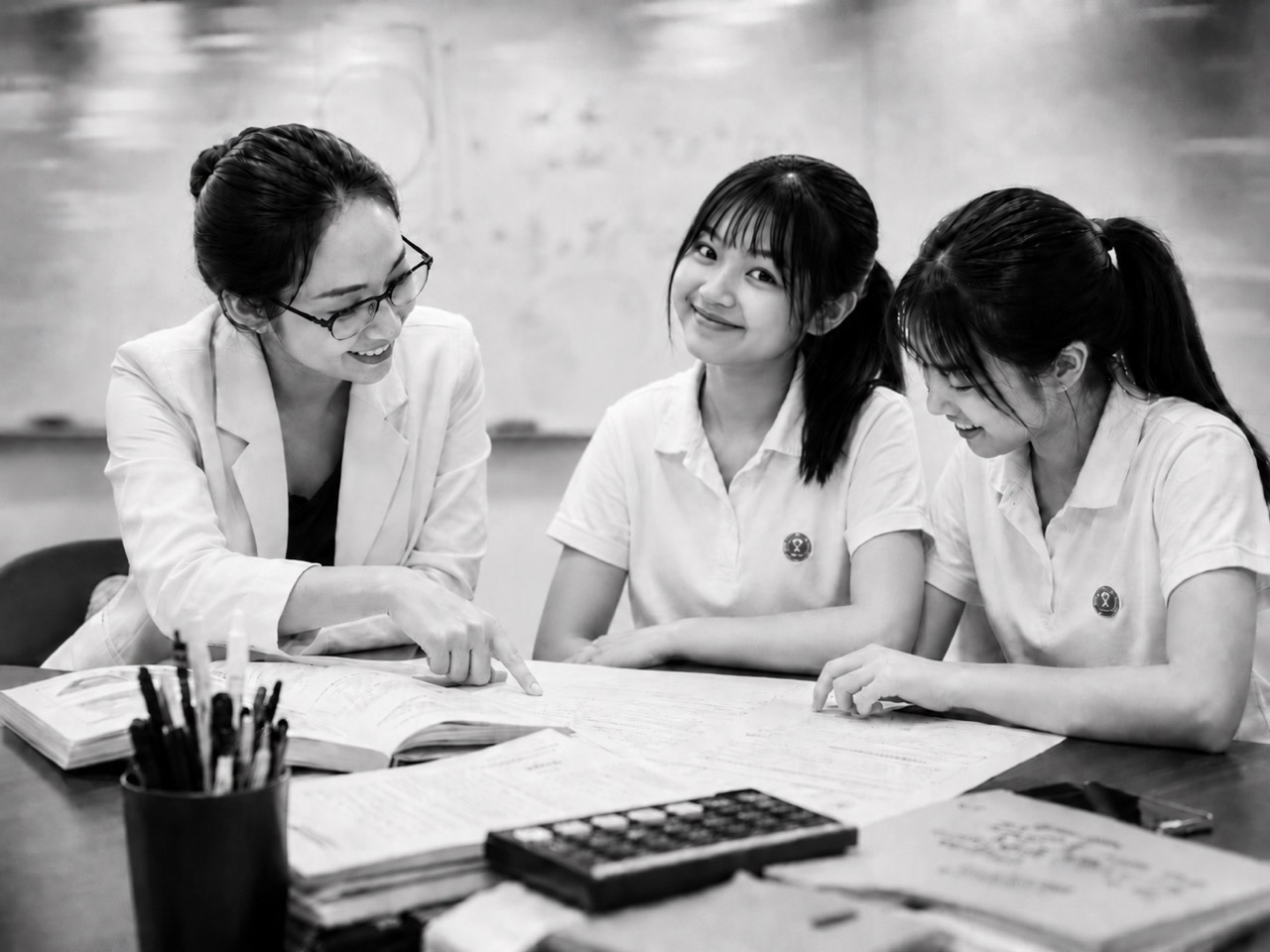
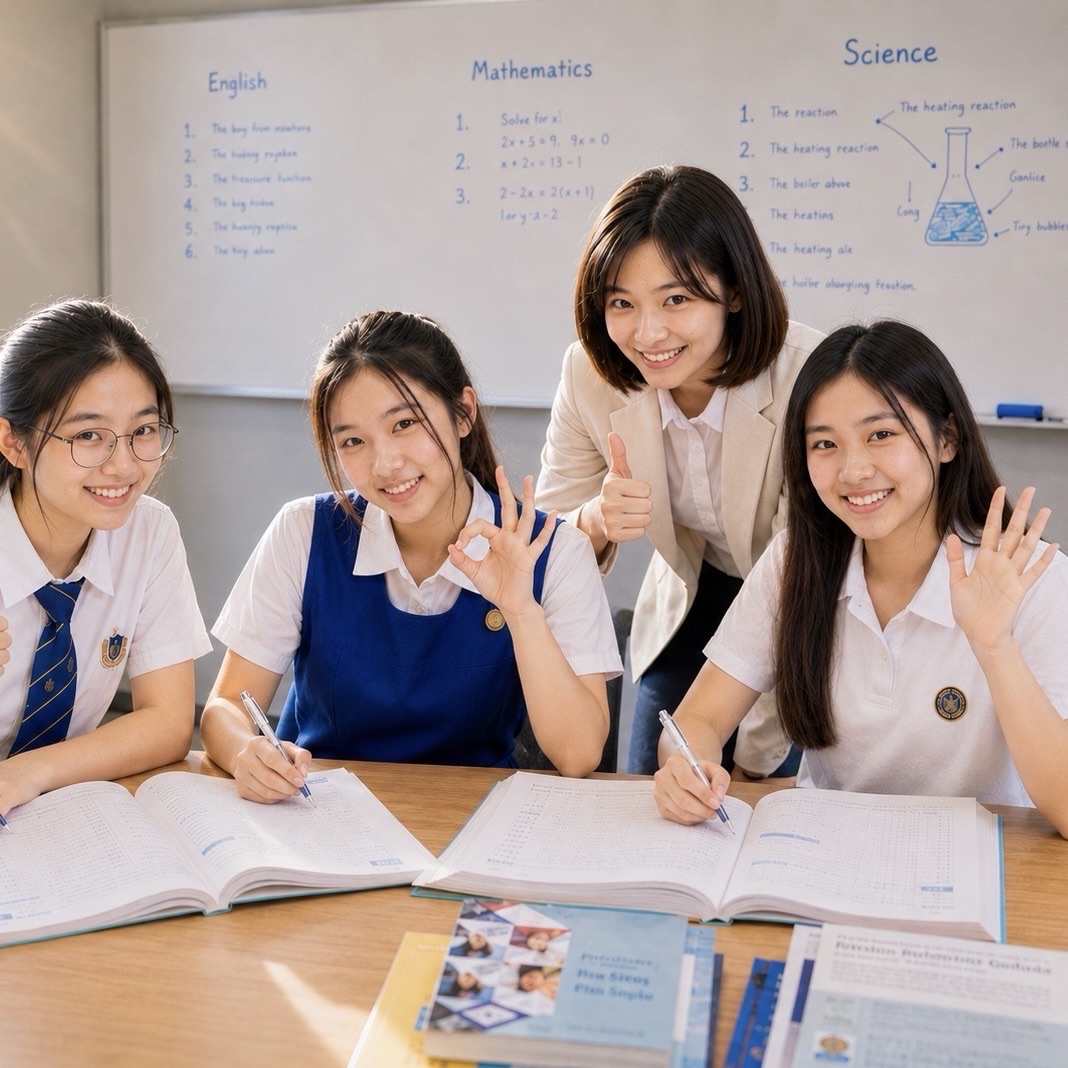
A small group allows a tutor to increase challenge without removing all support at once. Students can compare methods, explain choices, hear alternative interpretations and then attempt independent transfer.
The tutor can also see whether a student is genuinely ready for harder work or merely succeeding because the current task is familiar.
Frequently Asked Questions
Should Primary students start Secondary English early?
Usually the more important priority is strengthening transferable Primary foundations. Premature exposure is not the same as readiness.
Is PSLE preparation enough for Secondary 1?
PSLE preparation can strengthen important skills, but students also need independence, reading breadth and the ability to transfer beyond familiar examination routines.
What should parents prioritise in Primary 6?
Secure the current syllabus while protecting reading, writing and independent-learning habits that will still matter after the examination.
Preparation Means Making the Next Step Possible
A child does not need to know the future in advance.
They need foundations strong enough to meet it.