
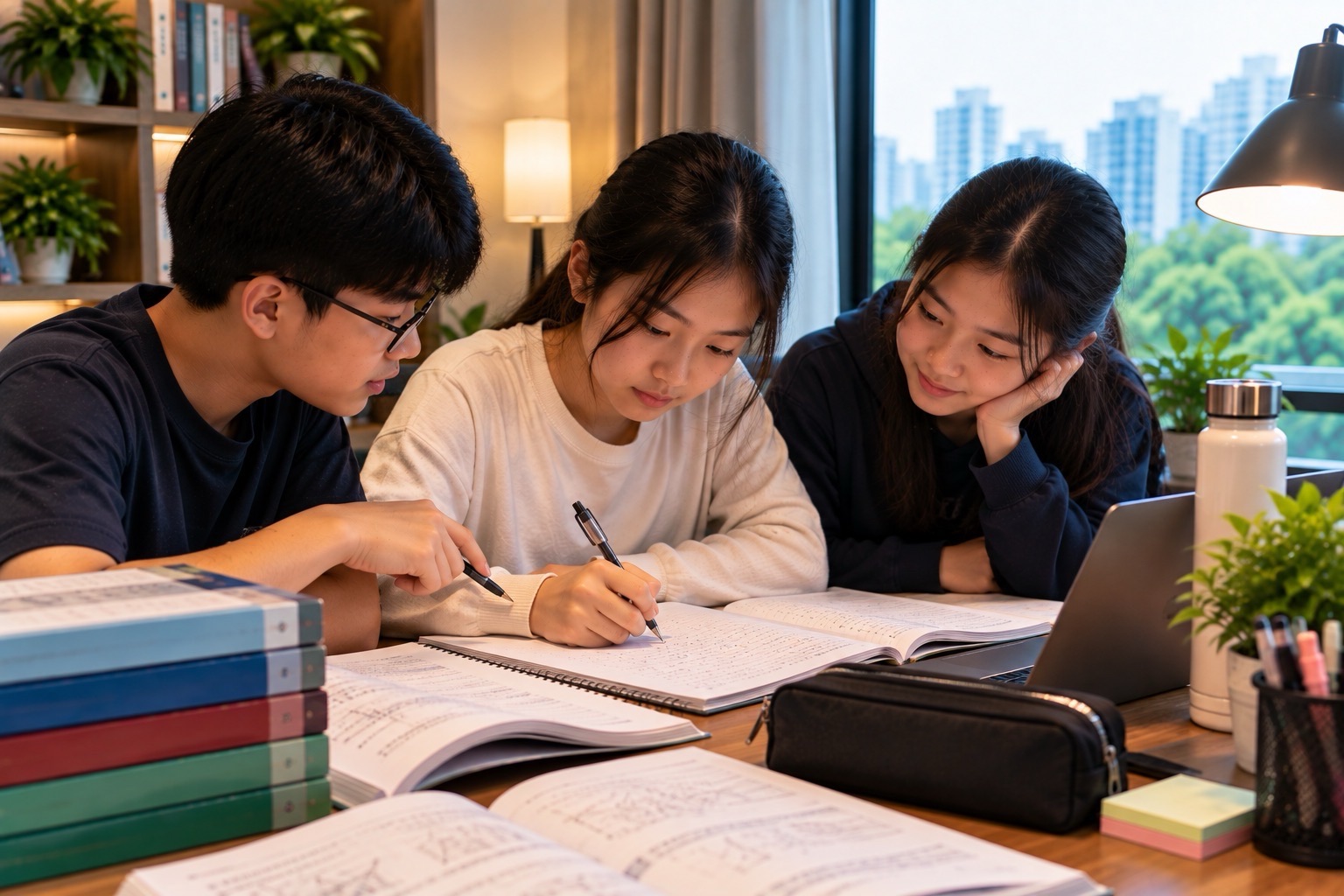
Secondary 4 G3 Higher Art tuition in Punggol should help a graduating student develop independently connecting artistic inquiry, supported visual judgement, personal interpretation and evaluation, rather than substitute an adult’s demonstration for the child’s own capability. For the first Singapore-Cambridge Secondary Education Certificate (SEC) graduating cohort in 2027, SEAB lists K348, previously referenced as 6124. Papers 1 and 2 determine the core SEC grade: Visual Response (135 minutes, 50 marks, 50%) and Portfolio (30 hours within 12 weeks, 50 marks, 50%). All Higher Art candidates also take Paper 3, the independent Higher Art Project (100 marks, 12 weeks, February–April). It is not another third of the core grade. Confirm the school’s actual subject registration, examination year and approved assessment arrangements. A useful first learning decision begins with genuine independent evidence.
A pupil may already enjoy noticing visual relationships, comparing artistic approaches, asking why an artwork communicates differently to different viewers and investigating cultural context. These experiences, earlier knowledge and curiosity are learning resources, not predictions of intelligence or examination results. Niche syllabus engineering means locating a specific unstable relationship, teaching it accurately, withdrawing the example and checking a changed independent response. eduKate Punggol’s small-group learning philosophy emphasises individual progress; confirm whether specialist teaching in this exact subject is currently available, along with class size, fees and facilities. School-supervised assessed work must remain the pupil’s own. This guide answers high-frequency parent questions, distinguishes ordinary practice from assessment, and describes a responsible route from latent potential to capability without guaranteeing a distinction.
- K348 is the 2027 G3 Higher Art school-candidate specification; confirm actual registration.
- Papers 1 and 2 determine the core SEC grade: Visual Response (135 minutes, 50 marks, 50%) and Portfolio (30 hours within 12 weeks, 50 marks, 50%). All Higher Art candidates also take Paper 3, the independent Higher Art Project (100 marks, 12 weeks, February–April). It is not another third of the core grade.
- Paper 1: 10 marks visual analysis and 40 marks exploratory sketching. Paper 2: 30 marks visual materials, 20 commentary.
- Portfolio: at most 15 screens and at least three art forms/media; commentary on three works, maximum 800 words.
- Paper 3: choose one of three questions; PDF report of 1,000–1,200 words.
- Higher Art Distinction requires A1/A2 in both core and independent project; Merit requires C6 or better in both, unless qualifying for Distinction. D7 or below in either means no Higher Art award.
- Use genuine independent responses to identify a precise learning gap, then check transfer and delayed retention.
- Do not outsource any assessed practical, artistic, musical or written submission. Follow school rules and maintain a sustainable workload.
Five parent reading routes
- Registration and learning diagnosis
- Syllabus foundations
- Connected concepts and evidence
- Independent progress and authenticity
- Four-week review and options
26 high-frequency questions parents ask
- 1. Which syllabus and examination arrangements should the family verify?
- 2. What do the assessment weights mean for the final-year plan?
- 3. What does converting latent potential into capability actually mean?
- 4. Does my child need additional tuition or a narrower routine?
- 5. Why is Higher Art not simply an award for technical drawing ability?
- 6. What happens if the core result and project result differ?
- 7. Why is visual analysis an evidence-based discipline?
- 8. How do artistic context and competing readings deepen understanding?
- 9. How can visual vocabulary go beyond a list of art terms?
- 10. How does Paper 1 exploratory sketching differ from the Higher Art Project?
- 11. How does creative synthesis differ from imitation or visual accumulation?
- 12. Why do medium and technical process need a reasoned connection to intent?
- 13. Why is the Portfolio commentary not interchangeable with Paper 3’s report?
- 14. What should parents know about the Paper 3 release and duration?
- 15. What does investigation and analysis mean as a learning capability?
- 16. What does conceptualisation and development measure?
- 17. What does evaluation of process and outcome mean?
- 18. Why does personal response matter as much as the other project criteria?
- 19. How can a student protect both core learning and authentic independent inquiry?
- 20. How should the first unstable learning decision be identified?
- 21. How should authenticity and appropriate resources be protected?
- 22. What might a focused small-group session look like?
- 23. How do we track progress without creating extra pressure?
- 24. When should timed rehearsal and distinction goals enter the plan?
- 25. What four-week review can a Punggol family use?
- 26. What should parents ask before choosing tuition or a later pathway?
2027 SEC K348 assessment at a glance
| Paper | Duration | Raw marks | Weight |
|---|---|---|---|
| 1: Visual Response | 135 min | 50 | 50% of core |
| 2: Portfolio | 30 hours within 12 weeks | 50 | 50% of core |
| 3: Higher Art Project | 12 weeks | 100 | Independent award |
1. Which syllabus and examination arrangements should the family verify?
The national SEC framework begins with the 2027 graduating cohort. Papers 1 and 2 determine the core SEC grade: Visual Response (135 minutes, 50 marks, 50%) and Portfolio (30 hours within 12 weeks, 50 marks, 50%). All Higher Art candidates also take Paper 3, the independent Higher Art Project (100 marks, 12 weeks, February–April). It is not another third of the core grade. Full Subject-Based Banding allows different subject levels within the same pupil’s combination. A Posting Group label or older sibling’s experience cannot establish the registered subject. Ask the school to confirm the exact subject code, actual examination year, school programme and authorised assessment conditions. A syllabus document is a national specification, not a promise that every school offers the subject.
Keep a private map of learning outcomes distinguishing content not yet taught, work in progress, independently secure familiar skills and secure transfer to changed situations. Older practice materials may be useful where they align, but they must not substitute for the 2027 assessment scheme. Confirm the Higher Art programme and the actual independent project requirements with the school. School assessment requirements and permissible assistance take priority over a private revision article. This protects the learner from preparing the wrong paper or confusing supported practice with assessed work.
Question index · Next question
2. What do the assessment weights mean for the final-year plan?
Paper 1: 10 marks visual analysis and 40 marks exploratory sketching. Paper 2: 30 marks visual materials, 20 commentary. Portfolio: at most 15 screens and at least three art forms/media; commentary on three works, maximum 800 words. Paper 3: choose one of three questions; PDF report of 1,000–1,200 words. Higher Art Distinction requires A1/A2 in both core and independent project; Merit requires C6 or better in both, unless qualifying for Distinction. D7 or below in either means no Higher Art award. The published weightings explain how the components contribute to the qualification. The independent project award conditions must be considered separately from the combined core result. A learner may be technically skilled yet struggle to connect evidence with an explanation. Another pupil may have strong written understanding but still need the actual supervised learning experiences.
Compare genuine school feedback and independent ordinary practice rather than assume that the lowest component score automatically identifies the first skill to repair. The missing relationship may be narrow but consequential. Maintain both core papers and the independently assessed project under school guidance. Do not use informal practice percentages as national grade boundaries or predict a grade from one successful task. The school sets actual deadlines, permissible resources and required formats. Allocate the rest of the study time according to evidence and the child’s wider timetable.
Previous question · Question index · Next question
3. What does converting latent potential into capability actually mean?
Here latent potential is a metaphor for existing learning resources: curiosity, prior knowledge, observation, persistence, suitable opportunities and teaching. It is not physical energy, a measurable intelligence level or a promise of identical results. A learner compares two unrelated teacher-selected works using a similar repeated form and concludes that the artists intend exactly the same thing. The tutor asks how placement, variation and reliable contextual information differ. The child explains what is visible, which connection is supported and what remains uncertain. A new pair of works requires an independent reading. This develops the kind of discriminating judgement Higher Art requires without choosing the candidate’s research task or creating assessed material.
The learning cycle starts with a genuine independent response, identifies the first unstable decision, clarifies the underlying relationship and tests a changed example without the original answer visible. Revisit after several days. If the pupil can explain why the relationship applies and use it in a fresh context, there is evidence of one skill becoming more dependable. If the child still depends on a prompt, reduce the demand or revisit the prerequisite. Keep this cycle entirely separate from any live assessed work. A single secure relationship does not establish complete syllabus mastery, but it helps determine the next teaching move.
Previous question · Question index · Next question
4. Does my child need additional tuition or a narrower routine?
Begin with school feedback and one or two genuine independent non-assessed responses. A pupil who understands feedback and independently transfers the relationship may already have sufficient school support. If a consequential difficulty repeatedly returns, focused specialist instruction may be useful. In Higher Art, a possible gap is distinguishing a supported artistic interpretation from an assertion of meaning or a superficial imitation. A finished artifact or answer does not reveal who made the original decision unless the child’s independent process is visible.
Ask what the child thought the task required, where the response became difficult and what guidance was given. Consider whether the issue concerns terminology, observation, interpretation, selection, technique or communication. These difficulties require different responses. Take account of the entire school schedule, travel, cost, facilities and rest. Ask the school about ordinary non-assessed learning that can be practised separately. Where the issue concerns live coursework, consult the supervising teacher rather than seek outside completion or coaching. The right decision may be school consultation, independent revision or carefully bounded specialist instruction.
Previous question · Question index · Next question
5. Why is Higher Art not simply an award for technical drawing ability?
K348 builds on visual observation, artistic processes, communication and appreciation, but requires the separate Higher Art Project as well. A technically skilful drawing may not demonstrate a thoughtful interpretation or independent inquiry. The award rules depend on both the core result and the independently assessed elective. The pupil must maintain both responsibilities rather than treat the project as an optional extra.
Ask the school about the actual programme, eligibility and timetable. In a separate unrelated classroom exercise, ask the pupil to compare two supplied examples for visual evidence and supported interpretation. The learner should explain which relationships are clear rather than rank artists by realism. Do not use the student’s current project or select work for the actual portfolio.
Previous question · Question index · Next question
6. What happens if the core result and project result differ?
The combined result of Papers 1 and 2 determines the SEC grade. Paper 3 is assessed separately. Under the published award rules, a hypothetical core A2 and project A2 qualifies for Distinction. A core A2 and project B3 does not meet Distinction but meets the Merit threshold. If either is D7 or below, no Higher Art award is made. These are examples of applying the official grade conditions, not predicted marks.
Ask the pupil and school to keep evidence of core learning and project progress distinct. Do not calculate a grade by averaging the three raw marks, or assume excellent work in one compensates for the separate award requirement. Review the actual needs of the core subject through unrelated independent exercises and follow the school’s arrangements for the elective.
Previous question · Question index · Next question
7. Why is visual analysis an evidence-based discipline?
A claim about meaning should be linked to particular features and reliable context. In an invented image, several similar forms are separated from a single contrasting form. The visible arrangement may invite a reading of difference or isolation; it does not prove an autobiographical story about the artist. The interpretation should remain proportionate to the evidence.
Use a different unrelated image description with the contrasting form positioned centrally and surrounded by other shapes. Ask the learner what changes in the visual relationship and how that might affect interpretation. Then use a teacher-approved unfamiliar artwork. The pupil should articulate observations independently, rather than repeat a tutor’s preferred explanation.
Previous question · Question index · Next question
8. How do artistic context and competing readings deepen understanding?
An artwork’s social, historical or cultural context can change how an observer understands a feature. Multiple readings may be defensible if each is supported. Context does not license invention of an artist’s motives. A student may distinguish evidence about a work’s setting from a personal response to its visual language.
Compare two unrelated teacher-provided contextual statements about a work with the available visual evidence. Ask which claim each can support and which remains uncertain. Change the artwork in the next exercise. The purpose is critical reading and respectful engagement with different perspectives, not selecting research material or writing an interpretation for the live Higher Art report.
Previous question · Question index · Next question
9. How can visual vocabulary go beyond a list of art terms?
Terms such as contrast, emphasis, rhythm, balance, texture and scale describe relationships. Naming repetition is only the beginning; an explanation must indicate what repeats, how it changes, where it occurs and why it matters to the question. A repeated pattern can create cohesion or disruption depending on the context.
Ask the learner to compare two unrelated hypothetical descriptions with different intervals between repeated elements. What visual difference does the evidence support? Use a fresh teacher-approved example without announcing the target term. Require a concise explanation of the relationship. This builds the pupil’s vocabulary as a tool for reasoning, not an annotated response for assessment.
Previous question · Question index · Next question
10. How does Paper 1 exploratory sketching differ from the Higher Art Project?
The timed Visual Response has a supplied unfamiliar stimulus and requires visual analysis plus exploratory sketching toward a two-dimensional concept. The independent Higher Art Project concerns a chosen question over twelve weeks and has distinct assessment criteria and submission rules. An impressive project does not remove the need for flexible responses under the core examination conditions.
Ask the pupil to distinguish the two paper requirements and what authentic evidence each assesses. Ordinary practice can use wholly unrelated teacher-selected prompts and individual visual observation exercises. Do not create sketches, concepts or composition suggestions for a live assessment. The learner should be able to explain the difference between showing a process of thinking and supplying a completed final artwork.
Previous question · Question index · Next question
11. How does creative synthesis differ from imitation or visual accumulation?
Creative synthesis involves connecting relevant ideas and visual features into a personally meaningful, coherent response. Imitation may reproduce another work’s appearance without developing the relationship. Accumulating references does not establish that the candidate has evaluated them. Understanding an influence is different from claiming another person’s expressive choices as one’s own.
Compare two unrelated teacher-selected works and ask which relationships can be identified in the finished pieces. Change the comparison and ask what makes the evidence different. Discuss why appropriate acknowledgement matters. Never recommend a set of influences, develop a concept or prepare source selections for the student’s real project or portfolio. The assessed inquiry and visual choices remain the candidate’s own.
Previous question · Question index · Next question
12. Why do medium and technical process need a reasoned connection to intent?
Fine Art, Design and Time-based forms have different expressive possibilities, and forms can overlap. A technique that supports a particular purpose may be less suitable for another. The core portfolio must show breadth across at least three forms/media, including Fine Art and either Design or Time-based work. The curriculum specifies drawing and digital imaging plus at least three additional elective art forms, including Fine Art and Design or Time-based forms, and aims for exposure to at least four or five forms over the two years. This is distinct from the minimum portfolio evidence.
Ask the school what facilities and elective experiences are available. In a wholly unrelated analytical exercise, compare the evidence two teacher-selected works convey through different media. Ask the learner why changing the medium could change what a viewer experiences. Do not choose the pupil’s media, create a prototype, alter a work or prepare their assessed portfolio selection.
Previous question · Question index · Next question
13. Why is the Portfolio commentary not interchangeable with Paper 3’s report?
The core commentary is based on three works and describes the candidate’s artistic growth. Its maximum is 800 words and the assessment table specifies fewer than ten A4 pages. Paper 3 requires a separate report of 1,000–1,200 words. Its purpose concerns the selected task, inquiry, development, evaluation and personal engagement. The two submissions have different criteria and must not be confused.
Ask the school to confirm electronic formats, citation rules and deadlines for each. In an unrelated written theory exercise, ask the learner to distinguish a statement about artistic intent from a claim evaluating a process. Do not write, proofread, rewrite, translate or structure either assessed submission for the student. The candidate’s own articulation of learning is evidence being assessed.
Previous question · Question index · Next question
14. What should parents know about the Paper 3 release and duration?
The official project paper is released in February of the examination year and the candidate selects one of three questions. The task is completed within twelve weeks, normally February to April, with the prescribed electronic PDF report. It is externally marked. The project must take place under ordinary school classroom conditions, with the required authenticity confirmation by the teacher and principal.
Ask the school about the actual release date, school milestones, available resources, permitted consultation and submission procedure. Parents may protect the child’s time and ordinary wellbeing, but should not select a question, organise research for it, generate project content or construct a timeline for the assessed task. The school supervises the actual inquiry. Ordinary theory practice should remain entirely unrelated.
Previous question · Question index · Next question
15. What does investigation and analysis mean as a learning capability?
One of the four Paper 3 criteria concerns investigation and analysis of the task (25 marks). More generally, an artistic inquiry requires distinguishing a question from the available evidence and recognising what is not established. A large collection of information is not necessarily relevant. A carefully considered relationship matters more than repeating facts unrelated to the issue.
Use a teacher-authored hypothetical comparison unrelated to the released project. Ask the pupil which supplied evidence addresses the stated artistic question and what cannot be concluded. Then change the question and observe how evidence selection changes. Do not suggest research sources, methods, issues or directions for the live project. The actual investigation and its documentation must be the candidate’s own.
Previous question · Question index · Next question
16. What does conceptualisation and development measure?
Another Paper 3 criterion, worth 25 marks, concerns conceptualisation and development of the response. The educational idea is that an artistic solution emerges from relevant inquiry and thoughtful choices rather than merely arriving at a polished result. A finished object alone cannot establish how an artist explored or reconsidered an idea.
In a separate classroom discussion of unrelated completed examples, ask what relationships are visible and what cannot be known without evidence of process. Change the example and invite a different supported interpretation. Do not propose, iterate, draw, test or otherwise develop the candidate’s assessed response. School guidance determines permissible teaching around the live task.
Previous question · Question index · Next question
17. What does evaluation of process and outcome mean?
The third Higher Art Project criterion is worth 25 marks and concerns evaluation of the process and outcome. An evaluation examines what happened, how it relates to the purpose, and what implications or limitations can be supported. A claim of success with no evidence is not an evaluation. A genuine change or limitation may be informative when recognised honestly.
Use a wholly unrelated fictional account provided for ordinary theory practice. Ask the pupil to distinguish a description of events from an evaluation using supplied evidence. Give a different account and ask which conclusion is justified. Do not assess the live work, write improvements, supply findings or prepare the student’s project evaluation. The candidate must evaluate their actual process independently.
Previous question · Question index · Next question
18. Why does personal response matter as much as the other project criteria?
Personal response is the fourth 25-mark criterion. It concerns engagement, curiosity, independent critical thought and reflection. A pupil can learn about another artist’s work without taking over their ideas or speaking in a borrowed voice. A generic sophisticated-sounding report may not demonstrate genuine personal engagement. The purpose of the criterion is not to reward a manufactured autobiographical story.
Use an unrelated authorised work and ask the learner what different supported interpretations might be possible and which visible evidence matters. Encourage the child to explain their reasoning in ordinary conversation without composing assessed text. Do not invent personal motivations, write a statement of intent or supply language for the project. Authenticity matters more than a tutor’s polished vocabulary.
Previous question · Question index · Next question
19. How can a student protect both core learning and authentic independent inquiry?
The separate project can overlap with the broader academic year, but both core papers remain necessary for the Higher Art award. The student should maintain ordinary visual observation, analysis and independent sketching skills while complying with the school’s actual coursework arrangements. A parent should not assume the extra project can be delegated to a private provider or completed from a generic four-week guide.
Ask the school which non-assessed foundational capabilities can be practised separately. Compare two genuine unrelated practice responses at different times, recording how much help was needed. Keep the assessed portfolio and project under school supervision, and preserve other school subjects, sleep and rest. This supports sustainable progress without guaranteeing an award or creating outside contributions to assessed work.
Previous question · Question index · Next question
20. How should the first unstable learning decision be identified?
A useful diagnostic examines what the learner does before the teacher supplies an answer. For K348, the barrier might be distinguishing a supported artistic interpretation from an assertion of meaning or a superficial imitation. Choose an unrelated non-assessed question small enough to reveal the relationship. Ask the learner which information is relevant and why. A pupil who has selected an appropriate concept but expressed it imprecisely needs a different intervention from a pupil who chose the wrong concept altogether.
Give precise feedback and then change one meaningful condition in a new example. The student should decide independently whether the original relationship still applies. If it does, ask for a reason; if it does not, ask which evidence requires a different explanation. The result should guide the next lesson, not serve as a judgement of the child. Never substitute this diagnostic for the teacher’s actual coursework assessment. The value of the small-group approach is to make each pupil’s original reasoning visible rather than to produce impressive work with extensive adult assistance.
Previous question · Question index · Next question
21. How should authenticity and appropriate resources be protected?
The actual Higher Art Project is completed under normal school classroom study conditions; the teacher’s authenticity statement and principal’s endorsement are required. All examples here concern unrelated ordinary learning. Do not help choose the assessed question, propose a solution, develop a research plan, make visuals, select portfolio content, edit a report or fabricate sources or evaluation. Confirm school rules on outside consultation and any use of digital tools or AI.
Distinguish three situations: an explanation during ordinary teaching, a fresh practice response completed independently, and actual national assessment. Permission in one situation does not imply permission in another. A parent can help arrange a suitable study environment and access to school-approved materials, but should not complete, improve or disguise someone else’s assessed contribution. Never invent photographs, observations, recordings, artwork, quotations or sources. The pupil’s own voice and technical choices matter. When in doubt about permissible assistance or software, ask the actual supervising teacher. Preserve privacy and follow the school’s authenticity, citation and safety instructions.
Previous question · Question index · Next question
22. What might a focused small-group session look like?
A possible 90-minute ordinary-learning session is 10 minutes reviewing school feedback about foundational skills, 15 minutes for a first independent unrelated task, 20 minutes of precise instruction, 20 minutes of changed independent practice, 15 minutes of mixed interpretation or terminology, and 10 minutes agreeing a next check. This illustrative allocation is not a promise of an actual lesson or class duration. It is not a schedule for coursework, art production, musical composition or assessed practical work.
Ask the specialist which skill the next exercise will test and why it is relevant to the syllabus. A child who is struggling with distinguishing a supported artistic interpretation from an assertion of meaning or a superficial imitation should not simply be given another whole topic to memorise. Each learner must have a chance to think independently before discussion. A parent should confirm whether the provider offers the exact registered subject, appropriate specialist expertise and facilities. If no suitable provider exists, school consultation or another approved specialist may be more appropriate. The private lesson must not operate as a substitute national assessment supervisor or a way to obtain a finished submission.
Previous question · Question index · Next question
23. How do we track progress without creating extra pressure?
Keep a small private learning record of an unrelated first attempt, specific feedback, changed independent response and degree of assistance. For Higher Art, look for accuracy of vocabulary, selection of evidence, clarity of explanation and appropriate interpretation. Compare reasonably similar tasks rather than isolated marks from unrelated assignments. The child may have strengths in one strand and require support in another. That is useful planning information, not a permanent label.
Ask the student to identify what became clearer and what remains uncertain. If a response succeeds only when a model is visible, gradually remove cues. If it succeeds independently after a delay, retain light practice and extend the demand. If fatigue is interfering, discuss the timetable and reduce avoidable burdens. Keep the record limited to ordinary learning; do not manufacture or retrospectively curate assessed evidence. The core grade and independent award must remain distinct. The purpose is the next useful learning decision, not predicting a national grade.
Previous question · Question index · Next question
24. When should timed rehearsal and distinction goals enter the plan?
A distinction or higher award may be a legitimate aspiration, but no tuition arrangement can guarantee it. Timing is useful once the relevant independent skills are sufficiently stable. For the written or visual-response component, a realistic paper tests selection, pacing and switching between demands. If a foundational misconception persists untimed, more time pressure may obscure the first problem rather than repair it.
Begin with a short independent unrelated task, progress to mixed practice, and then to realistic written or listening rehearsal where appropriate. Do not use a generic tutoring schedule to direct or replace the separate project. Review the quality of reasoning and the child’s need for help, not just completion speed. Preserve other subjects and adequate sleep. Check the actual examination calendar, permitted materials and school instructions.
Previous question · Question index · Next question
25. What four-week review can a Punggol family use?
Week 1: identify a recurring difficulty in a genuine independent ordinary-learning example, such as distinguishing a supported artistic interpretation from an assertion of meaning or a superficial imitation. Week 2: clarify the narrow relationship with school-approved teaching and give a changed unrelated practice question without supplying the answer. Continue the normal school curriculum. This review is exclusively for ordinary non-assessed skills; it is not a coursework plan, a portfolio calendar, a project schedule, a recital rehearsal prescription or a submission timetable.
Week 3: revisit the relationship after several days using a new ordinary task; ask the learner to identify why the relationship applies. Week 4: compare a fresh independent response against the original. Examine evidence, accuracy, clarity, completion and support needed. Decide whether to repair again, maintain or extend. Discuss the decision with the learner and teacher. Repeat where useful, but do not promise that one month completes the syllabus or secures a particular result. The school supervises and schedules all real assessed work separately.
| Week | Independent ordinary-learning evidence | Teaching decision |
|---|---|---|
| 1 | Genuine unrelated first attempt | Identify recurring barrier |
| 2 | Changed question after instruction | Check independent transfer |
| 3 | Delayed fresh example | Check retention |
| 4 | Unfamiliar ordinary task | Repair, maintain or extend |
Previous question · Question index · Next question
26. What should parents ask before choosing tuition or a later pathway?
Ask the school to confirm the exact subject and level, actual assessment conditions, teacher supervision and available resources. Where later education depends on subject combination, portfolio, audition or other admission requirements, check the relevant institution and intake year. The SEC grade or a Higher Art award alone does not guarantee admission to a particular JC, MI, polytechnic, ITE or specialist programme. Consult current MOE information and actual institutional requirements before making a subject decision.
At a consultation, bring an unrelated authentic independent practice response and ask what capability the child already demonstrates, what specific relationship remains unstable and what new task will test the correction. Confirm actual expertise, group size, class timing, fees and facilities. Do not bring the student’s live coursework, project, portfolio, composition or recital notes for outside production. The right response may be school guidance or a suitable specialist rather than an additional tuition commitment. The most helpful first step is a genuine independent learning task and a clear, manageable teaching decision.
Previous question · Question index
Parent decision sheet: independent capability
Before buying more materials or adding classes, identify what the learner can now do independently that was previously unstable. The relevant evidence in Higher Art might involve distinguishing a supported artistic interpretation from an assertion of meaning or a superficial imitation. Choose a fresh ordinary-learning task unrelated to the actual assessment. A specialist should explain what the task tests, which conditions changed and what uncertainty remains. Do not treat a finished work or another person’s sophisticated explanation as evidence of the candidate’s own learning.
| Observed ordinary learning | Possible teaching decision | Fresh evidence |
|---|---|---|
| Misunderstands the demand | Clarify vocabulary and question | New demand on familiar content |
| Names a term without a reason | Explain the particular relationship | Changed evidence-based explanation |
| Selects a valid idea but misapplies it | Repair the specific missing condition | Different example |
| Succeeds with a full model | Gradually withdraw support | Independent fresh task |
| Succeeds independently after a delay | Maintain and extend | Unfamiliar mixed question |
A parent can support learning by asking one precise question and listening to the child’s response before providing a correction. Keep the actual assessed task separate from the example. Where progress is uncertain, seek the school’s feedback and adjust the next ordinary-learning task. Where it is stable, maintain the skill and extend to another outcome. Preserve the child’s own voice, evidence, choices and ordinary interests. The syllabus is a map of opportunities for developing capability, not a verdict about the learner.
Connected Secondary 4 G3 SEC parent guides
- Secondary 4 G3 Nutrition and Food Science K346 tuition guide
- Secondary 4 G3 Art K347 tuition guide
- Secondary 4 G3 Music K350 tuition guide
Official references and connected Punggol guides
- Official SEAB 2027 Higher Art K348 syllabus PDF
- SEAB G3 school-candidate 2027 syllabus directory
- SEAB official SEC information
- MOE education and post-secondary information
- Detailed Punggol K348 examination guide
- Related Higher Art mastery guide
- Connected Secondary 4 G3 Punggol guide
- eduKate Punggol — confirm current specialist teaching availability
- Clementi teaching-format reference
Reference review: 28 November 2026. Official assessment and award rules retrieved from the SEAB PDF text; assessment-page image unavailable. The Clementi reference returned HTTP 429, so the established two-paragraph opening, point-form summary, reading routes, 26 anchored questions and four-week review structure were retained. All illustrative exercises are original unrelated practice, not actual or predicted examination questions or assistance with assessed work. Confirm school rules, registration and current teaching availability. No grade, award or admission outcome is guaranteed.


