
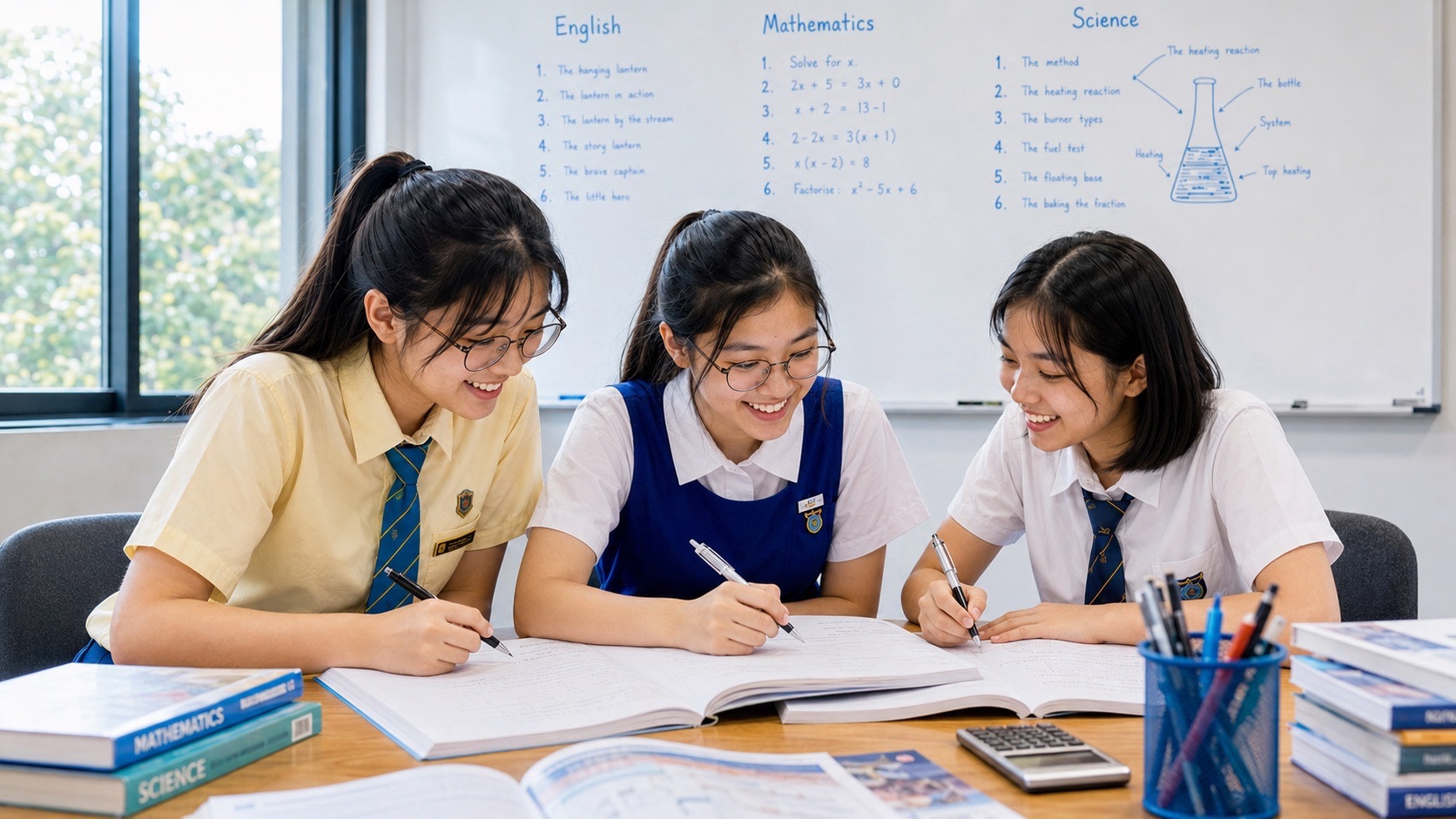
Some examination timetables place two papers on the same day, sometimes with a short interval between them. Parents may worry that their child will become tired, forget the second subject or spend too much time revising the first paper. A child may also feel that there is not enough time to prepare for both.
Start by confirming the exact timetable and the arrangements for the interval. Prepare for both subjects before examination day, then use the time between papers for recovery and a brief, focused reset rather than trying to relearn an entire subject. The most important work should already have been done during the days and weeks before the examination.
- Confirm the paper order, reporting time and interval arrangements from the school.
- Prepare both subjects in advance rather than relying on revision between papers.
- Prioritise each paper according to its syllabus, learning gaps and date.
- Pack permitted materials for both papers and separate them clearly.
- Plan food, water, transport and rest according to the school’s rules.
- Use the interval to settle and review a short reminder sheet only if permitted and helpful.
This guide is for parents in Punggol and Sengkang whose children have multiple examination papers scheduled on the same day. The arrangements vary between school examinations and national examinations. Follow the actual school’s timetable and candidate instructions; do not assume that students may leave the venue, access notes or use devices during an interval.
1. Confirm the full day’s schedule
Check the start and end time of each paper, the venue, reporting requirements and any scheduled break. Find out whether students remain in school or at the examination venue between papers and what they are allowed to do. The school or examination authority’s instructions take priority over general family plans.
Write down the timings in one place and share them with anyone responsible for transport or collection. This reduces last-minute confusion.
2. Prepare both subjects before the day
Do not rely on the interval between papers to teach or revise a large amount of content. The student should already have reviewed both syllabuses, corrected important errors and practised representative questions. A short reminder between papers can refresh an idea, but it cannot replace preparation.
In the days before the examination, use the paper order as one factor in the revision plan. The first subject may need a final check, but the second subject should not be ignored simply because it comes later in the day.
3. Allocate revision according to actual learning needs
One paper may be more demanding for the child even if it comes second. Review the child’s strengths, gaps and confidence in both subjects. Give time to important unresolved learning needs while keeping secure topics fresh through short retrieval checks.
Do not divide time equally just because there are two papers. The appropriate balance depends on what the child needs to learn and how much time remains.
4. Pack materials separately
Use the school’s list of permitted items. Prepare what is required for each subject and separate the materials so the child can identify them easily. Check calculator or instrument requirements only from the actual paper instructions. Do not assume an item permitted for one subject is permitted for another.
For digital assessments, follow device and platform arrangements from the school. Parents should not introduce unofficial tools or accessories.
5. Plan food, water and recovery within the rules
Ask the school what food and drink arrangements are allowed during the interval. Offer familiar food and suitable hydration where permitted. Avoid experimenting with unusual meals or drinks on examination day.
Some students need quiet time; others benefit from a short walk or a calm conversation. Let the child settle rather than discussing every answer from the first paper.
6. Do not conduct a full post-mortem between papers
After the first paper, the child may want to discuss difficult questions. Listen briefly, but avoid trying to estimate the score or compare answers with classmates. The submitted paper cannot usually be changed, and a long discussion may consume the energy needed for the next subject.
Help the child shift attention to the next paper: check the timetable, take a suitable break and use a short review only if it is allowed and genuinely helpful.
7. Prepare the second paper’s mind-set separately
The child should recognise that the second paper is a new task. Do not carry frustration from the first paper into the next subject. A simple reset can include breathing calmly, drinking water if permitted and recalling the next paper’s instructions.
If the first paper felt difficult, remind the child that this does not predict the second paper. They should read the next set of instructions carefully and approach it on its own terms.
8. Review the full day afterwards
After the final paper, allow the child to recover before discussing performance. If the schedule felt unusually demanding, record what could be planned differently for future school assessments. Keep the immediate priority on rest and normal routine.
A same-day examination checklist
- Both paper timings and intervals are confirmed.
- Both subjects have been prepared in advance.
- Materials are packed according to each paper’s rules.
- Food, water, transport and collection arrangements are clear.
- The child knows what is allowed during the interval.
- The transition between papers includes rest, not a stressful answer review.
Questions parents commonly ask
Should my child revise the second paper during the interval?
Only if the school rules permit it and the child finds a short review helpful. Do not assume notes or devices can be used. The main preparation should happen before examination day.
Should I ask how the first paper went?
You can listen if the child wants to share, but avoid a detailed analysis before the next paper. Help the child reset their attention.
Should the child study more for the first paper because it comes first?
Not automatically. Plan according to learning needs across both subjects. The second paper still needs sufficient preparation before the day.
What if my child is exhausted after the first paper?
Follow the school’s interval arrangements and prioritise appropriate rest and hydration. If the timetable creates a health or access concern, discuss it with the school in advance.
Further guidance
- How Can My Child Move On After One Paper and Prepare for the Next?
- What Should Parents Do in the Week Before an Examination?
- What Should I Do When My Child Gets a Marked Examination Paper Back?
Prepared for parents in Punggol and Sengkang. Information checked on 22 November 2026. Follow the actual examination timetable, interval rules and permitted-material instructions.


