
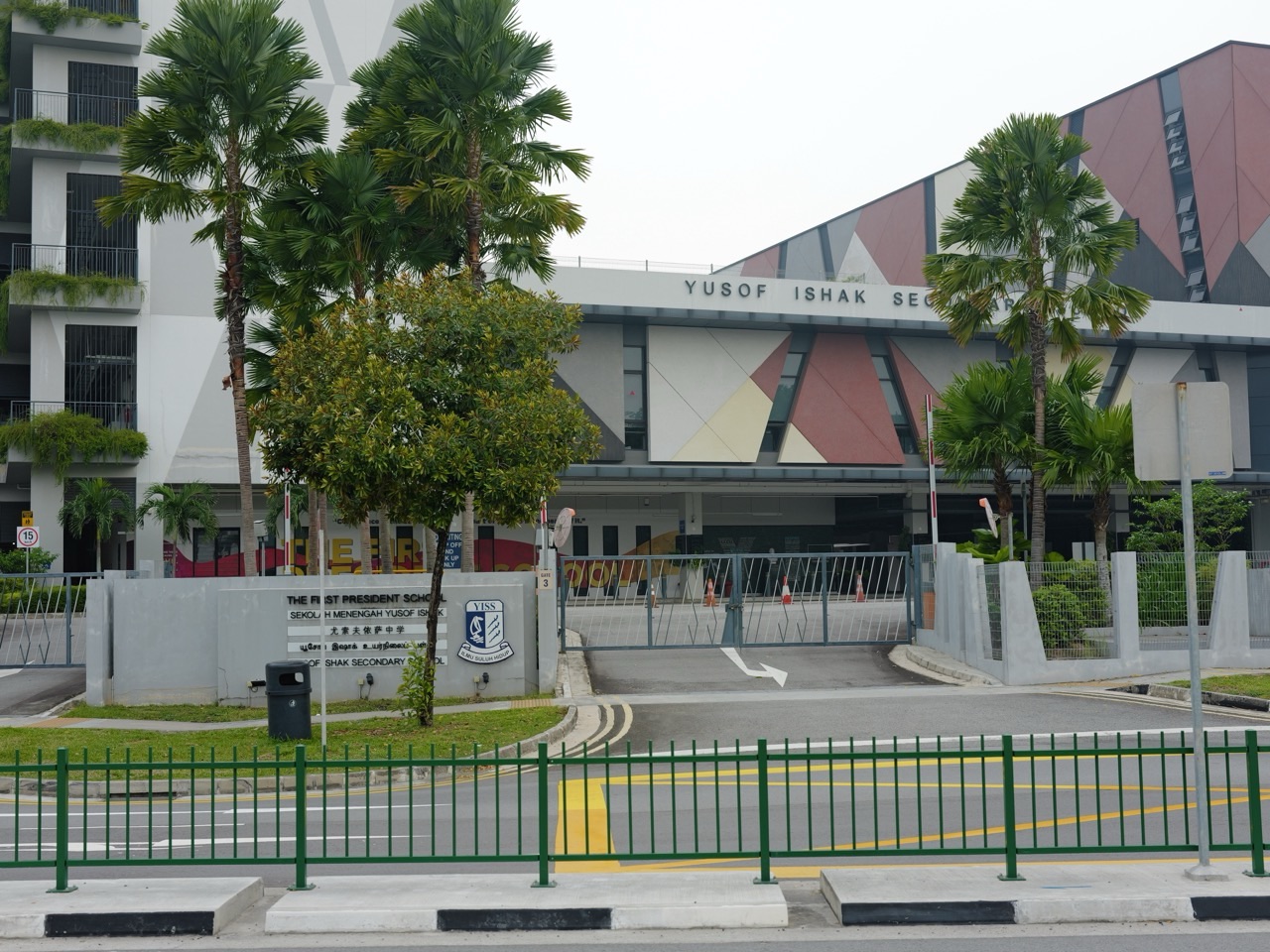
For a Punggol child receiving PSLE Score 22, Yusof Ishak Secondary is a school to investigate under Posting Group 2 (PG2). The school’s last-posted PG2 score for the completed 2026 Secondary 1 intake was 22, which means the exact previous PG2 boundary. Its PG3 cutoff was 15, a separate admission figure that was more stringent than Score 22. The school is at 8 Sumang Walk, Singapore 828676 and offers S4TEM@YI: STEM for the Strategic Development of a Sustainable and Smart City alongside YI LEAD+: Nurturing Honourable Leaders for Tomorrow. These historical numbers are guidance, not guaranteed places for January 2027.
Score 22 is a PG2/PG3 choice band. Families must select one Posting Group for all six ordinary S1 school preferences. Compare both complete group lists, the pupil’s four subject Achievement Levels, normal classroom support, CCAs and real travel from home. The 2026 PSLE results are released 24 November at 11.00am, and the S1 Portal choice window closes 30 November 2026 at 4.30pm. Verify official guidance at MOE S1 Posting, SchoolFinder and SEAB; do not treat last year’s cutoff as a forecast.
- PSLE total: 22; ordinary option between PG2 and PG3.
- School: Yusof Ishak Secondary, 8 Sumang Walk, Singapore 828676.
- 2026-entry historical PG2 cutoff: 22; the exact previous PG2 boundary.
- 2026-entry historical PG3 cutoff: 15; relevant only when selecting PG3.
- Applied Learning: S4TEM@YI: STEM for the Strategic Development of a Sustainable and Smart City.
- Learning for Life: YI LEAD+: Nurturing Honourable Leaders for Tomorrow.
- Decision: choose a group for all six preferences; check actual student needs, programme access and travel.
- Submission: 24–30 November 2026, online through the official S1 Portal.
Featured picture is an illustrative eduKate student image; it does not identify a pupil enrolled at this particular school.
Go directly to the chapter you need
- 1. Score 22: the PG2/PG3 decision comes before school ranking
- 2. Why Yusof Ishak Secondary is worth investigating
- 3. S4TEM@YI: the best technology idea must solve a real problem
- 4. Urban farming connects the smart city to the local community
- 5. STEMx IPW: interdisciplinary work needs clear foundations
- 6. YI LEAD+: leadership should be grounded in respect
- 7. At the old PG2 boundary, compare school choice without overpromising
- 8. Full Subject-Based Banding: the starting group is not the full subject timetable
- 9. Build two six-school lists, then choose one
- 10. Punggol transport: the entire journey is part of school fit
- 11. Ask about wellbeing, friendship and genuine support
- 12. Compare CCAs and schoolwide programmes with selected enrichment
- 13. Prepare for PSLE results day and the official portal deadline
- 14. A calm first-100-days plan after the school is allocated
- 15. Frequently asked Score-22 questions for this school
1. Score 22: the PG2/PG3 decision comes before school ranking
PSLE Score 22 falls in the unusual option band: the child may ordinarily choose Posting Group 2 or Posting Group 3. Only one of those groups applies to all six ordinary school preferences. It is not possible to enter three PG2 schools and three PG3 schools on the same form. The group decision should follow the child’s readiness, subject results and the complete list of schools that would be acceptable.
For Yusof Ishak Secondary, the completed 2026-entry cutoffs were PG2 22 and PG3 15. At Score 22, this is the exact previous PG2 boundary; in PG3 the former cutoff was 7 points more stringent. Those are two different school-place pools, not alternative interpretations of one number. Neither old score predicts a current 2027 place.
| Local Punggol school | 2026 S1 PG2 cutoff | 2026 S1 PG3 cutoff | Score-22 PG2 historical comparison |
|---|---|---|---|
| Punggol Secondary | 24 | 19 | Two points stronger than the last-posted PG2 score |
| Edgefield Secondary | 23 | 14 | One point stronger than last-posted PG2 score |
| Greendale Secondary | 23 | 16 | One point stronger than last-posted PG2 score |
| Yusof Ishak Secondary | 22 | 15 | Exactly the former last-posted PG2 score |
It is tempting to choose PG3 simply because the G3 curriculum sounds more demanding, or PG2 because the local historic figures appear closer to the child’s total. Neither shortcut is sufficient. The family needs to consider educational pace and whether each selected group’s six schools are genuinely appropriate. The child’s specific English, Mathematics, Science and Mother Tongue results help identify subject strengths and weaknesses.
If you have two draft lists, label them clearly as “PG2” and “PG3” and place the current MOE SchoolFinder eligibility beside every choice. If a school lacks the needed posting-group places, or the route would be unworkable, it is not a useful entry. Compare those two complete plans before selecting one group in the official portal.
2. Why Yusof Ishak Secondary is worth investigating
The school is at 8 Sumang Walk, Singapore 828676 and highlights S4TEM@YI: STEM for the Strategic Development of a Sustainable and Smart City, together with YI LEAD+: Nurturing Honourable Leaders for Tomorrow. A pupil who enjoys a fascination with smart-city systems, urban farming, responsible technology and service to others may find these experiences meaningful. That possibility has to be tested by looking at ordinary lessons, peers, the teacher’s feedback and a real weekday journey, rather than relying on the school name or one attractive display.
Yusof Ishak’s old PG2 cutoff was 22, exactly the Score-22 boundary; its PG3 cutoff was 15, seven points more stringent. A PG2 boundary match is not a reserved place, and it cannot be converted into a PG3 admission estimate.
Ask your child what they would actually like to do over several weeks at this school. Do they want to measure and explain something, build and test a model, organise a project, help others or take part in a team challenge? If the child struggles to give an answer, that is a reason for further research, not evidence of an inability to succeed.
The previous cutoff describes where a past posting exercise ended. It does not measure how strong the teaching will be, how quickly pupils settle in or whether a selected activity will be available to this child. A genuine school preference requires some evidence about everyday learning and a willingness to attend if posted there.
3. S4TEM@YI: the best technology idea must solve a real problem
Yusof Ishak Secondary’s Applied Learning Programme is S4TEM@YI: STEM for the Strategic Development of a Sustainable and Smart City. The current official description connects STEM enquiry with sustainability and Singapore’s interest in responsible urban systems. Schoolwide experiences can include urban farming, coding and aeronautics. For a child who asks how cities use technology, the programme may offer a compelling reason to practise Science and Mathematics rather than merely memorise facts.
Parents should ask how the ordinary Secondary 1 cohort participates. What does a typical lesson require students to observe, design or explain? A schoolwide introduction to technology is not the same as a place in a selective robotics competition or an industry-linked workshop. When a particular event is important to the child, verify the year level, selection and timetable before allowing it to determine the whole school choice.
A smart-city question has several possible answers. For example, using a sensor to monitor a growing system sounds efficient, but the sensor may produce errors and an automated adjustment may create unintended effects. A useful pupil learns to question the information and explain a safer decision. That scientific habit is transferable even if the child later chooses a non-technical course.
Ask about how pupils work with others. A student who likes coding may need to practise explaining a result; another who is good at writing may contribute by asking whether the proposed design actually meets a resident’s needs. The programme is strongest when all pupils learn evidence, communication and revision rather than a few children doing the technical tasks.
4. Urban farming connects the smart city to the local community
The official school programme describes soil-grown vegetables and hydroponics as regular settings for sustainability learning. It also documents the development of the YI AgriSphere laboratory and garden among earlier programme highlights. These offer tangible examples of how scientific and technological questions connect with food, water, energy and responsible resource use.
Parents can ask what pupils do with measurements and observations. A plant-growing system may seem straightforward, but different conditions can affect the result. When a child makes a claim after a brief trial, does the teacher show how to check another possible explanation? Those habits connect to Science enquiry, mathematical graphs and written argument.
The family can discuss a harmless home question about what affects a plant’s growth without buying an expensive device. Ask what would be measured and which conditions should be kept consistent. The goal is not to replicate a school assignment or claim the child has specialist knowledge; it is to discover whether the process of investigating genuinely interests them.
School websites often highlight successful past projects and competition achievements. The AgriSphere experience is evidence of the school’s programme direction, not proof that every future pupil will undertake an identical project or receive a particular award. Ask what is planned for the incoming 2027 cohort and which specialist work is selected.
5. STEMx IPW: interdisciplinary work needs clear foundations
Yusof Ishak’s STEM Experience through Inter-disciplinary Work, or STEMx IPW, encourages pupils to consider real problems that cross subject boundaries. Sustainability questions can involve Science, Mathematics, English explanation and ethical judgement at once. For a Score-22 child, this can be intellectually engaging while still requiring careful support when one foundational skill is weaker than another.
A pupil might understand a design yet struggle to interpret a long reading passage. Another may write confidently but fail to justify a calculation. Parents should not assume that the aggregate Score 22 reveals which support is needed. Prepare examples from the child’s recent work and ask how teachers help pupils structure evidence and revise after feedback.
The school’s ALP page mentions learning experiences with organisations including A*STAR, SUTD, SIT and NParks, alongside STEM Club and Robotics Club opportunities. The educational value is clearer when families distinguish what is broad-based from selected workshops, CCAs and competitions. A normal school-entry place does not guarantee an invitation to every partner event.
A child who enjoys STEM may still want a music, arts or sports CCA. The family should ask what other activities are available and whether their schedule is sustainable. An ALP theme can motivate learning without determining a child’s entire identity or future career.
6. YI LEAD+: leadership should be grounded in respect
The school’s Learning for Life Programme is YI LEAD+, nurturing honourable leaders for tomorrow and the greater good. Its current official page emphasises gratitude, respect, integrity, communication, teamwork and ethical decisions. Leadership experiences include guided reflection, workshops and service, with additional opportunities associated with specific student-leadership roles.
A child who has never held a formal title may still develop useful habits by preparing responsibly, listening to teammates and helping a new classmate. Ask what ordinary Secondary 1 pupils experience and what is reserved for elected or selected student leaders. A school should not be judged solely by its most confident representatives.
Smart-city work and leadership can reinforce each other. A pupil evaluating a new technology should consider who benefits, whether it is affordable and who might be left out. Those questions turn empathy into part of technical reasoning. Parents can ask how the school connects its sustainability emphasis with student service and responsible decisions.
A family can test the culture with practical questions: what happens when a pupil admits a mistake, misunderstands homework or disagrees with a team? Does a teacher help the group explain what went wrong and plan a correction? Those responses will matter during ordinary school life more than a programme slogan.
7. At the old PG2 boundary, compare school choice without overpromising
Yusof Ishak had a historical 2026-entry PG2 last-posted score of 22, exactly matching a child whose PSLE total is 22. The earlier number cannot tell parents which pupils with Score 22 were unsuccessful when a tie occurred, nor how many places will be available in 2027. The family should treat this as a genuine possible preference, not a conditional admission offer.
The PG3 comparison is very different. Yusof Ishak’s old PG3 cutoff was 15, seven points more stringent than Score 22. A family selecting PG3 must evaluate six schools against their PG3 ranges, not copy the school’s PG2 figure because the same campus appears on both lists. That distinction matters especially when the child would prefer a G3 starting pace but the nearest historical PG3 options were highly competitive.
A family near Sumang Walk may value the campus’s location and learning spaces. Test the morning route, after-CCA return and the actual student entrance with the child. A short commute can improve daily fit if a place is received, but does not provide an automatic geographical entitlement.
If Yusof Ishak is the child’s first preference because of S4TEM@YI or YI LEAD+, the other five choices must still be real acceptable schools. Research Punggol Secondary, Edgefield, Greendale and appropriate Sengkang or Hougang options, checking their current SchoolFinder details, subject support, CCAs and realistic commute. A future posting result can be successful even when the family does not receive its first choice.
8. Full Subject-Based Banding: the starting group is not the full subject timetable
Under Full Subject-Based Banding, Posting Groups facilitate school entry and guide the usual starting level for most subjects. PG2 ordinarily begins most subjects at G2, whereas PG3 ordinarily begins most subjects at G3. A particular child’s subject levels can differ where individual PSLE subject Achievement Levels, MOE rules and school offerings permit. The aggregate Score 22 alone cannot determine the actual individual subject timetable.
The key distinction is between permission to select a school-entry group and eligibility to study a particular subject at a more demanding level. A PG2 pupil who qualifies for a G3 subject should ask the receiving school how the subject is offered and supported. A PG3 pupil with uneven foundations should discuss what the academic pace involves and what support can be provided. Do not promise a child’s exact subject package from the total score.
| Subject | Useful evidence | Parent question |
|---|---|---|
| English | Actual PSLE AL and recent reading/writing | How will the child receive help with comprehension and written explanations? |
| Mathematics | Actual AL and a sample of reasoning | What support is available for fractions, algebra and multi-step tasks? |
| Science | Actual AL and a written explanation | How does the class teach evidence, variables and clear conclusions? |
| Mother Tongue | Actual AL and subject arrangements | What level, venue and progression rules apply to this pupil? |
A pupil might be confident at Mathematics but uncertain about reading; another might have strong language skills and struggle with written Science. Both can receive Score 22. Bring specific examples of errors, not a blanket description such as “bad at English” or “smart at Science”. A receiving school can usually explain its procedures more usefully when a parent identifies a concrete task that is difficult.
The Singapore-Cambridge Secondary Education Certificate begins with the 2027 examination cohort under Full SBB. A child entering Secondary 1 in 2027 takes the graduating examinations later, so post-secondary routes such as JC, polytechnic, PFP and ITE must be evaluated using the actual subjects, levels, grades and rules then in force. A posting group does not permanently define the child’s ability or guarantee a later destination.
9. Build two six-school lists, then choose one
A practical family worksheet starts with two headings: PG2 plan and PG3 plan. Under each, enter six schools the child would truly attend, using the correct posting-group historical cutoff. Do not mix the two columns. A PG2 cutoff of 24 at a Punggol school says nothing about its PG3 entry outcome, and the opposite is equally true.
For Score 22, the previous PG2 cutoffs across the four Punggol schools were 22–24, while their previous PG3 cutoffs were 14–19. The local PG3 figures were more stringent than 22 in that earlier cohort. If a family prefers PG3, it needs to research a broader set of suitable PG3 schools rather than assume a Punggol campus that looked attainable in PG2 will be attainable under PG3.
MOE advises parents to include at least two or three schools whose previous cutoffs were less stringent than their PSLE score, where possible. A Score-22 PG2 shortlist may include schools with previous PG2 cutoffs of 23, 24 or 25, provided the child wants to attend them and the daily route works. This is a risk-management aid, not a guarantee: cutoffs change with results, choices and places.
| School decision | PG2 worksheet | PG3 worksheet |
|---|---|---|
| Starting pace | G2 is usual for most subjects | G3 is usual for most subjects |
| Relevant history | Read 2026-entry PG2 cutoffs only | Read 2026-entry PG3 cutoffs only |
| Daily routine | Check G2 teaching, CCAs and commute | Check G3 teaching, CCAs and commute |
| Family risk question | Are all six PG2 schools acceptable? | Are all six PG3 schools acceptable and realistic? |
| Actual submission | Choose six in PG2 if this group is selected | Choose six in PG3 if this group is selected |
Rank schools in genuine preference order after checking the full school experience. Under the S1 Posting tie-break rules, citizenship, choice order and computerised balloting can matter when the same-score applicants compete for final places. Ranking a school first does not override a better PSLE total. Never assign a made-up percentage chance or call a school “guaranteed” from the previous last-posted number.
10. Punggol transport: the entire journey is part of school fit
The four local secondary-school campuses are in different parts of Punggol. Yusof Ishak Secondary is at 8 Sumang Walk, Singapore 828676, but a family living near Punggol Coast or Northshore may start the journey differently from one in Sumang, Matilda, Waterway Point or Oasis. The correct origin is the family’s actual front door. A journey estimate that starts at Punggol MRT can omit a substantial first leg.
Practise the expected morning route on a weekday if practical, with an adult accompanying the child. Include the walk to transport, waiting, direction of travel, any transfer, crossing the road and locating the correct student gate. Ask the school about reporting time rather than assuming its office hours are the pupil’s arrival time.
Repeat the exercise for a late CCA dismissal. The child may be carrying equipment, feeling tired or travelling when services are less convenient. Agree on a simple alternative route and a trusted contact for disruptions. These details may be decisive when two otherwise suitable schools appeal equally.
It is appropriate for travel to influence a family’s preferences. However, a nearby address does not ordinarily confer blanket priority in S1 posting and cannot change the child’s PSLE score. School choice is strongest when the commute, teaching, pupil’s interests and ordinary student support can all work together.
11. Ask about wellbeing, friendship and genuine support
Parents should ask how incoming Secondary 1 pupils meet classmates, find rooms and learn where to ask for help. A child’s first few weeks may involve unfamiliar routines and new friendship groups. A programme brochure can show opportunities, but it cannot establish how a particular student will experience the schoolday. Ask for specific examples of form-teacher support and how a pupil reports a concern.
Some pupils are anxious about public presentations, physical activity or unfamiliar technology; others find it hard to manage many assignments. Describe the actual task or situation when seeking help. For example, “My child understands a question when it is read aloud but loses track of written instructions” is more useful than a broad label about ability.
When the pupil has documented learning or support needs, discuss the actual arrangements privately with appropriate school staff. Do not assume every school has identical specialist resources or that a public statement about wellbeing guarantees an individual provision. Ask about the process, who communicates with parents and how progress is reviewed.
A school fit decision must leave room for the child to try, make mistakes and seek clarification. If parents only ask whether a school is prestigious, they may overlook what it would feel like to attend on an ordinary difficult day. The goal is an environment where learning and participation can be sustained.
12. Compare CCAs and schoolwide programmes with selected enrichment
A school’s Applied Learning Programme and Learning for Life Programme help describe its identity, but some workshops, leadership positions, competitions or external visits are selective. Ask what every incoming Secondary 1 pupil receives, what happens only at later year levels and what depends on an audition, club membership or capacity. A past award or industry partner is not an individual guarantee.
The CCA is a separate practical decision. A pupil who loves s4tem@yi: stem for the strategic development of a sustainable and smart city might still want a music, sport or uniformed-group activity. Confirm current beginner access, any trials and the usual dismissal time. An interest shown at an open house should be distinguished from a confirmed CCA placement after posting.
Ask for a realistic weekly picture: school lessons, lunch, CCA, return home, dinner and homework. For a family with a complicated transport connection, a late-day commitment may change the school’s practicality. If an activity is located off campus, check its venue and dismissal arrangements before assuming the normal home-to-school route is sufficient.
Some children develop their confidence through an unexpected activity that they did not try at primary school. A parent can encourage a second acceptable CCA choice without dismissing the child’s first interest. The aim is meaningful participation and friendships, not accumulating prestigious programme names.
13. Prepare for PSLE results day and the official portal deadline
SEAB announced that PSLE 2026 results will be released on Tuesday, 24 November 2026 at 11.00am. Parents may submit ordinary S1 school choices online from 11.30am on 24 November to 4.30pm on Monday, 30 November 2026, Singapore time. The S1 posting results are tentatively scheduled for Friday, 18 December 2026, subject to later official confirmation.
Use the SEAB results announcement and MOE S1 Posting guidance as the authority. Only one parent needs a valid Singpass to submit the ordinary school options. Families who need portal help should contact the primary school before the deadline. Keep the submitted confirmation and avoid turning speculative conversations about cutoffs into assurances to the child.
| Stage | Action | What should be checked |
|---|---|---|
| 24 Nov 11.00am | Collect the PSLE result | Total score, subject ALs and PG2/PG3 eligibility |
| 24 Nov 11.30am | Review the two prepared group lists | One selected Posting Group for all six choices |
| By 30 Nov 4.30pm | Submit the final school list | Correct school names, group and ranking; save acknowledgement |
| Tentatively 18 Dec | Check the posting result | Follow final MOE announcement and assigned-school registration |
If the student already has an accepted Direct School Admission (DSA-Sec) place or another special admission status, follow the instructions specific to that route. Do not assume ordinary school-choice steps apply identically. The family should resolve eligibility questions before submitting rather than relying on a generic score comparison to override the personalised result slip.
The results-week conversation should also respect the child’s feelings. Parents can say that the score makes two starting groups available and that the family will compare both thoughtfully. A cutoff is not a judgement of personal worth or potential; the next useful decision is which actual learning environment would serve this child well.
14. A calm first-100-days plan after the school is allocated
After posting, the assigned school’s instructions replace assumptions about uniforms, books, personal learning devices, subject arrangements, orientation and CCAs. Wait for the confirmed school before buying costly school-specific materials, especially if the family is applying for financial assistance. A familiar school choice should still be checked for the correct year’s dates.
| Period | A useful parent action | A small child-led step |
|---|---|---|
| Before school starts | Practise the real route and read official notices | Explain where to report and whom to ask |
| First fortnight | Keep a simple materials and homework system | Record assignments and identify one helpful adult |
| Weeks 3–6 | Use teacher feedback to identify one skill to improve | Try a correction and explain what changed |
| After CCA selection | Recheck travel, meals and sleep | Describe an ordinary late-day routine |
| Around day 100 | Review learning and belonging without comparisons | Name one new skill and one next question |
Help with English by reading a short explanation and pointing to evidence for a claim. Help with Mathematics by practising why a step in an equation is valid, rather than racing through advanced exercises. Help with Science by discussing observations, fair comparisons and limitations. Keep practice proportionate and leave room for rest, relationships and curiosity.
In the first term, focus on patterns. A single awkward day does not prove the school choice was wrong. If the child is repeatedly distressed, isolated or unable to understand assignments, contact the relevant teacher with a concrete example. Agree on a practical next step and review whether it is helping. Building the habit of asking for help is itself an important result.
Later post-secondary routes depend on the child’s actual subjects, levels and achievement. Keep options open by developing secure foundations and confidence now, rather than deciding a future JC, polytechnic or ITE outcome from a primary-school total.
15. Frequently asked Score-22 questions for this school
Is Score 22 eligible for PG3 as well as PG2?
Yes. The ordinary option band for Scores 21–22 permits PG2 or PG3, with one selected group applying to all six school choices. Individual result instructions take precedence.
Is Yusof Ishak Secondary guaranteed under PG2 at Score 22?
No. Its previous PG2 last-posted score was 22; that is an exact old boundary, not a 2027 offer.
Can I use the PG2 cutoff to assess a PG3 application?
No. The separate PG3 cutoff applies. At all four local Punggol schools the completed 2026-entry PG3 cutoff was more stringent than Score 22.
Can a PG2 pupil take G3 Mathematics or Science?
Potentially, if individual subject ALs, MOE eligibility and the receiving school’s arrangements permit it. The overall Score 22 is not enough to establish an individual subject level.
Does a more demanding cutoff mean the teachers are better?
No. A historical last-posted score reflects one year’s allocation and demand, not an independent ranking of teaching quality, student support or wellbeing.
Do school programmes guarantee an industry trip or selected CCA place?
No. Ordinary curricular learning, selective enrichment, specific competitions and CCA entry can have different conditions. Verify 2027 arrangements.
Should we rank the school first because it is near home?
Only if it is a genuine preferred school after checking the child’s learning and support. Travel matters, but it does not create automatic mainstream posting priority.
What if we cannot find six realistic PG3 schools?
Re-examine both complete group plans, consult MOE SchoolFinder and seek advice from the primary school before choosing the group. Do not simply copy PG2 cutoffs into a PG3 shortlist.
What happens after posting?
Follow the school actually allocated and its current S1 registration instructions. Appeals or transfers, where available, have separate rules and vacancies; neither is automatic.
Is PSLE Score 22 guaranteed entry to Yusof Ishak PG2?
No. It exactly matches the previous 2026-entry PG2 cutoff of 22, but the new 2027 intake is not yet posted and ties or changes in demand can alter the result.
Can the same pupil choose PG3 instead?
Yes, Score 22 ordinarily permits PG2 or PG3 for the whole six-school list. Yusof Ishak’s previous PG3 cutoff was 15; its PG2 cutoff cannot support a PG3 admission claim.
Does S4TEM@YI guarantee a STEM career or scholarship?
No. The ALP develops enquiry and exposure, while scholarships, competitions and later career qualifications have separate requirements.
Will every student be appointed a YI LEAD+ leader?
The LLP aims to develop leadership qualities broadly; formal student-leadership roles and selected activities have their own conditions.
Does being close to Sumang Walk give admission priority?
A manageable journey is valuable for daily school life, but ordinary Secondary 1 posting is governed by the official group, score and tie-breaking framework, not a general proximity guarantee.
Start of guide · Return to chapter one
Official references and related eduKate school guides
School programmes and historical posting data checked against materials available in November 2026. Cutoffs are for the 2026 intake after PSLE 2025; readers must reconfirm 2027 cohort programme details, open-house information and current options before choosing.
- Yusof Ishak Secondary official school site
- Yusof Ishak Secondary ALP information
- Yusof Ishak Secondary LLP and character development
- Punggol secondary-school 2026-entry historical cutoffs
- MOE SchoolFinder
- MOE Full SBB
- SEAB official 2026 PSLE results announcement
- MOE S1 Posting
- eduKatePunggol Score-22 school-choice overview
- Score 21 versus Score 22 PG2/PG3 comparison
- Score 22 versus Score 23 PG3 option boundary
- Six-school decision matrix
- First 100 days of Secondary 1


