
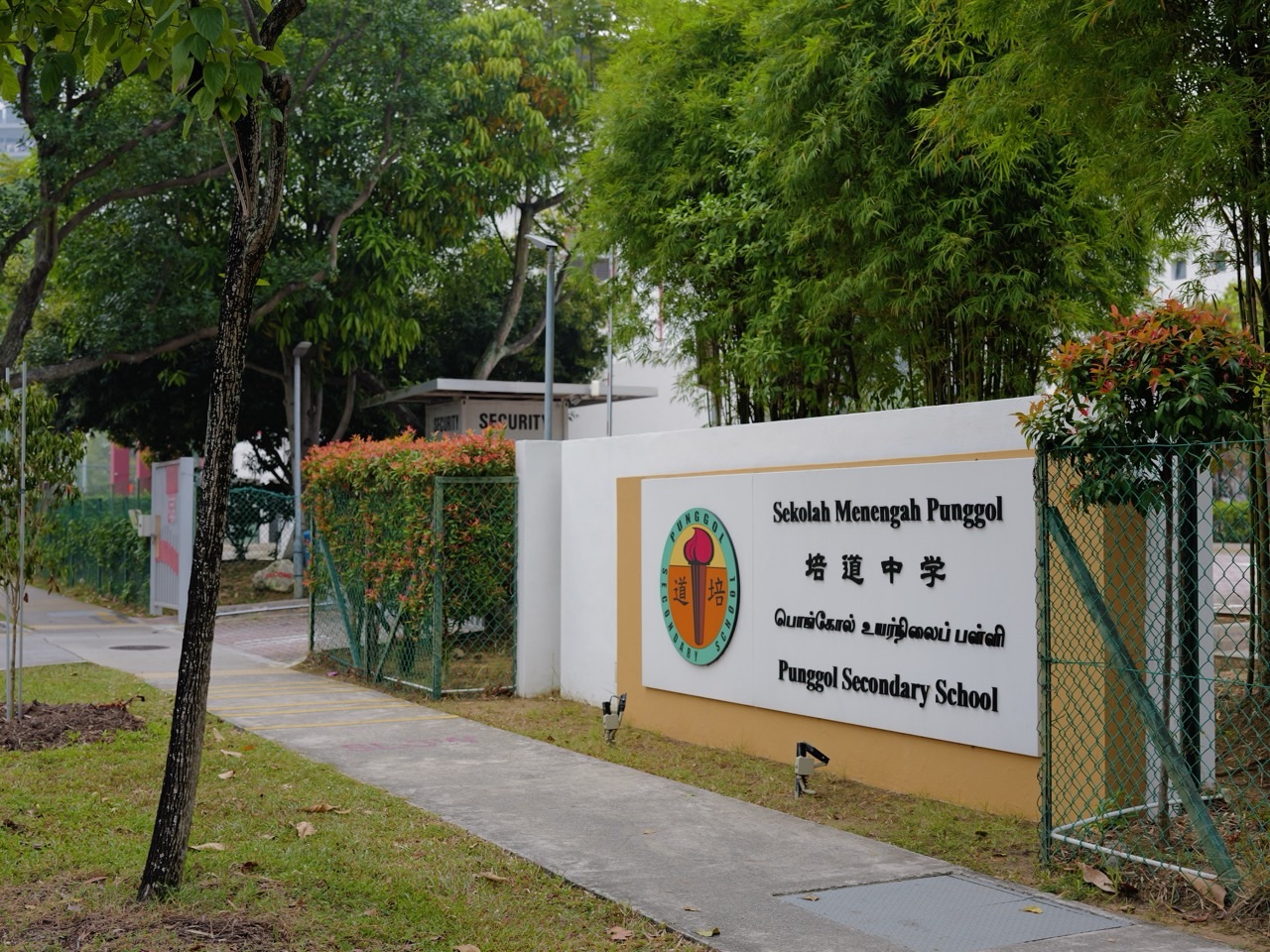
PSLE Scores 12 and 13 are both Posting Group 3 (PG3), but a previous Score 13 means two different things at two different secondary schools. Presbyterian High School reported PG3 8–13 for the completed 2026 Secondary 1 intake: its last-posted result was 13, an exact historical match for a Score 13 pupil. Punggol Secondary reported PG3 13–19: there, 13 was the first pupil posted, not the cutoff, which was 19. A Score 12 child is not ‘too strong’ to attend Punggol Secondary just because the former first-posted figure was 13. MOE explains how to read these ranges.
For 2027 school choice, parents should research actual educational fit rather than treating school ranges as fixed eligibility intervals. Presbyterian High’s current ALP focuses on Health and Food Science, design and AI literacy, while its LLP develops community and youth leadership. Punggol Secondary offers environmental education and community leadership closer to many Punggol homes. Edgefield, Yusof Ishak and Greendale provide further local PG3 options. The family should compare current programmes, teaching support, CCAs, daily transport and six genuine preferences with the child; past cutoffs do not guarantee the new cohort’s posting.
- Same Posting Group: Scores 12 and 13 are PG3; G3 is the usual initial subject level.
- Presbyterian High PG3 8–13: 13 was the previous last-posted cutoff; Score 13 exact historic match, Score 12 one point stronger.
- Punggol Secondary PG3 13–19: 13 was the previous first-posted result; the previous cutoff was 19.
- No minimum-score myth: a numerically stronger Score 12 child is not disqualified from a school whose past first-posted score was 13.
- School programmes: Presbyterian High Health and Food Science and leadership; Punggol Secondary environmental and community learning.
- Family shortlist: compare programme fit, actual school culture, CCA participation, transport and six acceptable preferences.
- Official dates: PSLE results 24 November 2026 at 11am; school choices close 30 November at 4.30pm.
Reviewed 20 November 2026. All numerical ranges concern the completed 2026 Secondary 1 intake after PSLE 2025. They do not predict or guarantee the 2027 intake. Verify official eligibility and current school profiles.
Chapters — Why Score 13 is a cut-off at one school but first-posted at another
- 1. The Score 12 versus 13 question is not a Posting Group change
- 2. Why Presbyterian High’s previous PG3 13 is a real historical boundary
- 3. Punggol Secondary’s 13–19 range has a different meaning
- 4. The same Score 13 can be an old first posted and an old last posted
- 5. A local and neighbouring table shows the different endpoints
- 6. Presbyterian High’s current health and food science ALP is a meaningful fit factor
- 7. Presbyterian High’s AI literacy is part of its practical science education
- 8. A tiered programme is not the same as a guarantee of talent selection
- 9. The school’s service leadership programme reaches ordinary pupils
- 10. School ethos should be considered respectfully rather than inferred from a name
- 11. Punggol Secondary’s environmental and community programmes offer another path
- 12. The other three local Punggol schools have their own strengths
- 13. Seng Kang’s 14–19 range repeats the first-posted lesson
- 14. Presbyterian High is outside Punggol: the full journey matters
- 15. How a stronger PSLE score can be posted to a less selective-looking school
- 16. Full SBB, academic support and four subject ALs
- 17. A reliable six-choice list needs several genuinely acceptable schools
- 18. Preference order and ties follow official rules, not old range endpoints
- 19. The 2026 results date and the S1 application window
- 20. Preparing for the first Secondary 1 year and SEC later
- 21. Frequently asked questions: 12 versus 13
- 22. Official sources, school links and both score-specific guides
1. The Score 12 versus 13 question is not a Posting Group change
Both PSLE totals are in Posting Group 3 under the ordinary MOE table. Most subjects generally start at G3. The one-point change does not permit a pupil to choose PG2 or automatically decide which school environment will help them learn. It changes how the pupil compares with some previous school last-posted results.
Presbyterian High School in Ang Mo Kio reported a historical PG3 range of 8–13 for the completed 2026 Secondary 1 intake. A pupil at 12 is numerically one point stronger than its previous last-posted 13, while a pupil at 13 matches that old cutoff. Neither comparison is a future admission guarantee.
Meanwhile, Punggol Secondary had a previous range of 13–19. The Score 12 pupil is numerically stronger than even the strongest pupil who actually entered that school in the previous exercise. That does not exclude them; the former cutoff was 19, not 13. Parents should learn both distinctions before ranking schools.
Family action: Confirm PG3 and write the school year beside each previous posting range.
Chapter 1 · MOE SchoolFinder · Complete Punggol school-choice hub
2. Why Presbyterian High’s previous PG3 13 is a real historical boundary
Presbyterian High reported its completed-year PG3 range as 8–13. The right-hand 13 was the last pupil’s aggregate, a previous cutoff used as reference. Score 12 is one point stronger numerically, while Score 13 is an exact former match. Lower PSLE totals are stronger academic scores within the eligible Posting Group.
A family should not treat either result as guaranteed admission in 2027. New cohort demand and school choices can change the final cutoff. At an actual future boundary, tie-breakers might matter, but a match with last year’s result does not tell parents that a new tie will happen.
The appropriate response is to investigate Presbyterian High as a genuine school, including its current curriculum, support, school values and commute from Punggol, then build other acceptable options. A last-posted number is a shortlist clue, not a promise.
Family action: Mark Presbyterian High old PG3 COP13 as exact for Score13, one point less stringent for Score12.
Chapter 2 · MOE SchoolFinder · Complete Punggol school-choice hub
3. Punggol Secondary’s 13–19 range has a different meaning
The completed-year Punggol Secondary PG3 range was 13–19. Here, 13 was the strongest student actually posted to that school in the previous cohort, while 19 was the last-posted score. Families should not treat the two endpoints as a minimum and maximum set of acceptable scores for future applicants.
A pupil with Score 12 has a numerically stronger aggregate than the former first-posted 13. The child is not ineligible for Punggol Secondary just because their score was better than any pupil who happened to enter it last year. Score 13 happens to match the old first-posted value, but not the old admission cutoff.
Parents who copy only one number from a range can reach completely wrong conclusions. Under ordinary posting, MOE eligibility, the child’s preferences and the actual current competition matter, rather than an artificial ‘too good’ rule based on the previous first-pupil result.
Family action: Write “Punggol Secondary old first posted 13, actual PG3 COP 19” prominently.
Chapter 3 · MOE SchoolFinder · Complete Punggol school-choice hub
4. The same Score 13 can be an old first posted and an old last posted
This is the most useful teaching example in the comparison. Score 13 was the previous last-posted result at Presbyterian High and the previous first-posted result at Punggol Secondary. The same total therefore appears at opposite ends of two different school ranges. It cannot mean the same thing in both columns.
At Presbyterian High, 13 was the former cutoff. At Punggol Secondary, 13 was simply the strongest pupil admitted, with the former cutoff at 19. A parent who hears “the school took Score 13” without knowing which endpoint is being described cannot make a reliable comparison for 2027 school choices.
The actual admission experience at each school also differs. Presbyterian High is in Ang Mo Kio with its own programmes, while Punggol Secondary is within the Punggol estate. Each child’s preferences, travel and learning interests deserve as much attention as the numbers.
Family action: Use a two-row comparison to explain first-posted versus last-posted to your child.
Chapter 4 · MOE SchoolFinder · Complete Punggol school-choice hub
5. A local and neighbouring table shows the different endpoints
The table below separates the old score ranges of the four mainstream Punggol schools and several neighbouring candidates from the historical Presbyterian High boundary. It refers to pupils who took PSLE in 2025 and entered Secondary 1 in 2026, not future vacancies for children choosing schools after PSLE 2026.
For Scores 12 and 13, Punggol’s four old PG3 endpoints of 14, 15, 16 and 19 are all numerically less stringent than those totals. The same is true at several nearby Sengkang schools. This information can help create a varied shortlist but does not tell families which school teaches best or where the child will be happiest.
Parents should verify exact school programmes and any admission conditions before finalising. A school with a former 19 may be a genuine favourite if its activities and community fit the child, rather than an automatic sixth choice solely because of the number.
| School / area | Historical PG3 2026 S1 range | Score 12 interpretation | Score 13 interpretation |
|---|---|---|---|
| Presbyterian High — Ang Mo Kio | 8–13 | One point stronger than old cutoff 13 | Exact old cutoff 13 |
| Edgefield Secondary — Punggol | 5–14 | Two points stronger than old COP | One point stronger |
| Yusof Ishak Secondary — Punggol | 7–15 | Three points stronger | Two points stronger |
| Greendale Secondary — Punggol | 11–16 | Four points stronger; 11 was first posted | Three points stronger |
| Punggol Secondary — Punggol | 13–19 | Stronger than first-posted 13; old COP 19 | Matches first-posted 13, NOT cutoff 19 |
| Seng Kang Secondary — Sengkang | 14–19 | Old first-posted 14 not a minimum; COP 19 | Old first-posted 14 not a minimum; COP 19 |
| Compassvale Secondary — Sengkang | 14–18 | Six points stronger than old COP | Five points stronger |
| North Vista Secondary — Sengkang | 11–18 | Six points stronger | Five points stronger |
Family action: Use historical score figures as context, never a universal school ranking.
Chapter 5 · MOE SchoolFinder · Complete Punggol school-choice hub
6. Presbyterian High’s current health and food science ALP is a meaningful fit factor
Presbyterian High’s current Applied Learning Programme is Igniting Minds@PresHigh, with STEM projects related to Health and Food Science. Its published Tier 1 is for all pupils, using design thinking, coding, teamwork and practical prototyping. This is more specific educational information than a bare historical cutoff of 13.
An interested child might enjoy solving user-centred health problems, making simple prototypes or examining how technology can support sustainable food systems. Ask how these modules connect with ordinary G3 Science and Mathematics learning and what teachers do when pupils find unfamiliar concepts difficult.
The school also describes advanced interest-based workshops and a selected talent tier. Parents should not promise every Secondary 1 pupil a competition, attachment or specialist award because those appear on the website. Confirm the current common experience and the additional optional or selected activities.
Family action: Ask what all Year 1 pupils do in Igniting Minds before considering optional tiers.
Chapter 6 · MOE SchoolFinder · Complete Punggol school-choice hub
7. Presbyterian High’s AI literacy is part of its practical science education
Presbyterian High describes AI literacy within its current Tier 1 ALP, helping pupils learn principles of AI and machine learning, consider ethics and evaluate AI-generated information critically. These are timely skills that may appeal to a child who enjoys technology, communication and problem solving.
Parents should ask how the school keeps those activities age-appropriate and connects them with genuine learning rather than substituting tools for thinking. A pupil who enjoys AI can still benefit from clear reading, mathematical reasoning and discussing evidence. The school can explain the current classroom approach.
Do not assume a school with a modern AI curriculum automatically offers every advanced coding or industry partnership to every pupil. Ask what is included for new Secondary 1 pupils and what becomes available by interest or later selection.
Family action: Compare ordinary AI and coding instruction with advanced opportunities.
Chapter 7 · MOE SchoolFinder · Complete Punggol school-choice hub
8. A tiered programme is not the same as a guarantee of talent selection
Presbyterian High’s ALP distinguishes Tier 1 for all students, Tier 2 for pupils with particular interests and Tier 3 for talent development. This distinction matters for parents tempted by impressive photographs from competitions or specialist workshops. A school entry does not automatically award a place in a selected challenge.
A child may enjoy the common lower-secondary programme even without entering every higher tier. Parents should ask about how students express interest, selection criteria, costs or time commitments, and alternatives when an activity is oversubscribed.
The family should be able to explain the real Year 1 opportunity to the child. A school whose common curriculum is attractive can be a sensible choice independent of its admission reputation.
Family action: Record one common and one selected opportunity separately.
Chapter 8 · MOE SchoolFinder · Complete Punggol school-choice hub
9. The school’s service leadership programme reaches ordinary pupils
Presbyterian High’s Learning for Life Programme is Igniting Hearts@PresHigh, with Community and Youth Leadership. The current school description says all pupils experience tailored leadership modules at lower secondary and take part in class values-in-action projects, while additional leadership and event roles have further tiers.
A pupil who enjoys helping others, organising activities or working with classmates may find this community approach appealing. The parent should ask what a typical Secondary 1 class project involves and how pupils who are shy about public speaking can be supported in contributing.
Selected student-leadership appointments or overseas community projects are different from the common programme. A child should not be promised a selected position in the future solely because the school admits them. Real participation and student welfare are the better fit questions.
Family action: Ask what the first-year community project looks like for an ordinary student.
Chapter 9 · MOE SchoolFinder · Complete Punggol school-choice hub
10. School ethos should be considered respectfully rather than inferred from a name
Presbyterian High has a distinctive school identity, values and traditions. Parents should read the school’s current official materials to understand the ethos, daily assemblies, character education and experiences students share. School culture is a legitimate factor in choosing a place where a child can learn comfortably.
The family should neither assume that a school name makes it suitable for every child nor dismiss it without investigating what ordinary student life is like. Ask what the child would enjoy, what might be unfamiliar and how teachers help new students feel included.
Compare school identity with practical considerations such as subject offerings, CCA access and the commuting schedule. The final choice should be an informed family preference, not a social label derived from a historical cutoff.
Family action: Let the child describe what they liked or disliked about the current school information.
Chapter 10 · MOE SchoolFinder · Complete Punggol school-choice hub
11. Punggol Secondary’s environmental and community programmes offer another path
The Punggol Secondary principal’s message describes Environment Education as the school’s ALP and Community and Youth Leadership as its LLP. The programmes invite pupils to learn about sustainability, relationships between science and nature, and service to others. Those themes can be meaningful to a child who enjoys practical environmental learning.
Both Score 12 and 13 are numerically stronger than the old PG3 cutoff of 19. That arithmetic does not require the family to treat Punggol Secondary as less desirable or inferior to Presbyterian High. One school may offer a preferable route, student community or programme for a particular pupil.
Ask about the current Year 1 experience, whether activities are common or selected, and how teachers support students in the G3 subjects. A pupil who can engage and participate confidently may benefit more than from a school chosen only for a smaller past cutoff.
Family action: Evaluate Punggol Secondary as a real preferred option, not a numerical afterthought.
Chapter 11 · MOE SchoolFinder · Complete Punggol school-choice hub
12. The other three local Punggol schools have their own strengths
Edgefield’s former PG3 cutoff was 14, Yusof Ishak’s 15 and Greendale’s 16. Scores 12 and 13 are numerically stronger than all three completed-year endpoints. But each school has its own campus, learning culture and programmes. The numbers do not prove the schools are equally suitable.
Edgefield describes a future-ready entrepreneurial ALP; Yusof Ishak highlights STEM for sustainable and smart cities; Greendale features design, technology, engineering and outdoor adventure learning. Parents should verify current arrangements and who participates in particular projects or advanced activities.
The family may prefer a campus because of travel, student support, a compelling CCA or an environment where the child felt comfortable asking questions. Comparing these real attributes is a better use of school research than sorting the four names mechanically by the former COP.
Family action: Identify a positive educational reason for each local school still under consideration.
Chapter 12 · MOE SchoolFinder · Complete Punggol school-choice hub
13. Seng Kang’s 14–19 range repeats the first-posted lesson
Seng Kang Secondary’s previous PG3 range was 14–19. That does not bar pupils with Score 12 or 13 just because 14 appears at the left. The number 14 describes the strongest pupil who happened to be posted there previously. The former cutoff was 19, the final figure.
Parents may see the same left-endpoint mistake across school comparison websites. When one school shows 11–16 and another shows 14–19, it does not mean the family must score at least 11 or 14 to enter. Lower PSLE totals are stronger, and those ranges are previous admissions observations.
This is an opportunity to teach the child how to read a table critically: identify its reporting year, admission category and which endpoint has the stated meaning. Good decision-making involves understanding the information, not just copying figures.
Family action: Ask the pupil to identify the old cutoff in three different school ranges.
Chapter 13 · MOE SchoolFinder · Complete Punggol school-choice hub
14. Presbyterian High is outside Punggol: the full journey matters
Presbyterian High’s campus is on Ang Mo Kio Avenue 6. A Punggol household considering the school should test the actual morning route from its own block to the campus gate. Depending on bus or rail connections and location, the trip could demand transfers and walking that are not visible from a station-to-station estimate.
Ask about school reporting time and CCA schedules before calculating the return. A longer trip may be worth supporting for a school the child genuinely likes, but the cost in rest, meals and homework time should be visible. Do not invent a universal travel duration for the entire Punggol estate.
Compare a normal Wednesday in Presbyterian High with a normal Wednesday in Punggol Secondary. The educational programme can differ, but so does the lived experience of travel and independence. Both dimensions matter.
Family action: Trial one Ang Mo Kio route and one local route before deciding between schools.
Chapter 14 · MOE SchoolFinder · Complete Punggol school-choice hub
15. How a stronger PSLE score can be posted to a less selective-looking school
Some parents believe that a Score 12 child would be wasting an opportunity by choosing a school whose former first-posted score was 13 or 14. That view confuses admissions statistics with school choice and quality. A pupil can genuinely prefer a school for its culture, CCA, teaching or simpler daily routine even if their score is stronger than those of previous pupils.
The ordinary posting process considers academic merit and the pupil’s eligible preferences; the school does not require a stronger-scoring child to achieve a worse total simply to fit the previous range. A previous first-posted figure is not a lower bound on eligibility.
Parents can aspire to strong learning outcomes while choosing the environment that fits this particular learner. A bigger historical numerical margin does not automatically mean a school will teach worse or that the child has less opportunity to develop strengths.
Family action: Let the family rank by actual preferences, not by avoiding a “wasted score” label.
Chapter 15 · MOE SchoolFinder · Complete Punggol school-choice hub
16. Full SBB, academic support and four subject ALs
Both totals 12 and 13 ordinarily enter through PG3 and generally begin most subjects at G3. Yet pupils with the same overall result can have different strengths across English, Mathematics, Science and Mother Tongue. The family should use actual individual ALs and observed learning habits to prepare for secondary school.
Ask what the child does when a reading passage is difficult, when a Mathematics problem demands several steps or when a Science answer requires evidence. Schools should be able to describe how pupils seek consultations and receive feedback on misunderstandings. The previous COP tells none of this.
Under Full Subject-Based Banding, the receiving school will explain lower-secondary routines and later subject decisions. The child’s first experience of teachers and learning support deserves attention alongside the reputation of any school’s programmes.
Family action: Make a four-row strengths-and-support note to accompany school research.
Chapter 16 · MOE SchoolFinder · Complete Punggol school-choice hub
17. A reliable six-choice list needs several genuinely acceptable schools
SEAB encourages families to use all six preferences and include two or three schools with previous cutoffs less stringent than the child’s result when suitable. At Score 12 and 13, some local and neighbouring old PG3 cutoffs exceed the child’s total, offering different historical comparisons. None guarantees a place for 2027.
Begin with more than six plausible candidates, then remove schools that fail important programme, support, transport or admission conditions. Ask the child which schools they would genuinely attend, and compare pairs rather than arranging names solely by cutoff size. The fifth and sixth choices deserve positive reasons too.
A preferred school whose former cutoff exactly matched the child can be listed with honest uncertainty, while other less stringent historical comparisons can offer broader research. The aim is a real six-school plan, not a spreadsheet decorated with reassuring percentages.
- Check actual Score 12 or 13 and PG3 eligibility
- Use the completed-year correct PG3 school ranges
- Identify first-posted versus last-posted figures without inventing a minimum
- Compare Presbyterian High’s programmes with Punggol schools’ real experiences
- Verify school culture, pastoral support and CCA opportunities
- Trial the actual daily journey, including a later CCA return
- Rank six eligible schools the pupil would genuinely attend
- Save the official S1 Portal acknowledgement
Family action: Have your child explain a meaningful attraction at all six final schools.
Chapter 17 · MOE SchoolFinder · Complete Punggol school-choice hub
18. Preference order and ties follow official rules, not old range endpoints
MOE places ordinary eligible pupils primarily on PSLE academic merit. When applicants with equal totals compete for final places, the official tie-breakers include citizenship, the order of school preferences and computerised balloting as needed. A previous cutoff match does not tell parents the new cohort will have an actual tie at the same score.
Putting Presbyterian High first cannot automatically displace every pupil with a stronger score, but genuine preference order can matter under the specified equal-score circumstances. A family should not reverse its real order because of a theory that a school will become ‘safe’ if it is listed lower.
Check any affiliation or programme conditions that apply. A successful DSA allocation is also a separate commitment. The correct category and actual application instructions matter more than advice copied from another family’s case.
Family action: Review six school codes, eligibility and the genuine order before submitting.
Chapter 18 · MOE SchoolFinder · Complete Punggol school-choice hub
19. The 2026 results date and the S1 application window
SEAB confirms that 2026 PSLE results are released on Tuesday, 24 November at 11.00am, Singapore time. Parents can submit ordinary school choices through the S1 Portal from 11.30am that day until 4.30pm on Monday, 30 November. Posting results are tentatively expected on Friday, 18 December, with official updates if necessary.
Both Score 12 and 13 pupils use PG3. The family should verify the actual result slip, current school profiles and correct programme codes, then submit six genuinely preferred eligible schools. Save the acknowledgement from the actual portal rather than relying on a screenshot of a planning worksheet.
Use the child’s primary school for assistance if the portal or an eligibility rule is unclear. The family should agree its school list early enough to resolve questions about transport, current activities and learning support before the deadline.
Family action: Set an earlier family decision deadline and retain the official confirmation.
Chapter 19 · MOE SchoolFinder · Complete Punggol school-choice hub
20. Preparing for the first Secondary 1 year and SEC later
A pupil entering Secondary 1 in 2027 begins a new school routine, with additional subject teachers, homework expectations, CCAs and growing independence. The SEC examination system starts with relevant graduating cohorts from 2027, but a child entering Secondary 1 that year will sit their final school-leaving assessments years later.
At home, focus on a small number of useful habits: reading instructions, showing Mathematics reasoning, supporting Science explanations with evidence, organising school materials and asking a teacher for help. If the child chooses a school with technology or community projects, encourage curiosity without making every holiday activity a formal examination exercise.
Parents should not claim that Score 12 or 13 guarantees a particular future JC, polytechnic or ITE pathway. Later subject combinations and actual achievement matter. A good secondary-school fit creates conditions for growth rather than fixing the child’s future.
Family action: Choose one academic habit and one independent-travel habit for the transition.
Chapter 20 · MOE SchoolFinder · Complete Punggol school-choice hub
21. Frequently asked questions: 12 versus 13
Is Score 13 the previous cutoff at Punggol Secondary? No. It was the first-posted figure in 13–19. The previous PG3 last-posted cutoff was 19. Can a Score 12 pupil choose Punggol Secondary? Yes, the previous first-posted 13 does not bar a stronger-scoring eligible PG3 pupil.
What does 8–13 at Presbyterian High mean? The previous last-posted score was 13. Score 13 matched that historical boundary, while 12 was numerically stronger. It does not guarantee either child a place. Should we choose Presbyterian High automatically at Score 12? No; assess current programme, school culture, classroom support, activities and actual commute.
Do both results use PG3? Yes. Should previous cutoffs decide the final school ranking? They inform admissions research but do not measure quality. Rank eligible schools the child genuinely wants to attend.
Family action: Distinguish first-posted 13 from last-posted 13 before discussing preference.
Chapter 21 · MOE SchoolFinder · Complete Punggol school-choice hub
22. Official sources, school links and both score-specific guides
Continue with PSLE Score 12 — Punggol PG3 school finder and PSLE Score 13 — Punggol PG3 school finder. The complete score-by-score school-choice hub links all totals and boundary comparisons, including the neighbouring Greendale and Edgefield cutoffs.
For authoritative explanation read MOE’s guide to the first and last posted scores, MOE Posting Groups, MOE posting rules and MOE SchoolFinder. School experiences are described on Presbyterian High’s programme page, its leadership programme and Punggol Secondary’s official school page. See SEAB’s current results schedule.
A family’s best tool is a clear decision sheet: actual score and subject ALs, dated historic cutoff, current school programmes and conditions, transport notes, real six-school preferences and an official S1 Portal acknowledgement. The previous data cannot guarantee the new posting outcome.
Family action: Keep source links and confirmed school choices in one place.
Chapter 22 · MOE SchoolFinder · Complete Punggol school-choice hub


