
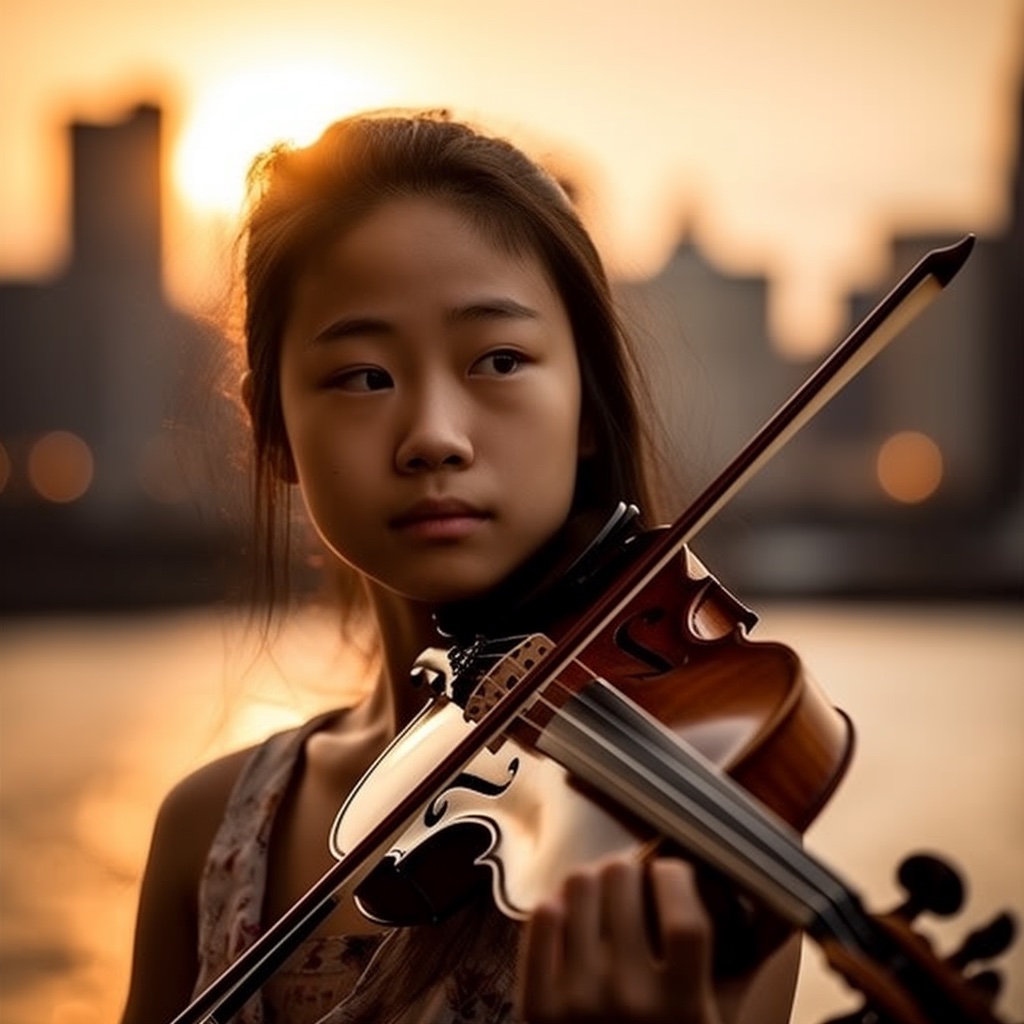
For Punggol parents whose child is considering G3 Higher Music, first confirm that their school or approved SEC G3 Music Centre provides the course and supervised elective. The official 2027 Singapore-Cambridge Secondary Education Certificate syllabus is K351, replacing former code 6086. It requires three compulsory core papers—Music Studies 40%, Creating 30% and Performing 30%—plus one elective chosen from Research Essay, Higher Creating or Higher Performing. The elective is assessed separately for Higher Music Distinction or Merit; it does not become an equal fourth slice of the core grade. The child’s strongest next step is to discuss the elective choice, actual repertoire and workload with the Music teacher.
This independent eduKate Punggol guide explains the verified 2027 MOE–SEAB rules and useful decisions for the 2027/2028 Full Subject-Based Banding environment. PG3 is a secondary admission Posting Group, while G3 is an individual subject level. Higher Music K351 is different from G3 Music K350. The first SEC examinations are in 2027; a pupil entering Secondary 1 in 2027 ordinarily sits national examinations later, so the applicable examination-year syllabus must be rechecked when released. Here, high-fidelity learning means hearing, creating, performing and investigating with real evidence. It does not mean buying expensive equipment, outsourcing coursework or guaranteeing a distinction.
- Exact subject: SEC 2027 G3 Higher Music K351, older code 6086; distinct from ordinary Music K350.
- Core Paper 1: Music Studies, 1h30, 75 marks, 40%; six compulsory unfamiliar listening questions.
- Core Paper 2: Creating, 30%; composition 40 marks and 400–500-word Reflection Notes 10 marks, up to nine weeks with five supervised hours.
- Core Paper 3: Performing, 30%; 5–10-minute recital 40 marks and 400–500-word Reflection Notes 10 marks.
- Elective Paper 12: Research Essay, 50 marks; individual inquiry of 1,500–2,000 words on a musical field outside the prescribed Paper 1 Areas of Study.
- Elective Paper 22: Higher Creating, 50 marks; three compositions up to six minutes combined, including technological creation, plus programme notes.
- Elective Paper 32: Higher Performing, 50 marks; 8–12-minute recital 40 marks and a 3–5-minute viva voce 10 marks.
- Awards: Distinction requires A1/A2 in both core result and elective; Merit requires C6 or better in both.
- Parent priorities: check supervision, suitability, originality and a sustainable learning schedule.
1. What Higher Music is meant to develop
Higher Music integrates the same three main musical activities as G3 Music—Listening, Creating and Performing—while allowing a deeper personal specialisation. Students study diverse musical cultures and develop interpretation, technical competence, creativity and reflection. The additional elective may involve a substantial independent essay, a composition portfolio or advanced performance. The subject requires more than being able to play an instrument impressively in an examination room.
Parents should ask which parts of the programme the learner enjoys and where their work shows independent judgement. A child who excels in recital may be less comfortable with research or composition; another may love creating sound worlds but struggle to explain stylistic differences in unfamiliar listening. Both need a plan for the core Music grade. The elective is an opportunity to extend a genuine strength rather than to hide a weak compulsory area.
2. The subject is not automatically available to every PG3 learner
SEAB states that K351 candidates must be under the direct supervision of a G3 Music teacher at their own school or at an approved G3 Music Centre. This condition matters. A school that offers band, choir or a music-related CCA does not necessarily enter students for G3 Higher Music. Likewise, private lessons alone do not create a legitimate school-candidate examination route.
Ask the secondary school about Music Elective Programme or approved centre arrangements, the subject-choice timeline, prerequisites, supervision, repertoire restrictions and travel requirements. Punggol students may need to balance school and music-centre journeys alongside CCA and core subjects. Choose on evidence of readiness and the actual programme, not the reputation of a label.
3. Posting Group and subject level are different concepts
Full Subject-Based Banding separates the initial school admission Posting Group from the G-levels of subjects taken. A pupil admitted through PG3 may have a particular individual subject offer but should not assume every national elective is available. The school decides its offered subject combinations within MOE rules, and should explain any criteria for enrolment.
The Singapore-Cambridge Secondary Education Certificate begins in 2027, replacing the earlier separate national secondary examination routes for the relevant graduating cohort. SEAB lists K351 with the older GCE reference 6086 for comparison. Candidates should check the school’s actual SEC entries before registration closes. A student entering Secondary 1 in 2027 would not normally be sitting K351 that same year, so younger families should build foundations and revisit the final-year requirements later.
4. Three compulsory papers plus one chosen elective
The official 2027 scheme requires Paper 1 Music Studies, Paper 2 Creating and Paper 3 Performing. These three together determine the candidate’s SEC grade, with a 40%–30%–30% weighting. In addition, each Higher Music candidate enters one elective: Paper 12 Research Essay, Paper 22 Higher Creating or Paper 32 Higher Performing. The electives are alternatives, not three extra papers that every student must sit.
The chosen elective is graded separately against a fifty-mark scheme and combined with the core result only for the additional Higher Music Distinction or Merit conditions. A family should not report K351 as a four-way average or imagine the elective can replace a compulsory paper. Planning should start with the official table and the Music teacher’s advice about the learner’s profile.
5. Distinction and Merit are two-part outcomes
The 2027 Higher Music Distinction requires A1 or A2 in the combined core Papers 1–3 and also A1 or A2 in the separate elective. The Merit condition requires C6 or better in both the core result and the elective. An A1 elective alongside a lower core grade cannot be presented as an automatic Distinction. Likewise, a strong core result cannot substitute for a weak elective.
Parents can use this rule to design a balanced strategy: protect all compulsory areas while extending a chosen strength. It does not mean chasing marks with constant additional practice. A student’s readiness, mental and physical wellbeing, opportunities for authentic musical learning and the school’s supervision arrangements remain central.
6. Paper 1: six unfamiliar listening extracts
Music Studies is a ninety-minute written paper worth seventy-five marks and forty percent of the core result. It contains six compulsory questions across three parts: Western Classical Tradition (two questions, 25 marks), Jazz and Popular Music (one question each, together 25), and Asian Music (two questions, 25). Students answer from unfamiliar recorded extracts, sometimes with a skeleton score, full score or lead sheet, and sometimes without notation.
SEAB may test rhythm, metre, melody, harmony, tonal relationships, texture, timbre, instrumentation, musical form, style and musical dictation. Naming a genre from a single familiar instrument is not high-fidelity analysis. A student should point to real audible features and explain how they support the identification. Practise with legitimate recordings and school-approved extracts rather than any claim to know the examination audio.
7. A layered listening method that parents can support
Begin with one short unfamiliar clip. First ask the student to identify pulse, metre, tempo and obvious changes. Then describe instrumentation, register and texture. Next consider melodic pattern, phrase, harmony or formal contrast. Finally decide what style or tradition is suggested and what evidence supports that conclusion. This sequence trains careful listening instead of fast guessing.
Keep a notebook with extract, audible detail, correct terminology and explanation. If a child writes ‘the music becomes exciting’, ask whether the change is caused by dynamics, density, a new instrument, rhythm or harmony. Retest with a different extract a week later. Recognition of one repeatedly played clip should not be mistaken for flexible musical understanding.
8. Western Classical study: context plus sound
The syllabus includes Baroque dance suites, Classical sonatas, Romantic character pieces, twentieth-century Impressionism and Nationalism, Classical string quartets, Romantic German Lieder and Classical symphonies. The point is not to memorise a single period label for every piece but to hear how form, harmonic language, instrumentation and musical practice function in context.
A child may need to distinguish the contrast of a sonata structure from the characteristic scale of a character piece, or the interaction of voice and piano from instrumental chamber writing. Ask which musical details led to the distinction. Context can explain a convention, but the answer must still correspond to what is actually heard in the extract.
9. Jazz, improvisation and Popular Music
K351 covers Traditional Jazz, Swing, Bebop and Cool Jazz from the American 1920s–1960s context. Students should identify groove, syncopation, improvisational roles, characteristic ensembles and stylistic development as appropriate. Popular Music includes late-1960s pop-rock, synth-pop and R&B/Soul, with attention to production and the interaction of voices, instruments and technology.
A strong listening answer notes what the rhythm section is doing, whether a riff is repeated, whether a synthesised timbre shapes the texture or whether an improvisational response changes the musical conversation. The mere presence of a drum kit does not prove a particular genre. Different music traditions should be studied respectfully and with attention to the syllabus’s actual examples.
10. Asian Music requires careful cultural and musical distinctions
The Asian Music area includes Malay traditional dance music such as Zapin and Joget; Chinese ensemble practices Jiangnan Sizhu and Guangdong Music; Indian classical Hindustani and Carnatic traditions; and Javanese gamelan. Each has specific approaches to instruments, metre, melodic organisation, texture and musical purpose. An informed answer is not a generic sentence about ‘Asian rhythm’.
Parents can discuss cultural performances or listening examples familiar in Singapore, while learning where the traditions differ. A student might explain the function of particular percussion or melodic instruments, or compare texture in two forms. The tradition’s name is not enough: the candidate should connect audible evidence to an accurate description.
11. Dictation needs a shorter practice cycle
Paper 1 can require simple melodic or rhythmic dictation, so a learner needs to retain a short musical phrase and represent it accurately. It helps to identify pulse, metre, contour and recurring patterns before transcribing every detail. The appropriate level and form of notation should follow the school’s Music teaching.
A parent can support quiet focused practice without purchasing special software. Use the teacher’s lawful learning materials or original short phrases. Fix one repeated issue, such as subdividing a beat or distinguishing repeated notes, and practise again using a fresh example. Dictation should reveal listening and notation ability, not merely the memory of one sample.
12. Paper 2 Creating: a genuinely original composition
The compulsory Creating paper carries thirty percent of the core result. It requires one original composition based on one of six given stimuli. The composition is worth forty marks and has a maximum performance duration of three minutes; Reflection Notes are worth ten marks. The syllabus provides a period of up to nine weeks with up to five hours of supervised time. The candidate’s work must be authentic and follow the school’s actual submission rules.
Composing begins with an idea and an intention. Ask the student to define the role of a motif, the shape of the piece, the relationship between sections and the planned instrumentation. A complex arrangement is not automatically a better one. One clearly developed idea can communicate more effectively than a sequence of unrelated effects assembled because the software offers them.
13. The 400–500-word Creating reflection
The 2027 K351 syllabus asks for a 400–500-word Reflection Notes submission with the core composition. It should explain the candidate’s compositional thinking and decisions, including how the stimulus shaped the piece, how musical elements were developed and what was changed during creation. Reflection is assessed, so a generic statement about passion does not provide sufficient evidence.
A parent can ask the child to talk through an earlier draft and the final version. Which musical change improved the work? Was a timbre substituted, was a motif transformed, or did the structure become clearer? The notes should be the candidate’s own account under school rules, not an adult rewrite that invents musical intentions after the fact.
14. Paper 3 Performing and the second reflection
The compulsory Performing paper also contributes thirty percent. Candidates present a 5–10-minute recital worth forty marks and a separate 400–500-word Reflection Notes submission worth ten. Musical fluency, technical control, interpretation and communication matter. The recital can include solo and ensemble work according to the syllabus and approved repertoire, and the programme should suit the learner’s developmental stage.
A technically difficult work is not automatically the best selection if it leads to insecure performance. The Music teacher should help choose repertoire demonstrating musical understanding and secure technique. Reflection on rehearsal should identify actual musical or technical problems and explain how the candidate addressed them. Repetition of a complete programme without specific correction may consume time without meaningful improvement.
15. Choosing an elective: three truly different pathways
Research Essay, Higher Creating and Higher Performing each reward a different kind of strength. Research Essay requires sustained critical listening, investigation and substantiated writing. Higher Creating develops multiple original compositions, technologies and analytical programme notes. Higher Performing requires more advanced recital planning, expressive performance and verbal explanation in a viva voce.
A student should not choose an elective only because they think it is ‘easier’. Ask which projects the school or approved centre can supervise, what evidence of readiness the child has already shown and what the added demand means for other subjects. A balanced course is more useful than an overloaded timetable built around one impressive-sounding elective.
16. Paper 12 Research Essay: 1,500–2,000 words
Paper 12 is a fifty-mark individual research essay between 1,500 and 2,000 words. It must examine a topic beyond the required Paper 1 Areas of Study, with musical works selected from outside the prescribed genres. This restriction prevents a candidate simply reusing ordinary listening revision as the assessed research topic. The essay needs a manageable inquiry, evidence drawn from actual music and a coherent argument.
The assessed areas include aural attentiveness, contextual understanding, investigative techniques and vocabulary, substantiated judgements, and clear communication with acknowledgement of sources, each worth ten marks. A biographical timeline of a famous artist with little musical analysis would miss the point. The child’s research question should be small enough to answer meaningfully and supported by available legitimate recordings or scores.
17. Build a research question that musical evidence can answer
Consider a broad topic such as performance practices in a musical tradition not already prescribed in Paper 1. The candidate must narrow it: which musical feature, which two or three representative works, and what relationship will be examined? The answer should emerge from listening, context and comparison, not merely from web articles describing the genre.
Before committing, ask the teacher to check that the proposed topic falls outside the prohibited core genre list and suits the school supervision. Choose primary musical evidence where it is lawfully accessible, then record full references. The parent can support research organisation but must not write or secretly edit the national essay.
18. Paper 22 Higher Creating: a composition portfolio
Paper 22 is a fifty-mark elective requiring three complete compositions with a total maximum performance duration of six minutes, with technology used in at least one work according to the syllabus. It also requires programme notes for the compositions. The scheme assesses the portfolio’s compositional quality and programme notes, with a fifty-mark overall elective result.
Three compositions should demonstrate range and intentionality rather than being one idea copied three times with a different instrument preset. Ask how the intended performance context, expressive aim or technological method changes the musical decision. The student’s creative work must be original and appropriately documented. Digital effects are means of expression, not evidence of musical insight by themselves.
19. Higher Creating: technology should serve the music
Technology can help develop timbres, textures, layering, editing and production, but the result still needs a coherent musical purpose. A candidate using a DAW should understand what material they created, what was sampled or licensed, and how processing serves the musical idea. Generative tools and third-party assets require particular attention to attribution and school rules.
Programme notes should analyse the actual music, not tell a promotional story about how impressive the candidate is. The official K351 guidance limits programme notes to up to 500 words per composition. Ask whether a listener can connect the intended context to the composition’s important audible features. A large project file is not automatically a better composition.
20. Paper 32 Higher Performing: 8–12 minutes plus viva
Paper 32 is a fifty-mark elective with an 8–12-minute recital worth forty marks and a 3–5-minute viva voce worth ten. It therefore requires both expressive musical preparation and the ability to discuss repertoire, rehearsal and interpretative choices. The recital is longer than the compulsory core Performing paper and should be planned separately within the national rules.
In the viva, a student should be able to identify musical challenges, explain a relevant stylistic or technical decision and relate an interpretation to the work. Memorising a generic introduction about working hard is not equivalent to understanding the performed music. Let the teacher guide age-appropriate repertoire, ensemble arrangements and practice technique.
21. How to choose between the elective routes
Ask the child to rate genuine enthusiasm for researching, composing and performing, then look at recent work rather than preference alone. Someone who enjoys comparing musical traditions and writes well may be a strong Research Essay candidate. Someone who develops multiple original ideas and handles source attribution carefully may prefer Higher Creating. A performer who can play securely and speak analytically about the music may be well suited to Higher Performing.
Then consider logistics: school supervision, instruments, approved software, performance partners, authentic evidence, travel and available time. If an option depends on equipment or expertise the school does not provide, discuss alternatives before committing. Parents should not buy expensive software or book commercial recording studios simply because an elective exists.
22. Copyright, source acknowledgement and academic honesty
All elective routes depend on authentic candidate work. A research essay must acknowledge sources, a composition must distinguish original musical material from licensed samples or existing works, and a performance programme must follow repertoire rules. Recorded music and printed scores have rights that do not disappear when copied for an examination-related website.
An AI assistant may help explain general music vocabulary or research organisation if permitted, but it should not produce assessed essays, programme notes or compositions and pass them off as the child’s original work. Ask the school about current technology and attribution rules. Plagiarism can undermine the assessment and, more importantly, prevents the child learning the relevant skill.
23. A Punggol family’s first diagnostic review
Collect one school-marked listening response, a short original composing exercise, a recent performance comment and evidence of the child’s interest in one elective. Do not diagnose ‘weak in Music’ from one final mark. It may instead be aural uncertainty about texture, rhythm dictation, limited composition development, recital instability or difficulty expressing research arguments.
Write one precise improvement target, such as ‘identifies two audible features before claiming a style’ or ‘develops a motif meaningfully rather than repeating it unchanged’. A teacher can then demonstrate an approach and ask the learner to use it with a new example. Retesting a fresh task is more informative than praising a polished model.
24. One balanced 12-week preparatory plan
Weeks 1–3: examine core listening, creating and performing work and agree on two weaknesses. Use short legitimate unprepared listening extracts and one modest original musical sketch. Check that the elective direction matches the student’s strengths.
Weeks 4–6: practise interpretation across Western Classical, Jazz, Popular and Asian Music. Develop a short original phrase into a different texture or form, and practise targeted performance passages with teacher feedback.
Weeks 7–9: add short non-assessed research, composition or recital-analysis activities matched to the likely elective. Work on clear notation, sourced evidence and purposeful reflection. Do not confuse preparatory tasks with the controlled national coursework.
Weeks 10–12: test listening on unfamiliar extracts, discuss a new creative intention, and review performance or research explanations independently. Adjust the plan according to school feedback, health and the total subject load.
25. Secondary 1 through Secondary 4: the correct learning runway
Secondary 1: enjoy Music, develop aural awareness, rhythmic accuracy, instrument or voice fundamentals and curiosity about multiple cultures. Use school-approved materials; avoid treating this year’s SEC tasks as lower-secondary homework.
Secondary 2: discuss the school’s Music and Higher Music routes, selection criteria and whether an approved G3 Music Centre is involved. Evaluate the student’s sustained motivation across listening, creating and performing.
Secondary 3: after K351 is confirmed, build the four music Areas of Study and choose an elective that the supervising teacher can support. Develop independent research, composing or performance skills through ordinary learning tasks.
Secondary 4: for a 2027 candidate, follow the official K351 submission and examination schedule. For 2028 or later candidates, confirm the new syllabus, supervision, repertoire and award conditions before relying on earlier papers.
26. A timetable that respects Punggol families
Punggol pupils may attend schools or approved Music Centres outside the neighbourhood. Travel can combine with CCA rehearsals, instrument practice, G3 schoolwork and family responsibilities. A sustainable schedule places fixed lessons, sleep and recovery first, then reserves several focused musical-learning windows rather than insisting that every evening must contain a long recital run.
Parents can support high-quality practice through a quiet environment, useful school materials and realistic goal setting. They do not need to purchase every music app or enter every competition. Some of the strongest improvement comes from learning to hear one detail accurately, correcting a passage and explaining a musical choice without being prompted.
27. What small-group tuition should actually improve
A useful Music tutor can identify a specific weakness in dictation, aural analysis, structure or performance. They should understand K351’s compulsory papers and chosen elective, and respect the fact that assessed work belongs to the student under authorised school or centre supervision. Ask how improvement is checked through an unfamiliar extract or an independently revised musical idea, rather than trusting a portfolio polished by adults.
The immutable eduKateSG Clementi article demonstrates a specific three-pupil Mathematics tutorial and the principle of close feedback. It is not evidence that an identical Higher Music course, group size, price or location exists in Punggol. Families should confirm actual provision. School teaching and independent practice may already provide sufficient support for some learners.
28. Future educational routes, without guaranteed admissions claims
Higher Music may develop skills relevant to specialist music, performing arts, composition, teaching and interdisciplinary study. However, a Higher Music Distinction does not automatically secure a place in any JC, conservatory, polytechnic, ITE or university course. Particular institutions may use grades, practical auditions, portfolios, interviews or other prerequisites, and requirements may change.
The post-secondary admissions framework begins changing from 2028 following the first SEC results. Parents should use the actual application-year MOE and institution guidance, and should not narrow a Secondary 1 child’s entire future around a speculative admissions advantage. Musical growth has lifelong value beyond one qualification.
29. Frequently asked questions
How many papers must a K351 candidate take?
Three compulsory core papers (Music Studies, Creating, Performing) and exactly one elective chosen from Paper 12, Paper 22 or Paper 32.
Does the elective count as another 25% of the core SEC grade?
No. The core grade is weighted 40%, 30%, 30% across Papers 1–3. The elective is assessed separately for the Higher Music award.
How long is the Research Essay?
In 2027, Paper 12 requires 1,500–2,000 words and musical inquiry outside the genres prescribed for the core Paper 1 Areas of Study.
What is required for Higher Creating?
Three complete compositions with a total maximum duration of six minutes, including a technological creative element, and programme notes under the official submission conditions.
What is the Higher Performing assessment?
An 8–12-minute recital worth 40 marks and a 3–5-minute viva voce worth 10.
Can a child receive Distinction with an A1 elective and a B3 core result?
No. Distinction requires A1/A2 in both the core combined result and the elective. A qualifying Merit requires at least C6 in each.
Does every Punggol school offer Higher Music?
No. Confirm the school or approved G3 Music Centre’s actual offerings and direct supervision arrangements.
Official sources and connected eduKate learning
This is an independent parent education resource, not an official MOE or SEAB publication. The 2027 PDF, candidate-year syllabus and school or approved Music Centre instructions govern the assessment.
- SEAB official SEC 2027 G3 subject list
- Official SEAB 2027 G3 Higher Music K351 full syllabus
- SEAB SEC examinations and national candidate information
- Punggol G3 Higher Music research, creating and performance electives
- Secondary 4 K351 core and elective preparations
- G3 Higher Music school options and exam entry
- G3 Music versus Higher Music and MEP choices
- Related PG3 Music K350 parent guide
- How to confirm a child’s SEC subject entry
- Immutable Clementi editorial and tutorial reference


