
For Punggol parents whose child is considering G3 Exercise and Sports Science (ESS), the official 2027 Singapore-Cambridge Secondary Education Certificate syllabus is K354, previously reference 6081. This subject combines scientific reasoning and physical performance; it is not simply a national PE examination for sporty students. Paper 1 is a two-hour electronic theory examination worth 80 marks and 40%. Paper 2 is school-supervised coursework over 21 weeks worth 80 marks and 60%, including an individual/dual activity, a team activity and a Development Log. Ask the school whether ESS is offered, which practical activities it can support and how the student will balance performance, academic learning, CCA and recovery.
This independent eduKate Punggol guide translates the 2027 MOE–SEAB K354 syllabus into a realistic parent plan for the 2027/2028 Full Subject-Based Banding era. Posting Group 3 (PG3) is a secondary admission route; G3 is the level of an individual subject. The first SEC examinations are in 2027, but an entering Secondary 1 pupil in 2027 usually graduates later and must follow their own examination-year syllabus. High-fidelity ESS teaching means analysing movement safely, using relevant evidence, developing informed tactical decisions and reflecting honestly on performance. It does not mean guaranteeing sporting success or asking young people to overtrain to obtain marks.
- Exact subject: SEAB 2027 SEC G3 Exercise and Sports Science K354 (former code 6081).
- Paper 1: 2-hour e-Examination, 80 marks and 40%; Sections A/B/C carry 20/40/20 marks.
- Paper 2: supervised coursework across 21 weeks, 80 marks and 60%, assessed by the school and externally moderated.
- Practical activities: one individual or dual sport and one team sport, 20 marks each; combined performance worth 40% of the final subject.
- Development Log: 40 marks, worth the remaining 20%; includes tactical analysis and an individual training-programme inquiry.
- Five study areas: exercise physiology; motor learning and development; biomechanics; sports psychology; sports sociology.
- Safety: training plans, physical activities, filming and coursework must follow teachers’ supervision and safeguarding.
- 2028: verify the candidate-year syllabus and sport choices before acting on deadlines or entry requirements.
1. What Exercise and Sports Science is—and is not
ESS explores how the body produces movement, how learning and practice change motor performance, how psychological and social factors influence participation, and how to analyse evidence to improve safely. It includes physical proficiency, but achievement in a school sports team alone cannot satisfy the theory and Development Log. Equally, a pupil strong in scientific explanation may need time to develop competent performance in the specified activities.
Parents should ask the school’s ESS teacher which particular activities the department is equipped to offer and what the learning workload involves. Good ESS education strengthens responsible lifelong movement and sound judgement, not only competitive results. The subject does not require every student to become an elite athlete, and a national syllabus listing does not mean every school has the facilities or approved class to offer it.
2. The 2027 SEC and Full SBB context
Under Full Subject-Based Banding, the initial Posting Group is distinct from the levels at which individual secondary subjects are offered. A child in PG3 does not automatically take K354 in Secondary 3 or 4; subject combinations are decided through school arrangements and readiness. The school should confirm the actual elective, class availability, candidate registration and teacher-supervised activities.
The SEC begins for the first relevant national cohort in 2027. School candidates register through their schools; families should use the 2027 K354 code instead of the former 6081 when checking national entries. A student newly entering Secondary 1 in 2027 should focus on healthy physical education, general Science and school responsibilities. Full ESS examination drills and controlled coursework are for the appropriate upper-secondary programme.
3. Understand the two-component assessment
Paper 1, Theory, is an electronic examination lasting two hours and carrying eighty marks, equivalent to forty percent of the final result. Paper 2 Coursework also carries eighty raw marks but contributes sixty percent, conducted over twenty-one weeks. The differing percentages mean that a score of forty on each paper does not automatically give equal contributions to the final result.
The coursework is internally assessed and externally moderated. Parents should not treat a student’s CCA match result, fitness tracker score or video uploaded online as the SEC mark. The approved criteria involve performance in the specified activities and genuine independently documented analysis. The school and the national syllabus determine how evidence is collected.
4. Paper 1 is an e-Examination, not only a multiple-choice test
The two-hour electronic theory paper is split into three compulsory sections. Section A, twenty marks, includes item types such as multiple choice, matching, drag-and-drop, boxes, fill-in-the-blanks and short answers based on text, images and short videos or animations. Section B, forty marks, consists of structured questions using similar stimuli. Section C, twenty marks, uses one or two videos for structured analysis.
Being comfortable clicking through a computer interface is useful but not sufficient. A pupil must read the task and interpret movement evidence, scientific data or a social issue correctly. Practice should involve explaining why one movement strategy may be effective or why a particular graph supports a conclusion. Follow the school’s actual e-examination preparation instructions rather than assuming any commercial software precisely reproduces the national interface.
5. Paper 2: performance and Development Log
The coursework has two main parts. Performance of Practical Activities carries forty raw marks and forty percentage points of the overall subject. The student is assessed in one chosen individual or dual sport (twenty marks) and one chosen team sport (twenty marks). The Development Log carries another forty raw marks and twenty percentage points of the final subject.
The difference between raw marks and grade weighting is easy to miss. The two sports together are not merely half of the overall subject because they make up half of the 80-mark coursework; their assessed component is explicitly forty percent of the qualification. The Development Log is twenty percent. The school should explain this to the child before planning time and effort.
6. The official individual and dual options
The published 2027 individual activity list includes cross-country running, swimming and track and field. Dual activities include badminton, table tennis and tennis. Candidates choose one from the combined individual/dual category under their school’s approved preparation. A student who plays a sport informally cannot presume that their local recreational results meet SEAB’s standardised performance requirements.
Parents should ask about the actual school-supported options, available coaches, safe facilities, assessment conditions and any eligibility or medical considerations. A young learner need not purchase premium sporting equipment simply because a sport appears on the national list. The school’s programme governs how performance is taught and recorded.
7. The official team options
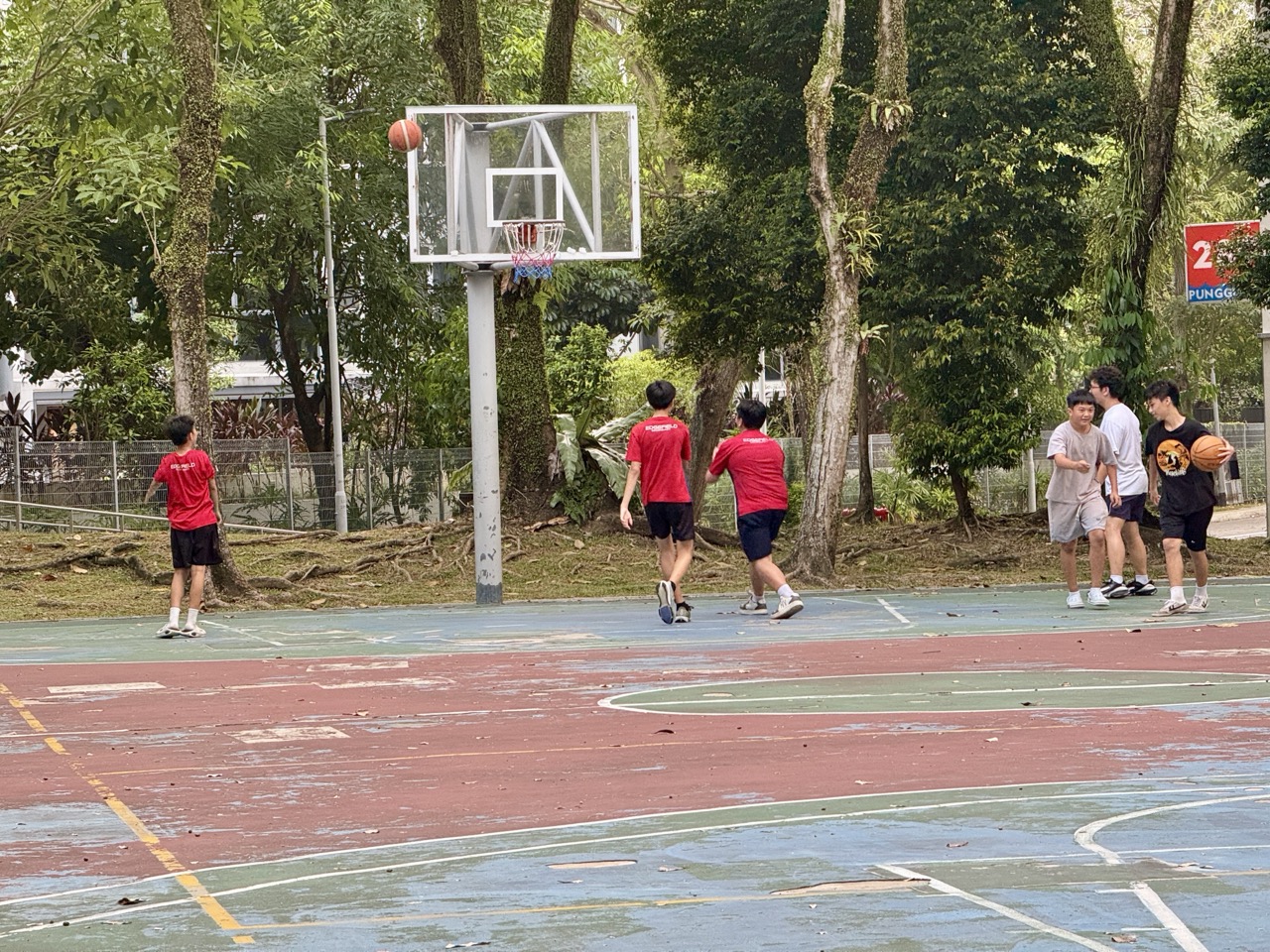
The 2027 team-activity list includes basketball, floorball, football, hockey, netball, softball and volleyball. Candidates must also undertake one team practical activity in addition to the individual/dual selection. Team performance tests movement, decision-making, response to other players and execution in a real playing context. It cannot be assessed fully through running drills alone.
A parent should ask which team activity is offered by the school, whether training fits CCA arrangements and how the learner will receive feedback. A student may understand tactics in a textbook but need supervised practice making decisions with teammates. Conversely, strong athletic skill does not automatically lead to sound tactical analysis for the Development Log.
8. Practical performance is not the same as personal fitness rankings
The school assesses skill proficiency, appropriate tactics, control and fluency in recognised forms of the practical activities. Individual activities may use standardised measured performance, whereas dual and team activities rely on descriptors and evidence of actual play. Comparing one child’s body shape or weight with a peer’s is not part of a responsible parent support strategy.
Focus on coach feedback, safe movement quality and meaningful improvement. A student may show better tactical decisions without being the fastest runner or most prolific scorer. A good educational environment allows progression with an understanding of limits. Injury, exhaustion or pain should never be ignored to meet a self-imposed practice target.
9. Why filmed evidence requires safeguards
The 2027 syllabus requires centres to provide video-recorded evidence for assessed dual and team practical activities, generally around fifteen minutes per filming under the prescribed arrangements. For certain objectively assessed individual activities, the centre submits recorded timings or distances instead. These are school/examination-centre requirements, not an instruction for parents to film classmates at will.
Ask the school about filming, storage, consent and safeguarding. Do not upload identifiable students’ training or assessment videos to public social-media accounts without appropriate permission. A private video may sometimes aid coaching, but a family’s own clip cannot replace official assessment evidence or the centre’s controlled submission.
10. The Development Log is 40 marks with distinct tasks
The 2027 Development Log includes Task 1, Improving Tactical Decisions in a Team Practical Activity, worth ten marks. Task 2 concerns developing a training programme to improve practical performance and is divided into Task 2(A) Analysis and Development, fifteen marks; Task 2(B) Implementation and Evaluation, ten marks; and Task 2(C) Consolidation of Experience, five marks.
This structure asks the learner to move through observation, analysis, choice, implementation and reflection. It is not a diary consisting solely of ‘trained hard today’. Each claim should be supported by appropriate performance evidence, and the proposed improvement should be connected to an actual movement or tactical problem. The official criteria and school’s instructions take priority over generic templates.
11. Tactical decisions in team play
Task 1 uses school-provided video of the candidate’s team practical activity. Students analyse the effect of their own tactical decisions on team performance and recommend justified improvements. A useful response identifies what happened in a particular situation, why the decision was made and what its consequences were. The student should consider teammates’ positions, the opposition’s actions and any constraints apparent in the footage.
A football example may involve choosing when to pass or retain possession. A netball example may involve supporting space and timing. These are illustrative situations, not predicted examination clips or a prescribed tactic for every team. Parents should not create their own answer for the log; teachers supervise, and the child must interpret the actual approved evidence.
12. Task 2: the four-to-five-week training inquiry
Task 2(A–C) requires students to analyse performance, design, implement and evaluate a four-to-five-week training programme within the overall coursework process. They may focus on either the chosen team or individual/dual activity. The plan must be safe and realistic, using appropriate training principles, measurable objectives and evidence that enables evaluation.
A parent should not prescribe an unsupervised increase in exercise intensity or volume because an external article recommends it. Individual training depends on age, medical circumstances, recovery, experience and coach supervision. The assessed plan is prepared by the candidate under school rules, with the supervisor checking whether it is safe to implement. If a student has pain or a medical concern, appropriate professional assessment takes priority.
13. Consultation limits: a vital academic-integrity detail
The syllabus permits specific coursework-supervisor consultations: one for the proposed training programme in Task 2(A), and three or four during implementation in Task 2(B). It does not permit consultation for Task 1 or Task 2(C) in the same way. Supervisors may explain requirements and endorse safety, but must not give students solutions, write entries or tell them what marks will be awarded.
Parents can support logistics and remind the child to record genuine observations, but they must not complete, rewrite or secretly improve the assessed log. A tutor should not sell a ‘perfect Development Log’ to copy. Academic honesty is not an optional decorative virtue: the K354 syllabus explicitly states that candidates must produce their original work.
14. AI-generated coursework and attribution
The published K354 instructions directly address generative AI. Content produced by AI is not treated as the candidate’s own work. Students must be discerning about the accuracy, objectivity and relevance of generated outputs, and acknowledge sources and AI tools used. Passing off another person’s or an AI system’s writing as original can lead to disciplinary action.
This matters for parents who expect to use a chatbot to polish the assessed Development Log. The safe approach is to follow the school’s specific rules and insist on student-generated reflection and analysis. AI can assist ordinary learning within school-approved limits, but an unauthorised generated tactical report or training plan is not acceptable evidence of the student’s own performance.
15. Paper 1 Area 1: Exercise Physiology
Exercise Physiology examines interacting bodily systems, including bones, joints, muscles, the cardiorespiratory system and energy systems, plus the body’s responses and adaptations to exercise. Students also study injury risks and training principles. A memorised anatomical label is useful, but a good answer explains how the structure or process affects movement in a given sport.
Ask the learner to explain a general movement using the relevant joint, muscle group and force relationship as taught by school. They can interpret a supplied graph of heart-rate response, but should not use personal health readings to diagnose a condition. Recovery and risk assessment are part of responsible performance, not excuses to ignore training.
16. Area 2: Motor Learning and Development
Motor learning concerns how skills are acquired, refined and performed under changing conditions. The syllabus covers information processing, the influence of practice and stages of motor development. A student who can describe a technique may still struggle to perform it automatically when the game becomes unpredictable. Comparing performance under different conditions can help reveal how learning transfers.
A useful teacher-led activity may separate a movement into stages, demonstrate it, give specific feedback and then ask the student to perform under a different but safe condition. Parents should avoid overwhelming children with simultaneous instructions. Effective feedback targets a manageable issue and allows the learner time to test the correction.
17. Area 3: Biomechanics
Biomechanics connects physics concepts with movement: forces, motion, balance and other relevant relationships. A learner should be able to interpret a sporting sequence and explain how technique changes might influence performance. Saying ‘more force is better’ without defining the direction or movement constraints is not a good biomechanical explanation.
Use still images or approved training clips to discuss a joint position, centre of gravity or movement pathway where these are within the syllabus. The child should identify what can actually be observed and avoid inferring precise forces from a casual video. Supervised coaches are needed for physical technique changes, especially in potentially injurious movements.
18. Area 4: Sports Psychology
Sports Psychology covers motivation, arousal, anxiety, goal setting and other influences on participation and performance. A student must learn that different situations and athletes may respond differently. Feeling nervous before a match is not necessarily proof of poor mental strength, and high arousal is not universally helpful in every sport.
An age-appropriate educational conversation may consider what makes a goal specific, how feedback influences confidence and how a player responds after an error. Parents should avoid using an examination course to diagnose a mental-health condition or impose punishing motivational methods. Supportive coaching and realistic expectations promote learning.
19. Area 5: Sports Sociology
Sports Sociology examines ethical, equitable and commercial influences on sport. Topics can include who has access to participation, how media and sponsorship shape sporting priorities, and how ethical choices affect individuals and teams. Students should learn to reason from different perspectives and evidence rather than assume the most popular position is automatically correct.
A useful classroom case may ask whether a sporting event is accessible to different participants or what trade-offs a sponsor arrangement creates. A thoughtful answer identifies stakeholders, relevant evidence and possible consequences. This is a suitable way to connect a young person’s sporting interest to broader civic and social literacy.
20. Training principles are not a home prescription
The syllabus includes knowledge of training principles and methods as academic content and controlled coursework. A parent might read about progression, specificity, overload or recovery, but applying these to a particular child requires the teacher or qualified coach to account for that learner’s circumstances. The National syllabus does not license an unsupervised home programme that pushes beyond safe limits.
Safe learning can instead involve interpreting a fictional training diary, explaining which principle it illustrates and identifying a missing rest period. This develops scientific reasoning without exposing a student to unnecessary risk. A child already heavily committed to CCA should discuss recovery and injury concerns with appropriate adults.
21. Analyse data without making ungrounded performance claims
ESS Paper 1 may include charts, statistics and clips relating to movement, training or sporting participation. Begin by reading the axes, measures, dates, population and sample. A modest improvement over a week may reflect several factors. A causal claim needs stronger evidence than a simple before-and-after measurement without controls.
Teach students to explain an observed pattern, propose a plausible mechanism, recognise limitations and suggest what further evidence could help. This is high-fidelity performance analysis. It also helps teenagers evaluate claims made by online fitness influencers and sports products without turning a school lesson into a purchasing recommendation.
22. A short diagnosis for parent and teacher
Collect a recent theory response, the student’s teacher-provided practical feedback and a small sample of non-assessed reflection. Ask which difficulty is most important: scientific knowledge, reading a video, tactics, motor execution, interpretation of data or organising written analysis. A child may know the terminology but struggle to apply it to a new play; another may move skilfully but cannot describe the mechanism.
Choose one or two targets that are safe and teachable. For example, a learner may practise identifying evidence of a tactical choice in a supplied clip or revising the explanation of a training principle. If the issue concerns an actual physical technique, the school coach should guide the movement rather than a parent attempting an unqualified correction.
23. A parent checklist that respects ESS assessment
- Confirm the school offers K354 and which team and individual/dual activities it can supervise.
- Check the 40% e-Examination and 60% coursework weighting separately.
- Understand the 20/40/20 theory section marks and approved e-Examination interface.
- Record official 21-week coursework and the school’s deadlines, not invented dates.
- Ensure training, filming and performance are supervised with safeguarding in place.
- Understand Task 1 and Task 2(A–C) without writing the assessed log for the child.
- Check whether the student is recovering adequately and balancing CCA with school.
- Follow teacher guidance on any injury, access arrangements or health concerns.
24. A twelve-week preparatory learning cycle
Weeks 1–3: ask the school for the current ESS learning areas and use theory responses to identify two misconceptions. Practise reading short movement descriptions, comparing physiological concepts and explaining tactical choices in safe hypothetical scenarios.
Weeks 4–6: develop scientific explanations for movement patterns and interpret teacher-approved sporting clips or datasets. Separate observed actions from inferences about intent. The student should begin to articulate relevant limitations rather than claiming certainty from one camera angle.
Weeks 7–9: alternate written theory questions with supervised school performance feedback. Practise explaining goal setting, training principles and safety in general terms. This is not an invitation to self-direct extreme training or to create assessed logs outside school control.
Weeks 10–12: test independent analysis with new images, data and short essays. Compare with the baseline for clarity, evidence use and sound judgement, and discuss appropriate next steps with the teacher. These are suggested general learning activities, not the controlled 21-week SEC coursework programme.
25. Secondary 1–4: the right stage for each step
Secondary 1: build enjoyment of movement, current Science knowledge and safe participation through the school’s PE and CCA. Develop a habit of asking how movement works rather than begin national coursework years early.
Secondary 2: inquire about ESS availability, approved sports, the school’s selection requirements and the student’s genuine interest in both movement and academic analysis. Consider recovery needs and the complete subject combination.
Secondary 3: once the school confirms K354, integrate physiology, biomechanics, psychology and sociology into teacher-led practice. Learn ethical documentation and honest video-based analysis in ordinary classroom work.
Secondary 4: for the 2027 graduating cohort, follow the official 21-week coursework and e-Examination arrangements. For 2028 or later cohorts, verify that year’s updated K354 syllabus, assessed sports list and school deadlines.
26. Punggol family life: balance performance and wellbeing
Students in Punggol may commute across Singapore, attend demanding CCAs and study multiple G3 academic subjects. A safe routine recognises travel time, meals, schoolwork, rest and recovery. A non-assessed home activity could be ten minutes of sports science reading or reflecting on teacher feedback; avoid scheduling extra physical training when the learner is already fatigued or injured.
The family can use a sporting event or school-approved video to practise tactical analysis without publicising classmates. They do not need expensive wearables, private coaching packages or specialist analysis software simply to understand the syllabus. The goal is intelligent, safe participation and growing independence.
27. Tuition, coaching and what each can legitimately achieve
A tutor may clarify theoretical concepts and help a student analyse data or draft non-assessed practice explanations. A qualified coach may provide supervised performance feedback. Both should respect the school coursework boundary and never promise to manufacture a Development Log, alter video evidence or guarantee performance outcomes. Ask whether they understand the K354 paper structure and the teacher’s supervision rules.
The immutable Clementi Mathematics article describes a three-pupil lesson model centred on close explanation. It is an editorial and teaching reference, not evidence that an identical ESS tuition or sports-coaching service exists in Punggol. Extra paid lessons are not obligatory when school resources and regular practice are appropriate.
28. Future pathways: interest without a guarantee
ESS may support curiosity about sports science, physical education, health, coaching and related fields, but the SEC K354 grade is not an automatic entry pass for a JC, polytechnic diploma, ITE programme or university course. Admissions criteria depend on the student’s actual subjects, levels, results and the institution’s rules in the application year.
The SEC-linked post-secondary admissions system changes from 2028. For a younger student, focus on broad literacy, Mathematics, Science, ethics and safe movement, and revisit specific prerequisites when educational choices become relevant. Sport and study should reinforce wellbeing rather than force the child into a single early career identity.
29. Frequently asked questions
Is K354 just a national physical fitness examination?
No. Forty percent is a two-hour electronic theory paper; sixty percent is supervised coursework combining sporting performance and a Development Log.
Is the Development Log worth sixty percent?
No. Performance of practical activities contributes forty percent of the overall grade, while the Development Log contributes twenty percent. Together they make the sixty-percent coursework component.
Does the student choose two individual sports?
No. The 2027 syllabus requires one individual or dual practical activity and one team practical activity from the listed options.
How long is coursework?
The scheme specifies twenty-one weeks under the school’s supervision. Its training-programme inquiry includes a four-to-five-week implementation component within that larger process.
Can a chatbot write the assessed log?
No. SEAB says AI-generated content is not considered the candidate’s own work, requires acknowledgement of relevant sources and warns about disciplinary consequences for misrepresentation.
Can parents film or upload match footage for SEC assessment?
The school manages the formal evidence and safeguarding under SEAB instructions. Parents should not assume personal recordings or public uploads substitute for the authorised submission.
Official documents and related Punggol learning
This is an independent parent guide, not an official MOE or SEAB publication or personalised sports-training prescription. School supervision, athlete safety and examination-year rules prevail.
- SEAB 2027 G3 school-candidate syllabus directory
- Official SEAB G3 Exercise and Sports Science K354 2027 PDF
- SEC examinations, registration and scheduling
- Punggol K354 electronic examination, coursework and Development Log
- ESS Secondary 3 subject choices and sporting performance
- G3 Exercise and Sports Science terminology
- PG3 secondary school subject options
- How to check the exact SEC subject entry
- Immutable Clementi tutorial editorial reference


