
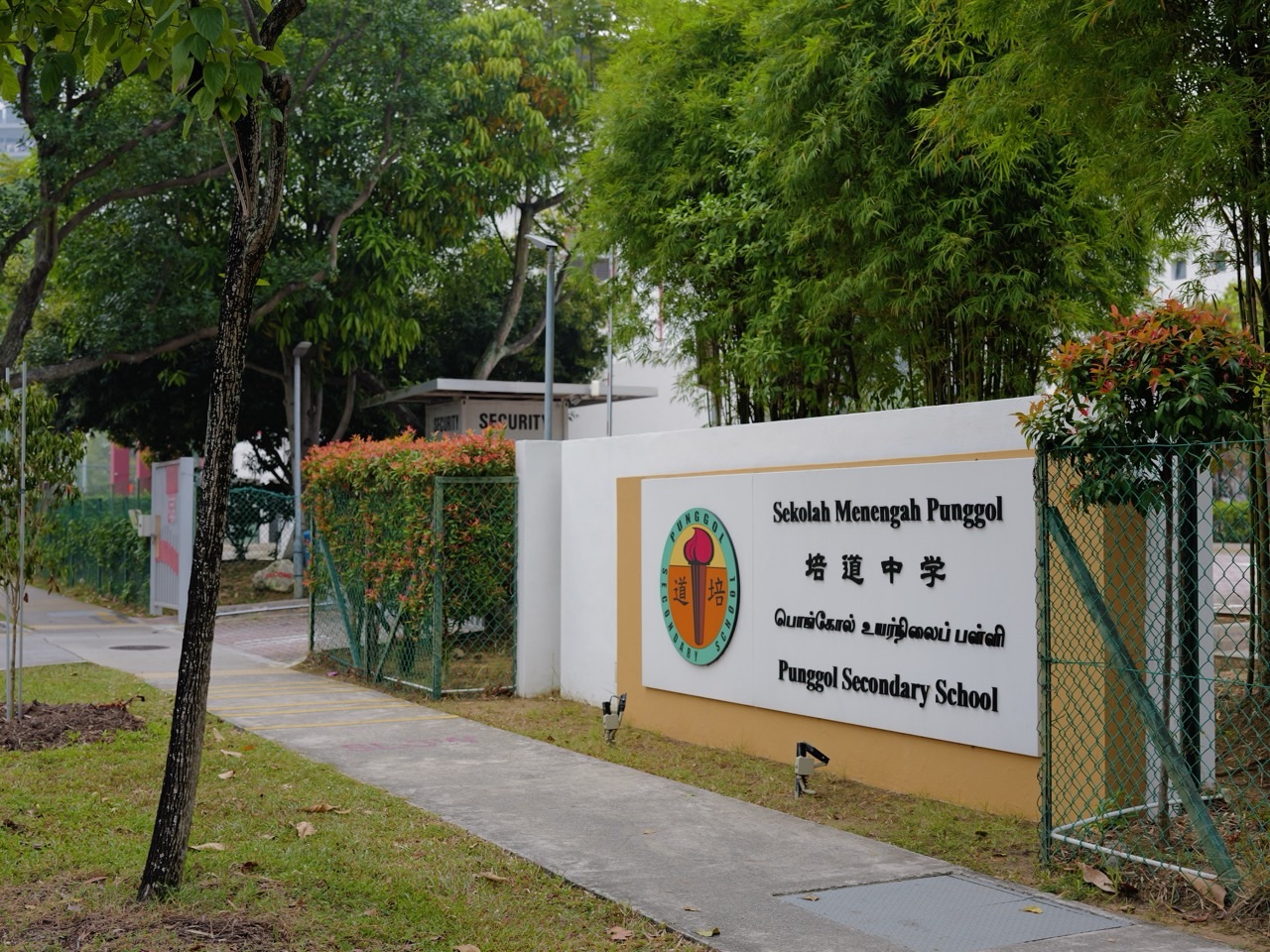
PSLE Scores 19 and 20 both qualify for Posting Group 3 (PG3), but Punggol Secondary’s previous PG3 cutoff of 19 makes the one-point difference important. At Score 19, a child exactly matches that school’s completed 2026 Secondary 1 last-admitted result. At Score 20, the child is one point numerically beyond it. The other three Punggol schools previously ended at PG3 14, 15 and 16, so neither score should be promised a local school. Historical figures are planning references, not confirmed admission thresholds for 2027. MOE’s Posting Group table confirms that both totals remain PG3.
For Score 20, parents should widen research to schools such as Hougang Secondary, Serangoon Secondary and Peicai (previous PG3 20), Bartley and Junyuan (21), and Yuying, Meridian or Loyang View (22), subject to eligibility and realistic travel. Score 19 families can consider these alternatives alongside Punggol Secondary if it fits. The goal is six genuinely acceptable school choices based on the child’s learning needs, CCA interests, current school programmes and complete commute—not a promise that last year’s cutoff will repeat.
- Posting Group: both Scores 19 and 20 are PG3; PG2 is not an option.
- Punggol Secondary: previous PG3 COP 19, exact historical match for 19 and one point stricter than 20.
- Other local schools: Edgefield 14, Yusof Ishak 15 and Greendale 16 in the completed 2026 S1 intake.
- Wider PG3 choices: compare actual schools with previous endpoints 20, 21 and 22 where suitable.
- School fit: ask about G3 learning, student support, CCAs and current programmes.
- Six genuine preferences: rank by child-and-family choice, not automatically by old cutoffs.
- Confirmed dates: PSLE results 24 November 2026 at 11am; S1 submission closes 30 November at 4.30pm.
Editorial fact check: 19 November 2026. School cutoff references describe the completed 2026 Secondary 1 intake (2025 PSLE). They are not 2027 admission offers or forecasts. Current official information takes precedence.
Chapter index — Punggol Secondary’s historical Score 19 boundary
- 1. Why the one-point boundary matters within PG3
- 2. Punggol Secondary’s previous PG3 cut-off was 19
- 3. Why the other three local Punggol schools differ
- 4. A 19-versus-20 school comparison parents can use
- 5. Score 19: a local historical match is not a reservation
- 6. Score 20: the geographical search becomes more important
- 7. The difference at previous PG3 20 schools
- 8. Bartley and Junyuan at a previous PG3 21
- 9. Yuying, Meridian and Loyang View at a previous PG3 22
- 10. What a historical cut-off does not measure
- 11. PG3 is the entry group; G3 describes individual subjects
- 12. Four subject ALs show learning needs the total cannot
- 13. A family commute test in the northeast
- 14. What ALP, LLP and CCA descriptions actually promise
- 15. How to create an honest six-choice shortlist
- 16. Equal-score ties and genuine preference order
- 17. Two hypothetical Punggol families, Scores 19 and 20
- 18. Academic readiness and the first Secondary 1 term
- 19. Confirmed PSLE results and S1 posting dates
- 20. Frequently asked questions about Score 19 versus 20
- 21. Official sources, score guides and the finished series
1. Why the one-point boundary matters within PG3
Both PSLE Scores 19 and 20 belong to Posting Group 3 under MOE’s ordinary Secondary 1 framework. They do not introduce a choice of PG2, because that optional band starts at Scores 21 and 22. Both families should therefore compare historical PG3 school ranges and expect G3 as the usual starting subject level. The one-point difference matters because a school’s previous last-admitted Score 19 can be an exact match for one child but a stricter historical comparison for the other.
That distinction does not prove the Score 19 child has a guaranteed place, or that a pupil with 20 cannot be accepted in a future intake. Past cut-offs are outcomes of the previous cohort’s results, preferences and places. They can shift in the next posting exercise. The parents’ practical task is to use these numbers accurately and find schools the child will genuinely want to attend.
At the Score 20 end of the direct PG3 band, an honest school search may need to extend beyond the four mainstream schools within Punggol. That is a geographical planning difference rather than a judgment about the child’s future.
Family action: Label both sheets PG3 and mark the one-point historical comparison correctly.
Chapter 1 · MOE SchoolFinder · Punggol school-choice hub
2. Punggol Secondary’s previous PG3 cut-off was 19
The completed 2026 S1 intake offers a clear reference: Punggol Secondary’s previous PG3 cut-off was 19. For a child with Score 19, this is an exact historical last-admitted boundary. For a child with Score 20, it is one point numerically stricter than their result. Neither comparison is a live vacancy check or a predetermined 2027 admission outcome.
Punggol Secondary may be a school a local family values because of its programme, community activities or route. The family should investigate the actual school environment rather than using one point as a personal judgment about the child. The school’s descriptions of environmental education and community or youth leadership are useful starting points to verify directly with current school sources.
Parents should plan beyond one preferred local school. If it is ranked high, every other entry on the list still needs careful research. In the new exercise, schools may have different cut-offs, and equal-scoring pupils competing for the final places may face the official tie-breakers.
Family action: On the worksheet write “Punggol Secondary PG3 19, completed 2026 intake—not a guaranteed 2027 place.”
Chapter 2 · MOE SchoolFinder · Punggol school-choice hub
3. Why the other three local Punggol schools differ
Edgefield, Yusof Ishak and Greendale Secondary recorded previous PG3 cut-offs of 14, 15 and 16 in the completed 2026 intake. Both Score 19 and 20 lie numerically beyond those older endpoints. The parents of either child should not treat these three schools as comfortable historical choices simply because the schools are within Punggol.
However, a historically more selective school can still be a genuine aspirational preference when its learning experience strongly appeals to the child and the official portal permits it. The responsible approach is to acknowledge uncertainty and prepare other acceptable schools. A parent should not make all six preferences depend on large favourable changes to last year’s cut-offs.
Even within Punggol, the actual journeys from different residential blocks are not identical. Edgefield, Greendale and Yusof Ishak may offer different programmes, CCA participation and classroom environments, all of which deserve child-specific research.
Family action: Research the three schools for fit if relevant, but do not describe their old PG3 values as safe for 19 or 20.
Chapter 3 · MOE SchoolFinder · Punggol school-choice hub
4. A 19-versus-20 school comparison parents can use
The table below contains selected schools relevant to a Punggol household, along with the previous PG3 last-posted figures in the 2026 S1 intake. The points are historical data, not promises. A lower PSLE aggregate is the stronger score, so the interpretation at an endpoint of 19 differs for children with 19 and 20.
The table also shows that schools outside Punggol can become important, including some in Hougang, Serangoon, Tampines and Pasir Ris. These locations should be investigated using exact school addresses and travel routes. A school that is numerically favourable in an old cutoff chart can still be unsuitable because of the journey, programme or student support needs.
Each family should treat the list as a research basket, not an ordered submission. Verify school offering, admissions conditions and the current profile in MOE SchoolFinder before choosing six.
| School and area | Previous PG3 COP | Score 19 historical comparison | Score 20 historical comparison |
|---|---|---|---|
| Edgefield Secondary — Punggol | 14 | Beyond old COP | Beyond old COP |
| Yusof Ishak Secondary — Punggol | 15 | Beyond old COP | Beyond old COP |
| Greendale Secondary — Punggol | 16 | Beyond old COP | Beyond old COP |
| Punggol Secondary — Punggol | 19 | Exact previous boundary | One point beyond previous boundary |
| Seng Kang Secondary — Sengkang | 19 | Exact previous boundary | One point beyond |
| Hougang Secondary — Hougang | 20 | One point numerically stronger | Exact previous boundary |
| Serangoon Secondary — Hougang | 20 | One point numerically stronger | Exact previous boundary |
| Peicai Secondary — Serangoon | 20 | One point numerically stronger | Exact previous boundary |
| Bartley Secondary — Toa Payoh | 21 | Two points stronger | One point stronger |
| Junyuan Secondary — Tampines | 21 | Two points stronger | One point stronger |
| Yuying Secondary — Hougang | 22 | Three points stronger | Two points stronger |
| Meridian Secondary — Pasir Ris | 22 | Three points stronger | Two points stronger |
| Loyang View Secondary — Pasir Ris | 22 | Three points stronger | Two points stronger |
Family action: Keep the historic group, year and campus location next to the school name.
Chapter 4 · MOE SchoolFinder · Punggol school-choice hub
5. Score 19: a local historical match is not a reservation
When a Score 19 child sees Punggol Secondary’s previous PG3 cutoff at 19, the family may feel relieved. That is an understandable reaction, but a former last-admitted score is not a reservation held for a new applicant. A new cohort can produce a more or less stringent cutoff depending on school choices and places available. It is possible for an exact historic match to become an uncertain new boundary.
Rather than promising Punggol Secondary, ask whether the child likes the ordinary school experience. What would the pupil learn in the first term? How are activities such as CCAs offered? What happens when a student is struggling in one subject? A school should make sense beyond a numerical match.
If the school is genuinely preferred, a family may rank it accordingly while preparing other acceptable options. The later preferences should not be schools the family would refuse to attend. A considered six-choice list is stronger than a list built around one hoped-for offer.
Family action: Ask your child why they would attend Punggol Secondary even if the old score were not visible.
Chapter 5 · MOE SchoolFinder · Punggol school-choice hub
6. Score 20: the geographical search becomes more important
At Score 20, none of the four local mainstream Punggol schools had a previous PG3 last-admitted result of 20 or higher. Punggol Secondary’s former 19 was closest. A family should therefore investigate schools beyond the estate instead of assuming there is a local historical safety option. This is not a prediction that local schools cannot ever change their cutoff; it is an accurate summary of the available old figures.
Schools such as Hougang Secondary, Serangoon Secondary and Peicai previously ended at PG3 20. Those are exact historical comparisons for Score 20. Other schools with old endpoints of 21 or 22 may provide numerically less stringent past comparisons. Each requires a fit and travel check.
Parents should explain this calmly to the pupil. A school outside the estate can still be a positive place to learn, build friendships and participate in CCAs. The goal is a workable four-year experience rather than an insistence on one town name.
Family action: List three reachable schools beyond Punggol with genuine educational reasons to investigate them.
Chapter 6 · MOE SchoolFinder · Punggol school-choice hub
7. The difference at previous PG3 20 schools
Hougang Secondary, Serangoon Secondary and Peicai Secondary recorded historical PG3 endpoints of 20. For Score 19, those were one point numerically less stringent. For Score 20, the pupil exactly matches the old last-posted figure. The older score provides useful context but does not tell the family the next posting result.
Do not infer that Serangoon Secondary and Peicai occupy the same neighbourhood simply because their names include Serangoon: Serangoon Secondary is in the Hougang area, while Peicai is in Serangoon. Check the live address and transit route. That is a practical detail that matters more than a generic school list grouped by a name.
A family should visit or review the schools’ current official information. Ask how Secondary 1 students are supported and how they can join activities. School choice can be rational and child-specific even when the previous admission endpoints are identical.
Family action: For each prior PG3 20 candidate, write a reason beyond “the score matches.”
Chapter 7 · MOE SchoolFinder · Punggol school-choice hub
8. Bartley and Junyuan at a previous PG3 21
Bartley and Junyuan Secondary had prior PG3 endpoints of 21 in the completed intake referenced by the school finder. That is two points numerically less stringent than Score 19 and one point less stringent than Score 20. The arithmetic can help families diversify a shortlist, but the value is still a previous outcome rather than guaranteed new admission.
Check exact campuses and available routes. Bartley Secondary is not necessarily at the location implied by Bartley MRT, and Junyuan is in Tampines. A Punggol family’s transport options may depend heavily on their actual residential block. Test normal arrival and return after CCA rather than inventing a universal journey time.
A school with a less stringent old COP can also be a family’s favourite when its culture or activities fit the child. The family should rank it according to real preference, not automatically push it into a low-priority category because of last year’s number.
Family action: Compare one school at previous PG3 21 with the closest schools at 20.
Chapter 8 · MOE SchoolFinder · Punggol school-choice hub
9. Yuying, Meridian and Loyang View at a previous PG3 22
Yuying, Meridian and Loyang View were among schools reporting previous PG3 last-posted scores of 22. For a Score 19 child, the difference is three numerical points; for Score 20, it is two. These may be useful historical comparisons when a family wants options beyond the most exact boundary schools.
The distances and routines differ. Yuying is in the Hougang area, while Meridian and Loyang View are in Pasir Ris. Parents should not copy all three names into a six-choice list solely to produce higher previous cut-off values. Each school needs a workable route and an aspect of learning life the pupil actually values.
Ask whether the child could picture attending the school when primary-school friends may go elsewhere. A realistic positive reason, such as a welcoming programme or CCA and dependable commute, matters more than a numerical difference alone.
Family action: Keep only the candidates that pass educational fit and household travel checks.
Chapter 9 · MOE SchoolFinder · Punggol school-choice hub
10. What a historical cut-off does not measure
A previous Cut-Off Point is the score of the last pupil admitted through a particular group in a completed exercise. It does not measure the quality of teachers, emotional support, access to CCAs or whether an individual child will flourish. Two schools at an old COP of 20 may provide different experiences, and a school at 22 need not be worse than one at 19.
Parents can investigate how a school supports a student who has difficulty understanding homework or settling with new classmates. Ask who the child can approach, how consultations work and what activity opportunities are available to ordinary new pupils. These concrete details give a family reasons to prefer one school to another.
A school chosen only because its previous cutoff looks suitably selective may be a weak personal fit. Parents should distinguish admissions context from a meaningful learning environment.
Family action: Write two child-specific reasons for the school that would remain true if its cutoff were hidden.
Chapter 10 · MOE SchoolFinder · Punggol school-choice hub
11. PG3 is the entry group; G3 describes individual subjects
Both Score 19 and Score 20 ordinarily use PG3 for admission. Their typical initial academic subjects are at G3 under Full Subject-Based Banding. Parents should not confuse this with the option-band rule at 21–22, where a pupil may select PG2 instead. At these two scores, the family should not seek a PG2 cut-off as a way to change a school admission comparison.
Under Full SBB, the school will explain its learning arrangements and future subject combinations. A pupil who struggles in one area may need appropriate support, but a single aggregate score cannot describe how they learn across English, Mathematics, Science and Mother Tongue.
Ask about the transition into G3 lessons, including homework organisation and how students ask for help. The goal is suitable academic challenge with realistic support, not simply a label of prestige.
Family action: Keep admissions group and later subject-level questions in separate notes.
Chapter 11 · MOE SchoolFinder · Punggol school-choice hub
12. Four subject ALs show learning needs the total cannot
Two children with a total of 19 can have different Achievement Level combinations, and the same applies at 20. One may be confident in Mathematics and less secure in English; another may be an enthusiastic reader who needs practice explaining scientific relationships. The same Posting Group does not make their learning profiles identical.
Ask the child about a specific topic they find difficult and what happens when they attempt it. For Mathematics, distinguish conceptual misunderstanding from presentation or rushing. For English, separate vocabulary, comprehension and writing clarity. For Science, check whether the pupil can explain evidence. This information can help parents ask schools about suitable support.
Keep strengths visible as well. The child may value music, sport, creative work or community involvement. Those interests can shape how they participate and feel a sense of belonging at the new school.
Family action: Create four brief subject notes and one list of activities that motivate the child.
Chapter 12 · MOE SchoolFinder · Punggol school-choice hub
13. A family commute test in the northeast
Punggol is large enough that one town-wide journey estimate is not meaningful. A household near Northshore may have a different connection from a family near Waterway Point or Punggol Field. A school in Hougang could be practical for one block and awkward for another. The correct test begins at the actual home entrance.
Include walking, bus or train waiting, transfers, the last crossing and the actual school gate. Try the route at a comparable weekday time where possible. The journey after a CCA may involve different services or a later return, so plan it separately.
A family may willingly accept a slightly longer commute for a school the child strongly prefers, but the decision should reflect rest, homework time and real independence. Do not hide the trade-off behind a score chart.
Family action: Record morning journey, later return and a disruption plan for every final candidate.
Chapter 13 · MOE SchoolFinder · Punggol school-choice hub
14. What ALP, LLP and CCA descriptions actually promise
Schools may advertise Applied Learning Programmes, Learning for Life Programmes and impressive CCA achievements. These are useful windows into what the school values but do not necessarily mean every pupil can join every team, competition or selected activity. Parents should ask which experiences are school-wide, optional or subject to trials.
A child who enjoys environmental projects, practical design, sport or performing arts may find a strong reason to attend a particular school. Check how new Secondary 1 students enter activities and what support is available if their first choice is not offered. A favourite CCA that requires an impossible late journey is also a practical issue.
Ask the same questions at several schools rather than comparing unrelated publicity. The family should understand what the pupil would actually experience during the first year.
Family action: Confirm one normal Secondary 1 programme and one accessible CCA at each top school.
Chapter 14 · MOE SchoolFinder · Punggol school-choice hub
15. How to create an honest six-choice shortlist
SEAB’s 17 November 2026 announcement encourages pupils to use all six choices and include two or three schools with previous COPs less stringent than the child’s score. At 19 or 20, a family can often investigate school options previously ending at 21 or 22 when the travel and school experience make sense. This is a historical planning suggestion, not a guarantee.
First prepare an unranked set of eight to ten eligible, workable schools. Exclude options whose journey or required programme conditions are unsuitable. Then rank the remaining schools by genuine preference. If the child would rather attend a school at a previous 22 than one at 20, that can be a rational choice; the old COP is not a quality rating.
The fifth and sixth choices must be real schools the child could attend with a positive attitude. A list containing placeholders nobody has researched may fail the family even if it looks balanced numerically.
- Verify PSLE aggregate 19 or 20 and actual PG3 eligibility
- Use PG3 rather than PG2 school cutoffs throughout
- Read local Punggol previous endpoints without guarantees
- Investigate three or more genuinely acceptable wider-area schools
- Test normal morning and after-CCA transport
- Rank six real preferences and verify school codes
- Save the official S1 Portal acknowledgement
Family action: Read six school names aloud and ask for a positive reason for each.
Chapter 15 · MOE SchoolFinder · Punggol school-choice hub
16. Equal-score ties and genuine preference order
In ordinary S1 posting, stronger PSLE results take priority for vacancies in the eligible group. When equally scoring applicants compete for the last places, MOE’s tie-breakers apply in sequence: citizenship, school choice order and computerised balloting where needed. This is why the preferred school order can matter under an actual tie.
A family cannot make a Score 20 pupil overtake every stronger-scoring applicant by listing a school first. Equally, a pupil whose score matched last year’s cutoff is not guaranteed the same place next year. The new cohort’s applications and available places determine whether a tie arises.
Check any affiliation, language, programme or DSA conditions that genuinely apply to the pupil. A different school admission category can make a copied historic range misleading.
Family action: Ensure the final order reflects preference rather than a speculative algorithm.
Chapter 16 · MOE SchoolFinder · Punggol school-choice hub
17. Two hypothetical Punggol families, Scores 19 and 20
Family A has a Score 19 child who enjoys the environment at Punggol Secondary and can walk or travel there reliably. The school’s former PG3 19 is an exact historical comparison. The family may rank the school highly but also investigates schools outside Punggol that the child genuinely likes, because the previous cutoff does not reserve a seat.
Family B has a Score 20 child who likes a particular learning programme in Hougang and is comfortable with its route. The family researches Hougang Secondary at former PG3 20, Bartley or Junyuan at 21 and suitable schools at 22. They do not describe leaving the Punggol town boundary as a failure. They consider the school’s actual teaching and how the child will participate.
These are illustrative decisions, not promises about actual admissions or advice that all children with the same score should prefer the same schools. The pupil’s interests and the household’s route matter.
Family action: Build a genuine alternative to the first preferred school for each family scenario.
Chapter 17 · MOE SchoolFinder · Punggol school-choice hub
18. Academic readiness and the first Secondary 1 term
A pupil entering Secondary 1 will manage more subject teachers, different assessment forms, CCAs and a more independent daily routine. Useful preparation is often modest: keeping a homework record, reading task instructions, showing working clearly and asking a teacher when something is confusing. Neither Score 19 nor 20 automatically decides the child’s later subject combinations.
The Singapore-Cambridge Secondary Education Certificate begins with the relevant graduating cohort in 2027. A child entering Secondary 1 in 2027 will sit school-leaving examinations later, not during that first year. Their future pathways will depend on later subject levels, performance and admission requirements at the relevant time.
Parents can support high aspirations while avoiding the idea that a one-point PSLE difference fixes the future. Study habits, teacher feedback, friendships and participation deserve continuing attention.
Family action: Choose one useful study habit and one independent travel habit to practise.
Chapter 18 · MOE SchoolFinder · Punggol school-choice hub
19. Confirmed PSLE results and S1 posting dates
SEAB has confirmed the 2026 PSLE results for Tuesday, 24 November at 11.00am, Singapore time. The normal S1 Portal opens at 11.30am on the same day and closes on Monday, 30 November at 4.30pm. Posting results are tentatively expected on Friday, 18 December, subject to an official update.
Score 19 and 20 families should confirm the actual PG3 eligibility and use SchoolFinder to check relevant schools, school codes and admission categories. One adult can submit the choices using Singpass while another verifies the final list if helpful. A saved family worksheet is not the official submission; retain the portal acknowledgement.
Avoid beginning research on the last day, because a question about transport, a school programme or a relevant condition may take time to resolve. The goal is a considered application, not an arbitrary ordering created under pressure.
Family action: Set an earlier family deadline and confirm the final saved submission.
Chapter 19 · MOE SchoolFinder · Punggol school-choice hub
20. Frequently asked questions about Score 19 versus 20
Do Score 19 and Score 20 both use PG3? Yes. Neither has the PG2/PG3 choice that begins at 21. Is Punggol Secondary guaranteed for Score 19 because its old PG3 COP was 19? No; that is a completed-year last-posted result. Is Punggol Secondary impossible at Score 20? Not a categorical future impossibility, but its previous cutoff of 19 was one point more selective.
Which wider schools can a Score 20 family research? Schools previously ending at PG3 20, 21 or 22 may be relevant, subject to current eligibility, geography and school fit. Are schools with higher previous cutoff numbers worse? No; cutoff values describe admission competition rather than teaching quality.
Should our child choose the closest school? Proximity can matter greatly, but it should be considered with learning support, activities, current programme arrangements and a workable daily routine.
Family action: Use the official score and the child’s school preferences, not a universal ranking.
Chapter 20 · MOE SchoolFinder · Punggol school-choice hub
21. Official sources, score guides and the finished series
Continue with the dedicated Score 19 PG3 guide and the dedicated Score 20 PG3 guide. The Punggol PSLE Scores 4–32 hub links all 29 score-specific articles and the other boundary comparisons. This article adds a focused explanation of why the old Punggol Secondary 19 matters across one point.
Verify the score-to-group table at MOE Posting Groups, posting and tie rules at MOE’s posting guidance, current school details in SchoolFinder, and the exact results dates in SEAB’s 17 November 2026 release. The school itself should confirm its current programmes and specific conditions.
The eduKate Clementi Secondary 1 tutorial reference explains a learner-focused approach to transition support. It is an educational reference, not a source of admissions promises. The family’s final checklist should preserve the correct year and group, six real preferences, positive reasons for each and the official submission acknowledgement.
Family action: Keep the two score guides and official evidence together in the family worksheet.


