
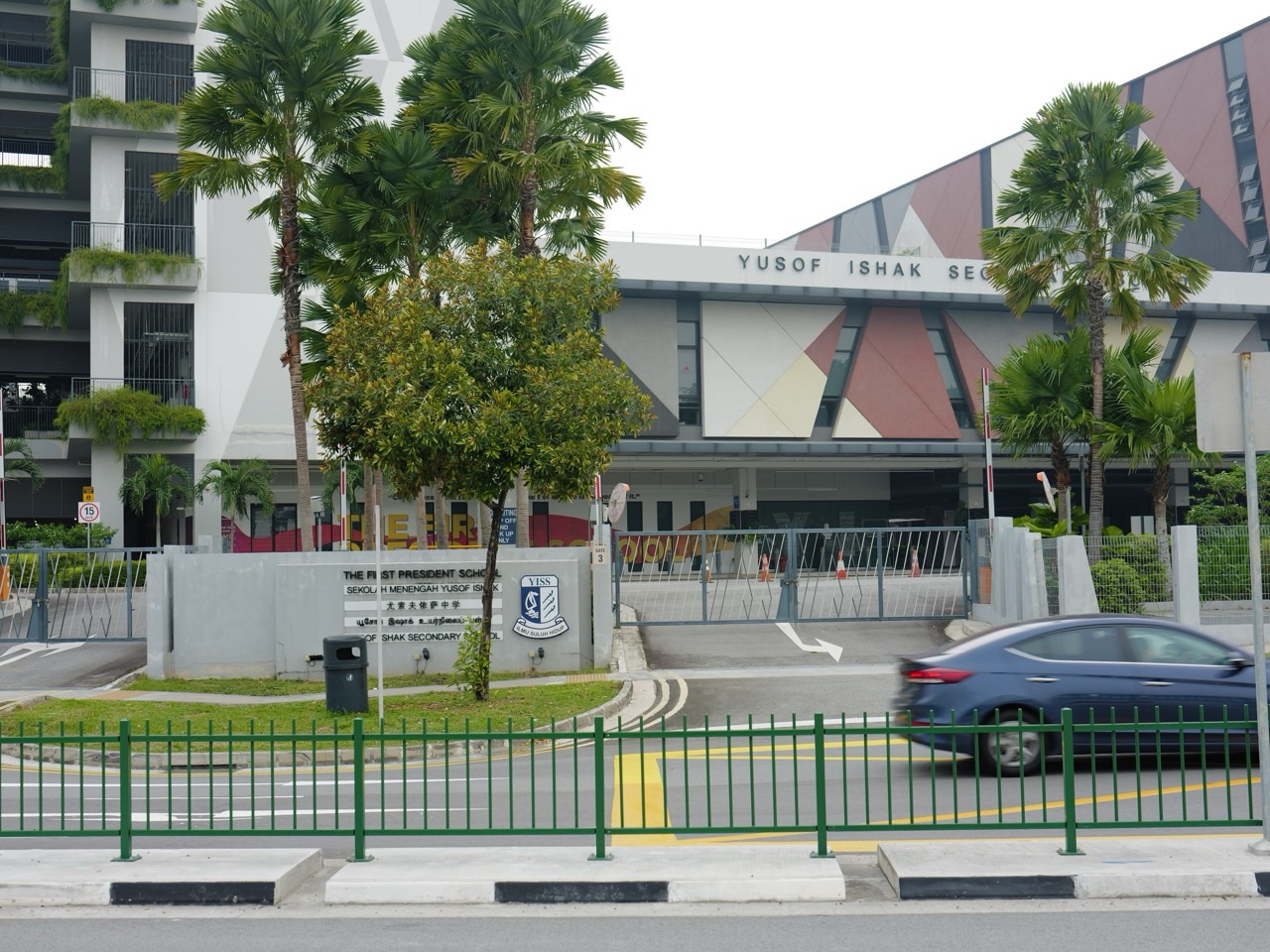
PSLE Scores 14 and 15 both use Posting Group 3 (PG3), but the historical local school boundary shifts from Edgefield to Yusof Ishak Secondary. In the completed 2026 intake, Edgefield’s PG3 cutoff was 14 and Yusof Ishak’s was 15. Score 14 exactly matched Edgefield’s previous last-admitted score and was one point numerically stronger than Yusof Ishak’s. Score 15 was one point beyond Edgefield’s earlier cutoff and exactly matched Yusof Ishak’s. Neither historical result promises a school place for 2027. MOE confirms both scores are PG3.
Parents should look beyond those two cut-offs. Yusof Ishak’s official Applied Learning Programme explores sustainable and smart cities through STEM; Edgefield’s G.E.M. programme emphasises entrepreneurial problem-solving. Greendale previously ended at PG3 16 and offers design, technology and outdoor learning, while Punggol Secondary previously ended at PG3 19 and emphasises environmental education and community leadership. Check each school’s current programmes, classroom support, CCAs and actual commute before ranking six genuine preferences. A child’s educational fit is more important than declaring one school ‘better’ because its previous cutoff was smaller.
- Same group: Score 14 and 15 both enter normal PG3 and usually start G3 subjects.
- Edgefield previous PG3 14: Score 14 exact old match; Score 15 one point beyond its former cutoff.
- Yusof Ishak previous PG3 15: Score 14 numerically one point stronger; Score 15 exact old match.
- Greendale and Punggol Secondary: historical PG3 endpoints 16 and 19, worth researching for actual school fit.
- Distinct school programmes: Edgefield G.E.M., Yusof Ishak S4TEM@YI and YI LEAD+, Greendale design and outdoor learning.
- School selection: six genuine eligible preferences, current programmes and a realistic Punggol commute.
- Official dates: PSLE results 24 November 2026 at 11am; choices due 30 November at 4.30pm.
Reviewed on 19 November 2026. Cutoffs refer to the 2025 PSLE cohort entering Secondary 1 in 2026 and are not guaranteed or forecast thresholds for 2027. MOE and each school’s current information govern actual choices.
Chapters — Edgefield PG3 14 and Yusof Ishak PG3 15
- 1. The first question: is the child PG3 at both scores?
- 2. Edgefield’s PG3 14: from an exact match to a stricter old score
- 3. Yusof Ishak’s PG3 15: the complementary boundary
- 4. The four Punggol schools in one factual table
- 5. What Yusof Ishak’s official STEM programme actually says
- 6. The school’s Year 1 biodiversity project is evidence of practical learning
- 7. YI LEAD+ and the difference between leadership learning and a title
- 8. Edgefield’s G.E.M. is another distinct form of applied learning
- 9. Greendale at PG3 16: one more historical step
- 10. Punggol Secondary at PG3 19: more historical numerical room
- 11. Seng Kang Secondary’s 14–19 is not a minimum 14
- 12. School choices beyond the Punggol boundary can still be personal
- 13. A useful comparison of school culture and actual classroom support
- 14. PG3 and G3 are related, but school fit remains individual
- 15. How to test a school journey from the exact Punggol home
- 16. Six schools should be genuine preferences, not score placeholders
- 17. Tie-breakers at an exact historical boundary
- 18. How to talk about a one-point change without creating fear
- 19. Preparation for G3 subjects and the SEC framework
- 20. 2026 results week and the S1 submission deadline
- 21. Frequently asked questions at the 14–15 boundary
- 22. Official sources and complete Punggol score guides
1. The first question: is the child PG3 at both scores?
Yes. MOE’s current table places PSLE totals from 4 to 20 in Posting Group 3. A result of 14 or 15 therefore uses the same ordinary entry group, and pupils generally begin most Secondary 1 subjects at G3. The one-point difference does not permit the family to switch to PG2 or explain any child’s entire potential.
The practical difference appears when the child is compared with the last pupil posted in the previous intake at a preferred school. Edgefield’s former PG3 cutoff was 14, whereas Yusof Ishak’s was 15. That creates a change in the historical numerical relationship to two actual Punggol campuses.
A parent should start with the correct group and then compare school culture, academic help, programme interest and daily travel. Neither an exact historical cutoff nor being one point numerically stronger is a confirmed offer for 2027.
Family action: Keep both Score 14 and Score 15 worksheets entirely within PG3.
Chapter 1 · MOE SchoolFinder · Punggol PSLE hub
2. Edgefield’s PG3 14: from an exact match to a stricter old score
Edgefield Secondary recorded a previous PG3 score range of 5–14 for the 2025 PSLE cohort entering Secondary 1 in 2026. Score 14 matches the last-posted figure in that exercise. Score 15 is one numerical point beyond it, because lower PSLE totals are stronger. This is a genuine difference in old admission context, not a prediction of next year’s outcome.
The former cutoff could move in a new cohort as applicants, scores, preferences and vacancies differ. A family whose child scores 15 may still investigate Edgefield if they genuinely prefer it and are eligible through the actual portal. The important caveat is not to label it a safe or assured place on the strength of the older data.
At Score 14, the family should also avoid telling the pupil a place is reserved. Exact equality with a completed-year cutoff is not a guarantee, and the new boundary may involve different competition and tie-breaks.
Family action: For Edgefield, write ‘Score 14 matched previous COP; Score 15 beyond previous COP’ without predicting 2027.
Chapter 2 · MOE SchoolFinder · Punggol PSLE hub
3. Yusof Ishak’s PG3 15: the complementary boundary
Yusof Ishak Secondary recorded a previous PG3 cutoff of 15. That makes a Score 14 pupil one numerical point stronger than the earlier last-posted figure and a Score 15 pupil an exact historical match. The shift from Edgefield to Yusof Ishak in the cutoff comparison is a reason to understand each school, not to declare that every child with 15 belongs at Yusof Ishak.
Yusof Ishak’s campus is at 8 Sumang Walk. A family living near the northern side of Punggol may find its route convenient, but a family in another part of the estate should test the actual walk, bus, LRT or interchange journey. Admission figures cannot settle transport or the educational experience.
Parents should ask what their child enjoys learning. The school’s sustainability and STEM programmes may be appealing, while another pupil might prefer a different school culture, CCA or shorter route. Genuine preferences matter after eligibility is established.
Family action: Mark Yusof Ishak as a previous one-point numerical margin for Score 14 and an exact historic match for Score 15.
Chapter 3 · MOE SchoolFinder · Punggol PSLE hub
4. The four Punggol schools in one factual table
The four local PG3 cutoff points for the completed 2026 intake were Edgefield 14, Yusof Ishak 15, Greendale 16 and Punggol Secondary 19. The table below shows the numerical relationship for each of the two scores. It does not rank the teaching quality of these schools or produce a recommended first-to-sixth list.
Score 14 is an old boundary match at Edgefield but numerically stronger than the other local last-posted results. Score 15 is beyond Edgefield’s former boundary, a match at Yusof Ishak and numerically stronger than Greendale and Punggol Secondary. These distinctions can guide research while recognising that next year’s cutoffs may change.
A school with a less stringent previous endpoint may still be the family’s favourite because it offers a manageable route, engaging programmes and an environment where the child will participate. The score is a planning fact rather than a quality rating.
| School / area | 2026 intake PG3 range | Score 14 previous comparison | Score 15 previous comparison |
|---|---|---|---|
| Edgefield Secondary — Punggol | 5–14 | Exact old COP 14 | One point beyond old COP |
| Yusof Ishak Secondary — Punggol | 7–15 | One point numerically stronger | Exact old COP 15 |
| Greendale Secondary — Punggol | 11–16 | Two points stronger than old COP | One point stronger |
| Punggol Secondary — Punggol | 13–19 | Five points stronger than old COP | Four points stronger |
| Seng Kang Secondary — Sengkang | 14–19 | Five points stronger than old COP | Four points stronger |
| Compassvale Secondary — Sengkang | 14–18 | Four points stronger than old COP | Three points stronger |
| North Vista Secondary — Sengkang | 11–18 | Four points stronger | Three points stronger |
Family action: Keep admission-year and Posting Group labels with every copied number.
Chapter 4 · MOE SchoolFinder · Punggol PSLE hub
5. What Yusof Ishak’s official STEM programme actually says
Yusof Ishak’s current Applied Learning Programme is called STEM for the Strategic Development of a Sustainable and Smart City (S4TEM@YI). Its published information describes school-wide exposure to STEM through activities such as urban farming, coding and aeronautics, connecting academic learning with sustainability and practical problems.
This is a potentially meaningful reason to investigate Yusof Ishak, especially for a pupil who enjoys exploring how science and technology can solve environmental challenges. Ask how a Secondary 1 pupil participates, which activities are common to the cohort and which advanced programmes require further selection.
Do not assume that every pupil will attend a particular competition, research project or tertiary partnership because those appear in school publicity. The family should learn about the ordinary first-term experience and G3 subject teaching as well.
Family action: Ask how the S4TEM@YI programme works for an ordinary Secondary 1 child.
Chapter 5 · MOE SchoolFinder · Punggol PSLE hub
6. The school’s Year 1 biodiversity project is evidence of practical learning
An official Go Green SG 2026 article described Yusof Ishak Secondary 1 pupils exploring biodiversity conservation and human–wildlife coexistence through interdisciplinary project work. Activities included studying real wildlife-related problems and developing ideas using practical materials and coding. Such examples may appeal to a pupil who prefers learning concepts through evidence and hands-on tasks.
However, a past project cannot be promised unchanged to every 2027 entrant. The parent should ask whether comparable interdisciplinary work is part of the school’s regular programme and how teachers connect it to Science, Mathematics and communication skills.
A pupil who likes practical STEM can still face challenges with the formal G3 syllabus. Ask what academic support and feedback accompany the enrichment rather than treating a project as a substitute for subject mastery.
Family action: Confirm which sustainability and biodiversity experiences the next intake is expected to have.
Chapter 6 · MOE SchoolFinder · Punggol PSLE hub
7. YI LEAD+ and the difference between leadership learning and a title
Yusof Ishak’s Learning for Life Programme is YI LEAD+, designed around honourable leadership, service and positive influence. The current school page describes opportunities to develop values, social action and a global outlook. That may suit a child who enjoys helping people or organising group activities.
Parents should distinguish broad leadership learning from appointment to a formal student-leader role. The school can explain whether all pupils experience core elements, how students are nominated or selected for additional responsibilities, and what new pupils should expect.
A school choice can be strengthened by a programme the child genuinely wants to engage in. It should not be made on an assumption that entering the school automatically grants an award or leadership position.
Family action: Ask which leadership experiences are common to all Secondary 1 pupils.
Chapter 7 · MOE SchoolFinder · Punggol PSLE hub
8. Edgefield’s G.E.M. is another distinct form of applied learning
Edgefield’s Growing the Edgefield Mindset (G.E.M.) Applied Learning Programme emphasises entrepreneurial and future-ready problem solving. Its published materials describe opportunities involving design, collaboration, creative responses to real-world problems and student initiatives.
At Score 14, the school is an exact historical admission comparison; at 15, it is one point more selective. Neither relation decides whether the child’s interests fit the programme. A pupil excited by entrepreneurship or innovative challenges may still want to investigate Edgefield as a genuine preference.
Ask about current activity availability, how teachers develop academic skills within projects and how new pupils seek help. A programme can be a compelling educational reason while remaining subject to actual admission and participation rules.
Family action: Compare Edgefield’s entrepreneurial approach with Yusof Ishak’s sustainability STEM.
Chapter 8 · MOE SchoolFinder · Punggol PSLE hub
9. Greendale at PG3 16: one more historical step
Greendale’s former PG3 last-posted figure was 16. A Score 14 child was two points numerically stronger than it, while a Score 15 child was one point stronger. That makes Greendale a relevant alternative in both research baskets, but not an automatically secure school for either child.
Greendale’s official 2026 open-house information highlights Design, Technology and Engineering as its Applied Learning Programme and Outdoor Adventure Education as its Learning for Life Programme. This school environment may appeal to pupils who enjoy building, coding, teamwork and practical outdoor challenges.
Families should compare the actual Year 1 experience, CCA access, student support and commute. A school previously ending at 16 can legitimately be a higher preference than one at 14 if the child values the former’s educational culture.
Family action: Ask the child whether design and outdoor learning would make Greendale a meaningful preference.
Chapter 9 · MOE SchoolFinder · Punggol PSLE hub
10. Punggol Secondary at PG3 19: more historical numerical room
Punggol Secondary’s completed-year PG3 cutoff was 19, which is five points numerically less stringent than Score 14 and four points less stringent than Score 15. Those differences help families diversify the old admission comparisons without reaching far outside Punggol, provided the school is genuinely attractive.
The school’s principal describes Environment Education and Community and Youth Leadership among its distinctive programmes. These themes may appeal to children interested in sustainability or service. Verify how Secondary 1 pupils participate and what help the school provides when a topic in the formal syllabus is difficult.
A larger numerical margin does not mean a guaranteed place or an inferior school. If Punggol Secondary suits the child particularly well, parents should rank it by real preference rather than push it down the list automatically.
Family action: Research Punggol Secondary as a genuine school, not just an admissions fallback.
Chapter 10 · MOE SchoolFinder · Punggol PSLE hub
11. Seng Kang Secondary’s 14–19 is not a minimum 14
Seng Kang Secondary recorded a former PG3 range of 14–19. For Score 14, the pupil matches the first-posted figure; for Score 15, the pupil falls within the old range. Neither means Score 14 has to reach a minimum value of 14 to qualify. In PSLE totals, numerically lower is stronger, and the old first-posted value does not set an entry floor.
The final number, 19, is the previous PG3 last-admitted result and should be used when interpreting the historical cutoff. An earlier range such as 14–19 is a description of the pupils actually posted in one completed exercise, not a fixed permitted interval for the next intake.
Parents can research Seng Kang Secondary alongside the four Punggol schools, verifying programme details and travel from the household. An adjacent town may or may not offer a convenient route depending on the family’s starting block.
Family action: Circle the last-posted 19 rather than treating the first-posted 14 as an eligibility minimum.
Chapter 11 · MOE SchoolFinder · Punggol PSLE hub
12. School choices beyond the Punggol boundary can still be personal
Compassvale and North Vista had former PG3 endpoints of 18 in the completed intake, while Seng Kang and Punggol Secondary ended at 19. For Score 14 or 15, these can be historical alternatives within the northeast without forcing a long island-wide school search.
The choice should not be driven solely by numerical headroom. Ask whether the child can participate in a desired CCA, whether the school environment feels welcoming and whether the normal commute leaves enough time for rest and homework. A nearby school outside Punggol can be a real favourite, not a lower-status backup.
Parents should also consider current school and programme codes. A correct school name is not enough if a special admission or language condition applies to the particular programme chosen.
Family action: Identify two northeast schools the family would genuinely welcome as an outcome.
Chapter 12 · MOE SchoolFinder · Punggol PSLE hub
13. A useful comparison of school culture and actual classroom support
Yusof Ishak, Edgefield, Greendale and Punggol Secondary may all offer distinctive programmes, but the everyday classroom and pastoral experience matter just as much. Ask how a new pupil obtains help after misunderstanding a concept, how homework is organised and how teachers communicate with parents when support is needed.
A pupil may enjoy a faster academic challenge while finding public speaking difficult, or be confident working with others but struggle with mathematical problem-solving. The receiving school’s approach to feedback and transition can help the child adjust. No former cutoff identifies which school would best support those needs.
Schools with different old admission outcomes can all provide meaningful education. The family should take the time to investigate the actual experience rather than assume the historically most selective school will always be best.
Family action: Write one teaching-support question for every school on the shortlist.
Chapter 13 · MOE SchoolFinder · Punggol PSLE hub
14. PG3 and G3 are related, but school fit remains individual
Both Scores 14 and 15 use PG3 and generally begin subjects at G3. The initial Posting Group is an entry mechanism and guide to subject levels under Full Subject-Based Banding. It does not determine a child’s interest in activities or guarantee a particular future upper-secondary combination.
The pupil’s four individual subject ALs still matter for preparing an effective learning plan. A child who enjoys language subjects may need different support from one who is stronger in Science or Mathematics. Ask what helps the child understand a difficult task rather than use the total as a full description of ability.
Secondary 1 will bring more teachers, a different timetable and new school relationships. Parents should consider how the school helps pupils settle, build independent habits and participate.
Family action: Prepare a short strengths-and-support profile for English, Maths, Science and Mother Tongue.
Chapter 14 · MOE SchoolFinder · Punggol PSLE hub
15. How to test a school journey from the exact Punggol home
Punggol households do not all start from the same MRT or LRT station. A family in Sumang may reach Yusof Ishak differently from a home near Waterway Point or Punggol Field. Greendale and Edgefield can also have different approaches and crossing points. Do not infer that being in the same town means the same travel time.
Plan the complete morning route from the residential block to the correct school gate and then the after-CCA journey home. Include walking, service waiting, transfers, rain and whom the child will contact when a connection is missed. A school that is attractive during an open house may still have an unexpected daily commute.
Parents can be willing to accept a longer route for a meaningful school preference, but should make the time cost visible rather than hiding it behind a map distance.
Family action: Trial two different routes with the child where practical.
Chapter 15 · MOE SchoolFinder · Punggol PSLE hub
16. Six schools should be genuine preferences, not score placeholders
SEAB encourages six school choices and at least two or three with previous cutoff points less stringent than the child’s result where possible. At Score 14 or 15 in PG3, schools with former endpoints of 16, 18 and 19 can provide a mix of historical numerical comparisons. But the family should not choose them solely as insurance or imply admission is assured.
Create an initial basket of eight or ten eligible schools, then remove those with unsuitable travel, relevant conditions or an educational environment the child would not enjoy. Rank the remaining six by true preference. A former 19 school can be first if that is where the child most wants to attend.
Keep the fifth and sixth choices meaningful. They may be the schools the pupil is actually posted to, and the family should be prepared to support the child positively wherever the result lands.
- Confirm PG3 and the actual PSLE score
- Read Edgefield PG3 14 and Yusof Ishak PG3 15 as completed-year data
- Review Greendale and Punggol Secondary as additional local choices
- Ask about school-wide and selective programme participation
- Check classroom help, subject strengths and CCA choices
- Test normal home-to-gate and after-CCA journeys
- Rank six genuine school preferences and save the submitted form
Family action: Ask for one real reason to attend each of the six choices.
Chapter 16 · MOE SchoolFinder · Punggol PSLE hub
17. Tie-breakers at an exact historical boundary
MOE gives priority by academic merit within the eligible Posting Group and applies tie-breakers when pupils with the same score compete for the last vacancies. The order is citizenship, school-choice ranking and computerised balloting where required. A pupil’s preference position can matter at an actual tie, but it does not override all stronger-scoring applicants.
At Score 14 for Edgefield or Score 15 for Yusof Ishak, a completed-year equal cutoff tells the family nothing definitive about the new cohort. The 2027 result could be different, and there may or may not be a tie at the new boundary.
Rank schools genuinely and verify any relevant affiliation, language or DSA rules. A school that is on the list for a concrete educational reason can remain a good preference even though the future admission outcome is uncertain.
Family action: Keep historical matches separate from actual current posting priority.
Chapter 17 · MOE SchoolFinder · Punggol PSLE hub
18. How to talk about a one-point change without creating fear
Parents may find it unsettling that one point changes which local school is an exact historical match. The child may hear friends comparing school cutoffs and feel they have lost an opportunity. Explain that previous results are planning references, not personal verdicts, and that every school on the final list should be a real place the family would support.
Ask why a particular school appeals. Does the pupil like its sustainability projects, friendships, cultural environment, CCA choices or manageable journey? Some of these needs can be met at another local or nearby school. A child can develop belonging in more than one environment.
The parent should be accurate about school competition while protecting the pupil from unnecessary comparisons with classmates. Secondary school is a place to continue learning and growing, not simply a prize attached to a number.
Family action: Help the child identify positive possibilities beyond one school name.
Chapter 18 · MOE SchoolFinder · Punggol PSLE hub
19. Preparation for G3 subjects and the SEC framework
A pupil entering Secondary 1 in 2027 will study within the Full SBB framework, while the Singapore-Cambridge Secondary Education Certificate begins with relevant graduating cohorts from 2027. The new Secondary 1 entrant will sit school-leaving assessments years later, not immediately. Future paths depend on actual subject combinations, grades, interests and applicable admission criteria at the time.
Holiday preparation can focus on meaningful foundations: reading instructions carefully, explaining mathematical working, supporting Science answers with evidence and keeping an organised homework record. Practise asking a teacher for help. These habits are useful regardless of whether the child’s former historical comparison was exact or one point stronger.
Allow the pupil time for rest, reading and activities outside examination practice. A positive transition plan is better than making the entire holiday a reaction to a previous school’s score.
Family action: Choose one targeted learning habit and one school-day independence habit.
Chapter 19 · MOE SchoolFinder · Punggol PSLE hub
20. 2026 results week and the S1 submission deadline
SEAB confirms the PSLE results for Tuesday 24 November 2026 at 11.00am Singapore time. Ordinary school choices open on the S1 Portal at 11.30am that day and close at 4.30pm on Monday 30 November. The posting result is tentatively expected on Friday 18 December; consult official channels for any update.
Both Score 14 and Score 15 pupils use PG3. Check actual school names, codes, current programme and any relevant conditions in the official portal. If the family needs assistance accessing the form, the primary school can help before the closing time.
Save the final submitted acknowledgement. A private worksheet, even a carefully researched one, is not the same as submitting the actual six-school preferences.
Family action: Agree on the order in advance and retain the official confirmation.
Chapter 20 · MOE SchoolFinder · Punggol PSLE hub
21. Frequently asked questions at the 14–15 boundary
Can a Score 14 child select Yusof Ishak? Yes, it is a relevant PG3 school to research; its former cutoff was 15, but no future offer is guaranteed. Does Edgefield’s old PG3 14 guarantee Score 14 admission? No. It was a last-posted result for a completed exercise.
Does Score 15 make Edgefield impossible? The old 14 was one point more selective, but new cutoffs can move; do not make a categorical prediction. Does Score 15 guarantee Yusof Ishak? No, it matches only the previous cutoff. Can either score choose PG2? No; both are PG3.
Which school should rank first? A genuinely preferred eligible school, after checking programmes, daily transport, learning support and official rules.
Family action: Read the score-specific guide matching the actual result.
Chapter 21 · MOE SchoolFinder · Punggol PSLE hub
22. Official sources and complete Punggol score guides
The dedicated guides are PSLE Score 14 — PG3 school finder and PSLE Score 15 — PG3 school finder. The 13-versus-14 Edgefield boundary guide explains the prior step, and the Punggol score hub connects all completed score and comparison articles.
Verify the entry group through MOE Posting Groups, current schools in MOE SchoolFinder, tie-breakers at MOE S1 posting rules, and the current calendar in SEAB 2026 results announcement. Read Yusof Ishak’s S4TEM@YI programme and Edgefield’s G.E.M. programme directly from the schools.
Keep the final worksheet with dated PG3 comparisons, six genuinely acceptable choices, current programme questions, realistic commute notes and the actual submission acknowledgement. A number alone should never replace parent-and-child school research.
Family action: Save current official references and the confirmed school choice order.


