
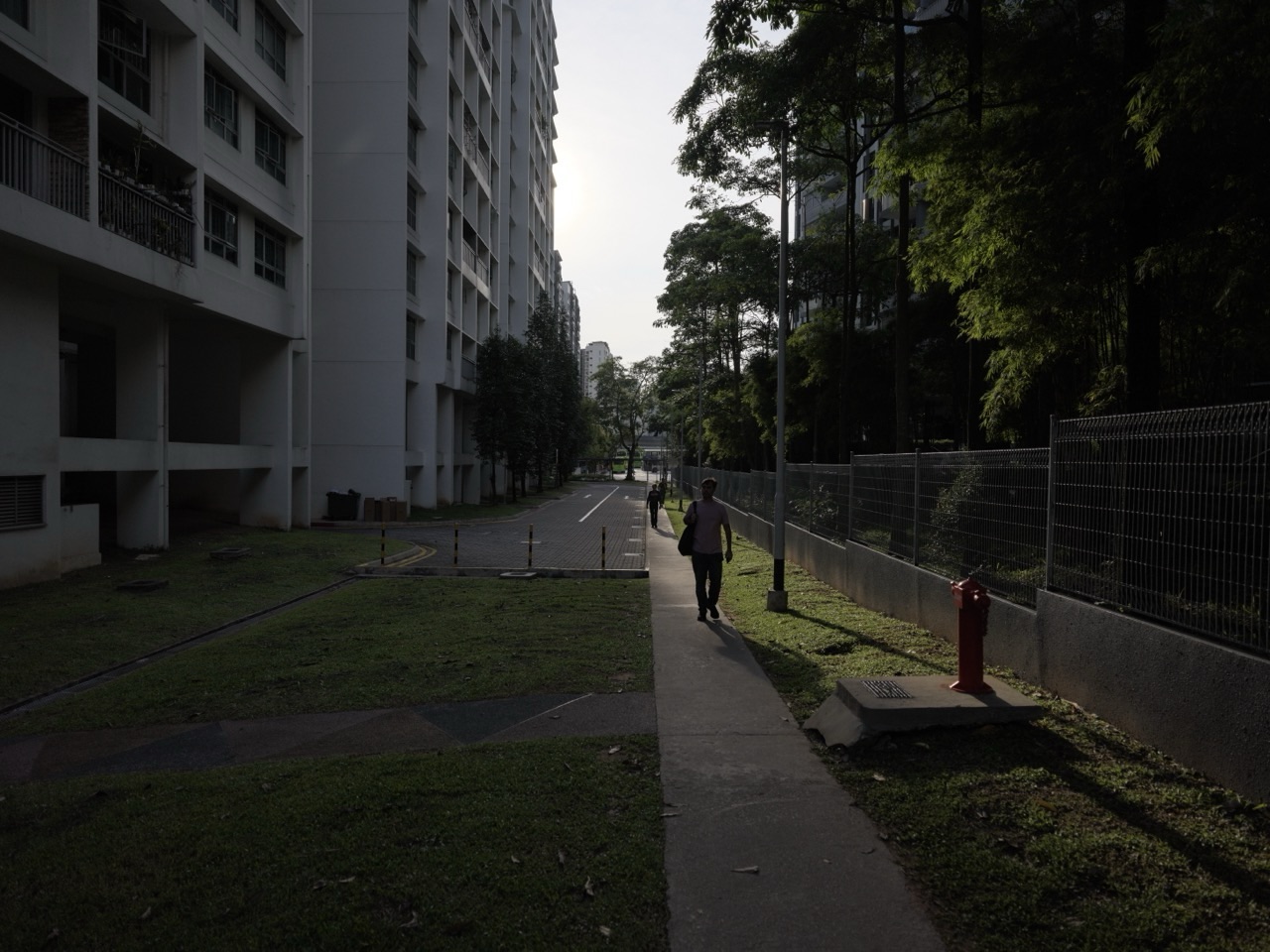
How much are Service and Conservancy Charges (S&CC) for a Punggol HDB flat, and will families receive rebates in 2026–2027? Punggol Town Council’s published reduced residential monthly rates, effective 1 July 2024, include S$49.80 for a standard three-room flat, S$69.40 for a standard four-room flat and S$88.90 for a standard five-room flat. The normal rates are higher, and Design & Build, DBSS and other flat types have their own amounts. These charges fund common-estate upkeep such as cleaning, lifts, lighting, pumps and preventive maintenance. They are not the same as a household’s electricity, water, gas, property-tax or mortgage bill. Check the flat’s actual rate category before budgeting or comparing an amount mentioned by a neighbour.
What is the latest 2026–2027 S&CC rebate schedule? For financial year 2026, eligible Singaporean HDB households receive a total of 3.5 months for one- and two-room flats; 2.5 months for three- and four-room flats; two months for five-room flats; and 1.5 months for executive or multi-generation flats. The rebates are credited automatically during April, July and October 2026 and January 2027, subject to eligibility. These figures describe FY2026, not an unannounced new FY2027 rebate scheme. Residents can confirm their individual S&CC rebate in MyHDB using Singpass and ask Punggol Town Council about the balance, due dates and payment arrangements. This guide separates the published rates, the rebates, U-Save utility credits and the practical steps when a bill looks wrong.
- Standard monthly reduced rates: three-room S$49.80; four-room S$69.40; five-room S$88.90, according to the current Punggol Town Council schedule.
- Normal rates: three-room S$78.40; four-room S$89.50; five-room S$101.40. The applicable category depends on household circumstances.
- Other flats: standard one-room S$22.50 reduced; two-room S$33.50; executive flats have normal rates from S$112.80 on the published table.
- FY2026 S&CC rebates: 3.5 months for one- and two-room; 2.5 for three- and four-room; 2 for five-room; 1.5 for executive/multi-generation.
- Last FY2026 tranche: January 2027; do not mistake that payment for a newly approved entire FY2027 schedule.
- Automatic credit: qualifying households need not pay an agent, fill an unfamiliar form or transfer money to claim the rebate.
- Eligibility: a qualifying Singapore Citizen flat owner or occupier, no disqualifying interest in private property, and the whole flat must not be rented out.
- Check your balance: MyHDB for rebate eligibility; the managing Town Council for payment and outstanding-account matters.
- Different scheme: U-Save credits go towards SP utilities accounts; S&CC rebates go into Town Council accounts.
- Source date: Punggol Town Council rates published with effect from 1 July 2024; MOF FY2026 rebate information dated 30 September 2026.
First, identify the flat and its managing Town Council
Punggol is a large HDB estate and residents may use ‘Punggol’ to describe several nearby residential areas. The correct managing council, registered flat classification and account details matter when discussing charges. The Punggol Town Council’s published table applies to properties it manages within Punggol GRC. A family living in a neighbouring estate should not copy the figures simply because a place is ten minutes away from Punggol MRT. Confirm the Town Council named on the account statement, estate notice or official property information.
S&CC is charged for maintaining common property and services, not for a household’s private electricity consumption. Town Council responsibilities include cleaning common corridors and public areas, lift maintenance, lighting, water pumps and periodic maintenance work. Homeowners may still be responsible for repairs inside their own flats, including private appliances and some plumbing. These are different kinds of expenditure. A monthly conservancy charge does not give a household unlimited free repairs for any item within its home.
When comparing a three-room, four-room and five-room flat, distinguish the official HDB flat type from the number of bedrooms a resident describes informally. Design & Build or DBSS designs may have different rates from standard flats of a similar broad type. A three-generation flat can also have a separate entry. The safe practice is to refer to the rate code on the account rather than ask another resident to confirm how much you should pay.
If a family has recently bought a resale flat, ask how the account transfer and outstanding charges are handled at completion. Do not assume the seller’s old GIRO authorisation will automatically become yours. Record the new owner’s correct account details and set up the preferred payment method directly with the managing Town Council. It is easier to resolve a missing first payment than to discover several months later that the family never activated the new arrangement.
Current Punggol residential rates in plain language
The Punggol Town Council S&CC Rates page lists reduced monthly charges of S$22.50 for a standard one-room flat, S$33.50 for two-room, S$49.80 for three-room, S$69.40 for four-room and S$88.90 for five-room. For its higher normal-rate category, the corresponding table gives S$61.00, S$66.50, S$78.40, S$89.50 and S$101.40. Those are monthly amounts, not annual charges. A resident who is eligible for the reduced rate should not use the normal-rate figure to assess affordability.
The same published schedule shows differentiated rates for particular non-standard designs: a three-room D&B/DBSS flat is S$53.70 reduced or S$82.00 normal; a four-room D&B/DBSS flat is S$76.10 reduced or S$92.50 normal; a five-room D&B/DBSS flat is S$95.00 reduced or S$106.50 normal. A five-room three-generation unit is listed at S$92.30 reduced or S$104.30 normal. Executive properties have separate normal-rate entries of S$112.80 or S$119.00 for the listed type. Consult the official table for special classifications rather than guessing based on floor area.
The rate schedule currently shown by Punggol Town Council is marked effective 1 July 2024. This does not mean charges necessarily changed on the day you are reading the article; it is the stated effective date of the published schedule. If a new rate notice is issued later, that notice and the current account must take precedence. Residents should check the official webpage before making large calculations for later years. An article dated November 2026 should not promise unchanged monthly rates through the end of 2027.
The council explains that reduced rates are generally for qualifying Singapore Citizen households without a private property or HDB industrial/commercial property interest. Normal rates apply to circumstances such as no qualifying citizen owner/tenant/occupier, specified additional property interests, corporate ownership or vacancy. Exact classification must be confirmed for the household. Citizenship of one family member does not necessarily override every other property-interest condition. If the bill unexpectedly uses a normal rate, ask the council to verify the classification before accusing the payment system of an error.
What does a 2026 S&CC rebate actually do?
A rebate reduces the S&CC charged to an eligible flat’s account; it is not generally a cash gift to be withdrawn. MOF’s 30 September 2026 announcement explains that more than one million Singaporean HDB households will receive S&CC and U-Save support. The S&CC rebate is measured as months of the applicable charge. Its dollar value therefore differs by flat type and Town Council rates, even for two households that both receive 2.5 months.
For FY2026, one- and two-room flats receive one month in April, one in July, one in October and half a month in January 2027, totalling 3.5 months. Three- and four-room flats receive one month in April and half a month in each of July, October and January, totalling 2.5. Five-room flats receive half a month in all four tranches, totalling two. Executive and multi-generation flats receive half a month in April, July and October, but no January tranche in that FY2026 table, totalling 1.5 months.
The months matter for practical budgeting. A resident might notice a zero or lower amount for one billing period and think the regular S&CC rate has fallen permanently. It may simply be a rebate credit. When the credit is exhausted, the normal monthly charge applies again. A family should distinguish a one-off fiscal support credit from the standing charge. Checking the transaction ledger gives a clearer picture than interpreting the amount automatically deducted in one month.
An illustration helps. A qualifying standard four-room Punggol flat on the published S$69.40 reduced monthly rate would receive 2.5 months of S&CC rebate over FY2026, equivalent to S$173.50 at that rate, assuming the household remains eligible and the applicable charge is unchanged. That is a calculation from a rate and a rebate schedule, not proof of a specific household’s credited amount. A standard five-room flat at S$88.90 would receive two months, equivalent to S$177.80 on the same assumptions. The ledger is the authoritative account-specific record.
Rebate eligibility: three important conditions
The FY2026 public rules generally require at least one Singapore Citizen owner or occupier of the flat. The owners and essential occupiers must not have a disqualifying interest in private property, and the flat must not be entirely rented out. This is distinct from some U-Save circumstances, which may include specified Singaporean tenants in a fully rented HDB flat. Do not copy eligibility from one assistance scheme to another. The two credits serve different accounts and can have different tests.
Consider a couple living in their own HDB flat with no private property interest. They may meet the basic S&CC rebate conditions, subject to the actual HDB records. Now consider a family owning an HDB flat but renting the entire flat to another household. The owner should not assume they qualify for S&CC rebates simply because the unit is an HDB property. The FY2026 rules exclude wholly rented-out flats for S&CC rebate purposes. Ask HDB or the council how the real arrangement is treated.
Another example is a flat where an essential occupier has a property interest elsewhere. Eligibility may be affected even if the flat is physically occupied by Singapore Citizens. Rather than rely on a neighbour’s experience, check the actual eligibility through the official MyHDB service. A property interest is a formal matter, not something that can be ignored because a person does not live in the other property. Seek specific advice if the ownership history is complex.
The government credits qualifying rebates automatically. There is no requirement to transfer money to a person who promises to ‘unlock’ a rebate. Scammers may exploit an announcement of financial assistance to send fake SMS or links seeking Singpass credentials or bank information. Use verified government websites and applications. If an unfamiliar message asks for payment in exchange for a GST Voucher or Town Council credit, stop and verify independently.
S&CC versus GSTV U-Save: why parents often confuse them
The Service and Conservancy Charges rebate is credited to the Town Council account to offset common-estate maintenance charges. The GST Voucher U-Save rebate goes into the household’s SP utilities account and helps offset utilities expenses. Because both may be announced together in a Budget package, many residents think they are interchangeable. They are not. A rebate in your SP account does not mean the Town Council has automatically received a direct payment from you, and an S&CC credit is not cash for household groceries.
For FY2026, MOF announced double the regular U-Save amount in each of the four quarterly tranches. Eligible one- and two-room households were listed for up to S$760 across the financial year; three-room S$680, four-room S$600, five-room S$520, and executive/multi-generation S$440. These totals are specifically for the FY2026 arrangement, including the January 2027 tranche. Do not extrapolate them to FY2027 or suggest that each Singaporean flat will necessarily receive the maximum without meeting the actual conditions.
A household can have a utilities account with SP and an S&CC account with the managing Town Council. Different bills, balances and payment channels mean that a credit can appear in one account but not another at the same time. If someone asks why a utility bill fell but conservancy charges did not, compare the correct records and dates before concluding that an announced rebate is missing. The relevant account administrator can explain payment posting and eligible credits.
Other programmes such as CDC vouchers, ComCare, electricity retailer plans and property-tax rebates may affect a family’s overall budget, but they are separate measures. Keep them in distinct budget rows with their proper eligibility and application rules. Mixing grants and rebates into one vague ‘government subsidy’ figure makes it difficult to plan what the household genuinely has available to spend.
How do I check my S&CC rebate using Singpass?
The Ministry of Finance directs residents to their MyHDB Page for eligibility details, following the menu path My Flat → Purchased/Rental Flat → View Service & Conservancy Charges (S&CC) Rebate. The exact interface may change over time, so follow the current government labels rather than a screenshot from another year. Use the official HDB address or a verified app, not a link sent from an unknown messaging account.
To understand payment status or outstanding S&CC, contact the managing Town Council. For Punggol Town Council, the published finance number is 6590 9520, and the address is Block 603 Punggol Road #01-01, Singapore 820603. The official site is punggol-tc.org.sg. Confirm current counter hours and the exact management area before visiting. A resident should not have to disclose sensitive Singpass passwords to a third-party helper to check eligibility.
When submitting an enquiry, provide only necessary account details through the verified council channel. Avoid posting account numbers, ownership documents or identity card photographs in a neighbourhood group. An online public comment asking why a specific unit has not received a rebate may disclose private property information. You can ask a general question without exposing family records, then provide identifying details securely to the correct authority.
Save a copy or note of the official response if an eligibility issue is resolved. It helps when a future payment is questioned or a family member takes over the household accounts. A record of what was checked, rather than a screenshot of somebody else’s rebate, is useful for the next annual budget review.
When is S&CC due, and what happens if I miss payment?
Punggol Town Council states that S&CC is due on the first day of every month without needing a paper demand. Its published residential guidance describes a grace period through the month, during which payment within that month does not attract a late-payment penalty. It lists a 2% penalty on an outstanding residential amount after the applicable due and grace terms. Always refer to the current account and council policy if a payment has been missed; do not assume that a rebate removes an older arrear automatically.
A family may prefer GIRO or another recurring payment method to avoid forgetting ordinary monthly bills. The council lists GIRO, certain card arrangements, AXS and internet banking routes, with details on its official site. Choose a method the household understands and can review. A recurring payment is convenient but is not an excuse never to look at account transactions. Check occasionally that the debit matches the correct property and that a rebate was applied to the relevant period.
When moving into a resale flat, confirm the account start date and whether existing payment instructions have been closed or transferred correctly. The transaction may overlap with a month in which ownership changes hands. Rather than guessing which household should pay, use the documented completion arrangements and enquire with the council. A clear transfer prevents the next owner from discovering unexpected arrears.
If a resident experiences genuine financial difficulty, contact the council promptly instead of ignoring reminder notices. Explain the situation and ask what payment arrangements or assistance channels may be available. Do not promise that every arrear can be waived, but a timely enquiry is more constructive than assuming that an automatic rebate will settle all obligations. A household budget is easier to repair before penalties and misunderstandings accumulate.
What if my Punggol Town Council rate seems too high?
Start with three checks. Confirm the flat’s official classification, then the reduced-versus-normal category, then the actual rate on the official Punggol Town Council table. A family may have been comparing a standard four-room reduced rate with a non-standard flat’s rate or a household eligible only for the normal category. Differences are not automatically errors. A legitimate rate change should still be traceable to an official schedule or account notification.
Ask whether the amount on a statement includes arrears or a late-payment penalty. Someone seeing S$140 or more due for a standard four-room unit might assume the monthly rate has doubled, but the invoice may include two months or outstanding balances. The correct question is how the total is made up. Request an itemised account explanation rather than relying on a public comment thread.
If the flat should qualify for a reduced category but the normal rate is charged, gather the relevant property and citizenship documents through authorised channels. Ask the council what information it needs to review the record. Do not send sensitive documents to a person who claims to be a council officer on an unverified personal phone number. Use the council’s published contacts or official correspondence.
When a rate changes, update recurring payments and the family budget. A standing instruction that covered the old amount may no longer settle the full monthly charge. Conversely, a temporary rebate may lower a particular month’s debit without changing the recurring rate. A simple written record of the regular charge and the rebate credit helps avoid both unnecessary concern and accidental underpayment.
How S&CC fits into a Punggol family’s monthly budget
Make distinct rows for mortgage or rent, S&CC, electricity, water, gas, internet, insurance, transport and food. Even though these expenses are all linked to living in a flat, they are paid to different organisations and may be affected by different rebates. Combining them into one ‘HDB bill’ makes it harder to identify a true increase or ask the right provider about it. An S&CC rebate can reduce the year’s total cash outflow without changing the amount of electricity the family uses.
Suppose a qualifying family lives in a standard four-room flat charged S$69.40 per month under the published Punggol rate. Without rebates, twelve months would total S$832.80 at that unchanged rate. If the household receives 2.5 months of FY2026 rebates, the net S&CC for a comparable twelve-month period would be S$659.30 under those simplified assumptions. This is a budgeting illustration; ownership changes, arrears, account adjustments or changing rates can alter the real ledger. Always use the statement for the actual amount owed.
For a five-room flat on the published S$88.90 reduced rate, the illustrative twelve-month amount before rebates is S$1,066.80. Two months of FY2026 credits would be S$177.80, leaving S$889.00 under the same simplified conditions. It would be misleading to tell parents that every five-room Punggol family saves exactly that amount, because eligibility and rate classification differ. The purpose of arithmetic is to show how to read a rebate expressed in months, not to promise personal benefits.
When planning a move to a different flat type, include S&CC among the recurring costs. A family may look mainly at mortgage payments and ignore smaller bills. Over a year, regular charges add up, particularly with transport, childcare and insurance. Comparing the actual reduced or normal rate for the prospective flat is more useful than assuming all estates charge the same amount.
Town Council maintenance: what residents are paying for
Punggol Town Council lists cleaning, lift maintenance, pumps, lighting, preventive works, cyclical repainting and certain common infrastructure among the services supported by S&CC. This explains why maintenance questions sometimes belong with the council rather than HDB, PUB or a private contractor. The council does not control every appliance inside a resident’s kitchen, but common lifts or corridor lighting are estate-level issues.
Residents can help by reporting genuine faults accurately. If a corridor light is not working, note the block and location. If a lift is malfunctioning, follow posted instructions and contact the official lift or Town Council response channel. If an object blocks a fire hose reel, treat the immediate hazard seriously and report it through the appropriate official route. A clear fault report can be more effective than a general complaint that the estate’s charges are too high.
The Town Council’s official website provides service and contact information. OneService may also route certain estate concerns. Distinguish a maintenance defect from a policy question about charges: the former needs location and technical symptoms, while the latter needs a secure account enquiry. The same public comments section is not the appropriate place for everything.
If the council undertakes scheduled repainting, roof work or landscaping, residents may see activity funded through estate maintenance arrangements. These works may cause temporary inconvenience, but that does not make S&CC a direct fee for a one-time renovation inside the flat. Ask the managing party about planned works and safety arrangements rather than assuming individual residents can choose how the council spends every monthly payment.
Fraud prevention: no one needs your Singpass password to claim the rebate
Government benefit announcements often attract impersonation scams. A message may claim that a 2027 S&CC rebate is pending and requires a small registration payment. That is a warning sign. MOF says eligible FY2026 S&CC and U-Save credits are disbursed automatically. Verify any claim of a new scheme through official government sites, and do not send your bank credentials or one-time passwords to an unfamiliar website.
Look closely at a link’s address before entering information. Criminals may use a convincing logo, a copied press-release image or a fake Town Council payment page. Open the official HDB or council website independently rather than through a forwarded link. If a phone caller claims there is a rebate problem, end the call and use the published official number to check. A legitimate question about your account can be resolved through verified channels.
If a family member has already entered credentials into a suspicious page, take prompt security steps and contact the affected bank or service provider. Use ScamShield guidance and the appropriate official reporting route. Avoid circulating the suspicious link among neighbours to ask whether it is real, because that can expose others. Share a screenshot with sensitive details removed or the official warning instead.
Older relatives may be particularly concerned about missing a benefit. Explain that no private agent can guarantee eligibility or speed up a statutory credit by taking a fee. Offer to help navigate the verified MyHDB process without asking them to reveal a password in a message. Respect their control over the account and protect documents they share for assistance.
Three household scenarios: identify the right next step
A standard four-room owner sees a higher charge. The family checks the S$69.40 reduced and S$89.50 normal monthly entries, then looks at the statement for the applied category and any arrears. It contacts the managing Town Council with the account details via the official channel. It does not assume that every higher bill is a new 2027 rate.
A five-room owner expects a cash rebate. The family checks the FY2026 S&CC schedule, recognises that the two-month benefit is a credit against Town Council charges and uses MyHDB to review eligibility. It separately checks the SP utilities account for U-Save. This resolves confusion between two support mechanisms.
A parent receives a ‘claim your S&CC payment’ SMS. The message includes a payment link and an urgent deadline. The parent does not click it, opens official government information independently and confirms that FY2026 credits are automatic. They warn older family members about impersonation without reposting a live scam link.
Frequently asked questions
How much is S&CC for a four-room Punggol HDB flat?
Punggol Town Council’s published standard monthly reduced rate is S$69.40, with a normal-rate entry of S$89.50, effective from 1 July 2024. The household’s actual category and any later official changes control what it owes.
What about three-room and five-room flats?
Published standard reduced monthly rates are S$49.80 for three-room and S$88.90 for five-room, with separate higher normal and non-standard design rates. Confirm the registered flat type.
What does S&CC pay for?
Common-estate cleaning, lifts, pumps, lighting, preventive and cyclical works and other Town Council maintenance responsibilities. It is not the same bill as utilities, mortgage or private repairs.
How many months of S&CC rebate does a four-room household receive?
An eligible four-room household receives 2.5 months across FY2026 under the published schedule: one month in April 2026, and half-month tranches in July, October and January 2027.
Is January 2027 a new FY2027 rebate?
No. The January 2027 tranche belongs to the published FY2026 four-quarter schedule. Check new official announcements before assuming an entire new financial-year entitlement.
Do I need to apply for the FY2026 rebate?
No, eligible credits are automatic. Check the official record through MyHDB or contact the Town Council about your payment account.
Can a flat rented out entirely receive S&CC rebates?
The FY2026 S&CC scheme excludes flats rented out in their entirety. U-Save has different eligibility rules, so do not use one scheme’s criteria for the other.
Does U-Save credit my Town Council charges?
No. U-Save is a utilities credit through SP Services, whereas S&CC rebates credit the managing Town Council account.
When are Punggol S&CC payments due?
Punggol Town Council states that charges are due on the first day of each month and describes a grace period for payments within that month. Check its current payment and penalty policy.
Will I receive a paper invoice every month?
The Town Council’s public guidance says residential S&CC is payable without demand and that it does not routinely send monthly paper invoices. Check your account through official channels.
Where can I check rebate eligibility?
Use MyHDB with Singpass, under the flat information and S&CC rebate menu. Account-specific payments or arrears should be checked with the managing Town Council.
What if I live near Punggol but under another Town Council?
Use the rate schedule and contact information for the council that actually manages the property. Neighbouring estates may have different account classifications or charges.
What if a message demands money to release my rebate?
Treat it as suspicious. The published FY2026 rebates are credited automatically, and official departments do not need an unknown private payment to release them.
Do the published 2026 rates stay fixed throughout 2027?
Do not assume that. The referenced council schedule is effective from July 2024 and is the publicly posted schedule reviewed in November 2026. Check official updates for any later change.
Official references and related Punggol lifestyle guides
- Punggol Town Council: residential monthly S&CC rates, payment methods and FY2026 rebates
- Ministry of Finance: October 2026 S&CC and double U-Save credits
- HDB: eligibility and monthly S&CC rebate guide
- MyHDB: use Singpass to check an individual flat’s rebate
- Government Benefits: GSTV and eligibility information
- ScamShield: verify suspicious benefit messages
- eduKate Punggol: CDC vouchers, ComCare, U-Save and household bills
- eduKate Punggol: cost of living and monthly family budgeting
- eduKate Punggol: complete Lifestyle hub
Fact-checked for 19 November 2026 against Punggol Town Council’s published rates and the Ministry of Finance’s FY2026 rebate notices. Household eligibility, payment balance and any later rate change must be confirmed with the relevant official administrator. Examples use a simplified unchanged-rate calculation and are not promises of an individual rebate.


