
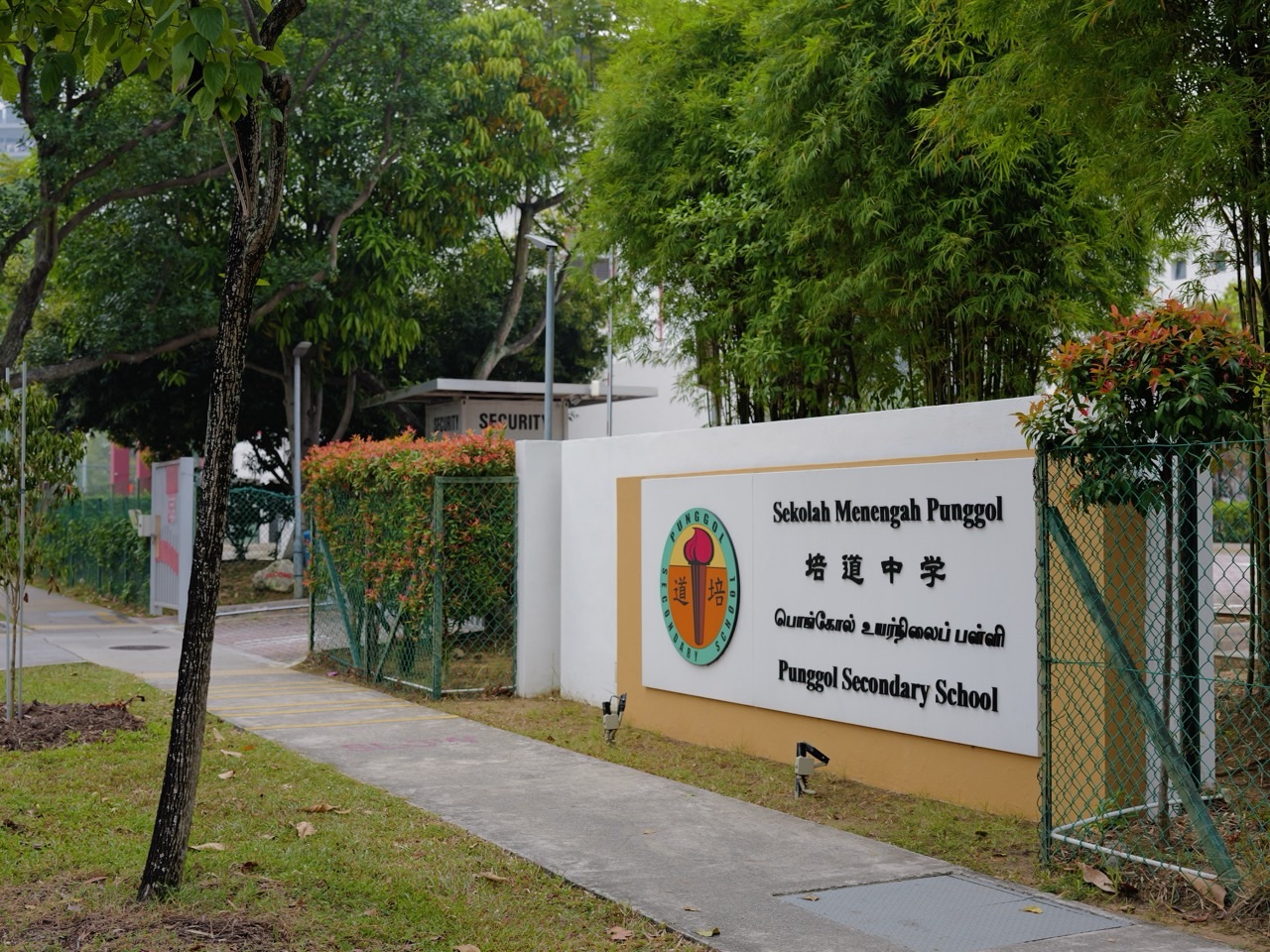
For a Punggol child who says they want to become a doctor, nurse, physiotherapist, pharmacist or another healthcare professional, choose a secondary school that provides appropriate Science, Mathematics and English foundations, opportunities to learn responsibility, and room for the child’s interests to develop. The child does not need a named specialist medical secondary school at age twelve. For Secondary 1 entry in 2027, local mainstream schools to investigate are Edgefield Secondary, Greendale Secondary, Punggol Secondary and Yusof Ishak Secondary. Each offers the national curriculum at the relevant subject levels, alongside different applied-learning and character programmes. A school with a STEM title is not automatically the most suitable school for all future healthcare careers.
When 2026 PSLE results are released on Tuesday, 24 November at 11.00am, the parent should use the child’s official PSLE Score and Posting Group to identify formal school options first. Then ask how the school teaches Science and Mathematics, builds English reading and communication, supports practical investigation and helps pupils make later subject choices under Full Subject-Based Banding. Becoming a doctor, registered nurse or allied health professional involves different post-secondary training and professional requirements; none can be guaranteed by a PSLE Score or a school name. The four Punggol schools’ 2026-entry historical cut-offs are reference data only, not certain 2027 admissions. Ordinary S1 school choices close on 30 November 2026 at 4.30pm.
Quick parent summary
• There is no one mainstream Punggol secondary school that guarantees medicine, nursing or another healthcare career.
• Confirm the child’s actual PSLE Score, individual subject ALs and PG1/PG2/PG3 eligibility before choosing schools.
• Investigate ordinary Science, Mathematics, English and Humanities teaching, not just STEM demonstrations.
• Medicine, nursing, pharmacy, allied health and community care are distinct fields with different later qualifications.
• Actual post-secondary requirements change and must be checked at the relevant future application year.
• Greendale offers design and technology learning, Punggol Secondary environment education, Yusof Ishak smart-city STEM and Edgefield enterprise and collaboration.
• Rank six genuinely acceptable schools with a balanced historical score range and safe travel.
Ask what the child means by wanting to ‘work in healthcare’
A pupil might say ‘I want to be a doctor’ because they admire a family doctor who listened carefully, because a relative works in a hospital, or because they enjoy learning about the human body. Another may love caring for people, helping older adults, solving technical problems, discovering how medicines work or organising a community service project. Those motivations can point toward many professions, and they do not require the child to make an irreversible decision in Primary 6.
Doctors assess and treat health problems through medical education and professional registration. Nurses provide essential assessment, care, education and patient support through their nursing training and registration routes. Allied health professionals include areas such as physiotherapy, occupational therapy and diagnostic services, each with its own qualifications. Pharmacists, healthcare scientists and community-care workers have further distinct educational paths. A parent should not tell a child these are equivalent jobs or that a single school programme automatically leads to any one of them.
Ask the child which part of healthcare interests them most. Do they like biology and scientific explanations? Do they enjoy reassuring someone who is worried? Are they drawn to devices, data, languages or community service? These interests help the family select a school with suitable education and opportunities, while leaving room to change direction.
What a good healthcare-oriented secondary school needs to teach
| Foundational area | Why it matters in health-related fields | What parents should ask |
|---|---|---|
| Science | Understand biological, physical and chemical explanations | How does the school teach evidence, practical inquiry and safe lab work? |
| Mathematics | Interpret measurements, quantities, graphs and relationships | What support or stretch is available at the child’s actual subject level? |
| English | Read complex information and communicate clearly | How are comprehension, writing and explanation developed? |
| Humanities and social awareness | Understand people, communities and differing needs | What opportunities develop evidence-based thinking and empathy? |
| Character and service | Build responsibility, teamwork and care | What school-wide VIA and student development experiences reach all pupils? |
| Physical and personal wellbeing | Manage the demands of schooling and activities | How does the school support healthy routines, safe practical work and students seeking help? |
A student hoping to become a healthcare professional should learn to communicate without exaggeration, understand evidence and work respectfully with people. A strong Science result is useful, but reading, writing and quantitative reasoning are equally important. A pupil who finds one subject difficult should receive relevant support rather than being told that a career ambition is already impossible.
Medical and clinical training is regulated and much later than the secondary-school decision. Parents can encourage academic effort while explaining that the child will make subject, college and career choices at several future stages. A twelve-year-old should be able to explore without the burden of guaranteeing an adult occupation.
The difference between doctor, nursing and allied health pathways
For a medical degree, institutions such as NUS Medicine publish their own university-level admissions criteria. NUS Medicine’s current 2026 A-Level prerequisites include strong Chemistry and either Biology or Physics at the relevant H2 levels, along with other stated requirements. This is a 2026 university admissions reference, not a promise about requirements when a pupil starting Secondary 1 in 2027 eventually reaches university. Different medical schools and other recognised qualifications have their own rules.
For nursing, Singapore’s Nursing Board publishes accredited programmes that lead toward different professional statuses. Recognised diploma routes include nursing diplomas at Nanyang Polytechnic and Ngee Ann Polytechnic, while ITE College East provides Higher Nitec in Nursing as an enrolled-nurse pathway. The exact admission criteria and progression routes differ, and an individual must meet the current programme and professional requirements.
Allied health careers have other diploma and degree programmes. A student interested in physiotherapy or diagnostic work may later research specific institutions and the qualifications required for registration. These programmes are not interchangeable with a medical degree. Parents should use the current official sources at each relevant educational decision rather than claim that ‘any Science subject’ guarantees all healthcare destinations.
| Future interest | Examples of later routes to research | Why no Secondary 1 guarantee exists |
|---|---|---|
| Medicine | Eligible pre-university/IB or accredited diploma route leading to a medical school’s admission process | University selection and professional requirements are separate, competitive stages |
| Registered nursing | Recognised nursing diplomas or degree programmes and SNB registration | Programme eligibility, training and professional standards matter |
| Enrolled nursing | ITE Higher Nitec Nursing and SNB enrolment requirements | Requires the actual course and its assessments |
| Allied health | Relevant accredited diploma or degree and professional requirements where applicable | Each profession has specific training and registration criteria |
| Community care or health services | ITE, polytechnic and other suitable educational routes | Different jobs have different qualification and employment expectations |
The table provides examples rather than advice to lock a child into a single qualification. A pupil who begins PG1 may later develop subject strengths and follow appropriate education routes, while a pupil who begins PG3 is not automatically assured admission to a medical school. Both require real learning, appropriate choices and future eligibility. Respect each pupil’s progression.
How Full Subject-Based Banding affects future Science decisions
From the 2024 Secondary 1 cohort, mainstream Singapore secondary schools have used Full Subject-Based Banding. PG1, PG2 and PG3 are school entry Posting Groups. G1, G2 and G3 are individual subject levels. Where a pupil meets the applicable criteria, different subjects may be studied at different levels. A learner who is strong in Science but still developing English could require a more differentiated plan than a single old stream label suggests.
At upper secondary, SEAB publishes the SEC G3 subjects Biology, Chemistry and Physics, as well as combined Science variants. The national syllabus list does not guarantee that all subjects and combinations will be offered to every pupil at every school. The child entering Secondary 1 in 2027 would make a later subject-choice decision as they approach upper secondary, subject to the school’s timetable, offerings and actual performance.
A parent should not promise that taking Biology automatically qualifies a future medical student, or that Chemistry alone settles the admission process. Universities and professional programmes apply their own subject combinations, results and selection processes. The secondary school should help the pupil develop a sound foundation and provide accurate guidance at the relevant time.
The four local Punggol secondary schools
Edgefield Secondary: initiative, collaboration and useful solutions
Edgefield Secondary at 36 Punggol Field, Singapore 828814 highlights its Growing the Edgefield Mindset programme, involving enterprise, inventive thinking and collaboration. The child interested in designing a practical aid for people or communicating a helpful idea may find those experiences stimulating. Ask how ordinary Science is taught, how pupils learn to explain evidence and what support is available for Mathematics or English difficulties.
A socially useful project can help pupils develop empathy, but an entrepreneurship ALP is not a clinical training programme. A student should not assume that completing a school project will count as hospital experience or professional qualification.
Greendale Secondary: design, technology and evidence
Greendale Secondary at 51 Edgedale Plains, Singapore 828866 offers a Design, Technology and Engineering ALP including coding, design and hands-on systems. A child interested in healthcare devices, accessibility or scientific instruments may value this way of learning. Ask how pupils design and test solutions and how Mathematics, Science and written explanation are strengthened.
Engineering interest can coexist with healthcare ambitions, but it should not determine a future profession prematurely. A pupil who enjoys making things may later choose many education routes. The school’s ordinary subject teaching remains the central issue.
Punggol Secondary: environment, health and community service
Punggol Secondary at 51 Edgefield Plains, Singapore 828870 highlights Environment Education and community leadership. A child interested in public wellbeing, nature or helping neighbours may enjoy exploring how environmental conditions and responsible community action affect people’s lives. The family can ask about Science investigations, data interpretation, written explanations and VIA activities.
The school’s environment focus does not imply that it offers a specialised nursing curriculum. It is one way a young learner can practise responsibility, curiosity and evidence-based thinking while studying ordinary subjects.
Yusof Ishak Secondary: STEM and sustainable urban systems
Yusof Ishak Secondary at 8 Sumang Walk, Singapore 828676 highlights its S4TEM@YI sustainable smart-city STEM programme and student leadership. A pupil interested in healthcare technology or how cities support people may enjoy these applied questions. Ask what every Secondary 1 student experiences and what STEM Club activities require selection.
A technology theme is not the same as a guarantee of advanced Biology, Chemistry or another future subject. Parents should examine the actual school subject offerings and the child’s study needs, as well as the home-to-school journey.
The four schools’ completed 2026-entry historical cut-offs
The following scores are previous last-posted totals for the 2026 Secondary 1 intake following the 2025 PSLE. They are not known 2027 cut-offs, admission guarantees or a rating of which school produces doctors. A smaller numerical PSLE Score indicates stronger aggregate performance.
| Punggol school | Previous PG3 COP | Previous PG2 COP | Previous PG1 COP |
|---|---|---|---|
| Edgefield Secondary | 14 | 23 | 27 |
| Greendale Secondary | 16 | 23 | 27 |
| Punggol Secondary | 19 | 24 | 27 |
| Yusof Ishak Secondary | 15 | 22 | 27 |
A PG3 pupil with Score 17 who loves Science can consider the school programmes, but the previous PG3 endpoints were 14, 16, 19 and 15. Only Punggol Secondary’s old 19 was numerically less stringent than 17. That does not make it guaranteed for the new cohort, nor does it imply the other schools provide better medicine preparation. The family should include suitably accessible alternatives.
A PG2 pupil with Score 24 sees local past PG2 values of 23, 23, 24 and 22. Punggol Secondary’s 24 was the previous boundary, not a 2027 certainty. At Score 25, the family may have a PG1/PG2 option, with very different local school comparisons for each route. A healthcare interest cannot be used to mix the historical columns.
Students with different scores or subject levels can all develop care, communication and practical skills. The immediate school-selection problem is to find a school where they can learn well, not to assert that one PSLE band produces a more valuable future healthcare worker.
Five questions about health-related careers worth discussing with a child
- What interests you most: helping a person, understanding the human body, scientific investigation, technology or community care?
- Do you enjoy reading explanations and communicating clearly, including when someone is worried?
- Which parts of Science and Mathematics do you understand well, and where do you need better support?
- Are you curious about different healthcare roles rather than just the title of doctor?
- Would you still enjoy this secondary school if your career interests changed in Secondary 2?
The family should discuss these questions with curiosity, not as a selection interview. There is no need to choose a speciality or degree at twelve. The child can follow genuine interests by reading age-appropriate non-fiction, talking to responsible adults about their work and participating in school-wide service learning. The goal is broad understanding and respect for healthcare, not practising medical procedures.
A safe four-week exploration plan
Week 1: read about one healthcare role
Choose a reliable age-appropriate article or book about doctors, nurses, allied health or community care. Ask the child to explain what that role contributes and what training is needed. Avoid dramatized television portrayals as the sole source of information.
Week 2: study a basic Science explanation
Read a school-appropriate explanation about an organ system, hygiene or simple human biology. Ask the pupil to describe what evidence or observation supports the explanation. This is an educational exercise, not a substitute for medical advice or professional treatment.
Week 3: practise Mathematics and communication
Use a safe hypothetical data table involving quantities or trends—not actual private patient information. Ask the child to interpret the numbers and communicate one clear finding with appropriate caveats. This connects Science, numeracy and writing.
Week 4: reflect on helping responsibly
The pupil can plan a small family or community kindness project with suitable adult supervision. Discuss boundaries, consent, confidentiality and the importance of asking qualified adults for help. Do not encourage a child to provide medical treatment, give medicines or handle real patient information as an educational experiment.
What to ask secondary schools before choosing
- How does the school teach and support Science investigation at the child’s actual G level?
- What Mathematics foundations are taught and how are difficulties addressed?
- How do English lessons develop comprehension, accurate explanation and respectful communication?
- Which upper-secondary Science and Mathematics subjects are currently available, and how are later subject choices made?
- What learning opportunities connect school subjects to real community needs without promising professional experience?
- How does the school help pupils develop responsibility, empathy and collaborative skills?
- What is the actual route to school and home after a late CCA or programme session?
- What guidance is provided when pupils explore different post-secondary qualifications or career interests?
- Can the child experience broad CCAs and change interests as they grow?
- What information can the school confirm for 2027, and what cannot be guaranteed years in advance?
A responsible six-school list for a healthcare-interested pupil
| Decision factor | Evidence the family should record |
|---|---|
| Official entry | Actual PSLE total, individual ALs and chosen Posting Group |
| Historical admission | Correct previous COP for that specific route, marked 2026 intake |
| Science and Mathematics | Actual subject-level offers, teaching and support |
| Communication | English feedback, reading and writing expectations |
| School culture | Pastoral care, respectful relationships, service opportunities |
| CCAs | Clubs and activities the child genuinely enjoys, with recruitment rules |
| Family life | Safe morning and late CCA journey, fees and rest |
| Future flexibility | Would the child want this school even if they later chose another career? |
MOE encourages including two or three schools with previous COPs less stringent than the child’s result where suitable. For PG3 Score 16, an old PG3 COP of 19 was numerically less stringent, while 14 was more competitive. This is useful admissions history but no personal probability formula. If local Punggol options do not provide a balanced range, explore reachable schools in Sengkang, Hougang and other suitable estates.
Ordinary S1 posting considers academic merit and, when otherwise eligible candidates with the same PSLE Score compete for a final place, applies citizenship, preference order and computerised balloting. Neither a healthcare ambition nor living next to a school confers a general selected-school priority. Rank six schools in the child’s genuine preference order.
Official dates for PSLE 2026 to Secondary 1 in 2027
| Event | Announced date |
|---|---|
| PSLE results released | Tuesday, 24 November 2026 at 11.00am |
| S1 Portal opens | 24 November at 11.30am |
| Ordinary school-choice deadline | Monday, 30 November at 4.30pm |
| S1 posting results | Tentatively Friday, 18 December; official confirmation to follow |
These dates come from SEAB’s 17 November 2026 announcement. Eligible families can use MOE’s S1 Portal with a parent’s Singpass. Contact the primary school for assistance before the deadline if needed. A confirmed DSA-Sec placement follows its own official requirements.
Frequently asked parent questions
Which Punggol secondary school is best for future medicine?
There is no evidence that any one of the four guarantees medicine admission. Compare actual Science, Mathematics and English teaching, later subject options, school culture, CCAs and daily travel.
Does a child have to attend IP to become a doctor?
No. Medical school admission occurs much later through specified recognised qualification routes. An IP programme is one possible educational structure, but not a universal requirement, and admission is never guaranteed.
Is Biology alone enough for medicine?
No. Current medical-school requirements can include Chemistry and other relevant subjects, grades and selection. Check the actual named university’s official rules when the child eventually applies.
Can PG1 or PG2 pupils aspire to healthcare careers?
Children can explore many healthcare fields. Future opportunities depend on their later subject levels, qualifications, results and applicable professional criteria—not solely their Primary 6 Posting Group.
Is a nursing qualification the same as a medical degree?
No. Nursing and medicine have different courses, professional registration and roles. Singapore’s Nursing Board lists accredited diploma and Higher Nitec routes leading to different nursing statuses.
Should parents arrange hospital work experience for a twelve-year-old?
There is no general need to do that for S1 school choice. Any real clinical exposure has safeguarding, privacy and institutional requirements. Start with safe reading, ordinary school education and age-appropriate service under supervision.
Official sources and further eduKate reading
- SEAB: official G3 Biology, Chemistry, Physics and combined Science SEC subjects
- NUS Medicine: current admissions prerequisites, to be rechecked in the actual future application year
- Singapore Nursing Board: accredited programmes and nursing registration/enrolment pathways
- ITE: Higher Nitec in Nursing, current programme information
- MOE: Full SBB and individual secondary subject levels
- MOE SchoolFinder: school profile and historical school score ranges
- SEAB: PSLE 2026 result release and S1 submission dates
- eduKate Punggol: Science investigation and secondary school choices
- eduKate Punggol: choosing while keeping career options open
Final parent move: Encourage a child’s interest in caring for people while protecting the freedom to discover other talents. Choose a secondary school for clear Science, Mathematics and English teaching, supportive character development, actual subject options and a workable daily routine. A career ambition is a good reason to ask better questions—not a reason to promise a medical or nursing qualification at age twelve.


