
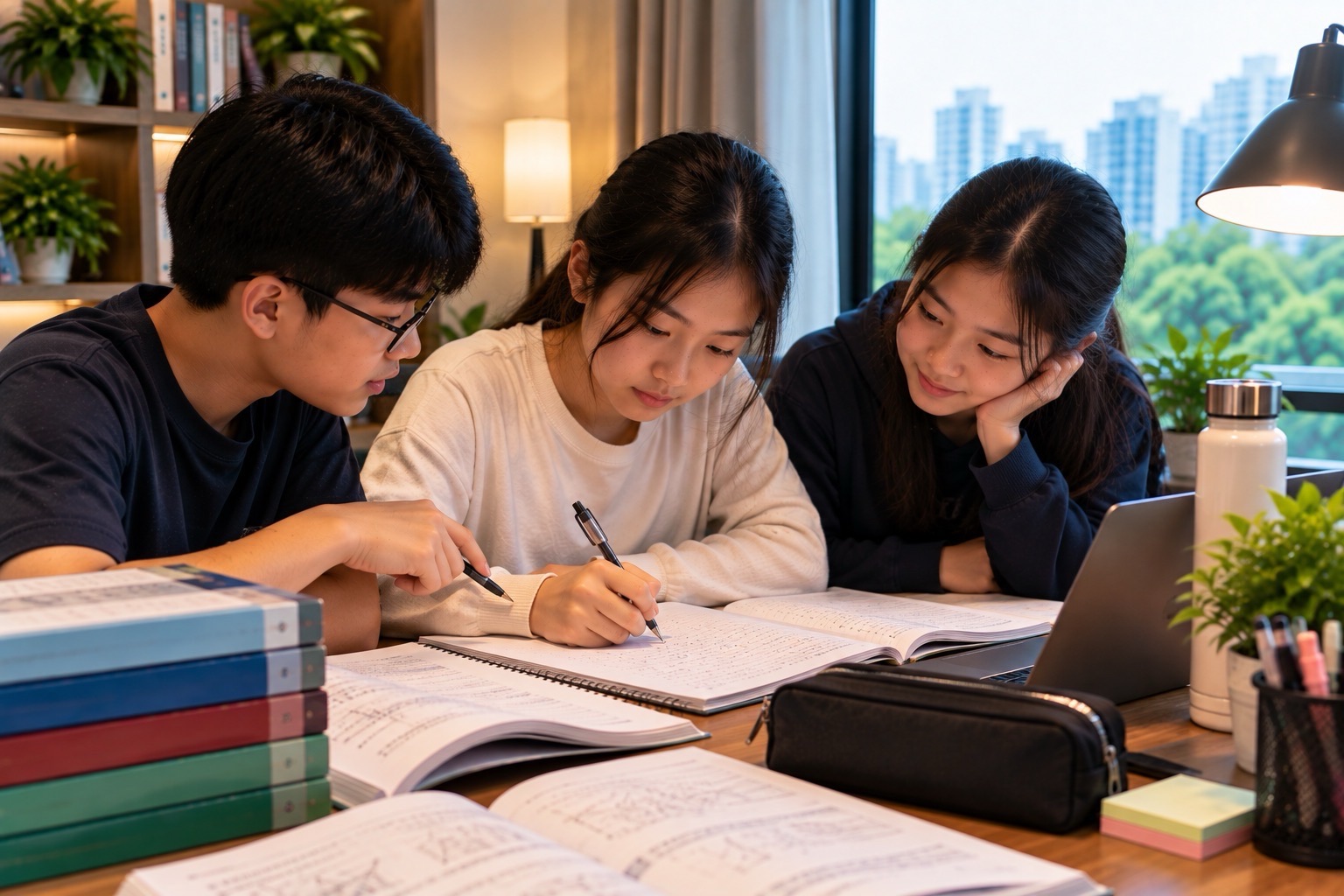
For a Punggol child who loves music, performing arts or debating, the best Integrated Programme (IP) secondary-school choice is not necessarily the one with the strongest PSLE cut-off. Raffles Institution, Hwa Chong, Singapore Chinese Girls’ School, Cedar Girls, Victoria School, St Joseph’s Institution and Eunoia Junior College offer different arrangements for band, orchestra, choir, drama, strings, debating and clubs. Some children enjoy formal rehearsals and competition; others want to try music or public speaking for the first time. A CCA can develop confidence and friendships, but its listing on a school website does not guarantee Year 1 entry or six uninterrupted years in the same ensemble.
Punggol parents should first verify the child’s PSLE eligibility for the particular IP track, the school’s current CCA recruitment, the likelihood of auditions or selection, and the actual weekly practice timetable. Then check travel after late rehearsals from the campus—not simply the morning journey from Punggol MRT. In joint IPs, the child may study at a boys’ or girls’ school for four years and move to a different junior college in Years 5–6. A school such as SCGS or Cedar offers one arts environment at secondary level, while Eunoia or VJC offers new activities later. The eventual academic qualification may be A-Levels or an IB Diploma, and neither a distinction in music nor an outstanding CCA record automatically reserves a university place.
- RI boys Years 1–4: Chinese Orchestra, Military Band, String Ensemble, Raffles Players and Raffles Voices, plus debating.
- Hwa Chong boys: Chinese Orchestra, band, strings, choir, Chinese and English drama, and debate or oratorical clubs.
- SCGS girls: band, choir, dance, Chinese and English drama, handbells and strings; the IP leads to Eunoia.
- Cedar and Victoria: separate Year 1–4 communities within the Victoria–Cedar Alliance, with music and performing arts activities before VJC.
- SJI and ACS(I): different Year 1–4 CCA participation requirements; both IPs lead toward the IB Diploma.
- DSA auditions: a talent-domain application before PSLE differs from CCA allocation after enrolment.
- Family test: compare the student’s genuine interests, training commitment, costs, Punggol travel and subject interests, not only competition medals.
Choose by the kind of creative activity—not simply the school name
A band may suit a pupil who enjoys ensemble wind or percussion playing and can commit to structured sectional rehearsals. A string ensemble may demand another kind of technique. Chinese Orchestra offers a different repertoire and instrument community; a choir develops ensemble listening and vocal control; drama requires interpreting scripts, collaborating and accepting performance feedback. Debate and oratorical clubs are not performing-arts CCAs in precisely the same way, but they develop persuasive speech and critical listening.
Ask what the child actually does without being pushed. Do they practise an instrument voluntarily, enjoy acting a part, sing in a group, or like explaining an argument? An impressive Grade 8 instrument certificate is not the whole story. A pupil who has practised for personal enjoyment may have different needs from a pupil who wants demanding competition rehearsals and auditions.
The school can provide opportunities, but participation, the instructor’s approach, the number of new pupils accepted and the work expected during exam periods determine the daily experience. Parents should speak with the current teacher-in-charge or CCA office and, where possible, observe the programme at open house.
Raffles Institution: the Year 1–4 and Year 5–6 difference
The Raffles Institution Year 1–4 2026 CCA directory lists Chinese Orchestra, Military Band, String Ensemble, Raffles Players and Raffles Voices, as well as Raffles Debaters. These belong to the boys’ junior-secondary Years 1–4, not a guaranteed place for an incoming boy in every group. The school can impose selection, instruments, audition requirements and training expectations.
The separate RI Year 5–6 CCA directory includes Chamber Ensemble, Chinese Orchestra, Raffles Chorale, Guitar Ensemble, jazz, rock, several dance groups, symphonic band, Raffles Players, debating and many other activities. Some offerings differ from Year 1–4 and may impose their own year-level intake or audition rules. A student who played strings in Secondary 3 should not assume a college-year role is automatic.
For a Punggol family this matters in two ways. The normal lower-secondary journey is to RI in Bishan, while the pre-university stage may have different start times, activity venues and transport demands. More importantly, the student may want to try a new creative activity in Year 5 rather than continue exactly the same one. Choose a school capable of supporting growth, not a promise that one audition at age 12 decides the next six years.
Hwa Chong: performing arts alongside a bilingual school culture
The Hwa Chong High School CCA directory updated July 2026 identifies Chinese Orchestra, Chinese Drama, English Drama, choir, School Band, String Orchestra, English Debate Club and Chinese Oratorical Society. Some are formal performing-arts activities and others clubs or societies; parents should look at which group a chosen activity belongs to and what recruitment rules apply.
A boy who enjoys both English and Chinese expression might value speaking and theatre opportunities in the wider bicultural school environment. A boy who loves orchestra but is less interested in language enrichment may still find the music attractive, but must understand the school’s actual Higher Chinese and academic commitments. Academic fit and CCA fit should both be established; one should not be used to obscure a mismatch with the other.
Hwa Chong is in the Bukit Timah corridor, a substantial journey from many Punggol homes. Instrument cases, score folders and performance attire may make the last leg home demanding. Ask whether rehearsals run longer near concert dates, whether students have to return on weekends, and whether the orchestra’s future college arrangement is substantially different.
SCGS: handbells, strings and more than one kind of drama
The SCGS secondary CCA list updated September 2026 includes band, choir, dance, Chinese drama, English drama, Handbell Ensemble and String Ensemble. Its clubs include Debating Society, Infocomm and Art Club. This is a notably varied menu for a girl considering an arts-friendly school before progressing through the Eunoia Joint Integrated Programme.
A pupil interested in acting should ask about the actual difference between Chinese and English drama groups, their audition or intake criteria and the balance of performances versus routine training. A musician might compare handbells with strings or band; these are different technical disciplines. A pupil who has never played an instrument may want to ask whether beginner recruitment exists in the selected group.
The first four years take place in SCGS’s Dunearn Road setting, then the joint IP cohort proceeds to Eunoia JC for Years 5–6, subject to school requirements. The family needs two commute estimates and should not assume a CCA place automatically follows into the college. An academic programme leading to A-Levels is part of this decision, so ask what a child’s long-term subject interests might require.
Eunoia JC: an example of a new arts menu in Years 5–6
Eunoia Junior College’s CCA page updated August 2026 lists Chamber Strings, Chinese Orchestra, Choir, Dance, Drama, Rock Band, Street Dance and Symphonic Band among its performing arts, as well as Debate, Media, Press and Visual Arts in other groups. Those opportunities may attract students joining from Catholic High, St Nicholas and SCGS, but access to any individual group remains subject to current school recruitment and programme policies.
Year 5 can be a fresh start. A secondary-school choir member may seek a different role; another student may discover a love of rock music or journalism. The new college environment can help pupils broaden their interests, but it can also create social adjustment and a heavier pre-university academic schedule. Ask the senior-year CCA leaders about training frequency, major productions and support during exam periods.
Eunoia’s 2026 DSA-JC notice also listed particular performing arts talent domains for JC1 entry. That is a separate admissions route for eligible candidates from outside its joint IP, not proof that a Year 1 student can use JC DSA for the same activity in Secondary 1.
Cedar Girls and Victoria: two secondary arts cultures before VJC
Cedar Girls’ 2027 DSA notice specifically offered a Symphonic Band talent area, with relevant performances or competition experience, auditions and interviews for shortlisted applicants. It also identified sports and social innovation domains. This distinguishes a band DSA talent area from the full range of ordinary CCA opportunities that girls may explore after joining.
Victoria School’s 2026 CCA list includes Chinese Orchestra, Choir, Concert Band, English Drama, debate/oratorical activities and photography. The Year 1–4 school is boys-only, whereas Cedar is girls-only; both feed the Victoria–Cedar Alliance route towards VJC for A-Levels. Their teaching, performance environment, school culture and commute are not interchangeable merely because their final qualification is shared.
Ask whether a student’s desired instrument is needed in the incoming cohort, whether a school rehearsal includes weekend or competition commitments, and whether any performance venue is away from the campus. The later VJC arts menu must be checked separately, especially when the pupil wants to continue a particular orchestra or ensemble.
SJI and ACS(I): the CCA policy can shape the entire week
The SJI secondary CCA policy lists Bagpipes & Drums, Drama, Guitar Ensemble, Symphonic Band and Vocal Ensemble among performing arts. The school expects sustained engagement in one core school-based CCA, with special conditions for selected clubs. A boy who values serious musical development and community may appreciate that clear commitment.
The ACS (Independent) Year 1–4 policy expects two CCAs, one uniformed group and another selected from sports, arts or clubs. For a child who also attends external music lessons, this requires a careful family timetable. It may provide broad development, but an already overextended learner could find it difficult. Ask about the current policy, actual assigned groups and support.
SJI and ACS(I) both have six-year IP paths leading to the IB Diploma in their final years, but the school ethos, CCA requirements and travel from Punggol differ. A family should consider the student’s likely ability to handle IB coursework, research and academic writing as well as instrumental practice.
A DSA music application is not an ordinary CCA registration
DSA-Sec allows selected schools to consider a child’s particular talents before PSLE results. A band or music talent area may involve a demonstration, prepared contrasting pieces, sight-reading, scales or an interview. The specific items depend on the school and exercise. The Cedar 2027 entry notice describes selection for Symphonic Band; Temasek JC’s notice includes Concert Band and Music Elective Programme (MEP).
Temasek JC announced that its 2027 DSA exercise for 2028 intake would retain Concert Band and MEP while removing separate English, Mathematics and Science talent areas. A family preparing for the next cycle should watch the actual school announcement for further changes instead of borrowing an older list. A talented musician should understand whether the offer involves taking an examinable music subject, CCA participation or both.
The 2026 DSA exercise for admission in 2027 is no longer open in November 2026. A parent cannot reopen it by submitting audition recordings after PSLE results. Check MOE’s DSA rules and use the ordinary S1 posting process where no DSA placement was secured.
A performing-arts week from Punggol: build the real timetable
Write down the school morning arrival time, lessons, CCA practice, instrument transport, homework and the final trip home. On a normal rehearsal day, ask whether a student can complete assignments after travelling. During concerts or competitions, include costume preparation, extra practices and weekend sessions. A child should not need perfect public-transport connections every day to get enough rest.
Families in Punggol Coast and Northshore may access the North East Line differently from those in Oasis, Matilda or Punggol Field. Transport maps starting at central Punggol leave out the first and last leg. A school in Dunearn Road, Bukit Timah or Dover can require more travel for some homes than a school in Bishan or the east, but the actual route and child’s fatigue matter more than a region label.
The Year 5 transition introduces another factor. If a pupil is in a linked programme, Eunoia, VJC, RI senior years or ACS(I) may be a different location and timetable. Plan for both phases without inventing fixed travel minutes. A family can reasonably prefer a school with a less prestigious ensemble if the child can attend it consistently, keep up academically and still enjoy music.
Music, arts and debate: what later study do they support?
A pupil interested in music may later investigate conservatories, performing arts courses, arts education, sound production, media, design or other programmes. Some require an audition, portfolio or specialist prerequisite in addition to academic qualifications. A-Level or IB students can also apply to mainstream university degrees when meeting the relevant grades and subjects. The school CCA itself does not automatically give access to a conservatory or degree.
Drama, debate, journalism and media activities can develop critical reading, communication, collaboration and judgment. These are useful in fields including law, communications, education, business and public service, but no CCA award should be presented as a promise of a law degree, scholarship or university admission.
A student who later prefers a polytechnic arts, design, media or computing diploma can research course-specific eligibility. ITE also offers applied education, with progression possible under qualifying conditions. Early IP leavers must verify what formal qualifications they hold; four years of internal IP school assessments are not automatically a Singapore-Cambridge SEC certificate. The 2028 PSE framework is relevant to eligible SEC-based applicants, not automatic entry for every IP pupil.
Three child-focused choices and a practical parent checklist
Case 1 — a girl who loves choir and debate: SCGS and Cedar may both be interesting, but their programmes, Year 5 destination and CCA intake differ. Ask where she will be happiest rehearsing, whether beginner or experienced levels are accepted and what a late return to Punggol means. Include genuine non-IP alternatives if she values a nearer school.
Case 2 — a boy who already plays violin seriously: RI or Hwa Chong strings might be worth investigating, but only if the school and IP admission eligibility suit him. A current instrument need, audition and external lesson schedule matter more than an adult’s school ranking.
Case 3 — a musician with a strong PSLE score who wants independent research too: SJI or ACS(I) might provide an IB route, but their CCA commitment policies differ. The family should compare coursework demands and instrument practice rather than assuming any IB institution automatically offers a flexible timetable.
Before submitting the school list, confirm the exact IP option and last admitted historical score in SchoolFinder; ask for the incoming CCA intake list; establish whether the desired activity is performance, club or an examinable subject; test the normal and late return from school; investigate fees, instrument costs and aid; and rank schools the child would truly accept.
Frequently asked questions and official school links
Does a listed school orchestra have to accept every new student? No. Schools may use auditions, instrument-specific intake, prior experience or available places. Verify the incoming cohort.
Is music DSA the same as being assigned a music CCA? No. DSA is an earlier school admission process with talent-area criteria and commitments. CCA assignment occurs after enrolment.
Will a musical CCA make university admission automatic? No. Specialist programmes may require auditions or portfolios; academic courses require eligible credentials and grades.
What if the child enjoys music but does not want a demanding arts schedule? Explore broader IP or mainstream schools offering a suitable CCA rather than treating intensive specialist training as the only serious choice.
School sources: Raffles junior CCAs, Hwa Chong, SCGS, Eunoia, Cedar, Victoria, SJI and ACS(I). For a complementary family decision see humanities, arts and business IP pathways. Checked against 2026 school information; reconfirm during the actual intake.
