
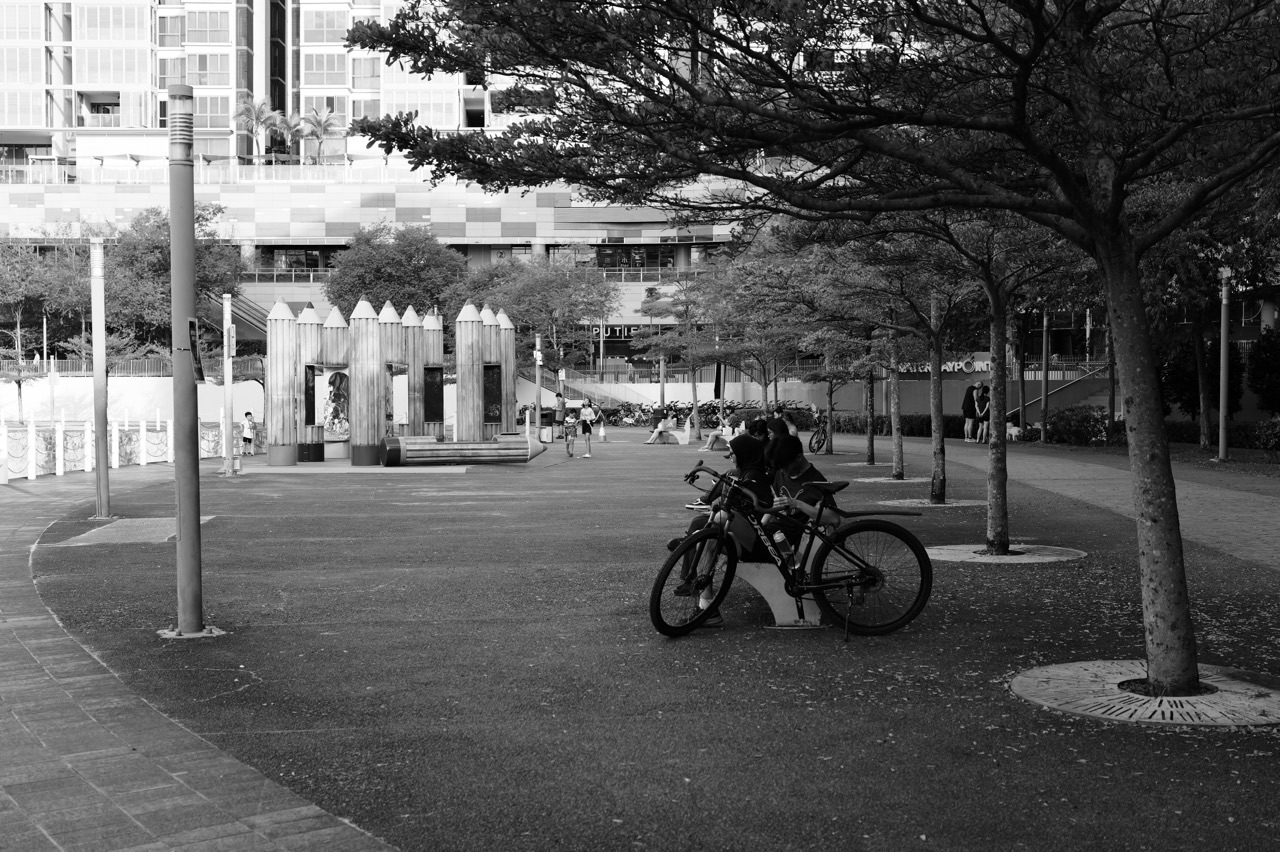
A public bicycle repair stand or air pump can be useful when a Punggol cyclist discovers a soft tyre, loose accessory or minor adjustment problem during a ride. But the equipment is only helpful when it is in good condition. If a pump hose is split, the pressure head will not lock onto a valve, a tool is missing or the repair stand is unstable, do not force it or improvise a repair beside a cycling path. Secure your bicycle, move out of the way of other users and report the exact station to the organisation responsible for it.
Public bicycle repair facilities are not all the same. Some are installed by a Town Council, community group, commercial property, cycling organisation or private operator. LTA’s cycling community resources have described community bicycle repair stands that provide simple tools such as tyre levers and pumps, while OpenStreetMap-based directories can help locate facilities but do not guarantee that an entry is still present or working. Punggol cyclists should therefore verify the specific station, its operator and current access arrangements rather than assume that every park connector or HDB precinct has a public pump.
- Check whether the station is actually intended for public use and whether any access conditions or opening hours apply.
- Do not force a pump head, remove a tool, dismantle a hose or use a damaged stand as a bicycle support.
- If the bicycle itself is unsafe to ride, walk it to a safe place rather than continuing on a busy shared path.
- Record the station location, nearby block, park connector entrance or fixed landmark, and the component that is faulty.
- Describe the symptom: air will not flow, hose leaks, head will not secure, gauge is unreadable, tool is missing or stand is loose.
- Contact the named operator, Town Council, park manager or premises management as appropriate.
- Use OneService for a suitable HDB common-area or municipal facility report; use direct operator contact for private equipment.
- Do not assume that a public directory listing guarantees a pump is free, open or compatible with your valve.
1. What a public bicycle repair stand is
A self-service bicycle repair stand may combine a pump, hanging hook or support arm, and a small set of tethered hand tools. It is intended to help a cyclist complete limited adjustments while away from home. A stand is not a full workshop, and it may not carry every tool needed for a complicated repair.
The equipment’s presence does not guarantee that it can safely support every bicycle. A heavy electric bicycle, cargo cycle or unusual frame may need a different support method. Read the station’s own instructions, check whether the stand is public and use it only within the operator’s stated limits. If the support appears loose or damaged, do not hang the bicycle from it.
2. A public pump is not always a full repair station
A simple pump may be mounted on a wall or post without any work stand or tools. A repair station may have several tools but no pressure gauge or compressor. Listings may use the words ‘bike pump’, ‘repair stand’ and ‘repair point’ for different installations.
Do not travel across Punggol expecting a full workshop because an online map shows a bicycle symbol. Check the listed features and the operator’s current information before depending on it. Community-maintained mapping may be helpful as a lead, but it is not an official service-level guarantee.
3. Why tyre pressure matters
A tyre that is too soft can make a bicycle harder to control and increase the chance of pinch damage to an inner tube when the wheel hits an edge. Excessive pressure can also be unsuitable and uncomfortable or exceed the tyre’s stated limit. The correct pressure depends on tyre size, construction, rider load and manufacturer guidance.
Use the pressure range printed on the tyre or provided by its maker, where available. Do not copy a pressure from another cyclist’s road bike and apply it to a child’s bicycle or a wide-volume tyre. If the station’s gauge is broken or absent, use a reliable alternative rather than guessing.
4. Schrader and Presta valves
Many bicycles use either a Schrader valve, which resembles a car tyre valve, or a narrower Presta valve with a small locking nut. Some pumps support both types; others need a reversible head or adapter. A pump that does not fit one valve is not automatically broken.
Check the valve type and the pump instructions before using force. For a Presta valve, the small tip is normally loosened before inflation and secured afterwards, but the valve should not be bent or forced sideways. If the station lacks the correct head or adapter, report its compatibility limitation.
5. A pump head that will not lock
A pump head may fail to grip a valve because the rubber seal is worn, the locking lever is damaged, the nozzle is incompatible or the valve itself is bent. Repeatedly forcing it can damage both the pump and the bicycle valve.
Stop if air escapes continuously or the head will not attach normally. Do not use pliers to tighten the station’s fitting. Record which valve type you were using and whether the problem appears to be at the hose head or the bicycle valve, without assuming the exact internal cause.
6. A leaking hose
A hose may have a visible split, loose coupling or damaged outer covering. Air can escape before it reaches the tyre, so the user may hear a hiss without achieving useful inflation. A damaged hose can also whip or detach if pressure is applied.
Do not tie the hose with tape or hold a split section shut while pumping. The station operator should replace the hose or fitting using compatible parts. Report whether the leak appears near the pump body, hose joint or head, and keep other users from repeatedly trying the damaged equipment.
7. A broken gauge
Some pumps include a pressure gauge, while others do not. If a fitted gauge has a cracked face, stuck needle or unreadable display, the pump may still move air but the user cannot easily verify the result. A gauge that moves erratically should not be treated as accurate.
Do not exceed tyre limits simply because the gauge seems low. Report the gauge as a separate defect and use a reliable alternative if you know the correct pressure. A public repair stand should not encourage cyclists to inflate tyres blindly.
8. Missing or damaged tools
Repair stands may include Allen keys, screwdrivers, tyre levers or other tethered tools. A tool may be absent, bent, rusted or disconnected from its tether. That reduces the service available and can create a hazard if a sharp or broken tool remains attached.
Do not remove a neighbouring tool to replace the missing one or leave a personal tool at the station without permission. Report the station and exact missing or damaged tool. The operator can decide whether the tool should be replaced, the stand secured or the entire station temporarily closed.
9. A loose bicycle support arm
A work stand may have a hook or arm intended to hold a bicycle while a user makes a minor adjustment. If the mounting post rocks, weld appears cracked or arm bends unusually, it may not safely support a bicycle.
Do not hang a heavy bicycle to test it. A loose support should be reported to the owner and left unused until inspected. The bicycle may fall and injure the user or someone passing nearby; a simple-looking bracket can have a structural fixing that is not visible.
10. A pump that has been vandalised
A public pump may have a cut hose, broken handle, missing head or deliberate markings. A broken component can be accidental wear rather than vandalism. Report the observed condition and do not accuse a named person without evidence.
A good report helps the operator identify what needs replacement and whether the station should be taken out of service. A photo of the damaged part taken from a safe position may help, but do not touch sharp edges or enter a restricted area to get a closer view.
11. Who owns a bicycle repair station?
The owner depends on where the equipment is installed. A station within HDB common property may fall under Town Council or another estate arrangement; a park installation may be managed by NParks or a contracted operator; a petrol station, mall or condominium may be privately managed.
A nearby HDB block does not prove that the Town Council owns a pump on commercial land. Look for the operator’s label, signage or a facility contact. If unclear, provide the location to OneService or the premises manager and ask them to route it.
12. OneService for suitable estate facilities
The OneService App and chatbot let residents report municipal issues and attach relevant location information. The OneService Work guide explains how HDB and Town Councils handle common-area maintenance and route reports to the responsible party.
Use OneService where the equipment is genuinely part of an HDB estate or another municipal service it supports. If a private business owns the station, contact that operator first. Do not assume the app itself repairs the equipment or guarantees a fixed response time.
13. NParks and park-connector facilities
If a repair point is located within a public park or park connector, NParks or its appointed manager may be the relevant starting point. NParks provides a Contact Us service for park and facility enquiries. Give the park name, route section and closest landmark.
Punggol’s park connectors are long and can have similar-looking junctions. ‘Somewhere beside the waterway’ is not enough to locate a small pump. Include the nearest bridge, entrance, park sign, block or path crossing, and whether the station is on the park or adjacent private premises.
14. What LTA cycling resources tell us
LTA’s community cycling playbook has described a neighbourhood bicycle repair stand equipped with simple tools and a pump as a useful local active-mobility initiative. That is an example of a community-supported facility, not a promise that every town or path has such an installation.
It shows that repair stands can be installed through local initiatives and maintained by volunteers or organisations. The responsible operator and its maintenance arrangement should be identified before a user reports a fault. A station’s presence should not be extrapolated from one example in another estate.
15. Private stations at commercial premises
A petrol station, shopping centre or bicycle shop may provide a pump or repair stand as a customer amenity. It may be available only during the premises’ opening hours or subject to staff instructions. It may not be free for every person or suitable for every bicycle.
Ask the operator before using the tools if terms are unclear. If a hose or stand is damaged, report it to the business or premises manager. Do not leave a bicycle unattended while using a public corridor or block access to other customers.
16. A flat tyre is not always repairable at a public stand
A pump can inflate a tyre that has simply lost air, but it cannot repair a puncture. A sharp object embedded in the tyre, torn sidewall, damaged tube or leaking valve may cause the tyre to deflate again immediately.
Do not keep pumping a tyre with a visible sidewall split or a large puncture. A cyclist should assess whether the bicycle can be walked to a repair shop or collected safely. A stand is a convenience for minor upkeep, not a guarantee of roadside recovery.
17. A damaged tyre sidewall
The sidewall carries loads and protects the tube. A cut, bulge, exposed casing or serious deformation can mean the tyre is unsafe even if it holds air temporarily. Inflating it further may make the defect worse.
Do not rely on a public pump to make a structurally damaged tyre roadworthy. Stop riding and arrange a proper inspection. If a family is travelling with children, choose the safest route to dismount and move the bicycle away from other path users.
18. A broken chain or derailleur
A chain that has come off may sometimes be refitted, but a broken link, bent derailleur or damaged hanger needs the correct repair knowledge and parts. A public stand’s small tool set may not include a chain tool or replacement link.
Do not force the chain through the gears or ride with it tangled in the wheel. A cyclist can ask for help from a competent bicycle mechanic or walk the bicycle to a shop. The station operator is responsible for the stand, not for diagnosing the bicycle’s mechanical failure.
19. Brake issues need particular caution
A loose brake cable, damaged hydraulic hose, worn pad or misaligned caliper can affect stopping ability. Some public stands may have tools for minor adjustment, but a user must know how to inspect and verify the brake afterwards.
If braking is unreliable, do not ride on a shared path or road to test it. A mistake can endanger the rider and pedestrians. Seek a qualified mechanic if you cannot verify that the brake works correctly after an authorised repair.
20. E-bikes and power-assisted bicycles
An electric bicycle may be heavier and have electrical components, battery systems and specific regulatory requirements. A public stand designed for ordinary bicycles may not be suitable to hold an e-bike or service its electrical system.
Do not lift a heavy e-bike onto an unmarked hook or use the station to open a battery enclosure. Never improvise wiring repairs at a public facility. The owner of the repair stand may restrict its use to conventional bicycles, and the bicycle should be handled in accordance with the manufacturer’s and LTA’s applicable rules.
21. Do not confuse a pump with a compressor
A hand pump may deliver air slowly and require repeated strokes. It will not necessarily behave like a high-pressure workshop compressor. A cyclist unfamiliar with the station may interpret slow inflation as a fault when it is normal for that pump design.
Check the pump instructions and allow normal operation without forcing the handle. If the handle jams, the hose leaks or no air is delivered despite correct fitting, stop and report. The public should not attempt to dismantle a pressurised air cylinder.
22. How to use a station without blocking the path
A repair stand is often located near a path, bike parking area or roadside facility. Keep the bicycle and tools within the designated space and leave enough room for others to pass. Do not spread parts across a shared pedestrian or cycling route.
If the station is too close to a narrow path to use safely, move to a suitable wider area only if permitted and without obstructing access. A maintenance report can also mention a layout issue, but do not reposition the stand or add unofficial bollards.
23. Children using repair equipment
Children may find a pump, lever or tool stand interesting, but small tools can pinch fingers or be misused. An adult should supervise any simple bicycle check and keep children away from broken hoses or sharp metal.
A child should never be asked to test a suspect support or handle a bicycle that may fall. If equipment is loose, leave it alone and report it. Teaching bicycle maintenance is useful, but a public station is not a toy or an unsupervised workshop.
24. What if the air hose is too short?
A hose may not comfortably reach the wheel valve if the station is awkwardly positioned or the bicycle is large. Pulling it under tension can damage the fitting or knock the bicycle over.
Do not stretch the hose with a rope or move the pump. Record the station location and describe the reach problem. The operator can consider whether the setup needs adjustment or whether a different pump design is appropriate.
25. What if the station has no instructions?
A public repair stand may display little information about valve types, tools or safe use. A first-time cyclist may not know whether the pump accepts Presta or Schrader valves or how the tool tethers are intended to work.
Ask the operator for instructions or use a reliable bicycle-specific guide. Do not infer that a missing instruction sticker means equipment can be operated in any manner. A clear sign can explain the supported features, normal operating hours and reporting contact.
26. Photographing a defective station safely
A wide image can show where the station is located, while a closer image may show a cracked hose, missing gauge or loose support. Take photos from a stable public position and do not place your hands on a damaged component just to demonstrate it.
Avoid photographing other cyclists’ faces, vehicle registration plates or private premises beyond what is needed to identify the site. If the fault cannot safely be photographed, a precise text description is enough. The purpose is to locate a maintenance issue, not to create a dramatic scene.
27. What to write in a report
State the station’s location, whether it is a pump or full repair stand, the part that appears faulty, the date and time, and whether it was accessible. If there is an operator label, mention the name shown. A short factual report is better than saying that all bicycle facilities in Punggol are broken.
For example: ‘At [park connector entrance or block], the public bicycle pump’s hose head does not lock onto a Schrader valve and air escapes at the fitting. Observed on [date/time]. Please inspect and advise whether the station should be taken out of use.’ This is a template, not a claim about an existing station.
28. What if the stand is out of order already?
A barrier, label or notice may indicate that management has already restricted use. Do not remove it or try the equipment because it looks almost fixed. Follow the directions and use another suitable option if one is available.
A resident can still report a missing notice or an obstruction around the disabled station. If a repair has apparently been completed but the unit remains unsafe, refer to the earlier case and give a fresh observation. The operator decides when it can reopen.
29. Punggol cycling and the repair-shop alternative
Cyclists may be able to reach a commercial bicycle shop or return home rather than relying on a public pump. A public station is one convenience within a wider cycling network, not a guarantee that a full repair service is nearby.
Plan with enough time and do not assume every shop is open when you pass it. If a tyre or brake issue makes riding unsafe, walking the bicycle or arranging collection may be the more responsible choice. The exact shop and opening information should be checked separately.
30. A family cycling example
A family rides along a Punggol path and stops at a repair stand that appears to have a torn hose. The parent does not pull harder or ask a child to hold the fitting together. They move the bicycles out of the path, note the nearest entrance and tell the station operator or relevant public manager.
This hypothetical example does not claim a particular Punggol station is damaged or that every route has a repair stand. It illustrates the practical sequence: protect people, protect the bicycle, identify the asset and leave the repair to the owner.
31. A delivery cyclist example
A delivery rider notices a loose support hook while trying to steady a bicycle. The rider decides not to hang the frame from the stand and records the location for the premises manager. If the bicycle itself needs work, the rider arranges a proper repair rather than relying on a damaged public fixture.
This is another illustrative scenario, not a report about a specific Punggol delivery facility. A public amenity should be used within its intended design and terms. Work pressure or a tight delivery schedule does not make an unstable support safe.
32. A repeat failure
If a pump works briefly after a repair and then fails again, send a new dated observation with the previous case reference. The operator may need to look at a recurring hose connection, exposed installation or repeated damage.
Do not make repeated attempts to force the same defective part. A clear record of the failure pattern helps management decide whether a replacement unit or different design is required. Avoid blaming volunteers or contractors without evidence.
33. Why a community station needs maintenance
A repair stand may be a small asset, but its value depends on the pump head, hose, gauge, tools, support and anchoring all being serviceable. A missing valve adapter or loose stand can make the whole amenity less useful even if one part still works.
A local organisation may have installed the equipment as a cycling initiative and relies on its own volunteer or contractor arrangement. The best community feedback is specific and respectful. It supports better maintenance without assuming that every station is an agency-funded or always-staffed facility.
34. The main takeaway
Public bicycle pumps and repair stands can make local cycling more convenient, but they are not a substitute for a proper repair shop and they should never be forced when a component looks damaged. A cyclist should check the station’s actual features and rules, keep clear of shared paths and report defects to the responsible owner.
A good report identifies the location and failed component and avoids inventing a station, a service guarantee or a technical diagnosis. That makes the facility more useful for the next person and helps preserve safe cycling routes throughout Punggol.
Bicycle repair station reporting checklist
- Confirm that the pump or stand is intended for public use.
- Check the valve type and operating instructions before inflation.
- Do not force damaged pump heads, handles, hoses, tools or support arms.
- Move your bicycle out of the pedestrian and cycling flow before checking it.
- Record the exact location, operator and affected component.
- Describe symptoms rather than guessing the internal fault.
- Contact the Town Council, NParks, commercial premises or private operator as appropriate.
- Use OneService for suitable municipal or HDB common-area reports.
- Do not ride a bicycle with uncertain brakes, tyre damage or unsafe steering.
- Keep the case reference and report repeat failures factually.
Frequently asked questions
Does every Punggol park connector have a public bicycle pump?
No. Availability depends on the actual facility and operator. Check current information before planning a ride around a pump.
Is a public repair stand the same as a bicycle shop?
No. It generally provides limited self-service equipment, while a shop can offer parts, diagnosis and more complete repairs.
What if the pump head does not fit my tyre valve?
Check whether it supports Presta or Schrader and whether an adapter is provided. Do not force a mismatched head.
What if the air escapes from the hose?
Stop using the pump and report the leaking connection. Do not tape or clamp a public hose yourself.
Can I use the stand for an electric bicycle?
Only if the station’s operator and equipment instructions permit it. A heavy e-bike may not be suitable for an ordinary bicycle hook.
Can I leave a tool at the station to replace a missing one?
Do not modify public equipment without permission. Report the missing tool to the owner.
Who maintains a pump in an HDB estate?
The actual Town Council or other operator responsible for that common facility. Verify ownership by location and signage.
Who maintains a pump in a public park?
NParks or an appointed operator may be responsible. Use the park name and precise landmark when reporting.
Can OneService receive a report?
Yes, for suitable municipal and HDB common-area issues. Private commercial stations should be reported to their operator.
What if the bicycle has a puncture?
A pump cannot repair a puncture. If the tyre will not hold air, arrange a suitable repair and do not ride unsafely.
Should I use a public pump to test tyre pressure?
Use it only if its gauge is working and the instructions are clear. Do not guess or exceed the tyre manufacturer’s range.
What if the support arm wobbles?
Do not hang a bicycle from it. Report the instability and keep others from using it until the owner checks it.
Are stations always free?
No. Terms depend on operator and premises. Check posted information rather than assume free access.
What if a station is behind a petrol station or shop?
It may be private and subject to opening hours or customer conditions. Ask the premises operator.
What if no operator contact is visible?
Ask the host facility to identify the asset owner or use a suitable OneService report if it is municipal infrastructure.
Can I repair the pump head with pliers?
No. The public user should not dismantle or modify the shared equipment.
What if the station is blocked by bicycles?
Report the obstruction to the operator and keep the shared path clear. Do not move someone else’s bicycle without authority.
What if the stand has been repaired but is still loose?
Quote the earlier case and describe the new observation and date. Leave it unused.
Do online bicycle-pump maps guarantee a working station?
No. Community-mapped listings are leads and may be outdated. Verify access and condition with the operator.
What is the best one-line report?
‘At [Punggol location], the public bicycle [pump/repair stand] has [specific fault] as of [date/time]; please inspect and advise whether it should be taken out of use.’
Official sources and further reading
- LTA — Active Mobility Community Playbook: Neighbourhood Bicycle Repair Stand Example
- OneService — Municipal Feedback and Reporting
- OneService — HDB Common-Area Maintenance and Report Routing
- NParks — Park and Park-Connector Feedback
- LTA — Active Mobility Rules and Code of Conduct
- Community Bicycle Pump Directory — OpenStreetMap-Based Listings (Verify On Site)
- eduKate Punggol — Bicycle Maintenance Before a Ride
- eduKate Punggol — Damaged Cycling-Path Bollards
Updated 15 November 2026. This article does not claim that a specific public pump or repair stand is currently installed or defective at a named Punggol location. The LTA playbook gives an example of a community repair stand; the current equipment, owner and access terms must be verified at the actual site. Never use damaged equipment or ride a bicycle with unsafe brakes or tyres.


