
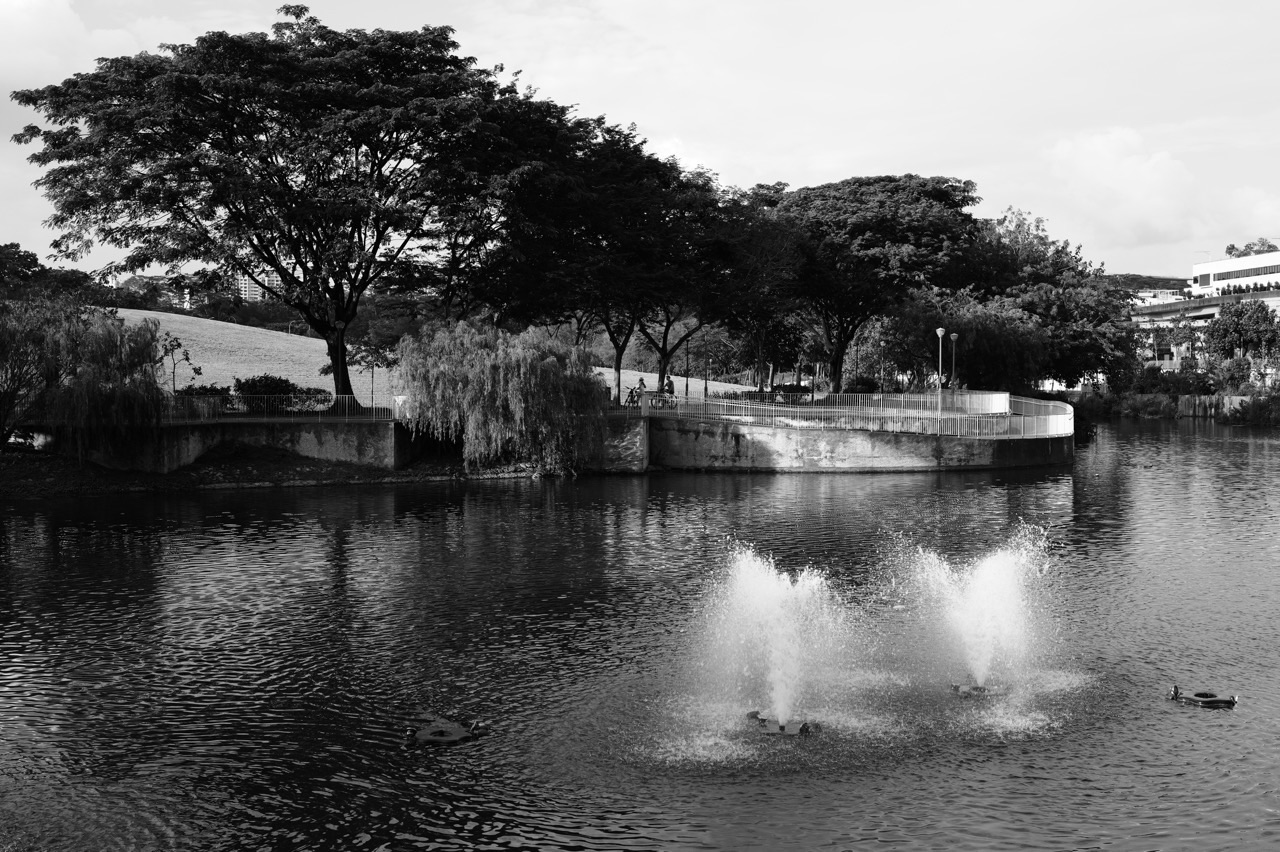
A landscape irrigation sprinkler in a Punggol park or estate garden may run longer than expected, leak from its head, spray across a footpath or leave a persistent puddle on the ground. Irrigation is part of plant care, so seeing water in a landscaped area does not automatically mean that a pipe has burst. But a sprinkler that keeps running outside its normal cycle, sprays pedestrians or creates a slippery route should be reported. Do not block the nozzle, turn an unfamiliar valve, dig around the pipe or drive a stake into the ground to stop the water.
NParks manages greenery and park facilities within its parks and provides official feedback channels for parks, greenery and plant matters. For greenery issues in HDB estates, NParks directs residents to their respective Town Council; private condominium matters should go to the MCST. The distinction is important because a park irrigation system, an HDB estate garden hose point and a leaking public drinking-water refill station are different assets. This guide covers landscape irrigation sprinklers and their water distribution, not drinking fountains, household taps or storm drains. A clear report identifies the exact landscaped area, the sprinkler head or pipe that appears affected and how the water is changing the surrounding route.
- Do not touch, block or turn the sprinkler head or an unfamiliar irrigation valve.
- Keep children, mobility-aid users and cyclists away from a wet or muddy patch that creates a slip hazard.
- Record whether the head sprays continuously, fails to retract, leaks around its base or sprays onto a path or seating area.
- Note the park, garden, HDB block, path junction or nearest fixed landmark.
- Report NParks park-greenery issues to NParks; HDB estate greenery to the Town Council; private development systems to the MCST or managing agent.
- Do not dig, stake, clamp, tape or seal an irrigation pipe yourself.
- If water is flowing strongly, undermining paving or reaching electrical equipment, notify onsite management promptly.
- A normal scheduled watering cycle is not automatically a fault; compare the observation with posted information or ask the operator.
1. What landscape irrigation does
Landscape irrigation provides water to planted areas such as lawns, trees, shrubs and garden beds. A system may use sprinklers, drip lines, emitters, valves, controllers and pipes. Some installations operate at set times, while others use different controls depending on the landscape design and weather conditions.
Water flowing through a sprinkler can therefore be normal when the system is scheduled. A report should focus on an observable abnormal condition: an unscheduled continuous spray, a broken head, a persistent leak, water crossing a walking route or a fitting that fails to retract after the cycle.
2. A sprinkler is not a drinking-water fountain
A landscape sprinkler distributes water to vegetation and is not intended for drinking or washing hands. It may use a different layout and operating schedule from a public drinking-water refill point. A broken drinking fountain should be reported as a water amenity fault, not an irrigation issue.
Do not drink from irrigation outlets or allow children to play in the spray as though it were a water-play facility. The existing Punggol drinking-water refill point guide covers potable refill stations. This article is about landscape watering equipment.
3. A normal watering cycle
A sprinkler may switch on for a planned period and then stop automatically. Different planting areas may be watered at different times, and an irrigation cycle can operate when the weather is cool or when visitors are not present. The public may not know the controller’s schedule.
Do not assume a sprinkler is faulty only because it is running in the evening or early morning. If the spray remains active for an unusually long period, continues after surrounding heads stop or wets an access route, ask the site manager whether it is within the planned cycle.
4. A sprinkler that stays on continuously
A head that continues to spray long after nearby irrigation has stopped may have a valve or control problem. Water can pool, damage planting beds or create slippery surfaces. The head may also be difficult to see at night or behind low vegetation.
Do not step on the head or cover it with a bucket. Report the time, location and whether the water appears to be coming from the nozzle or its base. The maintenance team can check the controller and valve using its authorised procedure.
5. A sprinkler that sprays the footpath
A head may be misaligned, damaged or obstructed so that its spray reaches a footpath, cycling path, bench or entrance. Even clean irrigation water can make a hard surface slippery, and repeated spray may reduce visibility for cyclists or pedestrians.
Do not bend the nozzle to redirect it. Tell the operator which route is affected and whether water is reaching a doorway, crossing or seating area. Staff can determine whether a head needs adjustment, repair or a temporary isolation.
6. A sprinkler that sprays a road
An irrigation head near a driveway or road may direct water into moving traffic. Water can obscure a driver’s view, wet a pedestrian crossing or create a slippery turning area. A head that has shifted after maintenance or impact can behave differently from its intended pattern.
Keep clear and report the exact road or driveway edge. Do not place an object in the road to deflect the spray. If the water creates an immediate traffic hazard, notify the property or park operator promptly so the affected area can be assessed.
7. Water leaking around the sprinkler base
A wet ring or small stream around the sprinkler head may indicate a leak at the fitting, riser or underground pipe. It can also be caused by residual water after the system shuts off. A single observation may not establish the source.
Do not dig around the head or pull it out of the ground. Describe whether the water continues after the irrigation cycle stops and whether the ground is becoming soft or eroded. The operator can inspect the fitting and buried line safely.
8. A broken or missing sprinkler head
A head can be cracked, knocked off, buried by soil or left exposed after landscape work. Water may escape in an uncontrolled direction or the system may continue to run without watering the intended plants.
Do not insert a stick, cap or bottle into the exposed fitting. A replacement component must match the irrigation system and pressure requirements. Report the missing or damaged head and keep others away from any sharp or exposed part.
9. A head that does not retract
Some sprinkler designs rise during operation and retract when the cycle finishes. If a head remains raised, it may become a trip obstacle for pedestrians and a strike hazard for maintenance machinery. A raised unit can also be damaged by a lawnmower or bicycle wheel.
Do not push it back into the ground or step on it. Record whether it remains raised when the surrounding system is off and tell the landscape manager. The operator can inspect the mechanism and decide whether replacement or cleaning is appropriate.
10. A sprinkler that never rises
A sprinkler that remains buried may not water the intended area, or the water may escape through another point. Soil, debris or a damaged internal mechanism can be involved, but a visitor should not attempt to clear the housing.
If the planting area appears dry while another part is flooded, mention the difference. Do not use tools to lift or pry the head. The maintenance team can check whether the head is blocked, damaged or controlled by a valve that is not opening.
11. A rotating head that stops moving
A rotating sprinkler may become stuck and direct a concentrated stream in one direction. This can saturate a small patch while leaving the rest of the landscape dry. The issue may be at the head, filter or water supply, but the cause needs a technical check.
Do not twist the rotating top or use pliers to free it. Describe the continuous direction of the spray and the area being soaked. The operator can adjust or repair the system according to its design.
12. Water pooling on a footpath
A persistent puddle on a walking route can cause slips, muddy footprints and algae growth. It may come from irrigation overspray, a leak, rainwater or another source. The report should distinguish what was directly observed from what is suspected.
If a puddle remains long after a sprinkler is off, it may involve drainage or ground-level conditions as well. Report the water and the nearest head separately. Do not block a drain grate or sweep soil into the channel to make the puddle disappear.
13. Water softening the soil near a tree
Continual watering can make the ground around a tree or shrub soft, muddy or visibly eroded. Irrigation is intended to support plant health, but uncontrolled flow may wash away soil or expose roots. A passer-by cannot assess root stability from a wet patch alone.
Do not pack extra soil against the trunk or tread on exposed roots. Report the persistent water and any visible erosion to the landscape manager. The team can review watering duration, drainage and plant condition.
14. Water near an electrical fitting
A sprinkler spraying onto electrical equipment, lighting cabinets or a power outlet may create a more urgent hazard. Do not approach the fitting to see whether it is wet, and do not touch an electrical enclosure while standing in water.
Move away and notify onsite management promptly. If there is sparking, smoke or immediate danger, seek appropriate emergency assistance. A routine landscape watering complaint is not the correct response to an active electrical hazard.
15. Water spraying onto a bench or rest area
A sprinkler may wet a public bench or table, leaving the surface slippery or unusable. It can also soak bags or personal belongings left nearby. Water reaching seating during an intended rest period may indicate that the spray pattern needs checking.
Do not cover the sprinkler with a bag or move the public bench yourself. Record the nearest shelter or path landmark and describe the affected seating. The grounds team can assess whether the head is misdirected or the furniture is placed within the normal irrigation zone.
16. Water spraying onto a playground
A sprinkler near a playground may wet equipment, fall surfaces or the access path. This can create slippery conditions even if the water is clean. A landscape sprinkler is not the same as an approved interactive water-play installation.
Do not allow children to run towards the sprinkler or use the wet equipment until the operator has assessed the area. Report the play zone and whether the water reaches equipment, impact surfacing or the entrance. A separate water-play facility follows its own operating and water-quality rules.
17. Water spraying onto a cycling path
Cyclists can lose traction on a wet surface, especially while turning or braking. Spray that reaches a shared path may also reduce visibility or startle riders. A sprinkler head that rotates across the path can make the hazard intermittent.
Do not ride close to the head to capture a video. Move to a safe place and report the path section, direction of spray and time. The operator can decide whether a temporary warning, adjustment or closure is needed.
18. Is the water potable?
Irrigation outlets should not be treated as drinking-water facilities. Water used for landscape irrigation may not have the same intended access or user safeguards as a potable-water dispenser. Visitors should not fill bottles or wash food at a sprinkler head.
If a public refill station is affected, report that separately through the operator of the drinking-water amenity. A sprinkler’s apparent clarity does not make it safe for drinking. Follow posted signs and avoid contact with damaged irrigation equipment.
19. Why irrigation may operate after rain
Some systems use timers or zones that do not immediately respond to every local shower. A watering cycle may still begin even if it rained earlier, depending on controller design and settings. That does not automatically indicate a leak or wasted water.
If the site appears to be watering during or immediately after heavy rain, report it as a possible scheduling or control concern rather than a confirmed technical failure. The operator can review the controller and site conditions.
20. Drought and plant stress
A dry lawn or wilted plant does not necessarily mean that a nearby sprinkler is broken. Plant species, soil conditions, shade and weather affect water requirements. Some landscapes use drip irrigation or other methods that are not visible from a path.
Report a visibly damaged or leaking irrigation fitting rather than assume every dry patch needs more water. NParks or the estate grounds manager can assess the planting and decide whether irrigation is appropriate.
21. Park irrigation and NParks
NParks’ official Contact Us page provides feedback routes for parks, greenery and plant matters. For irrigation equipment inside an NParks-managed park, the park or greenery feedback route is a practical starting point. Give the park name and exact location.
NParks also directs HDB-estate greenery issues to the relevant Town Council and private condominium greenery issues to the MCST. This makes it important to identify the property type before reporting a sprinkler.
22. HDB estate landscaping
A sprinkler in an HDB estate garden may be part of common-property landscaping maintained through the Town Council or an appointed contractor. The equipment may serve a landscaped strip, precinct garden, green deck or lawn.
For an estate sprinkler, provide the block, precinct or nearest car park/void deck and the exact planting area. OneService may route suitable municipal feedback. Do not assume that NParks repairs every green area in Singapore; the actual estate management boundary matters.
23. Private condominium or commercial property
A sprinkler in a condominium garden, shopping centre forecourt or private business park is generally managed by its property operator. A public walkway through a private development may still have a different maintenance arrangement from nearby public greenery.
Contact the MCST, managing agent or facilities desk. Tell them whether water is hitting a shared entrance or creating a wet-floor risk. Do not use a PUB report for an ordinary private irrigation head unless the problem also concerns the broader water supply or a public water fitting.
24. The difference between irrigation and a water-main leak
A sprinkler head directs water to landscape areas. A main or service pipe leak may produce water from the ground without a sprinkler operating. A burst water pipe can result in a larger flow, erosion or disruption to supply.
Do not conclude that PUB’s network is responsible based only on a puddle near a park. Notify the site operator first where the leak appears to come from a landscape system. If there is a major pipe burst or water interruption, PUB’s official urgent contact route may be appropriate.
25. The difference between irrigation and a drain problem
A sprinkler may wet a path while a nearby drain is blocked, causing water to accumulate. Conversely, water may be emerging from a drain or pipe rather than from the sprinkler. These systems have different maintenance responsibilities.
Describe where the water starts and where it collects. Do not remove drain covers or put soil into the drain. A clear report can help the operator determine whether irrigation, drainage or both need inspection.
26. What to include in a report
State the park or estate, nearest fixed landmark, sprinkler position, date and time. Describe whether the head is broken, stuck on, leaking at the base, not retracting or spraying across a path. Mention whether the flow continues after the surrounding cycle ends, if observed.
Do not guess the underground pipe size, valve number or controller fault. A photograph from a dry, safe position can show the head and surrounding route. The actual operator can trace the equipment and direct the maintenance team.
27. Safe photography
A wide photo can locate the sprinkler within a park, while a close image can show a damaged cap or a stream from the base. Avoid standing in a traffic lane, on a wet slope or near electrical fittings to obtain a better view.
Do not put a hand or foot next to the water stream for scale. Do not film identifiable children who happen to be near the spray. If the water creates an immediate hazard, report it directly rather than spend time trying to capture a perfect image.
28. Do not plug or cap the sprinkler
A resident may think a rubber stopper, cloth or plastic bag can stop a leaking nozzle. Such material can block the head, damage the system or become debris. A plug may also leave water pressure acting on a damaged fitting elsewhere.
Do not tape the head or clamp the pipe. Keep clear and let the operator isolate or repair the equipment. A temporary control must be installed by authorised maintenance staff using the correct component.
29. Do not dig to find the pipe
Irrigation pipes can run below ground near trees, lighting, drains and other services. Digging without knowing their route can damage other infrastructure or cause injury. A visible wet patch does not reveal the direction or depth of the pipe.
Do not use a spade, screwdriver or metal rod to locate the leak. Report the surface evidence and allow the site owner to check plans and arrange safe excavation if needed.
30. A Punggol park example
A walker sees a sprinkler at the edge of a landscaped path continuing to spray across the pavement after nearby heads have stopped. The walker steps around the wet section, notes the park sign and reports the sprinkler’s position to the park operator.
This is a hypothetical example, not a claim that a particular Punggol park sprinkler is currently faulty. It demonstrates how to report an observable abnormal condition without touching the nozzle or assuming the controller has failed.
31. An HDB precinct example
A resident notices water pooling beside a precinct garden and sees a sprinkler head leaking around its base. The resident records the block and garden location and contacts the Town Council. They do not cover the head with a plastic bag or dig into the soil.
This example reflects the distinction on NParks’ contact page: greenery issues in HDB estates should be directed to the respective Town Council. The responsible party can confirm whether its landscape contractor or another provider should attend.
32. A sprinkler near a playground
A caregiver notices a sprinkler spraying onto a playground access route. The caregiver keeps children on the dry path and reports the location to the park operator. The caregiver does not tell children to stand in the spray to prove that the water is coming from the head.
This example is illustrative. It reminds families that landscape irrigation is not a public water-play feature and that wet access surfaces can create additional risks.
33. What if the sprinkler turns off before staff arrive?
A timer-controlled system may stop before a maintenance worker reaches the site. That does not mean the report was false. A dated observation, description of the cycle and safe photograph can help staff investigate the next scheduled operation.
If the fault recurs, provide the earlier case number and the new time. Do not attempt to switch the cycle on manually. The operator can inspect the controller or arrange to observe the system during its normal schedule.
34. Repeat leaks in the same area
If water repeatedly pools in the same place, the issue may be recurring irrigation leakage, poor spray direction or drainage. A maintenance repair that addresses only the visible puddle may not address the underlying source.
Record different dates and whether the same sprinkler appears involved. Avoid claiming the site is wasting a measured volume of water unless it has been professionally assessed. A recurring observation helps the operator decide whether a broader review is needed.
35. Why repair time can vary
A small sprinkler head may be relatively straightforward to replace, while an underground pipe leak may require locating the line, isolating a zone and restoring soil or paving. Access near trees, paths or other utilities can affect the work.
No universal repair time should be promised. The operator may need a contractor and temporary closure or barrier. Follow any posted diversion and keep clear of excavated areas.
36. When a wet area should be cordoned off
If water creates a broad slippery patch or undermines a path, the operator may need to place warning signs or restrict access. A small damp patch on a garden bed is different from a wet public walkway or a water jet across a cycle path.
Do not set up your own rope or barrier across the route. Tell staff about the extent and location. An authorised temporary arrangement should preserve an accessible alternative where possible.
37. Water conservation and public reporting
A sprinkler left running can waste treated water and damage planting or paving. Reporting an abnormal cycle helps the operator investigate whether the issue is mechanical, scheduling-related or caused by damage.
Do not assume the system uses potable water or calculate waste from the appearance of the spray. The operator can determine the water source and the amount involved. The public contribution is to identify a genuine abnormal condition promptly.
38. If a tree or plant looks damaged
An irrigation fault may leave some plants dry while others are waterlogged. A broken sprinkler can also damage young planting through excessive flow or soil erosion. Report the irrigation symptom and the plant condition separately where possible.
Do not transplant, prune or fertilise public greenery to compensate for the fault. NParks or the Town Council can assess whether the landscape needs treatment after the water system is repaired.
39. Follow-up after a reported repair
When the operator says the sprinkler has been fixed, do not interfere with the next scheduled cycle to test it. Observe from the public route during normal use and report any recurring overspray or leak with a new time and case reference.
A repaired fitting may need a later check under operating pressure. The owner or contractor should verify it. A resident should not turn the water on or off to confirm the repair.
40. The practical takeaway
Landscape sprinklers help maintain parks and estate greenery, but a damaged head or uncontrolled flow can waste water and create hazards on paths, playground approaches and seating areas. The public should describe the exact symptom, keep clear and contact the organisation responsible for the land.
The right reporting route is based on location: NParks for its parks, the Town Council for HDB estate greenery and the MCST or managing agent for private developments. Do not confuse irrigation with a drinking fountain, household tap or drainage defect.
Irrigation sprinkler reporting checklist
- Check whether the sprinkler appears to be operating on a normal cycle.
- Do not touch, block, turn or dig around the sprinkler head.
- Record the park, estate, block, path and nearest fixed landmark.
- Describe whether it is stuck on, leaking, broken, misdirected or failing to retract.
- Mention any wet pedestrian or cycling route, puddle, erosion or electrical concern.
- Report NParks park-greenery issues to NParks; HDB estate greenery to the Town Council; private property to its manager.
- Use a safe photo if it helps locate the head, but do not enter wet or restricted areas.
- Do not use PUB reporting for an ordinary landscape head unless there is a wider water-supply issue.
- Keep the case number and record repeat faults with new observations.
- Follow official barriers and temporary diversions until the operator confirms the area is safe.
Frequently asked questions
Is every sprinkler running in a park faulty?
No. Irrigation may operate on a scheduled cycle. Report abnormal continuous flow, damage or spray onto an unsafe route.
Can I turn the sprinkler head off?
No. Do not turn or dismantle a public irrigation fitting. Contact the operator.
Who maintains sprinklers in an NParks park?
NParks or its appointed landscape contractor. Use the official park feedback route.
Who maintains irrigation in an HDB estate?
The relevant Town Council or its appointed contractor generally handles estate greenery matters.
What about a condominium garden?
Contact the MCST or managing agent.
Is irrigation water safe to drink?
Do not treat landscape irrigation outlets as drinking-water facilities. Use designated potable water refill points.
What if a sprinkler sprays the cycling path?
Keep clear and report the exact path section and direction of spray. Wet surfaces can reduce traction.
What if the sprinkler is raised and will not retract?
Do not press it down. It may become a trip or wheel hazard; report its position.
What if water leaks around the base?
Record whether the leak continues after the cycle stops and notify the site operator. Do not dig around the fitting.
Should I cover a broken head with a bag?
No. It can block the system, become debris or conceal the fault. Keep clear and report it.
What if it sprays onto a playground?
Keep children away from the wet surface and report the affected play area. Landscape sprinklers are not water-play equipment.
What if water pools on the path?
Report the location and the likely source if visible. The issue may involve irrigation, drainage or both.
Should I call PUB for a sprinkler leak?
For an ordinary landscape irrigation head, contact the park or property operator. PUB is relevant to wider water-supply or public water-fitting concerns.
Can I dig around the pipe to find the leak?
No. Underground services may be nearby. Leave excavation to authorised workers.
What if the sprinkler stops before staff arrive?
Provide the observation time and describe its usual cycle. If it recurs, quote the earlier case reference.
Will a sprinkler leak be fixed immediately?
No fixed timeline applies. The operator may need a contractor, parts or excavation.
What photo should I take?
A safe view showing the park landmark and sprinkler position; avoid standing in water or near electrical equipment.
What if plants are wilting?
Report the plant condition and any visible irrigation defect separately. Dry plants alone do not prove a broken sprinkler.
Can I change the watering timer to conserve water?
No. Only authorised operators should adjust irrigation controllers.
What is the shortest useful report?
‘At [Punggol park/estate], sprinkler [location] is [leaking/stuck on/spraying path] at [time/date]; please inspect the irrigation system and make the route safe.’
Official sources and related Punggol reading
- NParks — Feedback on Parks, Greenery and Plant Matters
- OneService — Common-Area Maintenance and Town Council Reporting
- PUB — Water-Supply Issues and 24-Hour Contact
- PUB — Water Fittings and Potable-Water Guidance
- MSE — Responsibility for Installation and Maintenance of Water Coolers
- NParks — Punggol Waterway Park and Park Amenities
- eduKate Punggol — Public Drinking-Water Refill Points
- eduKate Punggol — Community Garden Tap Leaks and Water Access
Updated 15 November 2026. This guide covers landscape irrigation equipment, not drinking-water dispensers or household water fittings. It does not claim that any named Punggol park currently has a defective sprinkler. The land or facility operator determines the actual maintenance route and repair action.


