
The best IB-related secondary-school choice for a Punggol child is not necessarily the school with the strongest past PSLE range. Families should assess which IB route they are choosing, how the child will develop through CCAs or specialist activities, and whether the actual commute supports six years of learning. ACS(I) and SJI provide local-system IP-to-IB routes outside Punggol. SOTA and Singapore Sports School use arts or sports talent pathways. OWIS Digital Campus and GIIS SMART Campus are nearby international schools whose published secondary programmes progress from Cambridge-based study or IGCSE towards a later IB Diploma.
For planning purposes, separate three different scores. A PSLE AL total (4–32) influences MOE Secondary 1 posting; a SEC subject result supports applications through the appropriate post-secondary framework; and an IB Diploma total (0–45), subject to award conditions, is a pre-university qualification considered by universities and some polytechnic admissions routes. None can be converted directly into the others with a simple table. Parents should check school-specific entry routes, CCA availability, subject prerequisites and transport before deciding.
- School types: IP-to-IB (ACS(I), SJI), arts-to-IB (SOTA), sports-to-IB (Sports School), and international Cambridge/IGCSE-to-IB (OWIS, GIIS).
- Scores: Use programme-specific prior-year PSLE ranges for MOE posting; do not apply them to talent or international-school admission.
- CCA fit: Inspect real timetables, selection, fees and late-day travel, not only published activity names.
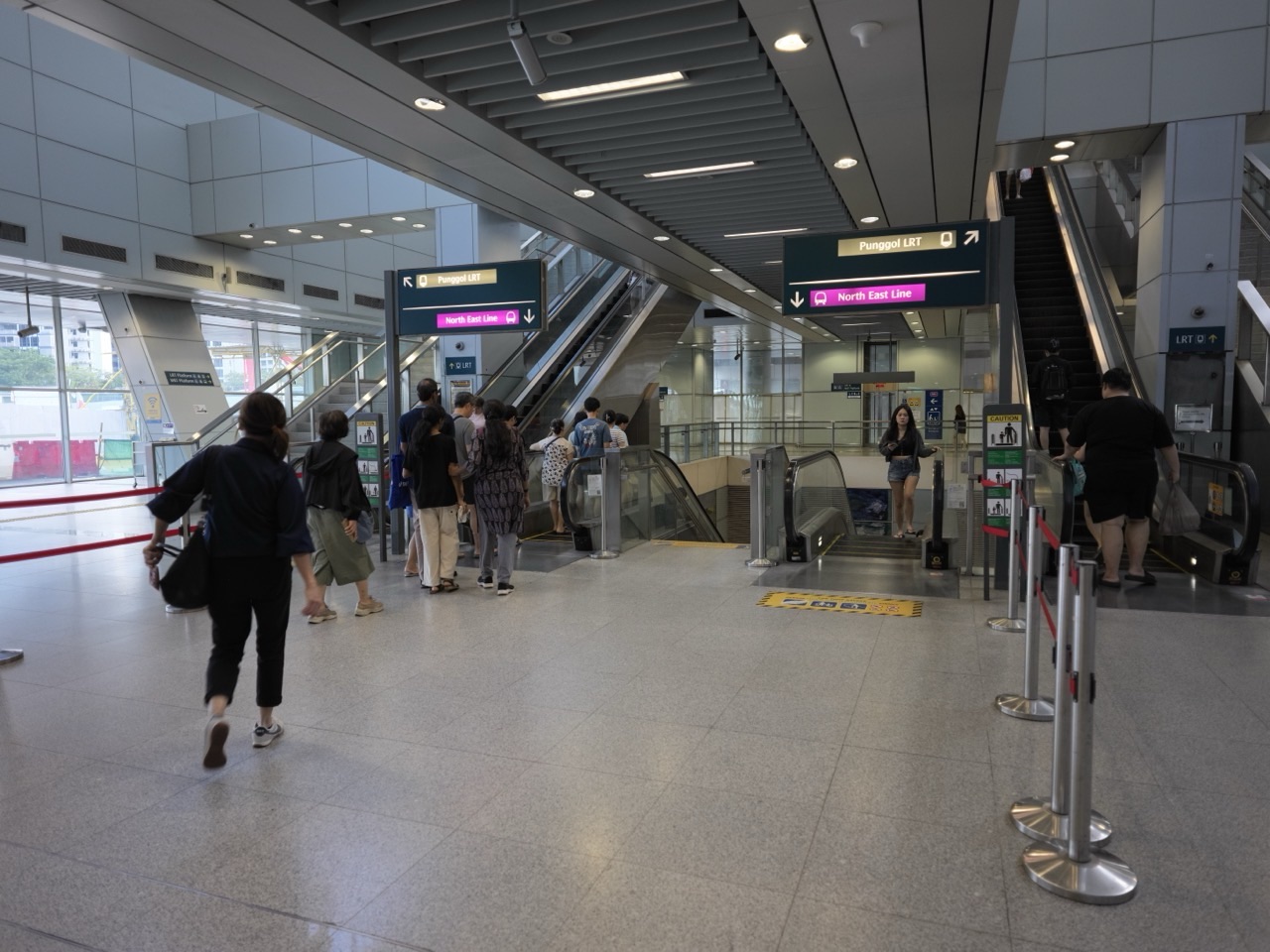
- Travel: Punggol MRT is a starting reference, not the whole commute from Northshore, Punggol Coast, Matilda or an LRT stop.
- University: IB score and Higher Level subject combinations matter; the diploma is not a guaranteed offer.
- Other routes: Mainstream SEC can lead to JC/MI, polytechnic and ITE; IB holders may use separate university or DAE processes.
Put all routes on the same map—but do not pretend they are the same course
The first decision is the nature of the school. ACS(I)’s six-year IP and SJI’s IP culminate in the IBDP. SOTA’s six-year arts education culminates in IB Diploma or Career-related Programme. Sports School’s specialist sports system has an IBDP as a later post-secondary option. OWIS and GIIS in Punggol offer Cambridge or IGCSE preparation before an IBDP option in Grades 11–12.
That means the family’s choice is between different educational experiences, not merely different badge colours. Ask what the 12-year-old will do tomorrow, not only what qualification the 18-year-old may hold in six years. Academic breadth, assessment method, religious or school ethos, student support and daily demands should all be considered.
For the foundation, use MOE SchoolFinder and these official routes: ACS(I) IP, SJI IP, SOTA admissions, Sports School admissions, OWIS Digital and GIIS SMART.
A Punggol-first location comparison
- ACS(I), Dover: Plan Punggol-to-west travel with transfers towards Dover; check the last-mile walk and CCA return journey.
- SJI, Malcolm Road: Test the North East Line to Little India and the Downtown Line towards Stevens; verify the final approach.
- SOTA, Dhoby Ghaut area: A North East Line trip to the central arts district, then walking; rehearsal timing changes the day.
- Singapore Sports School, Woodlands: Check the northbound train/bus journey and sports training arrangements; ask about any boarding alternatives.
- OWIS Digital and GIIS SMART, Punggol Field Walk: Same broad Punggol campus locality, but use the correct school entrance and student pick-up plan.
- Neighbourhood SEC schools: Edgefield, Greendale, Punggol Secondary and Yusof Ishak Secondary are practical local choices worth inspecting separately.
These are geographic planning routes, not calculated travel-time guarantees. Actual journey time depends on the home block, traffic, platform waits, walking, disruptions, gate access and whether a CCA runs off-campus. Parents should test on a school weekday at relevant hours. Do not use a single travel-app screenshot to make a six-year decision.
What a real commute audit should include
A sensible commute audit should measure the actual door-to-door burden for the child, not a convenient station-to-station headline. Begin with the lift, walk or feeder bus/LRT at home; include transfers, delays, walking to campus and queueing at the gate. Perform a separate evening measurement after a CCA, rehearsal or training session.
- Leave-home time for a normal school day and time actually spent sleeping.
- Return-home time on both an ordinary afternoon and a late CCA day.
- Number of transfers and exposure to long waits in rain.
- Availability of a safe contingency route when a train or bus is disrupted.
- Carrying instruments, heavy sports bags, projects or art materials.
- Whether a parent must regularly collect a child from a distant campus.
- Annual and monthly transport costs, and whether an after-school meal is required.
- Whether the route remains reasonable if health or family circumstances change.
Treat sleep and free time as valuable educational resources. Removing ninety minutes of discretionary time from a child’s day can displace reading, sport, unstructured play or homework review. The goal is not to minimise commute at any cost, but to know what the child is trading for the school’s advantages.
CCA fit: sport, arts, STEM, service and leadership
A CCA is most useful when it supports an actual interest while developing persistence, teamwork, responsibility and wellbeing. It need not be selected solely for a future admissions bonus. A child who chooses a comfortable activity and attends consistently may benefit more than a child forced into a prestigious competition they dislike.
Sports and games
Ask whether the chosen school currently offers the specific sport, what level of competition occurs, what entry trials apply and how many days training takes. For a child with high sporting ambitions, inspect the Sports School route. For a child who simply loves playing, a mainstream school’s recreational or competitive activity may provide a healthier balance.
Performing and visual arts
A child drawn to music, drama, dance or visual art should compare mainstream CCAs with SOTA’s much deeper specialist model. SOTA reports no conventional CCAs because its art practice is integrated. Ask about instrument or studio access, extra rehearsals and whether the student can still explore interests beyond the chosen discipline.
STEM, languages and reasoning
Robotics, coding, research, mathematics clubs, debate, literary groups and student publications can all build worthwhile skill sets. Confirm they are actually operating for the child’s school year. A ‘STEM school’ label or school laboratory does not mean every child receives a specific research opportunity.
Uniformed groups, leadership and service
Leadership becomes meaningful through service, planning, teamwork, reflection and responsibility. Ask what students do during regular meetings and projects; do not rely on the activity’s name or its possible impact on CCA points. In an IB Diploma, Creativity, Activity, Service is part of the award’s core, but it is not interchangeable with a particular MOE CCA scheme.
The academic scores are different instruments
PSLE: The PSLE AL total is the sum of four Achievement Levels and ranges from 4 to 32, lower being stronger. ACS(I) and SJI IP placement use past programme-specific score ranges as reference; talent routes and private international campuses have different admissions gates.
SEC: The common Singapore-Cambridge SEC examination starts in 2027. Its subjects are taken at G1, G2 or G3 levels. Results form part of post-secondary eligibility, but the receiving institution also sets minimum grades, subject combinations and aptitude requirements. MOE’s announced national Post-Secondary Admissions Exercise begins in 2028 for the first SEC cohort.
IB: The IBDP uses six subjects, each graded 1–7, and up to three core points. The maximum is 45. The award generally requires at least 24 and other conditions; the headline total alone is not a university entry promise. Use the IB’s official 2026 rules rather than social-media conversion charts.
Polytechnic and ITE: Diploma, PFP and Higher Nitec admissions have their own qualification and entry pathways. Do not claim that a PSLE 7, G3 result or IB 38 automatically ‘converts’ to another system’s points. The correct task is to evaluate the actual qualification and intended course.
University planning should begin with subject doors, not predicted rankings
For an IB student, an intended university degree can make some subject choices particularly important. A learner interested in engineering should check Mathematics and science prerequisites; a medicine applicant must check university-specific tests, evidence and relevant subject levels; an arts applicant may require a portfolio. Even if two students score the same total IB points, they may not be eligible for the same courses.
Ask the school in Years 3–4 when it advises students about Higher Level and Standard Level selection, how students receive independent university counselling, and how options are limited by actual school timetables. Verify the IB curriculum and a live university admissions page such as NTU’s IB guide. Do not build a ten-year plan around an outdated subject prerequisite.
For students who prefer hands-on learning or career-related development, a polytechnic diploma, ITE Higher Nitec or arts diploma can be a suitable pathway, sometimes leading to university later. The student’s interests should be the centre of the plan, not the assumption that university is the only respectable outcome.
JC and MI: the qualification distinction
A mainstream secondary pupil completing the SEC may apply to a Junior College or Millennia Institute if they meet the relevant requirements. The 2028 PSE announcement changes the admissions administration for SEC students, while the revised JC L1R4 framework also matters for that intake.
A six-year IP-to-IB pupil at ACS(I) or SJI is already on a pre-university course and does not normally need to enter another JC simply to ‘get to university’. SJI separately admits eligible students from other secondary schools to its Year 5 IB route under its published criteria. That is not an automatic transfer from every school.
Families should ask, ‘What certificate does my child receive if they leave before the terminal IB years?’ The answer is school-specific and can significantly affect fallback plans. Clarify this at the point of enrolment, not after a problem arises.
Polytechnic: an important alternative even for IB students
Singapore Polytechnic’s Direct Admissions Exercise explicitly lists the IB Diploma among qualifications that may apply. Selection remains based on course prerequisites, results and vacancies. Other polytechnics publish their own policies; never assume that holding an IB Diploma automatically places a student into a particular diploma or exempts a first year.
For a Punggol family, the polytechnic choice also carries an area component: Nanyang Polytechnic may be convenient for parts of the north-east; Temasek Polytechnic and Republic Polytechnic offer different courses and travel patterns; Singapore and Ngee Ann Polytechnics require consideration of the westbound journey. These are geographic considerations, not rankings or a guarantee that a desired course is offered at each campus.
An applied diploma can lead to employment or a later degree. Compare course modules, work attachments, progression rules, costs and campus commute, not only the institution’s general reputation.
ITE: a real progression route, not a failed result
The Institute of Technical Education offers applied courses and progression opportunities for students who meet its admission conditions. For mainstream SEC students, the ITE secondary-school leavers guide explains relevant G1/G2/G3 routes into Higher Nitec. There are also other admission mechanisms and course requirements.
An IB student changing direction must ask ITE whether their exact qualification is eligible under a specified application route. Do not interpret the SEC tables as automatic IB equivalence. Families considering practical skill development can compare a Higher Nitec, polytechnic diploma and other suitable training routes based on the intended occupation and onward progression.
Six profiles and the educational decision they invite
- Strong PSLE, enjoys scholarly research: Explore an IP-to-IB route, but assess six-year stamina and travel.
- Strong PSLE, wants a local school and broad options: Explore a Punggol G3/SEC route; high PSLE performance does not mandate IP.
- Committed artist: Examine SOTA’s audition process and specialised six-year arts workload.
- Competitive athlete: Examine Sports School selections, health and sports-specific training demands.
- Family prioritises a nearby international campus: Evaluate OWIS/GIIS curricula, eligibility and fees rather than assuming ‘IB from Secondary 1’.
- Child learns best through applied work: Keep mainstream SEC, polytechnic, ITE and course-based progression in view.
These profiles are starting questions, not labels placed on children. A real student may fit more than one profile, and interests can change during adolescence.
A school-choice worksheet for the family
- Actual PSLE total and posting eligibility; any DSA offer already accepted
- Exact school and programme, not just the IB label
- Past relevant cut-off point or separate talent/private-school admissions requirements
- Academic subject breadth, language choices and future prerequisite flexibility
- Weekly CCA or specialist practice and weekend commitments
- Normal and late-day door-to-door travel in minutes measured by the family
- Annual family budget, financial assistance and contingency costs
- Child’s own ranking and reasons, in their words
- Alternative routes if the student changes course or needs support
- Official links and date last checked
Run this worksheet together with your child. Compare the present educational experience and the next admissions gate, not a vague prediction of a university in six years. For current Punggol choices, consult the Punggol school comparison, the IP, IB or G3 decision guide for Punggol, MOE SchoolFinder and MOE’s post-secondary admissions changes from 2028.
Frequently asked questions
Is CCA more important than IB score?
They measure different things. Strong co-curricular participation can enrich development and sometimes contribute to particular admission routes, but a university course still has academic and subject requirements.
Which IB school is closest to Punggol?
OWIS Digital and GIIS SMART are in Punggol Field Walk, but they are international schools with Cambridge-to-IB routes and separate admissions conditions. The MOE IP-to-IB schools discussed here are outside the estate.
Does IB automatically lead to university rather than polytechnic?
No. Universities use competitive programme-specific selection; eligible IB applicants may also apply to some polytechnics using separate routes such as DAE.
Can a student with a modest PSLE score still reach university?
Yes, potential pathways include SEC to JC/MI, polytechnic and later degree routes, depending on results and requirements. PSLE is one educational transition, not a lifetime verdict.
Can the family choose SOTA purely for its IB Diploma?
That would misunderstand its purpose. SOTA uses specialist arts admissions and sustained artistic study; its curriculum may lead to a Diploma or Career-related qualification. The art commitment must genuinely fit the child.


