
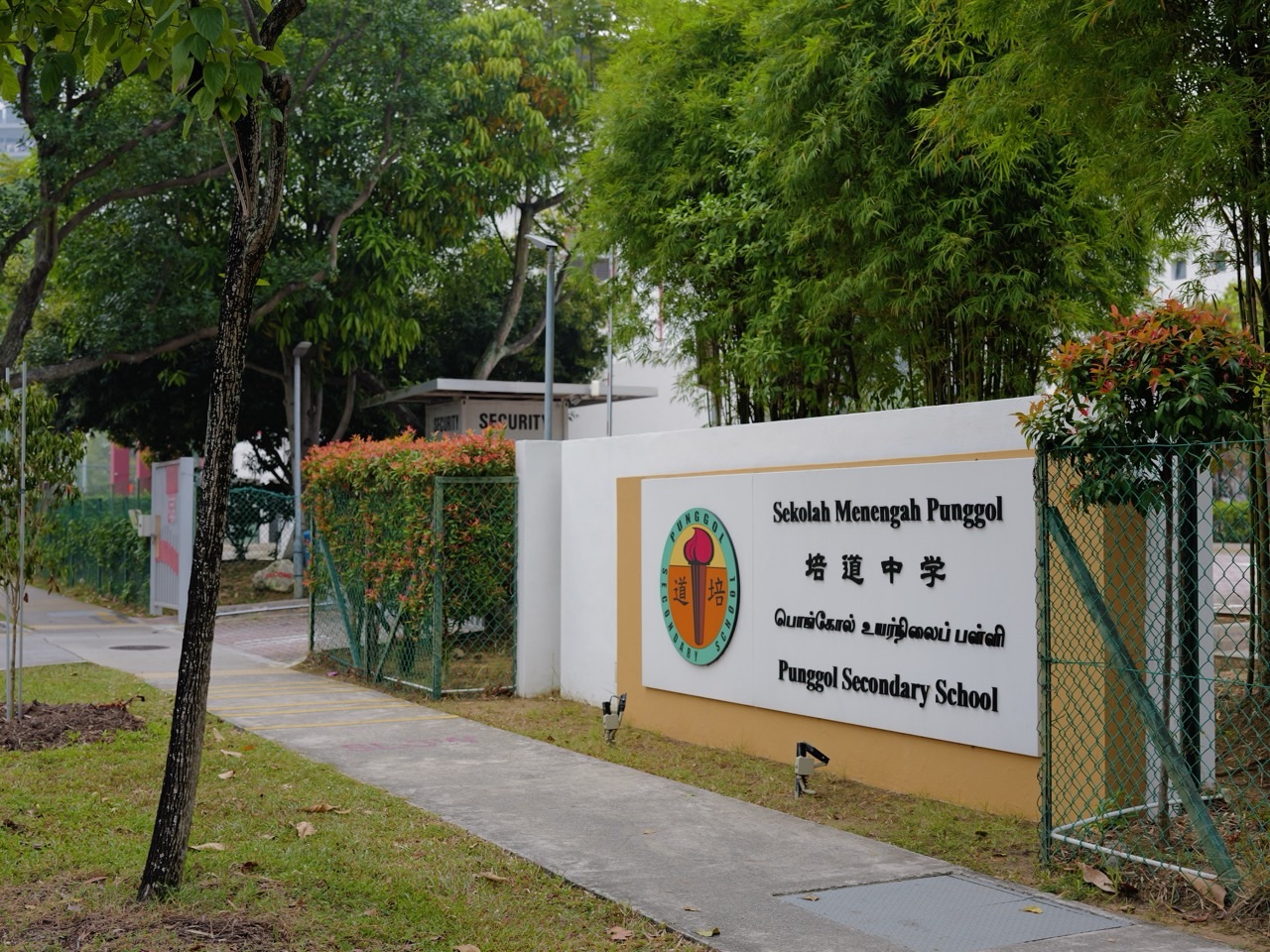
Punggol Secondary School at 51 Edgefield Plains offers a substantial range of Co-Curricular Activities: Basketball, Football, Netball, Shooting, Table Tennis and Volleyball in sports; Modern Dance, Concert Band, Guzheng and Choir in performing arts; NCC, NPCC, Red Cross Youth and Scouts in uniformed groups; and clubs including Art, Audio Visual Aid, drama and debate, Environmental and Interact. A Punggol family should compare these real programmes rather than assuming that every secondary school in the estate offers the same CCA. The next step is to check the incoming Secondary 1 intake’s trials, selection rules, training schedule and available places.
A good CCA decision combines the pupil’s interest, academic adjustment, realistic home-to-school journey and long-term possibilities. PSLE Achievement Level scores influence school posting; Posting Groups and G1/G2/G3 subjects are not measurements of sporting or creative worth. CCA participation can contribute to LEAPS 2.0 and may develop evidence relevant to a future DSA-JC, Poly-EAE or ITE-EAE application, but cannot remove academic entry conditions for JC, polytechnic, PFP, ITE or university. This guide explains what Punggol Secondary actually publishes and how a parent can make the decision without false promises.
- School: Punggol Secondary School, 51 Edgefield Plains, Singapore 828870.
- Sports: Basketball, Football, Netball, Shooting, Table Tennis, Boys’ Volleyball and Girls’ Volleyball are published on the school CCA pages.
- Performing Arts: Modern Dance, Concert Band, Guzheng Ensemble and Choir.
- Uniformed Groups: NCC, NPCC, Red Cross Youth and Scouts.
- Clubs: Art, Audio Visual Aid, English Language Drama and Debate, Environmental, Indian Language Drama and Debate, and Interact.
- Special distinction: the 2026 DSA-Sec talent areas are Volleyball, Choir and Environmental Science, but DSA-Sec and normal CCA allocation are different.
- Pathways: check LEAPS 2.0, the first graduating SEC cohort in 2027, the PSE from 2028 and the actual eligibility rules applying to the child.
1. Why a parent should start with the school’s real CCA directory
The phrase “secondary-school CCA” can mean very different things to different children. A student attracted to competition may want Volleyball or Shooting. Another may feel most confident in the Choir or Guzheng Ensemble. A child who likes to help at school events might prefer Audio Visual Aid Club or Interact; one who enjoys learning about conservation may be drawn to Environmental Club. The right choice cannot be identified simply by a ranked list of prestigious activities.
The school’s CCA directories describe opportunities in character, skills, teamwork and service. Parents should treat those aims as invitations to investigate, not as guarantees that a child will acquire every advertised quality. A student develops responsibility through being present, practising, responding to feedback and contributing. Different programmes provide different occasions to do that work.
Before the preference form, a family should agree on what success will mean in Secondary 1. It might mean attending consistently and making friends, learning a new instrument, participating safely in a team, or completing the first service project. Winning an award can be a welcome bonus, but is not the only reasonable standard for a twelve-year-old beginning secondary school.
2. The campus and the area around Edgefield Plains
Punggol Secondary School is at 51 Edgefield Plains, Singapore 828870. Some families live within a manageable walk, while others may travel by LRT, bus or a combination. “Punggol” includes homes around Punggol Central, Punggol Field, Edgedale Plains, Sumang Walk and more distant sections of the town. The practical commute for a child depends on the specific block and route.
A parent should test the outward journey during school reporting hours and the return journey after a likely CCA session. On a normal lesson day, the pupil may be carrying textbooks; after CCA, the bag might include sports clothing, an instrument case or special supplies. A safe, straightforward trip can preserve time for dinner and rest. An extra transfer when the student is tired may matter more than it appears on a map.
Do not invent a fixed number of minutes from Punggol MRT to the school or from every housing estate. Walking pace, station access, rain, traffic and waiting time change the real result. A family that measures its own journey can compare Punggol Secondary fairly with nearby alternatives.
3. What the official Sports page confirms
The school’s Sports directory lists Basketball, Football, Netball, Shooting, Table Tennis and Volleyball for boys and girls. A printed list of seven programme headings does not mean every child is automatically eligible for every team. Ask whether a sport has trials, beginner pathways, cohort or team criteria, and a distinction between CCA participation and competitive school representation.
Basketball, Football, Netball and Volleyball all require shared decisions, communication and repeated practice. Yet their demands differ. Basketball involves fast transitions and individual technique within a small playing area; Football uses different positions and field awareness. Netball emphasises passing and positional discipline. Volleyball requires coordinated contact and anticipation. A child should experience the sport or speak with members before deciding based only on its reputation.
Shooting and Table Tennis may appeal to pupils who like concentration, fine technical adjustments and personal practice, while still taking part in a team culture. Shooting requires strict safety and supervised equipment arrangements. Families should ask about training venue, selection and coaching rather than trying to source equipment independently.
4. Volleyball: distinguish DSA-Sec from ordinary team selection
Punggol Secondary’s official Punggolites information page identifies Volleyball as one of the school’s 2026 DSA-Sec talent areas. This can be important for a Primary 6 child who already has relevant demonstrated talent, but it must be interpreted carefully. DSA-Sec is a separate school admissions process; it is not the same as placing Volleyball first in an ordinary CCA preference form after admission.
A child who enters through the regular posting route may wish to try Volleyball; the school decides CCA allocation under its current rules. Conversely, a child who applies through DSA-Sec must satisfy that exercise’s published criteria and conditions. Parents should not assume a sports DSA offer is automatic because a child plays on a neighbourhood team, or that a good PSLE score guarantees a squad place.
This distinction also matters later. DSA-JC is a separate programme for admission to junior colleges, which have their own talent areas and requirements. A Secondary 1 pupil’s interest in Volleyball may grow into relevant experience, but the family should not promise a future junior college offer. The aim now is to build healthy skill, teamwork and academic balance.
5. Basketball, Football and Netball: good fit begins with ordinary practice
If the child likes ball games, ask what an ordinary training session looks like rather than only attending a championship match. How much time is spent on technique? Are new players taught foundations? What happens if a student is not selected for the competitive squad? The atmosphere for non-star players matters because most children will spend much more time learning than receiving public recognition.
Parents should also check physical demands. A child who enjoys casual play may not be ready for the pace of school-team training. This can change through patient practice, but overcommitment should not be mistaken for motivation. Proper food, hydration, rest and safe coaching are part of sustaining a sport. If the pupil has a health concern or injury, the school should be informed through appropriate channels.
Sport is a chance to learn that mistakes can be corrected. Losing a match may teach a team to communicate better. A missed pass can become a reason to practise a particular technique. Students who feel able to learn from errors often carry that confidence into schoolwork. That is a benefit worth discussing without claiming that sport automatically raises examination scores.
6. Shooting and Table Tennis: different approaches to concentration
Table Tennis can be attractive to pupils who enjoy quick exchanges, footwork and precise control. It can be played individually and in teams, and members learn to respond rapidly to changing situations. Beginners need practice with grips, placement, spin and movement. Parents should ask about entry criteria and the skill progression rather than assuming the child must arrive competition-ready.
Shooting is a specialist activity. The school publishes it as a CCA, but all practical training must follow the school’s safety procedures and supervision. Parents should ask where sessions take place, how equipment is handled and stored, who teaches safety, and what participation involves for new members. No child should attempt to reproduce school range activities independently.
The broader lesson is that sporting success is not one personality type. A patient pupil may enjoy precision work; an energetic student may prefer team play. A child can explore both interests before deciding. Neither choice should be made solely because a parent thinks it will produce a more impressive LEAPS outcome.
7. Performing Arts: Choir, Concert Band, Guzheng and Modern Dance
Punggol Secondary’s performing-arts pages describe Choir, Concert Band, Guzheng Ensemble and Modern Dance. These give families several different forms of artistic practice. Choir teaches breathing, pitch and listening; a band relies on instrumental sections and timing; Guzheng involves specialised instrumental technique and ensemble listening; dance combines physical conditioning and expressive coordination.
A child drawn to music may be unsure whether they prefer singing or an instrument. Ask the school which groups welcome beginners, how auditions are managed and whether instruments can be borrowed. Avoid buying specialist equipment before a CCA allocation. For dance, parents should ask about training attire, physical readiness, conditioning and any production-related costs.
Performing arts involve more than a concert photo. The regular experience is repetition, revision, learning to support colleagues and being part of something larger. A child who makes steady progress without becoming a soloist has still gained something worthwhile. The right programme is one the pupil wants to attend even when a public performance is months away.
8. The 2026 DSA-Sec Choir talent area: what it does and does not promise
Choir is another 2026 DSA-Sec talent area identified by Punggol Secondary. Families should distinguish an application to enter a secondary school through Choir talent from the ordinary experience of joining the CCA after entry. The DSA-Sec process has current-year application dates, assessment criteria and conditions; an attractive Choir programme does not turn every interested student into a DSA applicant.
A pupil with existing singing ability may wish to explore a DSA route during Primary 6, while another child with no prior formal singing instruction may enjoy beginning Choir in Secondary 1 if the school accepts beginners. Those are different paths into school life and should be discussed separately. A parent should never promise that talent alone overrides all conditions set by the school or MOE.
Later DSA-JC routes are again different. A committed secondary Choir member may develop a portfolio of performances and personal growth, but the relevant junior college must publish and assess a suitable talent area. Academic eligibility conditions remain part of that later decision.
9. Uniformed Groups: NCC, NPCC, Red Cross Youth and Scouts
The official Uniformed Groups directory names National Cadet Corps, National Police Cadet Corps, Red Cross Youth and Scouts. NCC describes fitness, drills and adventure activities; NPCC covers structured civic learning and responsibilities; Red Cross Youth builds first-aid and community-service knowledge; Scouts offers outdoor practical work, including cooking and pioneering.
A Uniformed Group can suit a child who enjoys predictable routines, teamwork and gradually increasing responsibility. But parents should resist the stereotype that joining a uniformed group will automatically “fix” a pupil’s discipline or confidence. Good character development takes supportive teaching and the student’s own effort. A pupil who dislikes formal training may do better in another CCA and still become highly responsible.
Ask about the required uniform, badge and equipment costs, camps, weekend activities, off-site transport, supervision and appropriate support for health or accessibility needs. Good preparation allows the student to participate safely and gives the family realistic expectations.
10. Red Cross Youth and Scouts: two approaches to contribution
Red Cross Youth may attract a child interested in helping people, learning basic first aid and serving the community. The school describes leadership and service in its programme. Parents should ask which skills are taught under proper supervision and whether beginners receive structured training. CCA membership does not confer medical qualifications; responsible pupils must learn when to seek adult or professional help.
Scouts can appeal to children who enjoy outdoor cooking, campcraft and team problem-solving. A child may learn that preparation, equipment care and helping a patrol can matter more than being the most vocal person in the group. Families should ask about camps, environmental conditions, safety and travel.
These activities can produce a meaningful record of service, but service should be real. A child who participates in an event should understand whom it helps, what they did, whether the effort met a need and what could improve. A certificate alone does not describe the learning.
11. Clubs and Societies: the school’s widest range of interests
The official Clubs and Societies directory lists Art Club, Audio Visual Aid Club, English Language Drama and Debate Society, Environmental Club, Indian Language Drama and Debate Society and Interact Club. These activities differ greatly in their day-to-day work. Art involves visual making and experimentation; AVA can involve sound, photography and technical support; drama and debate develop expression and communication; environmental work and Interact can emphasise responsible action and service.
A child who likes technology is not necessarily interested in the same tasks as an AVA Club member. AVA may require careful setup and behind-the-scenes support for school events, rather than inventing software. A pupil who enjoys storytelling may prefer drama; a child who likes evidence-based argument may be drawn to debate. Ask the teacher how the activities are balanced in the actual school year.
Families should check current entry arrangements and whether a club has selection criteria or limited places. Avoid relying on hearsay about “easy” and “hard” CCAs. Sustained club work can be demanding, particularly around performances, school events and external projects.
12. Environmental Club and the Environmental Science DSA route
Punggol Secondary’s 2026 DSA-Sec information identifies Environmental Science as a talent area. The school’s Environmental Club is also a real CCA with activities connected to environmental action and learning. These facts are related but not identical. The DSA talent area has its own official application criteria; the Environmental Club has its own activity and allocation arrangements for enrolled students.
This distinction is particularly useful for a child who loves Science. A Primary 6 pupil may have conducted meaningful projects or demonstrated environmental interest, but the school decides DSA suitability using the current criteria. Another child may simply wish to join Environmental Club after regular admission. The latter should not be discouraged by the assumption that every member must already have a sophisticated Science portfolio.
Environmental projects can teach students to observe a problem, gather evidence, plan action and evaluate results. The values are practical: reduce waste responsibly, protect natural places, communicate with others and think about the consequences of decisions. Students should be taught to seek permission and supervision for community activities, not to organise unsafe unsupervised ventures.
13. Interact, Drama and Debate: different forms of confidence
Interact Club focuses on relationships and meaningful service. English Language Drama and Debate can develop speaking and interpretation, while Indian Language Drama and Debate may combine performance, language and cultural expression. These activities may be especially attractive to pupils who want a school community where they can work on communication and contribution beyond written assessments.
A child who is quiet should not be pressured into becoming outgoing overnight. A supportive club can introduce gradual responsibilities—one planned sentence, one scene, one small task or one service commitment. The parent should ask whether the pupil enjoys the process and feels safe trying. A teacher’s patient feedback often matters more than the club’s public reputation.
Later admissions applications may sometimes consider a specific language, leadership or community portfolio, but the student must explain the actual work. Being in a debate society is not proof of excellent academic writing; being in Interact does not by itself demonstrate course-specific aptitude. Authenticity is the more useful preparation.
14. The CCA allocation process is a separate decision after posting
Punggol Secondary has publicly described CCA fairs, trials and selection procedures in past intake materials. These show that the school treats CCA allocation as an organised process, but parents must not copy a prior year’s deadlines into the new cohort’s calendar. Use the current Secondary 1 registration and CCA notices, along with official school communications.
The sequence is straightforward. First, a Primary 6 student applies to suitable secondary schools through the appropriate route. After allocation, the family completes school onboarding and learns the actual CCA options. The pupil attends demonstrations or trials where offered and ranks preferences. The school then allocates activities according to current rules and available places. Only after that should parents make final equipment or transport commitments.
If the first choice is unsuccessful, the student should have meaningful alternatives. Ask the child to explain their second and third choices instead of listing filler names. A disappointing trial is not evidence that the pupil’s entire secondary-school journey is damaged; the best CCA can sometimes be an activity not previously considered.
15. PSLE, PG1/PG2/PG3 and subject levels: keep the terminology accurate
PSLE Achievement Level totals are used in the posting system and influence which schools may be realistic. Under Full Subject-Based Banding, Posting Groups inform initial arrangements, while subjects may be studied at G1, G2 or G3 levels according to applicable rules. These labels do not describe the student’s potential to become a musician, sportsperson, service volunteer or media producer.
A family should avoid assuming that a pupil’s Posting Group automatically prevents participation in a particular CCA. The school may have specific safety, allocation or selection rules, which should be checked directly. A child may need additional academic help and still benefit from joining a CCA. Strong subject performance does not necessarily make a pupil suitable for an intensive competition schedule.
Historical school cut-off points describe previous posting outcomes, not a guarantee for the coming year. Parents should use current MOE SchoolFinder and official posting instructions when choosing schools. The goal is a school that supports the learner and is logistically workable, with an interesting CCA as part of the overall fit.
16. LEAPS 2.0: what two bonus points really represent
LEAPS 2.0 recognises four domains: Participation, Achievement, Leadership and Service. A student in any CCA category may make progress across them. A Basketball member can serve teammates and community projects; a Choir member can support younger singers; an Interact member can organise meaningful work; a cadet can develop leadership and service. Recognition is individual and must follow the published levels.
Punggol Secondary’s own LEAPS attainment table states that Excellent requires Level 3 in all four domains and Level 4 in at least one, corresponding to two applicable bonus points. Good requires Level 1 in every domain plus one of several published higher-level combinations and corresponds to one bonus point. Fair does not confer a bonus. No CCA name can guarantee Excellent.
Parents should ask how participation, service and leadership are recorded, and encourage the child to understand their progress honestly. A medal or position is not interchangeable with an entire LEAPS record. The long-term developmental aim is a young person who participates, learns and contributes, not simply someone who accumulates certificates.
17. The SEC examination change and 2028 PSE
The first Singapore–Cambridge Secondary Education Certificate (SEC) graduating cohort is in 2027. Subjects are taken at the applicable G1, G2 or G3 levels. From 2028, MOE’s Post-Secondary Admissions Exercise (PSE) will cover admission to JC, MI, polytechnics and ITE, while DSA-JC, Poly-EAE and ITE-EAE continue. These are national policy changes that parents should understand, but they are separate from choosing a Secondary 1 CCA.
The announced 2028 JC calculation uses five qualifying G3 subjects in an L1R4 aggregate, with a gross threshold of 16 and minimum subject conditions. The 2028 bonus-points cap for JC and MI is three. Other programmes use their own criteria. A LEAPS bonus can be relevant under the right rules, but cannot turn a non-qualifying subject profile into automatic eligibility for a course.
A child entering Secondary 1 in 2027 is younger than the first 2027 SEC graduating cohort. Their eventual graduation and post-secondary application will be later, and the family must check the rules in force then. Use official announcements to orient the child, not to freeze every academic choice years in advance.
18. JC and DSA-JC: where CCA strengths might matter
Some junior colleges may assess athletic, artistic or other talent areas through DSA-JC. A strong Secondary 1 CCA commitment may later develop into meaningful evidence, but the relevant college must offer the talent area and the student must satisfy selection and academic conditions. Punggol Secondary’s 2026 DSA-Sec areas—Volleyball, Choir and Environmental Science—must not be presented as a promise that a later junior college will offer the same pathways.
For an aspiring JC student, the first priority is to maintain appropriate subject readiness while sustaining chosen extracurricular interests. The pupil may eventually need particular G3 subjects and grades. The family should plan workload carefully, especially during major performance or competition seasons. A CCA can support identity and confidence, but cannot replace knowledge of Mathematics, language or other required subjects.
Millennia Institute is another pre-university choice with distinct admission conditions. Families should examine all suitable routes rather than treating one JC place as the only valid goal of secondary education.
19. Polytechnic, PFP and ITE: honest alternatives with different entry rules
Polytechnic diploma programmes and the Polytechnic Foundation Programme have particular academic entry criteria. ITE Higher Nitec offers vocational and technical programmes with separate conditions and possible later progression. Students should understand these routes respectfully and accurately. PSLE is an early assessment, not a final verdict on the child’s educational destination.
Some CCA experiences may support Polytechnic Early Admissions Exercise or ITE Early Admissions Exercise applications where relevant aptitude is assessed. An AVA Club member might document a media project; an Environmental Club member might present a thoughtful science-related activity; a Volleyball player might explain teamwork and disciplined training. The connection must suit the actual course, and the institution still evaluates the applicant’s academic and other requirements.
Avoid exaggerated promises. A secondary CCA is not a diploma; it is an environment for building transferable skills. A student can follow a suitable route, strengthen qualifications and later apply for further education if the relevant entry standards are met.
20. Later university admission and the limits of bonus points
Universities assess applicants under their own qualifications, course prerequisites and selection rules. Relevant secondary-school achievements may help illustrate personal growth in some holistic assessments, but the LEAPS 2.0 bonus points used in appropriate post-secondary calculations are not automatically deducted from university admission scores.
A student interested in engineering may later come through A-Levels or a polytechnic diploma and must meet the programme’s Mathematics requirements. A student who develops confidence in Choir may later study business, medicine or design, depending on qualifications and prerequisites. A Red Cross member might explore healthcare but is not thereby certified for clinical work. The CCA can inspire interests without becoming an occupational licence.
The long-term educational benefit is a pupil who knows how to work with others, persist through difficulty and make informed choices. That is valuable even when no admissions office asks for the CCA record.
21. Five parent scenarios from a Punggol household
Case A: A pupil who loves Volleyball. The parent checks the official sports page, asks about ordinary CCA trials and separately studies 2026 DSA-Sec if relevant. They do not assume the two routes are identical or that a team place is automatic. Travel and competition-season intensity are included in the decision.
Case B: The student who wants Choir but has never sung publicly. The family asks whether the incoming cohort welcomes beginners and what an audition or demonstration involves. If accepted, focus on enjoying rehearsals and building musical habits. Do not promise a solo role or an eventual DSA-JC offer.
Case C: A child interested in environmental work. The parent compares Environmental Club activities with the specific DSA-Sec Environmental Science conditions rather than confusing the two. Encourage real observation, projects and responsible participation, not a portfolio built solely to impress adults.
Case D: A student who likes technology and helping at events. AVA Club may provide practical audio-visual work and responsibility. Ask what equipment beginners handle, how events affect dismissal times and whether the child enjoys the behind-the-scenes duties. A camera is not the whole CCA.
Case E: A family worried about academic adjustment. Instead of forbidding all CCAs, the parent identifies the subject gaps, schedules homework and rest and works with the school to keep CCA commitments sustainable. A positive group can support the child’s sense of belonging while academic foundations improve.
22. A four-year plan that does not overpromise outcomes
In Secondary 1, help the child settle into the chosen CCA, learn the foundations and make friends. Ask about the ordinary weekly routine and whether participation is enjoyable. Academic adjustment and sleep deserve equal attention.
In Secondary 2, encourage deeper practice, constructive teamwork and a first understanding of how service and leadership may develop. A student can contribute without becoming president or captain. Celebrate useful, specific learning rather than comparing with more advanced peers.
In Secondary 3, revisit the student’s subject levels, emerging courses and the relevance of actual CCA achievements. If a suitable aptitude-based route may be considered, keep honest records of work and reflections. Do not turn every event into a compulsory portfolio item.
In the graduating year, check the current SEC and admissions requirements, clarify the official LEAPS record and prepare applications where relevant. The academic qualification remains essential; the CCA record can enrich an application and the student’s personal development.
23. Questions to take to Punggol Secondary’s CCA briefing
- Which CCAs are accepting the incoming Secondary 1 cohort, and which have selective trials?
- Are boys’ and girls’ sports teams subject to specific entry rules or limited places?
- What are the current CCA preference deadlines and allocation procedures?
- How are ordinary CCA places different from the 2026 DSA-Sec Volleyball, Choir and Environmental Science routes?
- Do beginner Choir, Guzheng or Concert Band members need prior lessons or an audition?
- How are safety, equipment and supervision managed for Shooting and outdoor activities?
- Which sports or clubs have training at off-campus locations?
- What are the ordinary and peak-season training hours?
- What instruments, uniforms, costumes or sporting equipment are provided by the school?
- Can a pupil move CCAs under exceptional or genuine mismatch circumstances?
- How are participation, leadership and service recognised through LEAPS 2.0?
- What wellbeing, accessibility or financial assistance is available?
24. A seven-day CCA selection exercise for parents
Day 1: verify the child’s school posting and the actual Punggol Secondary intake information. Day 2: open the current Sports, Performing Arts, Uniformed Groups and Clubs pages. Day 3: identify three activities the child would enjoy during ordinary training. Day 4: ask the school about trials, vacancies and realistic alternatives. Day 5: test the journey from home to 51 Edgefield Plains and back after CCA. Day 6: compare the schedule with meals, homework, tuition where relevant and sleep. Day 7: let the pupil explain the choice order in their own words.
This process is more useful than a ranking of CCA prestige. It asks the family to make a choice rooted in the pupil’s real interests and capacity. It also gives the child appropriate responsibility for a new stage of growing up.
Frequently asked questions
Does Punggol Secondary offer Robotics Club?
The school’s official Clubs and Societies directory currently lists Art, AVA, two drama-and-debate groups, Environmental and Interact; it does not list a Robotics Club under that directory. If robotics is essential, do not assume the school offers it as a CCA. Ask the school whether any different, current programme exists and compare confirmed options elsewhere.
Can a PG1 or PG2 pupil participate in Volleyball or Choir?
Posting Group is not itself a universal national prohibition. The student must be admitted to the school and follow its specific CCA selection rules. Do not confuse academic subject levels with sporting or artistic ability.
Will joining Red Cross or Interact guarantee two LEAPS points?
No. The school records individual participation, achievement, leadership and service. Excellent requires the published domain levels; membership alone is insufficient.
Is Punggol Secondary’s 2026 DSA Environmental Science the same as Environmental Club?
No. DSA-Sec is a route for admission to the school with its own criteria. Environmental Club is a CCA for students according to the school’s allocation rules. Check each process separately.
Can a child use CCA success to enter university?
Sustained relevant achievements may have value in some holistic or aptitude-based assessments, but entry still follows qualifications, prerequisites and selection rules. Secondary LEAPS bonus points do not translate into a universal university score reduction.
Official sources and connected family reading
The school’s authoritative pages include Punggol Secondary contact and address, Sports, Choir, Uniformed Groups, Clubs and Societies, 2026 DSA information and Secondary 1 matters and LEAPS 2.0 recognition.
For national policy use MOE SchoolFinder, SEC from 2027, JC criteria from 2028 and PSE from 2028. Other Punggol CCA category guides are Sports, Performing Arts, Uniformed Groups and Clubs and Societies.
Information checked against official pages available in November 2026. Intake vacancies, eligibility, training days, DSA talent areas and admissions rules change. Confirm current details before a final school or CCA decision.


