
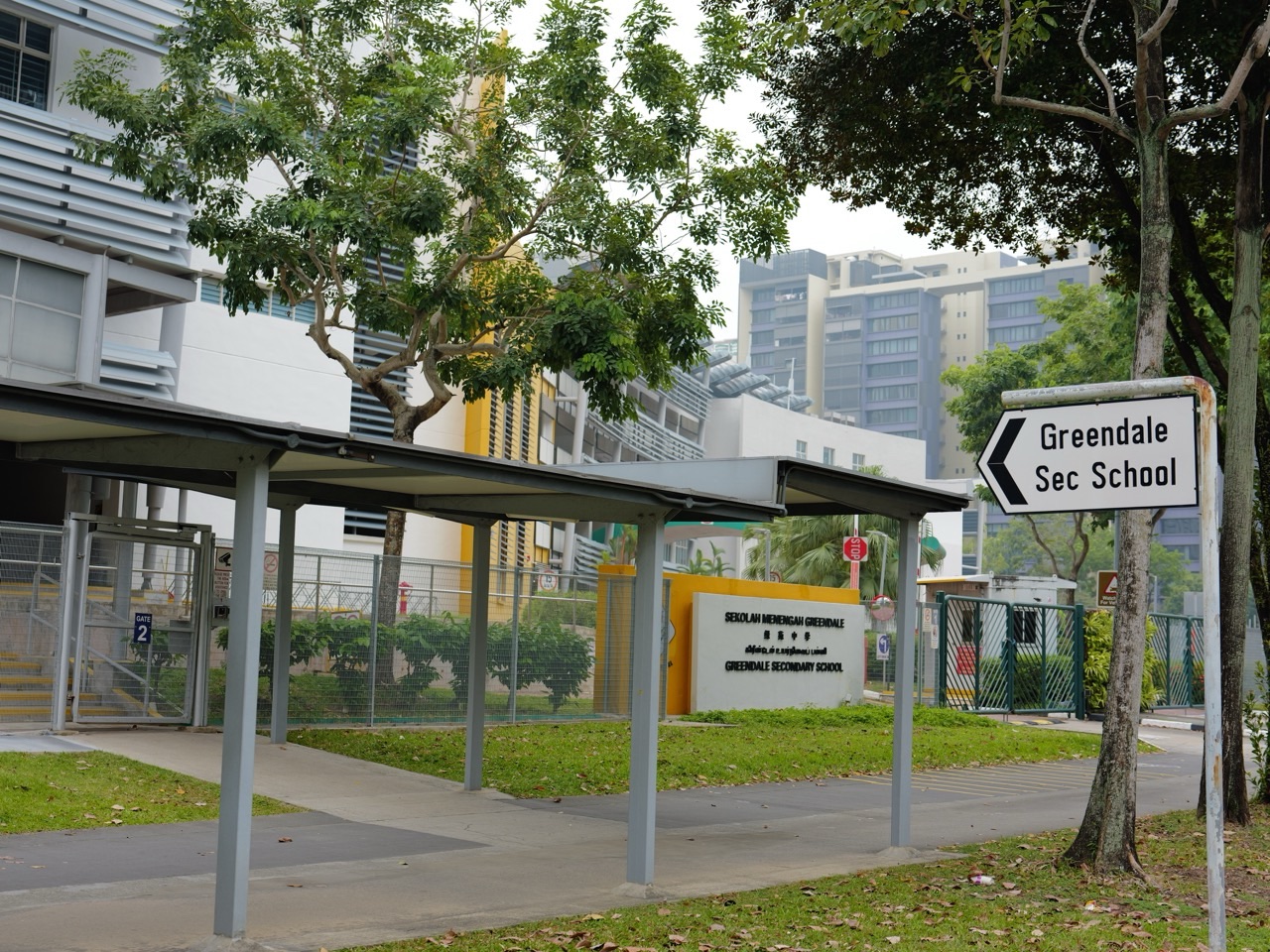
Greendale Secondary School at 51 Edgedale Plains gives Punggol families several distinctive CCA choices. Its published programme includes Canoeing, Fencing, Floorball, Football and Softball; Angklung Ensemble, Dance Ensemble, Greendale Chorale, Greendale Orchestra and Theatricks!; NCC (Air), NPCC and Singapore Red Cross Youth; and clubs spanning Art & Culture, Broadcasting, environmental work, Outdoor Adventure and Robotics. The important decision is not the number of names. Parents should establish which activities are available to the incoming Secondary 1 cohort, what the child will actually do each week, and whether the commitment fits the family’s home location and academic needs.
A PSLE result affects which secondary schools and Posting Group options are realistic, not a child’s inherent talent for coding, fencing or music. Under Full Subject-Based Banding, G1, G2 and G3 describe subject levels, while a CCA is an opportunity for wider learning and contribution. Greendale’s 2026 DSA-Sec talent areas in Design, Technology & Engineering, Leadership and Outdoor Adventure are worth understanding but must not be confused with the ordinary CCA allocation process. LEAPS 2.0 and some later aptitude-based admissions routes may recognise relevant accomplishments, but JC, polytechnic, PFP, ITE and university programmes retain academic and course requirements.
- Campus and family access: 51 Edgedale Plains, Singapore; assess the actual journey from your block, including after CCA.
- Sports: Canoeing, Fencing, Floorball, Football and Softball offer different training environments.
- Performing Arts: Angklung Ensemble, Dance Ensemble, Greendale Chorale, Greendale Orchestra and Theatricks!.
- Uniformed Groups: NCC (Air), NPCC and Singapore Red Cross Youth are distinct school programmes.
- Clubs: Art & Culture, Broadcasting, Green Club, Outdoor Adventure and Robotics; confirm current Year 1 offerings.
- DSA-Sec: the school’s 2026 DTE pathway specifies direct allocation of successful candidates to Robotics; its conditions do not describe every student’s ordinary entry.
- Later pathways: use verified LEAPS 2.0 attainment and the real SEC subject/score rules for 2027 and PSE from 2028.
1. Reading Greendale’s CCA menu as a parent
A school can publish a long list of activities that appears almost impossible to compare. A more useful approach is to examine the kind of work each CCA asks a pupil to do. Canoeing involves water safety, technique and teamwork. Robotics requires designing, testing and debugging. Chorale builds vocal skills through rehearsals. Red Cross Youth involves service and life-saving awareness. A student may find one of those experiences energising and another frustrating. The mere existence of a programme says little about an individual child’s fit.
Greendale describes its wider co-curricular approach as helping students discover skills, form friendships and grow in character. These aims are important because a Secondary 1 child’s immediate priorities are not exclusively academic scores. New class relationships, travel routines and personal confidence can influence how well a child settles into secondary school. A supportive CCA can become a community within the larger school.
Yet parents should not assume that every activity listed online is open to every pupil in exactly the same way. Some programmes may have selection trials, limited places, particular equipment needs or timetable arrangements. Ask about intake requirements and alternatives. The right choice is one the student can participate in consistently—not simply the activity whose promotional page looks most impressive.
2. The five published Sports and Games activities
The official Greendale Sports and Games directory lists Canoeing, Fencing, Floorball, Football and Softball. These are strikingly different experiences, and parents should avoid describing them as one “sports CCA”. Football involves continuous team movement and decision-making; Floorball rewards fast passing and awareness. Softball uses throwing, catching, batting and specialised field positions. Fencing involves precise footwork, concentration and controlled contest. Canoeing adds the water environment and its safety, venue and transport requirements.
Start by finding out what a beginner’s first month would involve. Does the child need previous experience? Is there a trial? Does the school teach fundamentals, and how does it balance competitive squads with ordinary members? A pupil who has never played a sport may still discover it through a supportive group. Conversely, a strong Primary 6 player may find secondary competition much more demanding than expected.
A parent who asks only about medals may miss whether the activity builds sustainable habits. Ask about coaching, safety, physical preparation and how the school supports pupils who are not selected for a competition team. Healthy participation includes rest, hydration, constructive feedback and appropriate medical attention when needed.
3. Canoeing: the essential safety and logistics conversation
Greendale’s Canoeing programme is distinctive because a water sport can demand arrangements beyond an ordinary school court. Parents should ask which venues are used for different sessions, how travel is supervised, whether swimming or water-confidence criteria apply, what protective equipment is provided and what happens when weather conditions make training unsafe. Do not assume that every CCA meeting takes place at the school campus.
A water activity may excite a teenager who loves outdoors and hands-on challenges. It may also be unsuitable for someone who does not currently feel safe or comfortable in that environment. This does not require a fearful conversation, but it does require direct answers from the teacher-in-charge. Children have different readiness levels, health needs and comfort with water; the actual school policy should guide the decision.
Check peak training periods and competition commitments. If a parent must manage later travel from an off-campus venue, that is a real family cost. It should be placed beside homework and rest, not discovered after allocation. A robust decision includes both the joy of the activity and the resources needed to participate safely.
4. Fencing, Floorball, Football and Softball: choosing by the nature of the task
Fencing may appeal to a child who likes measured technique and rapid one-to-one decisions. Coaching and protective gear matter greatly. Ask what equipment the school supplies and how a beginner is taught to move and handle gear safely. Not every pupil will start as a strong competitor; it is more helpful to see whether the child enjoys disciplined practice.
Floorball and Football are both team sports but have different movements, spaces and ball control. A pupil might enjoy the speed and enclosed flow of Floorball yet feel less at home on a football field, or vice versa. The choice is not a measure of toughness. A family can ask about a normal training session and whether trials let beginners explore the activity before allocation.
Softball rewards cooperation through distinct field roles, batting and throwing mechanics. Parents should ask who can join the relevant intake and how training groups are organised. Do not infer cohort or gender eligibility from another school’s DSA criteria. Each programme’s official current requirements govern selection.
5. Performing Arts: music, dance and theatre in five different forms
The official Performing Arts directory lists Angklung Ensemble, Dance Ensemble, Greendale Chorale, Greendale Orchestra and Theatricks!. These are not interchangeable because they all culminate in a performance. Angklung introduces Indonesian instrumental traditions and ensemble timing. Dance requires movement, physical conditioning and expressive coordination. Orchestra develops instrument-specific technique and collective musical interpretation. Choir asks members to listen, sing and blend; theatre can involve acting, stagecraft, sound and lighting.
A detail that families should check carefully is that the school’s published Greendale Chorale description identifies it as an all-girls’ choir. Parents should not assume another year’s intake rules or the availability of a particular ensemble without checking the school’s present programme. A student who loves singing deserves a realistic conversation about suitable opportunities rather than a promise based on a generic national list of school choirs.
For all performing-arts groups, ask about experience expectations, auditions, instruments or costumes, rehearsals ahead of major performances and safe transport afterward. The best fit is a group where a student enjoys the work between public shows. Rehearsal is the main activity; applause is only one moment.
6. Angklung, Orchestra and Chorale: what musical learners actually practise
Angklung and Kulintang-related ensemble work can introduce distinctive instrumentation, rhythm and collective attention. A child may enjoy the cultural and collaborative aspect even without private instrumental training. Ask what equipment is provided, how beginners learn and whether practice outside school is expected. The school’s current programme information should answer whether prior experience is required.
The Greendale Orchestra describes a sizeable ensemble and opportunities to perform at school and community events. A pupil joining an orchestra needs to learn how a personal part supports a larger whole. Practice habits, tuning, following direction and receiving correction are significant developmental tasks. Parents should avoid purchasing costly instruments before the school clarifies allocation and borrowing arrangements.
Greendale Chorale, like other choirs, builds vocal control, breathing, listening and teamwork. A student may grow in confidence over time, but a shy pupil may need a supportive entry process. Ask how individual voices are placed and how newcomers learn. Selecting a musical CCA because it sounds prestigious is a weaker reason than genuinely wanting to practise the music.
7. Theatricks! and Dance: creative participation beyond a photograph
Greendale’s Theatricks! programme describes work in theatre including lighting, sound and performance. This means parents should ask about roles beyond being on stage. A pupil who loves storytelling but dislikes public attention may find a production responsibility meaningful if the actual programme offers it. Another may want acting and should understand how auditions and roles work. The value is in learning to contribute to a collective creative work.
Dance Ensemble can build body control, technique, memory and expression. Parents should ask about conditioning, injuries, rehearsals, appropriate clothing and performance-season intensity. A child should not be pressured over their appearance or compared harshly with others. Safe teaching and an encouraging climate matter far more than a polished performance photograph.
Creative CCAs can strengthen communication and discipline even when a student later pursues Science or technical education. They are not hobbies to dismiss as academically irrelevant. However, they do not replace specific subject prerequisites for future courses; that balance should remain clear.
8. Uniformed Groups: NCC Air, NPCC and Red Cross Youth
The official Uniformed Groups page lists NCC (Air), NPCC and Singapore Red Cross Youth. NCC Air describes drills, aeromodelling and related activities. NPCC provides structured opportunities around civic values, teamwork and leadership. Red Cross Youth offers service and learning associated with safety and life-saving awareness. The details and training cultures differ, so the child should encounter the real programme before making a choice.
For NCC Air, do not confuse CCA exposure with a qualification to fly aircraft or work in aviation. It may be an opportunity to explore an interest, not a professional licence. For Red Cross, learning first aid is worthwhile but does not make a student a healthcare professional. Parents should ask what skills are formally taught, by whom, and how the school’s safety rules are applied.
A Uniformed Group can be a good environment for developing responsibility. It should not be prescribed as punishment for a child who needs better time management. A pupil who enjoys the structure and belonging will more easily sustain the weekly commitment. Ask about uniform costs, camp schedules, supervision, accessibility and options if the student experiences difficulty.
9. Clubs: a particularly broad range at Greendale
The school’s CCA information includes Art & Culture Club, Greendale Broadcasting Club, Greendale Green Club, Outdoor Adventure Club and Robotics. These programmes develop different skills, despite sharing one administrative category. A student drawn to storytelling may prefer broadcasting; a technically curious pupil may explore robotics; someone who loves nature might choose environmental or outdoor work. Art & Culture can offer creative making and cultural learning.
Ask what students actually produce or practise in their ordinary sessions. A programme may announce a competition but spend most of the year building foundational skills. This can be excellent for a beginner, provided it aligns with the child’s interest. Conversely, a student who wants hands-on work might feel disappointed if a club mainly conducts presentations. The correct answer comes from a current timetable and a conversation with the teacher-in-charge.
The school has an official CCA overview that explains its developmental aims. Parents should use that overview for principles, then look at the individual club pages for evidence of actual activity.
10. Greendale Robotics: substantial technical learning, not merely a coding label
The Greendale Robotics page describes design and fabrication, computer-aided design, 3D printing, laser cutting, coding, electronics and opportunities to explore AI-related technology. The school also describes debugging, design thinking and the ethical use of technology. These themes make the club potentially attractive to a pupil who likes building and problem-solving, but it is not necessary for every child to arrive already skilled in CAD or programming.
The core of technical learning is iteration. The first design may fail because a component is too weak, the code is incomplete or a sensor is unreliable. The student should learn to observe failures, revise a hypothesis, test again and document what improved. This process develops patience and communication as much as technical competence.
Parents can ask whether beginner members genuinely handle materials and undertake projects, how group roles are divided and whether competitions are optional or central. A club with advanced equipment is not necessarily the right fit for a student who wants leisurely exploration. It can be excellent for an interested learner with a sustainable commitment and appropriate instruction.
11. An important 2026 DSA-Sec detail: DTE and Robotics allocation
Greendale’s DSA-Sec guidance identifies Design, Technology & Engineering, Leadership and Outdoor Adventure as the 2026 talent areas. Its DTE talent page says pupils accepted through that specific DSA-DTE route will be directly allocated to Robotics Club. This is useful, material information for families choosing school pathways.
It is equally important to understand what that statement does not mean. It does not say that every pupil who wants Robotics must use DSA-DTE. It does not say that a normal school posting guarantees a place in Robotics. It does not promise an engineering diploma or university position. The DSA terms, application window and obligations must be read for the actual year’s exercise.
DSA-Sec happens around primary-to-secondary school admission. DSA-JC is a later post-secondary route with different institutions and selection processes. Mixing the two causes parents to infer advantages that do not exist. A Primary 6 family should first determine whether the child is a realistic DSA-Sec applicant, then ask about the exact programme and commitments if offered.
12. Broadcasting: storytelling, equipment and responsibility
The Greendale Broadcasting Club page describes audio systems, photography, videography, interviewing and editing. These can be valuable skills for students who enjoy communication and technology. A good broadcasting CCA requires reliability: someone must set up equipment before an event, capture it respectfully and produce usable work afterward. Technical skill alone is not enough if a team member cannot meet responsibilities.
Parents should ask how the school handles consent and privacy, whether pupils can retain copies of school footage for personal portfolios and what responsibilities are permitted for beginners. A child should not post classmates’ photographs publicly without school permission. These rules are not obstacles to creativity; they are part of responsible media practice.
A portfolio may eventually support a relevant aptitude-based diploma application, but only when the student can explain their own contribution and the chosen course considers such evidence. Broadcasting does not automatically qualify a student for a communications or media course. Academic and course-specific requirements still apply.
13. Outdoor Adventure and Green Club: an interest in the world beyond the classroom
Greendale’s Outdoor Adventure Club page discusses campcraft, climbing, kayaking, navigation and expedition planning. This is a practical reminder that a club can be physically demanding even when it is not grouped under competitive sports. A child who wants real outdoor experiences might thrive, but the family must ask about supervision, safety, fitness, equipment and weather contingencies.
Environmental work has a different emphasis, often involving observation, public communication and practical contribution. A student can learn to study a local problem and organise action, but the activity should not be reduced to collecting service-hour certificates. Ask how members choose projects, evaluate outcomes and reflect on what they learned.
Because these activities may involve outdoor or off-site sessions, their travel demands may differ from an ordinary classroom club. Families should never assume that an activity held on a Thursday afternoon finishes at the school’s main gate. The teacher must confirm the exact arrangements.
14. PSLE scores and Full Subject-Based Banding: two things parents should separate
Under the national Secondary 1 posting system, PSLE Achievement Level scores and applicable rules influence which schools and Posting Group choices are realistic. Full Subject-Based Banding allows G1, G2 and G3 subject-level arrangements. These are academic matters, not a fixed ranking of the child’s confidence, outdoor competence, performance ability or robotics talent.
A pupil whose PSLE result places them in a particular Posting Group may still discover a valuable CCA strength. A pupil with a low numerical PSLE total may still be new to music or technology. Parents should avoid using academic labels as predictions of unrelated abilities. The school’s actual CCA entry, selection and support arrangements should be checked directly.
When choosing between Greendale and another eligible school, do not treat a past cut-off point as a guarantee for the upcoming intake. Schools receive applicants with different scores from year to year. Follow current MOE SchoolFinder, the official Secondary 1 posting process and the published rules for the year your child is applying.
15. Edgedale Plains and the real commute
Greendale Secondary is at 51 Edgedale Plains, Singapore. Families around Punggol East, central Punggol, western Punggol or nearby Sengkang may experience different journeys. Walkways, traffic crossings, bus or LRT transfers, weather and late-afternoon waiting time matter. A route that appears short on a map may still be tiring after a full day of lessons and CCA.
For Canoeing or Outdoor Adventure, ask whether practices or expeditions begin or end elsewhere. For a performance, ask about rehearsals, dress rehearsals and event dismissal. For Robotics, ask about additional activities around competitions. These details determine whether the child can reliably get home, have dinner and complete study tasks without losing sleep.
Try the commute at the actual expected hours. Have the child navigate under safe supervision first, then plan contingency arrangements if a route is disrupted. Do not publish a universal journey-time claim because one parent’s trip will be very different from another’s.
16. Budgeting for four years of participation
Sports equipment, musical instruments, uniforms, outdoor gear, specialist club materials and transport may create costs. The actual school may supply or lend items. Parents should ask what is essential before buying anything. A child allocated to a club different from the first preference should not be left with expensive unused equipment.
Also consider events. Outdoor activities and camps may have separate consent processes and practical supplies. Performance programmes may require costumes or rehearsal travel. Robotics projects may use school facilities rather than family-owned machines. These arrangements are too specific to guess from a club title.
If there are financial constraints, ask the school discreetly about support. An activity should not be ruled out because the family assumes it is expensive without checking the actual provisions. The greater cost for many families is time; place that on the same decision sheet as money.
17. LEAPS 2.0: what counts and what does not
LEAPS 2.0 recognises Participation, Achievement, Leadership and Service. Students can make progress in all four CCA families. A Canoeing member may learn responsibility and contribute to the team. A choir member may help new singers. A Broadcasting member may support school events. A Red Cross member may practise meaningful service. Recognition depends on the framework’s actual criteria, not the CCA category’s prestige.
The published recognition table states that Excellent, worth two applicable bonus points, requires at least Level 3 in all four domains and at least one Level 4. Good, worth one point, requires at least Level 1 in all domains plus one of the specified additional combinations. Fair carries no bonus. A club can win a national trophy without automatically giving every student the same LEAPS outcome.
Ask the school how individual records are kept, what opportunities for service and leadership exist and when pupils can review their progress. Do not buy private lessons or demand titles solely to chase a CCA score. Sustained contribution and honest learning are the more reliable objectives.
18. The 2027 SEC, 2028 PSE and later post-secondary choices
The first graduating students sit the Singapore–Cambridge Secondary Education Certificate in 2027, with subjects offered at G1, G2 or G3. The new Post-Secondary Admissions Exercise begins in 2028, covering applications to JC, MI, polytechnics and ITE. MOE has stated that DSA-JC, Poly-EAE and ITE-EAE continue alongside the revised process. These systems affect future academic decisions; they do not decide which CCA a child enjoys in Secondary 1.
For the announced 2028 JC pathway, the qualifying aggregate uses five G3 subjects under L1R4, with a gross threshold of 16 and other subject requirements. The cap on bonus points is reduced to three for JC and MI under the revised rules. Polytechnic, PFP and ITE routes have different criteria. Parents must use current official details rather than assuming a LEAPS bonus replaces a missing subject or repairs an ineligible combination.
A child entering Secondary 1 in 2027 is not a member of the graduating 2027 SEC cohort. The family should use today’s reform announcements for orientation but verify the actual rules when the child’s graduation approaches. Rigid predictions four years in advance are rarely helpful.
19. DSA-JC, polytechnic EAE and ITE EAE: showing real ability
A student who excels in a sport, performs artistically or develops a significant technical project might later investigate a talent-based route. DSA-JC depends on the specific junior college’s declared areas and selection criteria. Poly-EAE and ITE-EAE assess aptitude for relevant courses under their own rules. A Greendale Robotics project may be relevant to a technical application; a Broadcasting project may support a media-related one; a strong sports record may matter for a declared sporting talent area. No connection should be claimed without examining the actual programme.
Good evidence explains what the student did. “I built and tested a prototype; the first motor arrangement failed; I revised it and measured the result” is stronger than “I belonged to an award-winning club.” Similar specificity matters in service, sport and performance. Families can support a simple project or reflection record without turning every CCA meeting into a marketing exercise.
Even a conditional talent-based offer may have academic conditions. A pupil cannot ignore Mathematics or required language grades because they enjoy coding or fencing. Keep academic readiness and authentic extracurricular development side by side.
20. Polytechnics, PFP, ITE, JC and university are not prizes for a club label
The later student may choose a pre-university route, a polytechnic diploma, PFP where eligible, Higher Nitec or other permitted programmes. Each has particular academic, course and sometimes subject-level criteria. A child interested in outdoor adventure may later prefer engineering; a Robotics member may discover business; a dancer may choose healthcare. These changes are normal and should not be discouraged.
University admission comes later, through recognised qualifications and the institution’s own criteria. LEAPS 2.0 bonus points do not automatically deduct from a university admission score. A teenager’s CCA can develop teamwork, perseverance and self-knowledge that remain useful in higher education, but its value is larger and less mechanical than an entry points formula.
The school’s CCA offering can help a family decide between suitable secondary schools, but it should not be used to promise a university outcome. The responsible promise is simpler: if the child participates thoughtfully and continues learning, they can develop skills that make future decisions more informed.
21. Five Greendale parent scenarios
The science-minded beginner. A child wants Robotics but has never coded. Ask how Greendale teaches introductory skills, how projects are allocated and whether there is a trial. Do not assume the child needs expensive external lessons before joining. Also do not confuse ordinary CCA entry with the 2026 DSA-DTE pathway.
The child who wants water-based sport. Canoeing appeals because it is different from games on a court. The family should ask about water readiness, training venue, safety equipment and travel. If the child’s health or confidence makes the activity unsuitable now, a different genuine interest is not a failure.
The artistic child who does not enjoy solo performance. Angklung, Orchestra, Chorale or theatre might provide collaborative roles, but each still has real rehearsal demands. Attend the showcase and ask the child what part of the work they want to practise. A polished concert is not a sufficient reason on its own.
The pupil who enjoys technology but wants communication. Broadcasting may better fit a child who likes interviews, filming and editing than Robotics. Conversely, a pupil drawn to mechanical testing may prefer Robotics. The family should compare actual activities rather than group all technology under one interest.
The family travelling from western Punggol. Even if the school is appealing, test the return journey after the latest plausible session. A preferred club becomes difficult if it repeatedly consumes dinner or sleep. The household needs a plan it can sustain throughout the year.
22. Building a four-year CCA path
Secondary 1 is a settling-in year. The child should learn fundamental skills, build friendships and understand the regular timetable. Parents can ask whether the student feels safe and supported, whether they have an adult contact and whether workload is manageable. Winning a competition is not the first measure of success.
In Secondary 2, greater contribution can emerge. A club member may take responsibility for a small project; a sportsperson may support teammates; an arts participant may help a new member; a cadet may organise part of a service activity. Encourage patience and honest reflection rather than chasing a title.
In Secondary 3, students can explore deeper projects and leadership, keep relevant records and begin to understand future courses. They should also review academic subject levels and their potential importance to later qualifications. A strong CCA record is most useful when it sits beside, not instead of, appropriate academic preparation.
In the graduating year, confirm the actual SEC schedule and later admissions rules. If a genuine DSA-JC or EAE opportunity suits the child’s interests, use accurate evidence of individual contribution. If not, the CCA has still provided a community and valuable learning over several years.
23. Open-house questions specifically for Greendale
- Which CCA programmes are open to the next Secondary 1 intake, and which have limited places?
- What are the exact trial and preference procedures for Canoeing, Fencing, Robotics and the arts?
- Is Greendale Chorale’s published all-girls arrangement still the rule for the coming year?
- What would a first-term beginner do in each of the preferred activities?
- How do DSA-DTE Robotics allocation conditions apply to successful 2026 applicants, and what differs for later years?
- What is the usual CCA timetable, and how do performance or competition weeks change it?
- Which activities occur off campus and what transport is arranged?
- Are music instruments, equipment, uniforms or specialist gear provided?
- How do members who are not in a competition team contribute meaningfully?
- What are the safety procedures for Canoeing and Outdoor Adventure?
- How can families seek financial, wellbeing or accessibility support?
- When can a student check their LEAPS 2.0 participation and attainment records?
24. A seven-day decision the family can complete
Day 1: confirm current school posting eligibility and compare Greendale with other realistic schools. Day 2: read the school’s current CCA menu, including any changes from the previous intake. Day 3: ask the child to choose three activities by the ordinary work involved. Day 4: investigate trials, equipment, membership conditions and alternatives. Day 5: test the route from home to 51 Edgedale Plains and back after likely training. Day 6: place the commitment beside schoolwork, meals, rest and the family’s transport capacity. Day 7: let the child explain the preference order in their own words.
A family that completes this process does not need to claim certainty about the child’s future. It has made an evidence-based decision about the next stage of school life. The student can then enter Secondary 1 with realistic expectations and some ownership of their interests.
Frequently asked questions
Does Greendale’s DSA-DTE route mean every Robotics pupil entered through DSA?
No. The 2026 page specifically describes the arrangement for successful DSA-DTE applicants. Ordinary CCA allocation is a separate process. Ask the school about the entry rules for the relevant intake.
Can a PG1 or PG2 pupil join Greendale’s STEM-related clubs?
Posting Group does not by itself constitute a universal national ban. The pupil must first enter the school and meet its specific CCA allocation conditions. Confirm current rules rather than assuming eligibility from academic labels.
Is Canoeing more valuable than a school club for LEAPS points?
No CCA category automatically guarantees a higher LEAPS attainment. The four domains and actual recognised levels determine the result. The student’s sustained involvement matters.
Is a Greendale CCA a guaranteed route to JC, polytechnic or university?
No. Specific aptitude-based routes may assess relevant evidence, and applicable LEAPS points can influence certain post-secondary calculations, but academic prerequisites and selection rules still apply.
Are there any costs for a performing-arts or outdoor CCA?
The exact costs depend on what the school supplies and what families must purchase. Ask for the current equipment and event arrangements and for financial assistance where relevant. Do not buy specialist gear before allocation.
Official references and connected guides
For current school-specific information, use Greendale CCA overview, Sports and Games, Performing Arts, Uniformed Groups, Robotics, Broadcasting, Outdoor Adventure and DSA-Sec.
National guidance: MOE SchoolFinder, the 2027 SEC framework, the revised JC admissions criteria, the 2028 PSE and LEAPS 2.0 recognition. For a Punggol-wide category comparison see Sports, Performing Arts, Uniformed Groups and Clubs and Societies.
Prepared using official school and MOE information available in November 2026. School CCA lists, Year 1 eligibility, DSA terms, schedules and admissions rules are subject to change; verify the current cohort’s arrangements before applying.
Continue with the connected guide: PSLE Scores 4–32 in Punggol | 2027 Secondary School Choice Hub. Use its linked index to compare the related questions and choose your next reading.


