
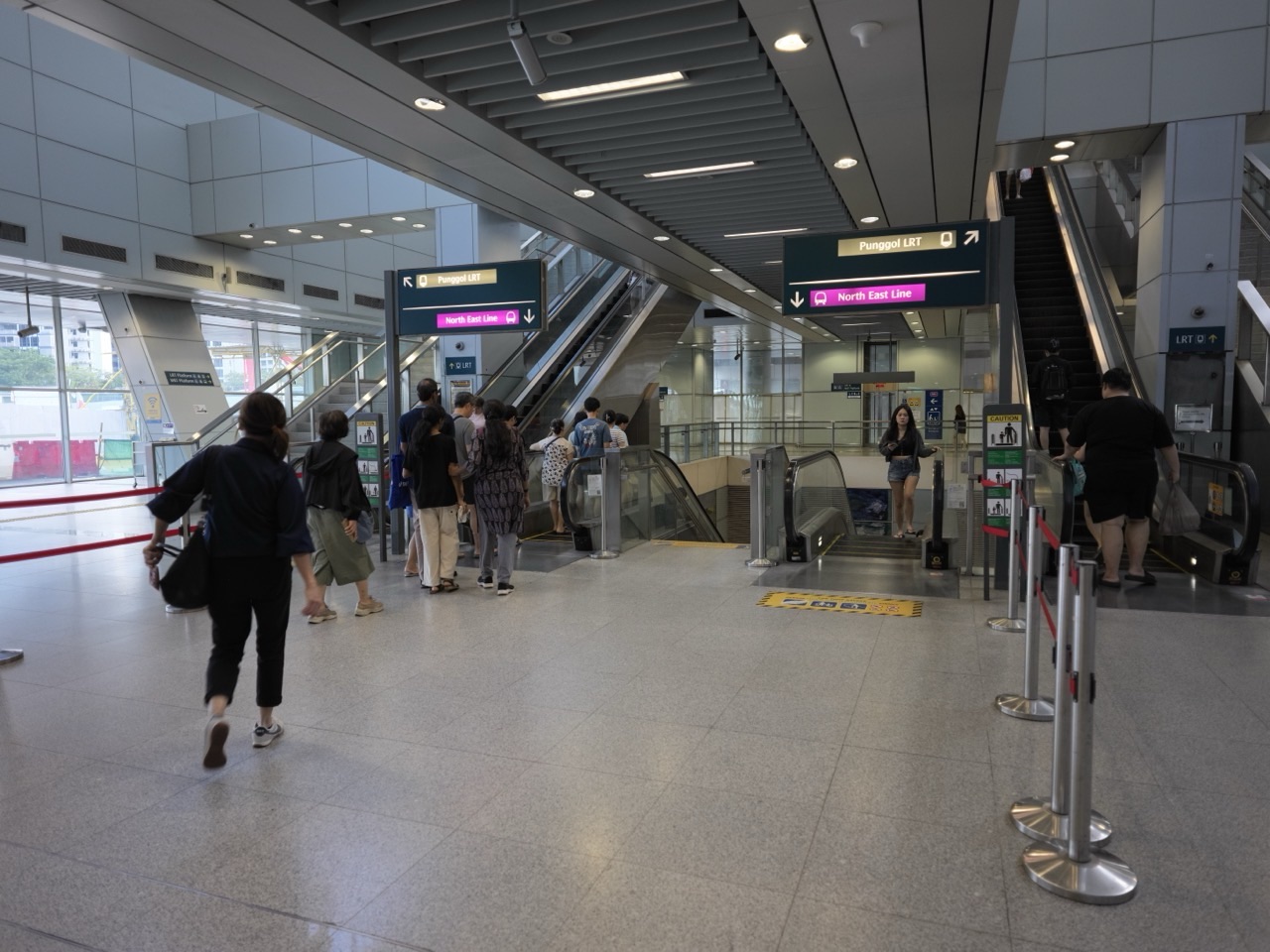
How do you go from Punggol to Johor Bahru without a car in November 2026? A straightforward public-transport option is to travel through Singapore’s MRT network to Kranji MRT, then use cross-border Bus 170X to JB Sentral or Causeway Link CW1 toward Larkin, checking the live route. Another option is to travel to Woodlands Temporary Bus Interchange and take SMRT Bus 950 to JB Sentral. A booked KTMB Shuttle Tebrau service between Woodlands Train Checkpoint and JB Sentral can also cross the Causeway, but a family must reach Woodlands Train Checkpoint from Punggol and follow its strict boarding deadlines.
Do not plan your November or December 2026 trip using the RTS Link yet. Singapore and Malaysia’s transport authorities announced on 2 October 2026 that the new Johor Bahru–Singapore RTS Link is now targeted to start passenger service in February 2027, subject to testing, independent safety certification and regulatory approvals. For now, use legitimate bus, Shuttle Tebrau or road transport, take your physical valid passport, and plan enough time for both countries’ immigration checks and possible Causeway queues. The MyICA QR code can simplify Singapore immigration clearance but does not replace a passport for travel to Malaysia.
- From Punggol MRT: travel via the rail network toward Kranji or Woodlands, then use the appropriate cross-border service.
- Bus 170X: SBS Transit, Kranji MRT to JB Sentral, according to LTA’s October 2026 cross-border list.
- Bus 950: SMRT, Woodlands Temporary Bus Interchange to JB Sentral.
- Causeway Link CW1: Kranji MRT to Larkin Sentral under the current LTA route listing.
- Shuttle Tebrau: between Woodlands Train Checkpoint and JB Sentral; passport data is required for booking and boarding.
- Passport: physical document required despite MyICA QR code clearance on Singapore’s side.
- Malaysia Digital Arrival Card: Singapore citizens are exempt under current Malaysia/MFA guidance; other nationalities should check eligibility and any visa requirement.
- Returning to Singapore: Singapore residents entering through land checkpoints are exempt from SG Arrival Card submission under current ICA rules.
- RTS Link: February 2027 target, not an open service on 14 November 2026.
- For families: check travel documents, child assistance lanes, toilets, food and the complete return journey before leaving Punggol.
Which Punggol–JB route should you choose?
The best route depends on where the family begins, whether it has heavy bags and how much waiting it can tolerate. A person living near Punggol MRT can use the North East Line, Circle Line and North South Line interchange network to reach Kranji. For example, a feasible path is Punggol NE17 to Serangoon, transfer to the Circle Line for Bishan, then transfer to the North South Line toward Kranji. That is only an illustrative route; use a live journey planner for the actual date and accessibility needs.
Once near the northern border, the family can choose a cross-border bus or reach the Woodlands train station for a pre-booked rail service. The public bus may have queues and require following passenger clearance procedures. Shuttle Tebrau has a fixed scheduled train and boarding cutoffs. A taxi or authorised vehicle has different road queuing and immigration arrangements. None of these methods promises a particular journey duration during school holidays or long weekends.
| Route | Useful for | Main constraint |
|---|---|---|
| MRT to Kranji then Bus 170X | Trip aimed near JB Sentral | Rail transfers, bus queues and two-country clearance |
| MRT to Kranji then CW1 | Trip using Larkin Sentral route | Different Malaysian bus endpoint; check continuation |
| MRT/bus to Woodlands then Bus 950 | Alternative service to JB Sentral | Interchange access and immigration queues |
| Woodlands Train Checkpoint then Shuttle Tebrau | Scheduled rail crossing with confirmed ticket | Advance boarding cutoffs and reaching the station |
| Authorised private vehicle | Some larger families and mobility needs | Driving permissions, tolls, traffic and border documentation |
| Future RTS Link | Expected future Woodlands North–Bukit Chagar rail trip | Not operating in November 2026 |
A family planning only a quick meal near JB Sentral may find 170X or 950 suitable. Someone visiting relatives around Larkin may prefer a route ending there, but still needs to confirm the last segment. Choosing a bus based only on the word Johor in its destination can result in arriving at the wrong terminal and paying for another local transfer.
Bus 170X, 950, CW1 and other cross-border routes
LTA’s updated 1 October 2026 list confirms the Singapore-operated routes: SBS Transit 170X from Kranji MRT to JB Sentral, 170 from Queen Street Terminal to Larkin Sentral, 160 from Jurong Town Hall Bus Interchange to JB Sentral, and SMRT 950 from Woodlands Temporary Bus Interchange to JB Sentral. These are different starting points, not four services originating at Punggol.
The same list identifies Malaysia-operated Causeway Link CW1 from Kranji MRT to Larkin Sentral and CW2 from Queen Street to Larkin, with other services serving destinations such as Perling Mall or Gelang Patah. Confirm the current bus stop, service direction and ticket/payment requirements. A route’s ending at Larkin is not the same as stopping at JB Sentral.
Many Punggol residents will choose the Kranji route because it connects to the North South Line. But the right route depends on departure time and real train connections. Do not assume that 170X is automatically the quickest because it has fewer characters in its name. A longer walk to an interchange can erase an apparent timetable advantage.
What happens when a cross-border bus reaches immigration?
Cross-border public bus passengers follow the current checkpoint’s instructions for alighting, immigration and reboarding. You may need to join the appropriate passenger hall queue, carry belongings for inspection and board a suitable onward bus under the operator’s terms. Do not assume the identical bus you boarded in Singapore will always wait until every passenger has cleared at each checkpoint.
Keep passports and necessary travel information accessible. A family with several children should agree on who supervises each child and who carries the main luggage during the immigration process. A large shopping bag that is easy to move on an MRT floor may be awkward when a crowd is moving between bus bays and immigration counters. Pack only what can be managed safely.
Follow official signs and transport staff instructions. Do not walk through vehicle lanes, cut queues or take a photo in a restricted immigration area without authorisation. The checkpoint is a controlled border environment, not an ordinary bus interchange where every shortcut is permitted.
Kranji MRT: how to prepare for the last Singapore leg
Kranji MRT is on the North South Line. A Punggol family should first plan how to reach that station from the actual block. The MRT and possible Punggol LRT journey are separate from the cross-border bus, so confirm the whole route rather than just checking the bus’s last departure. A bus service can be operating while the family’s local feeder service has stopped for the night.
Look for the correct bus stop and queue. Public transport signage can change during building works or traffic arrangements. If an adult is carrying a stroller, identify a step-free route where feasible. Travelling with one small day bag per person can make the journey more comfortable than combining several large shopping bags before the border crossing.
A route with multiple transfers may still be reasonable for a solo adult but tiring for a toddler or grandparent. Compare the additional cost of a taxi to an appropriate northern boarding point with the time and effort saved. There is no need to treat the lowest possible fare as the only correct choice.
KTMB Shuttle Tebrau: a different rail crossing
KTMB’s Shuttle Tebrau FAQ identifies travel between Woodlands Train Checkpoint and JB Sentral. Tickets are available through its official online booking system or counters under the current terms, and passport details including expiry are required. The passport serves as the boarding pass, and passengers must present a valid document. A person cannot simply arrive at Punggol MRT and board a train straight through to JB.
The FAQ says the departure gate at Woodlands opens 40 minutes before departure and closes 20 minutes before. At JB Sentral it opens 30 minutes before and closes ten minutes before. If a person reaches the station only a few minutes before the train’s scheduled departure, they may already be too late to board. This is why a train ticket must be planned with a generous route buffer from Punggol.
KTMB lists a maximum of 320 seats per train. Available services, tickets and prices may change, and school-holiday trains can sell out. The current FAQ describes fare and child arrangements, but families should check the exact travel date and official ticketing system before paying. Do not buy tickets from an unverified social-media seller claiming to control a reserved allocation.
Children on Shuttle Tebrau
KTMB’s published FAQ says children under four can travel without paying for a ticket but must be registered at the ticket counter before departure. Children above four require a ticket. This does not make the trip automatically easy for a family with a baby. Passport documentation, safe supervision, station accessibility and boarding deadlines all still apply.
Make sure the booking names and passport details are correct for every ticketed passenger. A train ticket assigned to the wrong passport may create trouble at the boarding gate. Keep the relevant documents with the responsible adult and provide enough time for any required infant registration or service-counter procedure.
A parent should not assume that a short rail crossing means the whole excursion takes only five minutes. Reaching Woodlands Train Checkpoint from Punggol, clearing the border and travelling onward inside JB can take much longer than the train’s own scheduled movement.
Shuttle Tebrau versus the future RTS Link
Shuttle Tebrau is an existing KTMB cross-border train serving Woodlands Train Checkpoint and JB Sentral. The RTS Link is a separate future railway connecting Woodlands North in Singapore to Bukit Chagar in Johor Bahru. The two systems use different stations and operators, and the future RTS will have its own tickets and integrated immigration process.
Do not confuse the KTMB fare or boarding gate with the future RTS fare and procedure. The RTS has not yet opened in November 2026. A website saying the RTS will provide about five minutes of rail travel is describing a future service, not a way to book a passenger ticket today.
Families should continue using current buses, Shuttle Tebrau or authorised road transport until both governments announce the RTS service has completed approvals and begun operating. Planning around an unapproved future timetable can cause missed travel and unnecessary expense.
Passport validity and entry requirements
Singapore’s Ministry of Foreign Affairs advises that Singapore passports must have more than six months’ validity at the time of entry into Malaysia. Travellers of other nationalities need to check their own passport, visa and immigration conditions with the Malaysian authorities. A Singapore permanent resident holding a foreign passport does not automatically have the same Malaysian entry entitlements as a Singapore citizen.
The physical passport is essential even when Singapore’s QR code clearance allows the electronic code to be scanned at the Singapore land checkpoint. Malaysia may require the original passport, and immigration officers can still ask to inspect documents. A photo of a passport on a phone is not a substitute for carrying the legitimate travel document.
Check every child’s passport separately. A baby’s passport can expire or be missing when the adults’ documents are current. A school holiday is not sufficient reason for border authorities to waive proper documentation. Do this early enough that a problem can be resolved before the family spends money on transport or attractions.
Malaysia Digital Arrival Card: is it required for Singapore citizens?
Malaysia’s High Commission guidance and Singapore MFA state that Singapore citizens are exempt from the Malaysia Digital Arrival Card (MDAC) requirement under the current rules. Other foreign nationals may need to submit the MDAC within three days before arrival, subject to specific exemptions and conditions. Malaysian permanent residents and certain long-term pass holders have their own exemptions.
A family may include Singapore citizens, a foreign spouse, a permanent resident with another nationality and children with different passports. Do not apply one person’s exemption to everybody. Check the actual nationality and status for each traveller. The MDAC is an entry information form, not a visa or permission to work in Malaysia.
Singapore MFA also says a Singapore passport holder intending to enrol fingerprints for Malaysia’s automated e-gates on later visits should submit an MDAC within the relevant period. The rule therefore has nuances even when ordinary entry is exempt. Use the legitimate Malaysian immigration portal rather than a third-party paid site promising to ‘unlock’ an arrival card.
MyICA QR code clearance at Woodlands and Tuas
ICA’s current land-checkpoint guide explains that eligible travellers can generate individual or group QR codes in the MyICA app for faster immigration clearance at Singapore’s Woodlands and Tuas checkpoints, including bus passenger lanes. The feature is separate from Malaysia’s own immigration procedures. Travellers must still bring a passport and satisfy all entry requirements.
For most eligible travellers, a QR code can be generated before reaching the checkpoint using passport data or supported Singpass information. If a person has renewed their passport, the MyICA profile needs updating before relying on an old code. A code associated with the wrong passenger or expired passport information may delay processing.
ICA says first-time foreign visitors entering Singapore and people re-entering Singapore on a different passport from their last visit may need to present the passport rather than use the QR process for that journey. A family travelling with several different statuses should follow the correct lane and officer guidance rather than assume one group code always works for everyone.
Children and immigration clearance
ICA’s automated passenger-hall guidance says children below six years old should use Special Assistance Lanes for immigration clearance. It also describes eligibility for automated lanes and QR arrangements under relevant conditions. A child older than six is not necessarily expected to navigate immigration alone; adults must follow appropriate supervision and officer directions.
Keep passports accessible during the queue but protect them from loss. A toddler may become tired, especially when crowds move slowly, so allow rest and food as appropriate. Do not depend on an arbitrary claim that the entire immigration process always takes ten minutes. Actual border security and travel volumes change.
If a traveller has a disability or needs mobility support, check current checkpoint assistance procedures before travel and follow staff guidance. The most practical route may differ from the one an able-bodied solo traveller prefers. A bus or train does not solve every accessibility requirement automatically.
Does a Singapore resident need an SG Arrival Card returning by land?
ICA’s SG Arrival Card guidance exempts Singapore citizens, permanent residents and eligible Long-Term Pass holders entering via land checkpoints from submitting an SG Arrival Card under the published rules. This is distinct from the Malaysian MDAC requirements and from the use of MyICA QR code clearance. Foreign visitors may have other SGAC obligations even when they can use electronic clearance.
Do not confuse three different concepts: the passport as an international travel document, the optional eligible QR clearance process on the Singapore side, and an arrival form required for certain traveller categories. They exist for different purposes and are governed by different authorities. The correct combination depends on the person and journey.
Where there is uncertainty, use ICA and Malaysia’s official immigration information before travelling. Do not pay an intermediary to submit a free government arrival form or ask someone in a queue to use another traveller’s identity. Proper records and individual eligibility matter.
RTS Link: the October 2026 schedule change
LTA’s joint announcement of 2 October 2026 states that RTS Operations expects to complete system tests and trial runs by 31 December 2026 and begin passenger service in February 2027, subject to independent safety certification and regulatory approval by both countries. This supersedes older promotional descriptions that still claim service will begin in late 2026.
The rail connection is planned between Woodlands North and Bukit Chagar. LTA describes capacity up to 10,000 passengers per hour per direction and a future train travel time of around five minutes between the stations. Those figures concern the railway segment, not the full door-to-door journey from a Punggol HDB flat through connections, security, passenger boarding and the final destination in JB.
MOT’s 4 November 2026 parliamentary reply reaffirmed that opening still depended on tests, safety certification and regulator approval. Therefore, the February date is a target rather than guaranteed public availability. When planning a future holiday, confirm the operator’s actual launch announcement and ticketing terms instead of treating the revised target as a published passenger timetable.
Why older websites may give the wrong RTS date
Some general infrastructure pages were written before the October 2026 revision and still mention an end-2026 start. A reader should prefer the more recent dated official announcement when sources conflict. The difference is not cosmetic: a family that expects to use RTS over the December school holidays may arrive at a station where passenger service has not started.
Transport projects sometimes reach substantial physical completion before the independent testing and regulatory permission for carrying passengers are finished. Construction progress photographs do not establish public operation. Safety certification is a separate gate from installing tracks, power systems and station buildings.
For a 2027 travel plan, keep both scenarios: if the RTS is open and suitable, use the confirmed operator details; if not, continue with bus, Shuttle Tebrau or road routes. A backup is particularly important for family commitments that cannot be postponed.
How busy can Woodlands and Tuas checkpoints become?
ICA’s November 2026 advisory notes that during the September school holidays, more than 6.1 million travellers crossed Woodlands and Tuas in eleven days, with a record of over 599,000 crossings on one day. It warned of very heavy traffic around the November Deepavali long weekend. These numbers describe past and anticipated pressure, not the current queue length at a given hour today.
The strongest practical lesson is to avoid making a plan that works only if immigration takes exactly twenty minutes. Border queues can fluctuate because of school holidays, vehicle volumes, security checks or operational changes. A family should build a buffer and be willing to shorten its JB itinerary rather than rush home after discovering a long return queue.
ICA advises checking official updates and following traffic rules. A driver must not cut queues or stop illegally near the checkpoint. Bus passengers should use the authorised passenger routes and avoid running between lanes. The journey is part of international border clearance, not a race to enter the shopping centre first.
Driving to JB from Punggol: check the rules before departure
For an owned Singapore-registered car, the driver needs valid travel documents and the current vehicle, insurance, toll and road-charge arrangements. Singapore Customs’ three-quarter tank rule applies where relevant before departing Singapore, under the published law. Malaysian entry rules and any vehicle-entry requirements must be verified separately. A Punggol HDB parking permit does not grant cross-border vehicle permission.
Driving may appear convenient when transporting older relatives, several children or bulky luggage, but a family should account for possible long queues and fatigue. Do not schedule a meal, shopping appointment or return time without a reasonable border allowance. Children should use appropriate restraints and all passengers should remain safely seated in accordance with vehicle and checkpoint rules.
If using a rented or shared vehicle, the contract may restrict Malaysia travel. GetGo’s 2026 guidance, for example, requires an eligible confirmed Drive to Malaysia booking for authorised use. A normal local car-share booking does not automatically allow a trip across the Causeway, and unauthorised driving can create severe insurance and financial exposure.
A Johor day trip with a baby or toddler
Young children may need frequent feeding, changing, rest and calm supervision. A day trip that appears short on a map can involve long queues and crowded buses. Choose a route based on whether the responsible adults can manage the child’s needs, not just which method has the lowest fare. A stroller may be useful on some paths and inconvenient at stairs or narrow transport connections.
Pack only necessary supplies but keep them accessible: appropriate food, drinking water, nappies, wipes, medication under professional guidance and a change of clothes. Do not bury passports at the bottom of a suitcase. A family can reduce stress by knowing which adult holds documents and which supervises the children at each checkpoint.
For a first cross-border outing, consider a limited destination near the arrival point rather than a full day of distant malls and attractions. A child’s stamina can be consumed by travel alone. A successful visit may be one enjoyable meal and a safe return, rather than ten shops photographed for social media.
Travelling with older relatives or a wheelchair user
Mobility needs can change the best mode. A bus journey may involve queueing, disembarkation and reboarding; a train uses separate ticketing and boarding cutoffs; a suitable vehicle may offer easier access but face road traffic. Consider which option provides accessible restrooms, step-free routes and appropriate assistance for the actual person.
ICA provides Special Assistance Lanes under its published passenger-hall procedures, but the family should still verify what help is available for the particular traveller and checkpoint. Do not expect ordinary bus drivers to perform specialised medical or physical lifting tasks. Plan a safe route with the person’s preferences and required support in mind.
A senior who enjoys shopping may still prefer a shorter outing and comfortable return. A Punggol family should not equate the ability to walk through one shopping mall with the ability to stand for several hours in immigration queues. Rest and accessibility are essential travel considerations.
Money, mobile data and cashless payments in Malaysia
Singapore Dollars and Malaysian Ringgit are different currencies. A shop in JB may accept local cash, supported cards or QR payments, but the exchange rate, card fees and merchant availability depend on the service. Check the actual payment method before ordering rather than assume that every Singapore PayNow QR works in every Malaysian shop. Some cross-border QR integrations exist, but participation and limits still matter.
Do not use an airport exchange rate or an old online screenshot as a guarantee of the rate offered at a particular counter. Compare the total cost of conversion, card fees and withdrawal charges. A small household budget can be helped by choosing a predictable method rather than carrying excessive cash or trying to optimise every cent.
Check mobile roaming or an appropriate travel data plan. Some travellers rely on electronic train tickets, banking apps or maps that need connectivity. Keep a usable offline copy of necessary address information and emergency contacts. Avoid using public Wi-Fi for sensitive banking without appropriate security precautions.
Shopping in JB and returning with purchases
A family may visit Johor for groceries, a meal, household items or an ordinary day of leisure. Singapore’s import and GST rules can apply when returning with goods, even when a family considers them personal shopping. Check Singapore Customs’ current traveller guidance for relevant allowances, restricted goods and declaration procedures. Do not assume everything bought overseas can enter Singapore tax-free or without restrictions.
Perishable groceries need appropriate temperature control. Raw food, meat, seafood and fresh produce may have import limits or licence requirements under the relevant Singapore agencies. Do not buy large amounts of products simply because prices appear lower, then discover the items cannot legally be brought across or stored safely after a long journey home.
Keep receipts for significant purchases and make accurate customs declarations when required. A shopper who is unfamiliar with a product’s status should check official rules before buying rather than ask a stranger at the checkpoint whether the item will be overlooked. A good day trip is one that ends lawfully and comfortably.
A day trip should have a realistic return deadline
When the family arrives in JB, check the current return options instead of waiting until everyone is exhausted. Shuttle Tebrau tickets may have fixed schedules, while buses can face long immigration queues and late-service limitations. Singapore’s last trains and local Punggol LRT or bus services also matter. A person may reach Singapore after the final useful connecting service has ended.
If the household has a child, elder-care or pet-care responsibility back in Punggol, communicate the plan with the authorised caregiver. Do not assume return travel can always be accelerated by booking an expensive taxi at the last minute. Border operations and road conditions affect multiple travel modes.
Leave time for rest, toilets, meals and unexpected delays. It is sensible to cancel a final shopping stop when the return journey becomes uncertain. A few extra items are rarely more valuable than arriving home safely with everyone accounted for.
What if someone loses their passport during the trip?
Notify the appropriate authorities and follow the relevant diplomatic or immigration instructions. A lost international travel document can prevent ordinary border crossing even when the person has a photo of the passport. Do not rely on an informal promise that a bus operator will take the person through without formal identification.
Keep important passport information securely and avoid displaying full passport details in a public chat. An adult can help a child keep documents safe, but the actual travel documents should be controlled and accessible when officers request them. Do not place all passports in a bag that can easily be left behind at a café.
For a serious emergency overseas, use legitimate local emergency services and the appropriate Singapore High Commission or consular guidance. The proper response is different from an ordinary lost transport card or phone and may require official documents.
Three Punggol–JB example itineraries
Example 1: solo traveller wanting a straightforward bus trip
The traveller leaves Punggol, uses the MRT network to Kranji and checks the current 170X stop and service. They carry a valid passport, use the correct Singapore and Malaysian immigration process, and arrive near JB Sentral. They plan a limited visit, then check return bus and Punggol connections before the afternoon ends. The trip does not depend on the unopened RTS Link.
Example 2: family booked on Shuttle Tebrau
The adults purchase legitimate KTMB tickets using correct passport information and plan the journey from Punggol to Woodlands Train Checkpoint. They arrive with enough time before the Woodlands boarding gate closes twenty minutes ahead of departure. Children are supervised throughout clearance and the family keeps the return train information available. A short rail movement does not eliminate the need for generous station and immigration time.
Example 3: a holiday weekend with grandparents
The family checks ICA traffic advisories, mobility needs and whether a limited half-day visit is realistic. If public bus queues and transfers are likely to be difficult, they consider a suitable authorised vehicle or postpone the outing. The choice balances comfort, money and safety rather than forcing a trip because the date is a public holiday.
Common mistakes in Punggol–Johor travel
- Assuming a direct bus runs all the way from Punggol MRT to JB Sentral without any Singapore transfer.
- Using an old 170 or 950 timetable without checking the actual boarding point and current operator route.
- Confusing Larkin Sentral with JB Sentral when choosing CW1 or other cross-border buses.
- Assuming the MyICA QR code replaces the physical passport for Malaysia.
- Applying a Singapore citizen’s MDAC exemption to a foreign-passport family member without checking eligibility.
- Using an expired passport or a passport that does not meet Malaysia’s entry-validity requirements.
- Arriving at Shuttle Tebrau just five minutes before departure despite earlier gate closure.
- Trying to use the RTS Link before its independent safety approval and actual start of passenger service.
- Making a shopping itinerary with no return buffer during a school holiday.
- Taking a normal shared car into Malaysia without specific contractual permission and insurance coverage.
- Assuming all imported foods and other goods can be brought back without declaration or restrictions.
- Forgetting that Punggol’s last local transport connection can end before the return journey is complete.
Four-week preparation plan for a Punggol family JB excursion
Week 1: confirm travel documents and party needs
Check the physical passport of each person, Malaysian entry rules based on citizenship and the potential need for a visa or MDAC. Ask about children’s, older relatives’ and mobility needs. Decide whether a bus, booked train or authorised road vehicle fits the group. Do not buy tickets before discovering a document problem.
Week 2: choose the exact service and border route
Look up live LTA and operator information for 170X, 950, CW1 or the train. For KTMB, check available tickets, passport details, boarding closure and return schedule. The complete route must begin at the Punggol block, not at the checkpoint. Keep a realistic immigration buffer.
Week 3: plan spending, food and communication
Set a manageable budget in Singapore Dollars and Malaysian Ringgit, including currency charges and potential return transport. Check roaming, payment options and customs restrictions on purchases. Pack appropriate day supplies and identify a safe way to contact the family if delayed.
Week 4: reconfirm and travel with flexibility
Check ICA traffic updates, service changes, weather and the actual return deadline. Leave early enough to avoid rushing a scheduled train gate or childcare pickup. If congestion makes the trip impractical, postpone it without guilt. A successful day trip is one with a pleasant visit and safe lawful return to Punggol.
Frequently asked questions about Punggol to Johor Bahru
Is there a direct bus from Punggol MRT to JB Sentral?
There is no simple listed direct route originating at Punggol MRT; use an appropriate Singapore connection to cross-border bus services.
Which bus goes from Kranji to JB Sentral?
LTA lists SBS Transit Service 170X from Kranji MRT to JB Sentral.
Where does Bus 950 go?
SMRT 950 links Woodlands Temporary Bus Interchange with JB Sentral under the October 2026 list.
What is Causeway Link CW1’s destination?
LTA lists CW1 from Kranji MRT to Larkin Sentral.
Are Larkin and JB Sentral the same place?
No. They are different bus/transport terminals in Johor Bahru.
Can I take the MRT directly from Punggol to Malaysia?
No. Singapore’s domestic MRT connects to cross-border services but does not directly cross into JB in November 2026.
Is the RTS Link operating now?
No. LTA’s October 2026 announcement targets February 2027 passenger service subject to approvals.
Why was RTS Link moved to February 2027?
Additional testing, independent safety certification and regulator approvals are required before operation.
Where will the future RTS run?
Woodlands North in Singapore to Bukit Chagar in Johor Bahru.
Can I buy an RTS passenger ticket in November 2026?
Do not assume any public ticket is available before the service’s official passenger launch.
What is Shuttle Tebrau?
KTMB’s existing railway between Woodlands Train Checkpoint and JB Sentral.
When does the Woodlands Shuttle Tebrau gate close?
KTMB lists closure twenty minutes before the train departs.
When does the JB Sentral train gate close?
KTMB lists closure ten minutes before departure.
Can I buy Shuttle Tebrau tickets online?
Yes, through the official KTMB ticketing channel with accurate passport details.
Do children under four need a Shuttle Tebrau ticket?
KTMB describes free travel with required registration at the counter under its rules.
Can a MyICA QR code replace my passport?
No. ICA requires the physical passport for international travel even if eligible QR clearance is used in Singapore.
Can I generate a family QR code?
MyICA supports eligible individual and group QR arrangements, subject to the travellers and passport details matching.
Do Singapore citizens need the Malaysia Digital Arrival Card?
Ordinary Singapore citizen travellers are exempt under Malaysian and MFA guidance, with nuances for e-gate enrolment.
Does a Singapore PR with a foreign passport have the same MDAC exemption?
Not automatically. Check the traveller’s actual nationality and applicable Malaysian rules.
Do I need an SG Arrival Card returning through Woodlands as a Singapore citizen?
ICA exempts Singapore residents entering by land under the current rules.
What about a foreign tourist returning to Singapore?
Different SGAC and immigration requirements may apply; check ICA guidance for the traveller’s status.
How long should a Singapore passport be valid for Malaysia?
MFA says more than six months at entry.
Are checkpoint queues the same every day?
No. Traffic and immigration clearance times vary significantly, especially during holidays.
Can I drive a normal GetGo car-share booking to JB?
Only an authorised eligible Drive to Malaysia booking is permitted under GetGo’s current rules.
Can a wheelchair user use Singapore’s land passenger halls?
ICA provides appropriate automated and Special Assistance Lane arrangements; check the actual eligibility and support.
Do I need Malaysian Ringgit for all purchases?
Payment methods vary by merchant; plan safe local currency or accepted cards, including fees.
Can I bring all shopping goods into Singapore without tax or declaration?
No. Check Singapore Customs and relevant import restrictions and allowances.
What if my booked train is missed?
Follow KTMB’s current ticket and refund conditions; a missed gate closure may mean no boarding.
How can I check official border traffic?
Use ICA’s current Woodlands/Tuas updates, together with legitimate live transport information.
What is the best Punggol–JB route for a family with a toddler?
Compare safe accessibility, actual transfer count, document readiness and border queues; no single option works best for every family.
Official sources and further Punggol reading
- LTA: 1 October 2026 cross-border bus services and destinations
- KTMB: Shuttle Tebrau tickets and boarding deadlines
- ICA: MyICA QR clearance at land checkpoints
- ICA: passenger halls and special assistance
- MFA: Malaysia passport, MDAC and entry guidance
- Malaysia High Commission: MDAC exemptions
- ICA: SG Arrival Card and land-resident exemptions
- LTA: October 2026 RTS February 2027 target
- MOT: 4 November 2026 RTS test and approval update
- ICA: November 2026 holiday traffic advisory
- eduKate: earlier Bus and Train to Johor Bahru route guide
- Lifestyle in Punggol: cross-town airport travel
- Lifestyle in Punggol: car sharing and approved cross-border terms
Bus routes, passport and checkpoint rules verified against LTA, ICA, MFA, Malaysia and KTMB on 14 November 2026. The RTS Link has not begun passenger operation; February 2027 is only a target subject to safety approvals. Actual fares, queue lengths, train seats and entry requirements may change.


