
For a Punggol child with learning, sensory, attention, mobility, social or emotional support needs, choosing a G3 or G2 secondary-school route requires more than comparing PSLE cut-off points. Parents should verify the correct Posting Group, then speak directly with prospective schools about the pupil’s learning profile, suitable subject levels, actual Special Educational Needs (SEN) support where relevant, accessibility, staff communication and safe travel. A historically reachable school is not automatically the right environment, and an ambitious G3 label does not replace the support a child needs to learn well.
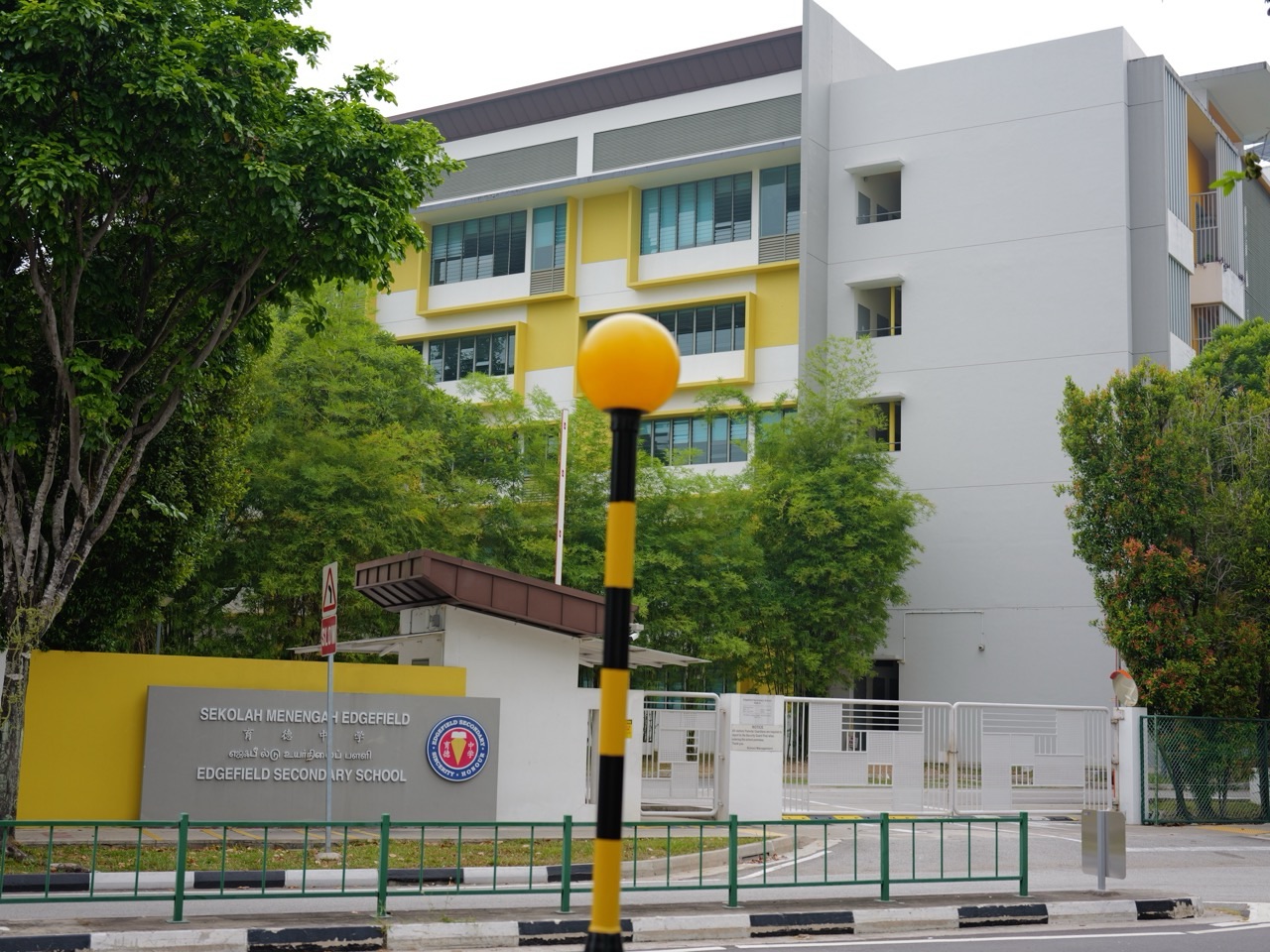
Punggol’s four mainstream secondary schools are Edgefield at Punggol Field, Greendale at Edgedale Plains, Punggol Secondary at Edgefield Plains, and Yusof Ishak at Sumang Walk. Their completed 2026 Secondary 1 intake PG3 last-posted scores were respectively 14, 16, 19 and 15; PG2 cut-offs were 23, 23, 24 and 22. These are historical score references, not evidence of the schools’ relative learning-support quality or an admission guarantee. A PSLE Score 21 or 22 pupil who can choose PG2 or PG3 should weigh school availability and subject readiness alongside the support question; check each school’s current information and the child’s official eligibility through MOE SchoolFinder.
- First: read the personalised PSLE result and confirm PG2/PG3 eligibility; never infer SEN from a score.
- Second: describe the child’s actual classroom needs and effective existing supports, not a generic label.
- Third: ask the school about SEN Officers, teachers, case coordination, intervention processes and communication where applicable.
- Fourth: inspect school-specific accessibility, transport, sensory and CCA arrangements; do not assume all campuses provide identical resources.
- Fifth: discuss G2/G3 individual subject levels on real academic evidence; an accommodation is not an automatic change in curriculum level.
- Sixth: explore designated mainstream schools where specialised visual or hearing support is essential; Punggol proximity cannot substitute for that provision.
- Seventh: follow official assessment and professional educational-placement guidance for children needing more intensive support.
- Finally: plan towards later SEC and JC/poly/PFP/ITE/university options through the qualifications the child can realistically achieve.

The starting principle: a learning need and a posting group are not the same variable
PSLE measures a set of examinations at a particular point in time. The overall score helps determine school posting eligibility and the indicative initial academic level. A special educational need, a temporary period of distress, a physical accessibility requirement or an individual learning difficulty is different information. A pupil can be academically strong and still require specific support. Another pupil may have a low-confidence period without having a clinical condition. Parents should avoid turning either PSLE marks or a casual impression into a diagnosis.
Under Full Subject-Based Banding, G1, G2 and G3 describe individual curriculum levels. A child admitted through PG2 may be eligible for a G3 subject where subject-specific criteria are met; another may take a different profile. The school should explain academic eligibility and the support provided in the actual lessons. It is misleading to claim that a pupil with any learning support need must be placed in G2, or that every child in PG3 necessarily learns without assistance.
The relevant objective is appropriate challenge with sustainable support. Too little challenge can limit growth; too much unsupported difficulty can lead to repeated failures and exhaustion. A family should compare the pupil’s comprehension, independence and recovery after mistakes against the school environment and the demands of the intended subjects.
What MOE says schools can provide
MOE’s Education Statistics Digest describes mainstream schooling for students who can access the national curriculum and mainstream learning environment with appropriate support. It identifies teachers and specialised personnel such as SEN Officers, targeted interventions, assistive technology and itinerant educational support services as part of the support ecosystem. This is system-wide policy information, not a confirmation that a particular school provides every device, specialist or programme on demand. Parents should enquire about the actual needs and available arrangements at each prospective campus.
For children requiring a specialised educational setting and more intensive support, MOE describes SPED schools and educational-placement processes. Families should follow qualified assessment and official guidance; this article does not decide whether an individual child should attend a mainstream or SPED school. A particular pupil’s placement must be based on real educational needs and proper professional consultation.
The national disability-support resource Enabling Guide also recommends speaking with schools about existing strategies, accessible facilities, examination access arrangements and the intervention plan. That is more useful than asking strangers on social media to judge a child’s support needs from an abbreviated description.
Create a one-page support profile before contacting schools
- Record the child’s genuine strengths: interests, successful classroom activities, subject understanding and friendships.
- Describe the most important learning obstacle in observable terms, such as difficulty following multi-step written instructions or managing long transitions.
- Note the support strategies that already work in primary school, without assuming another school must use precisely the same format.
- Record any verified professional report or school accommodation recommendation that is relevant to educational planning.
- Identify the parts of the school day that are difficult: morning arrival, stairs, noisy assemblies, timetable changes, CCA travel or homework organisation.
- Ask the child what support feels respectful and helpful; avoid discussing private details in public open-house spaces.
- List the questions that the school can answer, and distinguish them from medical questions requiring a qualified professional.
- Use secure school channels for sensitive records; do not place assessment reports in an open online admissions discussion.
The profile should not read like a catalogue of failures. It should explain what the pupil can do and what helps. For example, ‘This child can solve Mathematics questions accurately but needs written checklists for multi-step tasks’ is clearer than ‘bad at organisation’. ‘The pupil can participate in group work when instructions are provided in advance’ is more actionable than ‘cannot cope with teams’.
Ask about the form teacher, SEN Officer and the communication pathway
Parents should learn who receives transition information, who coordinates support and how concerns reach the right staff member. Some pupils need a general teacher conversation; others need SEN Officer involvement or a coordinated intervention plan. Do not assume a form teacher is the only person who can help, and do not assume a SEN Officer personally teaches every lesson. The precise role and availability should be explained by the receiving school.
A valuable question is, ‘What should we do if this strategy is not working after four weeks?’ A strong answer describes how the parent can share evidence, how the child can seek help and when the school will review the situation. It need not promise a perfect solution. It should create an intelligible path for identifying and responding to problems.
Learning support and subject-level decisions: keep them separate
| Decision | Correct evidence | Mistake to avoid |
|---|---|---|
| PG2 versus PG3 at PSLE 21–22 | Official overall score, eligible groups, realistic schools, readiness | Using a support need as an automatic reason to reject G3 |
| G3 English or Mathematics offer | Relevant Standard PSLE ALs and actual school rules | Treating an educational accommodation as an admission entitlement |
| Classroom assistance | Observed needs, school and qualified professional guidance | Assuming every pupil needs the same intervention |
| Examination access arrangement | Documented criteria and authorised assessment | Promising extra time or a device without approval |
| Future SEC pathway | Actual subjects and levels examined, later grades and institutional rules | Assuming a child’s support profile fixes their career future |
A child might require assistive technology but perform strongly in Mathematics. Another might need small-group reading support but have an excellent understanding of Science. In both cases, the right approach is to protect academic strengths while addressing genuine barriers. Full SBB is designed to make subject-level learning more responsive, but it does not erase curriculum standards or create unconditional upgrades.
Punggol school questions to ask without guessing provision
| School and area | Completed 2026 PG3/PG2 cut-offs | Questions for a private school conversation |
|---|---|---|
| Edgefield Secondary, Punggol Field | 14 / 23 | What steps help pupils who need structured instructions, accessible travel or subject-specific support? |
| Greendale Secondary, Edgedale Plains | 16 / 23 | How does the school support pupils participating in design/outdoor activities who need adaptations or different routines? |
| Punggol Secondary, Edgefield Plains | 19 / 24 | How are learner needs communicated across subject teachers and CCA staff? |
| Yusof Ishak Secondary, Sumang Walk | 15 / 22 | What support is available around timetables, STEM activities and individual subject-level demands? |
These are questions only. They are not claims that a named school has a particular therapy, quiet room, intervention programme, staff ratio or barrier-free feature. Parents should contact the actual school and discuss the child’s needs privately. Where a required facility cannot be confirmed, mark it as ‘unverified’, not ‘available’. A school with a suitable past cut-off might still be ruled out because an essential physical or educational need cannot be met appropriately.
A child with sensory needs may experience a large, loud open house very differently from an ordinary school day. If possible, request a practical conversation with the school’s relevant staff, inspect the journey at a normal time and ask about crowded corridors, assemblies or timetable changes. Do not judge suitability from a single event.
Why the route from the Punggol home matters even more for some pupils
Mobility, fatigue, sensory processing and health-related travel needs may change whether a route is sustainable. A school near Punggol MRT is not automatically close to a child living at Northshore or Sumang; a campus that seems walkable on a map may include a difficult crossing or uneven outdoor segment. Some students may need step-free access, safer waiting arrangements or adult assistance during transition.
The family should check the home-to-stop walk, transport access, number of transfers, lifts, the correct student gate and emergency alternatives. After a CCA, the return journey may differ. School location can affect learning through fatigue and attendance, but it should not override essential specialised support simply because a closer school is historically easier to enter.
When specialised hearing or visual support is necessary
MOE publishes a list of designated mainstream secondary schools with specialised support for pupils with moderate to profound hearing loss or visual impairment. Its guidance identifies Beatty Secondary for a signing approach to hearing loss; Outram Secondary and St Anthony’s Canossian Secondary for oral approaches; and Ahmad Ibrahim, Bedok South and Dunearn Secondary among schools designated for visual impairment support. The relevant current list and individual suitability must be checked with MOE; families should not assume that any of the four Punggol schools is a designated specialist campus simply because it is near home.
This does not mean other mainstream schools provide no support to pupils with disabilities. The important distinction is between general school-level SEN provision and specialised designated resources for particular needs. Parents should consult the child’s existing professionals and MOE to establish which support setting is actually appropriate and how admissions should be managed. A regular PG3/PG2 cut-off chart cannot answer that alone.
Families considering a school outside Punggol may need to compare a longer commute against essential support. That is a fundamentally different decision from travelling farther merely to pursue a historically more selective posting group. The child’s education and safety remain the priority.
Well-being and school fit: questions that do not require a diagnosis
Even pupils without an identified SEN may find the transition stressful. The timetable is larger, subject teachers change more often, homework demands become less familiar and the social environment may feel different. Parents should ask how the school helps pupils settle in, how they can contact teachers, how bullying or peer conflict concerns are handled, and what counselling or pastoral routes are available.
A child who is tired after a long route may appear disengaged in class. Another may struggle because they do not understand homework instructions. The response should not automatically be ‘choose the lower group’. First identify the mechanism. Is this a travel problem, a comprehension problem, a confidence problem, a new-school adjustment or a difficulty requiring specialised support? The answer changes what action is appropriate.
A parent should take persistent distress seriously while avoiding self-diagnosis. Speak to school staff, and seek appropriate professional help where needed. Educational support decisions should be grounded in observed needs and professional guidance rather than a public article claiming universal solutions.
Pupil voice and dignity
A learner should have meaningful participation in the decision. Some children will prioritise having a friend in the same school. Others may value a quiet activity, accessible journey or teachers who explain tasks carefully. Parents can discuss these needs without handing the entire choice to a twelve-year-old. The child contributes knowledge about how school feels; the adults and school provide knowledge about actual educational arrangements.
Avoid discussing the child’s challenges in front of classmates or relatives as a justification for a lower PSLE result. Likewise, avoid calling one posting group ‘the smart group’ and another ‘the problem group’. These descriptions are both inaccurate and harmful. A pupil needs to believe that progress is possible and that help can be requested without shame.
What to do after receiving a school offer
- Confirm the school, campus and actual subject-level offers from official notices.
- Arrange a private handover conversation for any verified learning or accessibility needs.
- Share only relevant records through the receiving school’s secure authorised process.
- Check the correct entrance, school-day commute and independent-travel skills.
- Confirm accessible classroom arrangements, transport, assistive technology or other supports with the school.
- Help the pupil rehearse asking for help, writing homework instructions and handling timetable changes.
- Follow up with the school if a practical arrangement fails, rather than assuming the child is unmotivated.
- Review the learning experience using observed work, attendance and well-being—never just one test mark.
The path from support now to SEC later
Under Full SBB, an eligible pupil may take subjects at different G levels and adjust at suitable points. The SEC from 2027 records subjects at the levels examined. For the published 2028 post-secondary system, JC/MI, direct polytechnic, PFP and ITE each have specific subject and grade requirements. A pupil beginning Secondary 1 in 2027 will ordinarily reach that stage later, so future admission rules must be rechecked.
Students with learning or disability-related support needs can progress through diverse educational pathways when they obtain the relevant qualifications and meet course requirements. Polytechnics, ITE and universities also publish their own SEN support offices and arrangements. Enabling Guide describes educational access support and assistive-technology funding at some post-secondary levels under eligibility conditions. Families can enquire early, but there is no blanket guarantee of admission or of a particular accommodation.
A family should therefore preserve the child’s academic interests and build the skills needed for independent study, communication and eventual work. The goal is not merely to maximise the number of G3 subjects; it is to create a sustainable education from Secondary 1 onward.
Frequently asked questions
Does a SEN diagnosis mean my child must choose PG2 instead of PG3?
No. Posting eligibility, subject readiness and educational support needs are separate considerations. The relevant school and qualified professionals should assess appropriate support and actual curriculum arrangements.
Are all Punggol secondary schools guaranteed to have the same SEN staff and facilities?
No. MOE describes a national support ecosystem, but personnel, programmes and specialised infrastructure can differ. Verify the requirements of the individual child with each school.
Can a pupil with a disability attend university later?
Potentially, yes. Admission depends on recognised qualifications and institutional criteria, while accessibility and support arrangements should be discussed with the receiving institution. A PSLE posting group does not itself decide university entry.
How should parents ask about examination access arrangements?
Privately provide relevant documentation to the school and ask which official criteria and procedures apply. Do not assume that a diagnosis automatically secures any particular access arrangement.
What if the school that seems most suitable is outside Punggol?
Compare its actual eligibility, essential support provision and realistic commute. For a child with specialised needs, the right facilities may be more important than neighbourhood proximity. Seek official placement and school guidance.
Official references and further parent reading
- MOE SchoolFinder — verify school attributes and posting-group histories
- MOE Education Statistics Digest 2025 — mainstream and SPED support overview
- MOE Parents’ Guide for Children with Special Educational Needs
- Enabling Guide — school support and educational placement considerations
- MOE Full Subject-Based Banding
- MOE 2026 announcements — inclusion and post-secondary system
- Related: Punggol school visit and open-house checklist
- Related: getting support after Secondary 1 posting
Checked 14 November 2026. This article is general independent educational guidance. No specific pupil’s medical, developmental or educational needs can be assessed here, and no named Punggol school is claimed to offer a particular specialist service without direct confirmation. Admission figures are historical completed-2026 intake cut-offs, not predictions for 2027.
Continue with the connected guide: PSLE Scores 4–32 in Punggol | 2027 Secondary School Choice Hub. Use its linked index to compare the related questions and choose your next reading.


