
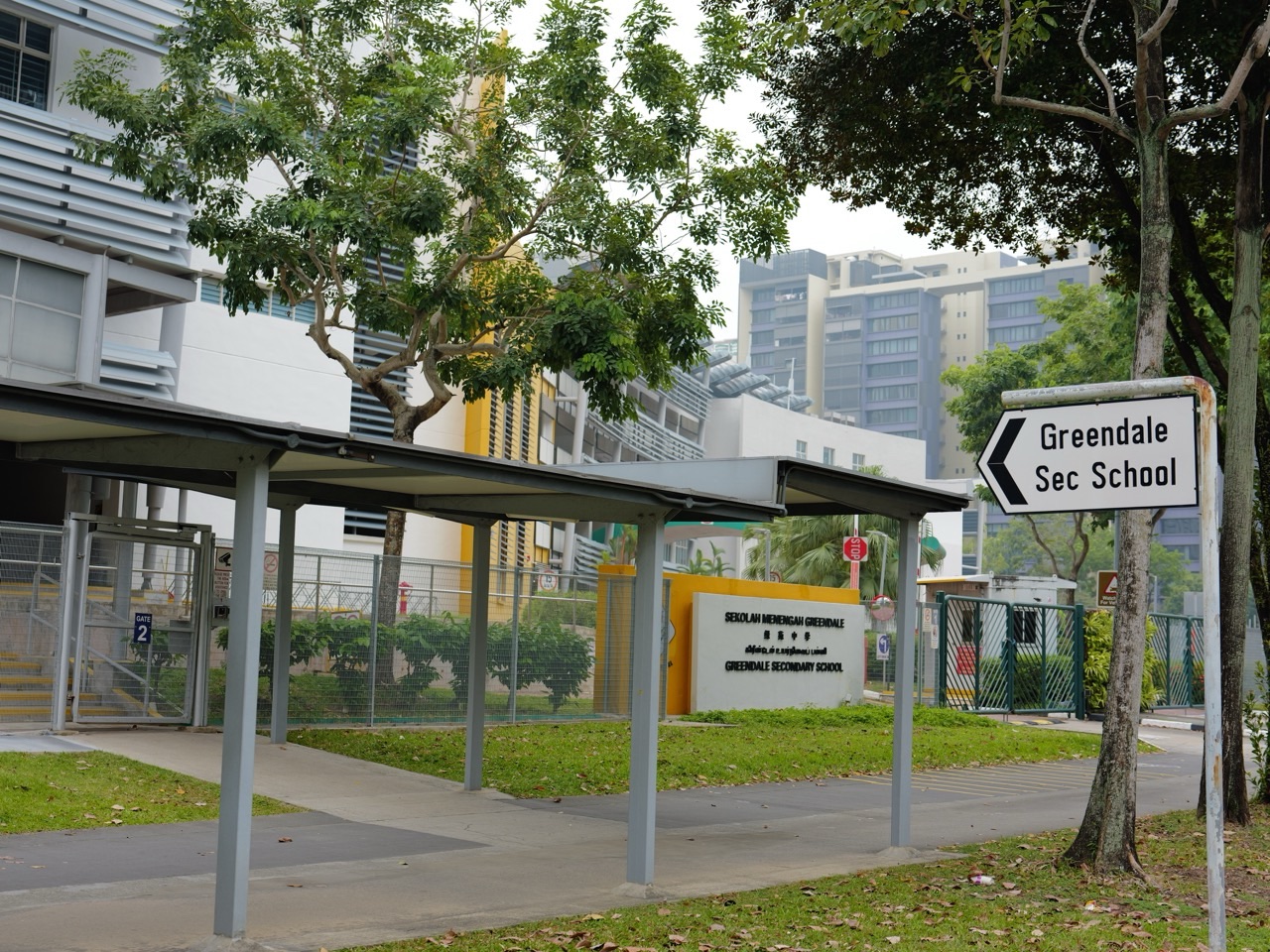
A Punggol family deciding between G3 and G2 secondary-school options should compare education fit, the correct PSLE posting score and the full cost of four years of school life. Tuition fees are not the entire family budget. Public-transport journeys, school meals, uniforms, textbooks, personal learning-device arrangements, CCA equipment, extra trips, siblings’ schedules and a parent’s working hours may all affect whether a school is sustainable. Families with financial needs should investigate the Ministry of Education’s Financial Assistance Scheme (MOE FAS) and school-based help instead of silently rejecting suitable schools because they fear a bill.
For the completed 2026 Secondary 1 intake, the four mainstream Punggol schools’ PG3/PG2 last-posted scores were Edgefield 14/23, Greendale 16/23, Punggol Secondary 19/24 and Yusof Ishak 15/22. A Score 21 or 22 pupil may usually choose PG2 or PG3, but the chosen group applies across the official six-school list; no budget saving can override admission eligibility. Under the MOE FAS rules effective January 2026, eligible Singapore Citizen pupils in government or government-aided schools can qualify if monthly gross household income is no more than S$4,000 or monthly per-capita income no more than S$1,000. Check the actual application and benefits using MOE’s Student Finance System.
- Admission first: use the proper PG3 or PG2 cut-off column; 2026 school cut-offs do not guarantee 2027 places.
- True costs: include actual travel, meals, books, attire, approved devices, optional CCA items and the parent’s practical support needs.
- MOE FAS from January 2026: either monthly gross household income at or below S$4,000, or monthly per-capita income at or below S$1,000, subject to eligibility.
- Secondary FAS benefits: full subsidy of school and miscellaneous fees, free textbooks and attire, meal support for ten school-week meals, and specified public-transport support.
- Public transport subsidy: S$21 per month, capped at S$252 annually under the published secondary-level FAS benefits.
- Multiple children: apply via the authorised finance service; each child’s eligibility and school-based processing can differ.
- Do not invent travel costs: calculate from the actual Punggol home, school gate, fare type and current transport arrangement.
- Later pathways: JC, polytechnic, PFP, ITE and university have separate qualification and financial-aid arrangements; the PSLE group is not a future tuition-fee category.

1. Cost is part of family fit, but not a replacement for eligibility
A school can appear attractive because it offers the child’s favourite CCA, has a shorter journey or has a strong reputation. None of these makes a pupil eligible for a posting group they were not offered. Scores 4–20 generally use PG3; Scores 21–22 may choose PG2 or PG3; Scores 23–24 normally use PG2. Always consult the child’s personalised official result and the current MOE instructions.
For a family at Score 21 or 22, a PG2 list may include more historical Punggol-campus possibilities in the completed 2026 numbers, while a PG3 list may require looking farther away. That can have practical consequences for travel and daily spending, but the family must also weigh subject readiness and school suitability. A parent should not automatically select a less demanding academic group for financial reasons if another eligible and supportable route is better; nor should they impose a costly long commute solely to display a higher group label.
The correct question is: Which eligible school gives the child realistic access to teaching, activities and support that the family can sustain? Financial assistance may change what is affordable, so parents should investigate it before making assumptions.
2. What the 2026 MOE FAS scheme actually covers
| Feature for qualifying secondary pupil | Published benefit effective January 2026 | What a family still needs to check |
|---|---|---|
| Income eligibility | Gross household income ≤ S$4,000/month, or per-capita income ≤ S$1,000/month | Citizenship, school type, actual means test and current-year rules. |
| School and miscellaneous fees | 100% subsidy | Whether the student qualifies and when approval takes effect. |
| Textbooks and school attire | Free | School’s actual distribution and any approved entitlement details. |
| School meal support | Subsidies for ten meals per school week | How the scheme is administered and when it begins. |
| Public transport | S$21/month up to S$252 per annum | Eligibility, effective month and whether the pupil uses public transport. |
| Additional help | Possible school-based assistance | School assessment of needs; no universal automatic outcome. |
The table is based on MOE’s published FAS benefits and criteria effective January 2026. It is not a claim that every Punggol family or every student receives every benefit. Eligibility includes the specified Singapore Citizen and school requirements, and the effective month matters. The family’s actual award notice determines the assistance received.
Parents should avoid turning the public-transport subsidy into an invented current full fare. A subsidy of S$21 a month is a support amount, not evidence that the pupil’s journey costs exactly S$21. If actual journeys cost more or less, the family’s net spending differs. Check the pupil’s relevant transport concessions and current fares separately.
3. The two income tests: understand the word ‘or’
MOE FAS uses a monthly gross household income threshold and an alternative per-capita income test. The per-capita amount depends on gross household income divided by the number of household members under the applicable rules. The important word is or: a qualifying household may meet either income criterion, subject to the full programme eligibility and the official means test.
| Illustrative household | Gross monthly income | Household members | Illustrative PCI | What to investigate |
|---|---|---|---|---|
| Family A | S$3,800 | 4 | S$950 | Income is below both illustrative thresholds. |
| Family B | S$4,500 | 5 | S$900 | GHI exceeds S$4,000, but the illustrative PCI meets S$1,000. |
| Family C | S$5,400 | 4 | S$1,350 | Neither published national threshold is met; ask about possible school-based help. |
| Family D | S$0 reported currently | 4 | Do not calculate from today’s income alone | Official means-testing may use prior income and other administrative information. |
These examples are teaching calculations, not official eligibility approvals. MOE’s rules define household composition, gross income, averaging and required documentation. The Student Finance System retrieves relevant means-test information; if details are missing or there is other administrative income, the school may need to review documents. A family should not deliberately omit income or assume that a recent drop in salary automatically determines the assessed amount.
If a household is above the national FAS threshold but still struggling with specific costs, approach the school about school-based assistance. It may assess needs case by case. There is no published blanket promise that every applicant above the threshold will receive a particular subsidy.
4. How to apply without creating a new administrative problem
MOE’s current Student Finance System application guide instructs a parent or legal guardian to log in, select the relevant child or children, confirm household and means-test data, supply required information or documentation, and submit the application. The system distinguishes applications that qualify automatically from ones needing a school-based review. Follow the actual portal status and directions rather than relying on a copied social-media form.
For families with multiple children in different government or government-aided schools, MOE’s FAS material explains that one completed application can be used through an appropriate school route, while the newer online system may process individual children’s eligibility and school review differently. The practical advice is to check that each child appears in the intended application and that each outcome is recorded. Do not assume that one pupil’s approval automatically covers siblings.
Parents should prepare proof of household composition or income if required, keep the acknowledgement and check any requests for clarification. Sensitive personal and financial documents belong in the authorised secure system or with the school, not in a parent chat group or public comment section.
5. The school budget has fixed, variable and optional components
| Budget category | Examples of possible family cost | Parent action |
|---|---|---|
| Essential school items | Uniform, approved books, stationery, required materials | Use the actual receiving-school list and check FAS coverage. |
| Daily meals | School canteen food and drinks | Record the child’s needs and approved meal support. |
| Transport | MRT, LRT, bus and any exceptional alternative travel | Measure fare type and actual trips; apply confirmed concessions. |
| Devices and connectivity | School-specified personal learning device, charging, broadband | Check school instructions, subsidies and relevant support. |
| CCA participation | Specific kit, instrument or competition transport | Ask whether the item is required, loanable or subsidised. |
| Optional spending | Enrichment, private tuition, extra purchases | Separate genuine learning needs from marketing pressure. |
| Family time | Parent drop-off, waiting, arranging sibling activities | Plan for the normal school week and late CCAs. |
A budget is only useful if it distinguishes a school-mandated item from something a parent assumes is mandatory. Do not buy a full set of G3 textbooks for a pupil who has not received a confirmed G3 subject offer. Do not purchase an instrument, uniformed-group kit or sporting equipment until the actual CCA membership and requirements are known.
A well-meaning family can spend unnecessarily during a stressed transition. The receiving school can tell you which materials must be bought, which may be subsidised, whether second-hand items are acceptable and how assistance works. Asking these questions is not a sign of low ambition; it is good household management.
6. Build a twelve-month budget using real, not invented, costs
Start with a spreadsheet or notebook containing monthly transport, canteen spending, required school charges after any approved support and a reasonable reserve for occasional school events. Separate annual or termly costs from recurring monthly spending. Do not turn an illustrative budget into an advertisement for the local school’s actual fees.
For example, a fictional pupil spends S$28 monthly on net transport, S$65 on meals or snacks outside subsidised provision, and S$12 as a monthly reserve for school items. This totals S$105 per month for those three categories. This is a purely illustrative arithmetic exercise; actual Punggol students may spend very different amounts, and a qualifying family’s awarded subsidies will change the result. Use actual current receipts, concession fares and school instructions when preparing your own plan.
If a parent expects irregular expenses such as a CCA event, divide a forecast annual amount by twelve to set a planning reserve, but do not claim that the school has charged the estimated amount. A family should also keep a simple emergency transport plan for severe weather or a late appointment. The costs may be financial, practical or both.
7. Punggol is not one commuting origin
Yusof Ishak is at 8 Sumang Walk; Edgefield at 36 Punggol Field; Greendale at 51 Edgedale Plains; Punggol Secondary at 51 Edgefield Plains. A family in Matilda, Waterway Point, Northshore, Oasis or Riviera may have a distinct route to each. The correct estimate starts at the actual residential block and ends at the student entrance.
Travel time and cost are related but not identical. A short train ride requiring two longer walks might be tiring despite a low fare. A bus route might require fewer transfers and offer greater practicality for a pupil carrying CCA equipment. A school may be convenient in the morning but difficult to return from after late practice. Check both journeys.
For a PG3 Score 21 or 22 pupil who considers a school beyond Punggol because the old local PG3 cut-offs were 14–19, the transport analysis becomes more important. A potentially longer journey should be justified by actual academic and personal fit, not status anxiety.
8. The sibling problem is a timetable problem
A household with one child in Primary 4 and another entering Secondary 1 may have two different reporting times, CCAs and school calendar events. The parent could be supporting a child in Punggol and another in Sengkang or Hougang. A simple schedule showing departure, pickup assumptions, after-school care and late-return alternatives can expose practical stress before the school choice is finalised.
Secondary pupils should gradually learn independent travel where appropriate, including transport-card readiness, a safe route and a procedure for disruption. However, not all children can independently handle every route immediately. Age, maturity and any accessibility needs matter. A school that forces an unsustainable adult pickup routine may create indirect household costs even when tuition fees are modest.
The decision should not be framed as the academically strong child versus the sibling with greater needs. Both children deserve a workable family schedule. Where compromises are necessary, discuss them without blaming either child for the parent’s travel obligations.
9. CCAs: costs and benefits need honest separation
CCAs can support friendship, responsibility, perseverance and discovery of talent. Some may involve equipment, instruments, sportswear, competition travel or additional activities. Others may have different demands. Parents should ask the school exactly what is supplied, what can be borrowed, what is essential and whether financial support exists. Do not assume a famous CCA is automatically more expensive, or that the child must buy all equipment before trials.
A pupil may join Robotics, environmental activities, drama, band, sports or a Uniformed Group at a Punggol secondary school, depending on actual offerings and places. A great CCA can be worth a manageable extra commitment, but excessive expenditure and fatigue undermine its value. Choose according to genuine interest and a sustainable weekly routine, not an attempt to manufacture a university admission portfolio.
10. Devices, internet and the actual booklist
Parents may worry about the cost of a personal learning device and home broadband. The school should explain required devices, the applicable subsidies, any available assistance and what can be reused. The government’s DigitalAccess@Home programme may provide subsidised digital connectivity or devices for eligible households under its separate rules. This is an additional enquiry path, not an automatic entitlement attached to every FAS application.
The receiving school’s actual 2027 booklist matters. Under Full SBB, subjects may be offered at different G levels; the wrong textbook can waste money and confuse the pupil. Wait for the actual subject offer and list. Read edition and curriculum-level details before buying second-hand books.
11. What financial support means for future JC, polytechnic and ITE
The FAS benefits described above address qualifying government or government-aided school pupils; they should not be assumed to apply identically to all later tertiary institutions. Junior colleges and centralised institutes have the relevant pre-university FAS arrangements. Polytechnics and ITE publish their own bursaries, fees, grants and course-related support. A household should apply through the scheme appropriate to the pupil’s real institution and year.
Singapore Citizens also have Edusave and, later, Post-Secondary Education Accounts (PSEA) under applicable rules. The MOE Student Finance System provides current account and finance information. The Higher Education Student Loan Scheme is a separate financing option for eligible approved tertiary study; a loan has repayment obligations and should not be confused with a grant or bursary. Parents should explore non-repayable financial assistance and institution-specific support before assuming borrowing is necessary.
A pupil who begins at PG2 or PG3 may eventually qualify for JC, MI, direct polytechnic, PFP or ITE depending on actual SEC subject levels and grades. Later university study is a separate credential and admissions decision. The future cost of a particular degree cannot be settled accurately from a Primary 6 score or a speculative course preference.
12. Keep the educational direction while controlling the spending
Some families overspend on tuition after a disappointing PSLE result. Others avoid all additional learning support because they fear the costs. Neither response is automatically appropriate. Begin with the child’s actual classwork and teacher feedback. A pupil may need more disciplined independent reading; another may need a small amount of focused tutoring to repair algebra misconceptions. A targeted solution can be more economical and more effective than several broad courses.
Teach the underlying idea before multiplying worksheets. In Maths, a student who understands equality can reason through equations rather than memorise moves. In English, a student who learns to justify inference with textual evidence can transfer that skill to many passages. Improving these foundational capabilities helps the family spend time and money where it is likely to matter.
A healthy school choice uses time, attention, ability and money responsibly. A realistic PG2 route with appropriate G3 subject opportunities can be educationally powerful. A manageable PG3 route can also suit a pupil ready for greater challenge. Neither should be chosen purely to impress other parents.
13. A four-school budget-and-fit worksheet
| School | 2026 PG3 / PG2 COP | Budget and routine question |
|---|---|---|
| Edgefield Secondary, Punggol Field | 14 / 23 | What is the actual fare and journey for our child, and what school items are confirmed? |
| Greendale Secondary, Edgedale Plains | 16 / 23 | Can we support the pupil’s interest in design/outdoor CCA without overcommitting time or cost? |
| Punggol Secondary, Edgefield Plains | 19 / 24 | Does the school and current subject offer fit our child’s needs and daily schedule? |
| Yusof Ishak Secondary, Sumang Walk | 15 / 22 | How feasible is the Sumang-side commute after the chosen CCA, and what support is available? |
These questions are prompts, not assertions about each school’s price or facilities. The cut-offs refer to the completed 2026 admission exercise; the next year’s admission outcome is unknown. Compare all schools against the same criteria and keep a documented list of facts that still need confirmation.
14. An application and decision checklist
- Read the official PSLE result and choose only among the allowed posting groups.
- Build six schools from the correct historical cut-off column, with varied admission margins.
- Confirm actual campus addresses, programmes and subject offerings in MOE SchoolFinder.
- Check with the school which booklist, devices, school attire and CCA items are mandatory.
- Create a 12-month household plan that separates transport, meals, school requirements and optional spending.
- Apply for MOE FAS if eligible and ask about school-based assistance when appropriate.
- Check all children in the Student Finance System application and the outcomes individually.
- Discuss whether the child can safely manage the morning and late-CCA journey.
- Do not assume a subsidy from a poster is approved until the official award is confirmed.
- Review later JC/polytechnic/PFP/ITE and university finance rules when the relevant future pathway is real.
Frequently asked questions
Does choosing PG3 make government secondary school more expensive than PG2?
The original posting-group label does not itself establish a separate universal school-fee category. Costs depend on the actual school, eligibility, programmes, transport and family circumstances. Ask the receiving school for current mandatory charges.
Can a family above S$4,000 income still qualify for MOE FAS?
Potentially. Under the published 2026 rules, the household may meet the alternative per-capita income test of S$1,000 or less, subject to full eligibility and official means-testing.
Is the S$21 transport subsidy the full cost of travelling from Punggol?
No. It is the published monthly public-transport assistance amount for qualifying secondary pupils, up to the annual cap. Actual travel costs depend on routes, fares and the student’s arrangements.
Can children in different schools be covered by one online FAS application?
The official system supports parent applications involving multiple children, but children’s outcomes and any school-based assessment can be processed separately. Confirm the status for each child.
Does financial assistance guarantee JC or university support years later?
No. Different later institutions and levels have distinct bursaries, grants, eligibility criteria and, where relevant, repayable loans. Recheck when the pupil actually applies.
Official sources and related guides
- MOE FAS: January 2026 income criteria and benefits
- MOE Student Finance System — financial assistance application
- Official step-by-step Student Finance System FAS application guide
- IMDA DigitalAccess@Home — eligible digital access support
- Official StudentLoanSG tertiary loan FAQs
- MOE SchoolFinder — current school eligibility, programmes and locations
- MOE 2026 post-secondary admissions policy context
- Related: actual Punggol school-day transport and route checks
- Related: future JC, polytechnic, PFP, ITE and university pathways
Verified policy reference: 14 November 2026. MOE FAS numbers cited are explicitly those effective January 2026. All budgets and household examples are illustrative, not actual school charges or eligibility determinations. School posting cut-offs refer to the completed 2026 intake; verify the next exercise, current support rules and individual approvals through authorised channels.


