
G2 Social Studies Issue 3, Being Part of a Globalised World, is an examinable theme in Singapore’s 2027 Singapore-Cambridge Secondary Education Certificate (SEC) combined Humanities K229 Social Studies/Geography, K230 Social Studies/History and K231 Social Studies/Literature. Its core question is how people and countries can respond to globalisation. Students learn how transport developments, digital technology and multinational corporations connect economies; why these connections can bring both growth and vulnerability; how employment opportunities and challenges change; and how government support and individuals’ acquisition of knowledge and skills can address consequences. The Issue may be examined through the compulsory 35-mark source-based case study or 15 marks of structured-response questions in the Social Studies paper.
For Punggol families, a teenager should distinguish an economic opportunity from a guaranteed benefit. Faster communication can help a small business reach overseas customers while exposing it to competition and disruptions; a new technology can create certain jobs while changing demand for other skills. Exam answers should explain these causal relationships and weigh perspectives, not repeat that globalisation is either entirely good or entirely bad. The 2027 Social Studies sitting lasts 1 hour 45 minutes, combines printed sources with typed answers in a digital booklet, and contributes 50% of combined Humanities. Confirm the child’s actual K229, K230 or K231 registration and use fresh sources, grounded examples and structured practice rather than trying to forecast a particular 2027 current-affairs event.
- 2027 G2 Social Studies is assessed within combined Humanities K229, K230 and K231.
- Issue 3 inquiry question: How can we respond to globalisation?
- Driving forces include transportation developments, digital technology and the growth of multinational corporations.
- Globalisation involves increasing connections and interdependence among countries and people.
- Economic consequences can include growth and vulnerability for countries.
- Individuals may encounter both new employment opportunities and challenges.
- Responses include government support and individuals acquiring relevant knowledge and skills.
- The Social Studies paper: 1 hour 45 minutes, 50 marks and half the combined Humanities grade.
- Section A: 35-mark source-based case study with five questions; final multi-source question is worth ten marks.
- Section B: two compulsory structured responses, Question 6 for seven marks and Question 7 for eight.
- Source-based and structured-response questions cannot be set on the same Issue in one sitting.
- Students use a hardcopy question booklet and a digital answer booklet for typed responses.
- Factual examples should be checked and trade-offs supported with actual evidence, not invented data.
Definition lock: globalisation is a process, not a slogan
Globalisation describes ways in which economic and other activities connect people and countries across boundaries. The 2027 G2 Issue focuses particularly on economic impacts, the factors driving these connections and different responses. It is not merely a vocabulary item asking the student to define the world as small. A useful answer explains which relationship changed, why it changed and what consequences followed.
G2 identifies the level of a Social Studies-containing combined Humanities subject under Full Subject-Based Banding, not the teenager’s Secondary 1 Posting Group. Families should verify the actual syllabus code. A student may understand digital technology very well but have little experience interpreting economic sources; targeted teaching should address that gap rather than assume the entire Issue is difficult.
What the official 2027 Issue asks students to understand
SEAB’s inquiry asks how countries and individuals should respond to globalisation. It identifies three connected understandings: growing interconnectedness and interdependence, impacts on economies, and differing responses. The syllabus specifies transport, digital technology and multinational corporations as drivers, plus growth, vulnerability, employment opportunities, challenges and responses through government support and skill acquisition.
That scope matters. An article about every political or cultural aspect of globalisation may be interesting but can distract from the precise G2 assessment. Students should first understand the published economic relationships, then practise applying them to unfamiliar source-based scenarios. Good study material separates core syllabus content from broader enrichment.
Three drivers: transport, digital technology and MNCs
Technological changes and multinational corporations are not interchangeable forces. Transportation improvements can make moving goods and people more efficient. Digital tools can accelerate information exchange and coordination. Multinational corporations organise activities across locations and can create further connections through supply chains, employment and markets. These forces can reinforce one another without producing identical effects.
Ask the learner to choose a fictional product and trace how it could be designed in one location, made elsewhere and sold through a digital channel. Which process depends on transport, which on communication and which on business organisation? This illustrates the mechanisms without claiming a specific real company follows the hypothetical chain.
Interconnectedness means there are more links
Interconnectedness concerns relationships among people, businesses and countries. A shipment route, communication system or international business relationship creates a link that may affect activities on both sides. The concept does not automatically imply that all participants benefit equally. Some connections may be essential for trade, while others create competition or environmental demands.
Use a fictional neighbourhood shop importing one item from another country. Draw the relevant seller, transport and buyer links. Then ask what information is needed to establish how the connection affects price, availability or jobs. The map of links provides a starting explanation, not a final economic judgement.
Interdependence means the links matter to one another
Interdependence goes beyond having a connection: actors rely on each other for inputs, customers, technology, income or services. If one part of a supply chain changes, others may experience consequences. Students should distinguish having many connections from relying heavily on a particular one. The latter can create both opportunities and vulnerability.
Imagine a fictional food producer using packaging from another country and selling to several markets. What happens if the packaging supplier stops shipping? Could alternative arrangements reduce reliance? The question encourages clear causal reasoning without inventing current market statistics.
Transport developments can lower barriers
Changes in logistics, freight systems and routes can alter the cost, reliability and speed of moving products. When a business can reach a distant market more readily, new exchanges may become feasible. But transport remains dependent on infrastructure, energy, regulation and external conditions. It is inaccurate to claim that globalisation means transport is always instant or affordable.
Use two invented trade routes with clearly stated costs and delivery times. Ask which is more suitable for a time-sensitive product and which may suit a less urgent shipment. Explain how logistics changes business choices. This teaches the mechanism rather than listing transport inventions without connecting them to outcomes.
Digital technology reduces some information barriers
Digital communication can allow organisations to coordinate work and share information across large distances. Online platforms can help businesses contact customers, but they also introduce dependence on connectivity, cybersecurity and changing market conditions. Students should avoid assuming that a website automatically generates profit or that digital access is equally available to everyone.
Ask the teenager to compare a fictional small business selling only in one neighbourhood with one offering lawful online orders. What new customers might be reachable? Which costs or risks could also arise? The answer should link the digital channel to specific opportunities rather than declare technology a universal success.
Digital speed does not eliminate physical constraints
Information may cross borders quickly while physical goods still require manufacturing, storage, customs arrangements and delivery. A student who says globalisation removes distance entirely may be oversimplifying the difference between a digital message and a physical product. Business operations connect both, and limitations at one stage can affect the final outcome.
Use a hypothetical order placed online for a product located overseas. The confirmation might arrive immediately, but the product needs actual transportation. Ask what could delay delivery even if communication is flawless. This contrast clarifies the roles of transport and digital technology.
Multinational corporations operate across economies
A multinational corporation conducts business activities in more than one country, potentially organising production, services, marketing or employment across borders. Its decisions can influence suppliers and workers in different locations. Students should not infer from a brand’s international fame that all its production occurs in every market or that every subsidiary has identical conditions.
Choose a fictional corporation with offices and production activities in several countries. Which activities may create jobs locally, and which goods or skills might cross borders? Then identify information needed before evaluating the benefits. The explanation should focus on the organisation of activity, not a list of famous logos.
MNCs can create opportunities for suppliers
A large corporation may purchase services or components from smaller firms, creating possible contracts and business learning. These benefits depend on requirements, prices, quality and the supplier’s ability to participate. It would be misleading to claim that every local firm automatically wins a contract or becomes more productive because an MNC is present.
Use an invented supplier that could provide packaging to an international manufacturer. What standards, delivery reliability and capabilities might it need? Then consider a risk of depending on one dominant customer. This illustrates opportunity and vulnerability together.
MNCs can also increase competition
An international business may introduce new products, pricing or services that compete with existing local firms. Consumers might gain choices while some businesses face pressure. The actual result depends on market conditions and the participants involved. A balanced response should distinguish the effect on consumers, workers and firms rather than label all competition harmful or beneficial.
Consider a fictional retail district with a new international seller. Ask which groups might value lower prices and which might worry about lost custom. What information would be needed to judge actual outcomes? This trains multi-stakeholder reasoning instead of guessing from the company’s reputation.
Economic growth: explain what grows and why
Globalisation may increase market access, investment, production or business opportunities that contribute to economic activity. A student’s answer should explain the pathway rather than simply write ‘globalisation leads to growth’. More sales or investment in one sector does not necessarily imply every household benefits equally. Growth measurements require context and credible data.
Give a hypothetical manufacturing firm gaining access to an overseas customer. How might greater demand affect production and employment under stated conditions? Then ask which costs could limit the benefit. This turns an abstract growth claim into a causal explanation.
Growth can be uneven across groups
Benefits from trade and investment may differ by skills, location, industry and ownership. Some workers can gain new employment while others face changing demand. A source reporting increased national output does not establish that every resident’s income has risen. Social Studies encourages candidates to consider different experiences when evaluating policy responses.
Ask the teenager to compare a fictional skilled service worker and a small business owner under a stated market change. Which opportunities differ? What assumptions should not be made about either person? This develops nuance without presenting an invented national statistic as fact.
Economic vulnerability: reliance creates exposure
A country or business connected to overseas markets may be affected by disruptions it cannot fully control. Supply interruptions, changes in demand or higher costs can spread through interconnected systems. Vulnerability does not mean international trade is inherently undesirable; it highlights a risk that needs to be managed. The extent of exposure depends on the particular relationships.
Use a fictional business importing a crucial component from one source. If deliveries stop, which local operations are affected? Then consider how multiple suppliers or other adjustments might change the risk. The answer should explain the dependence rather than simply blame foreign trade.
Economic shocks can travel across borders
When countries are economically interconnected, disturbances in one location can influence demand, prices or availability elsewhere. A student should explain which transmission channel operates in the supplied scenario. A change in overseas demand differs from a shortage of raw materials, even if both affect local producers. One general sentence about globalisation spreading crises may be insufficient.
Ask what part of a fictional supply chain fails and who directly depends on it. Then trace one secondary effect. If the question does not provide enough information for a broader claim, state the limitation. Good source analysis follows evidence rather than invents dramatic consequences.
Diversifying suppliers can change one risk
Depending on several suppliers may reduce vulnerability to the failure of one, but it can involve coordination costs and may not protect against disruptions affecting all suppliers simultaneously. Students should avoid treating diversification as a magical solution to every economic problem. Its suitability depends on the product, available alternatives and the nature of the risk.
Compare an invented business with one supplier and another with three. What risk differs if one factory closes? What might still go wrong if an international transport route is disrupted? This gives a balanced account of resilience without requiring live business data.
Employment opportunities arise through new activity
International business connections can create jobs in manufacturing, logistics, services or other sectors when demand and investment grow. A strong answer explains how the particular activity produces the opportunity. It should not claim every worker benefits or assume a multinational company’s arrival guarantees permanent employment. The consequences depend on skills, contracts and wider business conditions.
Use a fictional new service centre requiring different roles. Which workers may benefit, and what training might be needed? Then ask what evidence would demonstrate actual employment changes. This links the global driver with an individual outcome rather than listing occupations randomly.
Employment challenges can arise from changing demand
Global competition and technological change can alter the demand for certain tasks and skills. Some roles may expand while others become less common or require new capabilities. Students should avoid describing all technology as job destruction or every change as an opportunity. Workers and industries differ, and transitions can create genuine costs.
Imagine a fictional company replacing one routine process with software while expanding customer-support work. Which tasks change, and how might affected employees respond? The example should remain hypothetical rather than an assertion about a named employer. This teaches causation and response.
The quality of employment matters as well as quantity
A new position may offer income and experience, but conditions such as training, stability and working arrangements also affect its value to individuals. An examination source might emphasise job numbers while another discusses job security. These sources can describe different dimensions of the same economic issue without necessarily contradicting each other.
Ask the learner to compare a fictional announcement of new jobs with a worker survey about training needs. What can each source establish? Why would the overall judgement require both? This develops source synthesis and balanced evaluation.
Skill acquisition is an individual response
The syllabus names acquisition of knowledge and skills as a response individuals can make to economic change. Learning relevant skills may expand opportunities or help someone adapt to new tasks, though it cannot guarantee a particular job in every market. An answer should identify what kind of capability is useful for the scenario and why.
Use a fictional employee facing a change in workplace software. Which new skill would address the stated task? How might practice, mentoring or an appropriate course help? Then consider time and affordability constraints. This is a more realistic explanation than a generic instruction to keep learning.
Adaptability is not only technical skill
Changes in economic activity can also increase the value of communication, judgement, teamwork and the ability to learn unfamiliar processes. Students should not assume that every response to globalisation means mastering the same coding language. The relevant capability depends on the role and its evolving requirements. Different people may follow different learning pathways.
Compare two fictional workers, one whose role requires new digital tools and another whose main challenge is communicating with international customers. What development would serve each? The student should match response to need rather than repeat one solution for everyone.

Lifelong learning has practical constraints
Continuous learning can help people adapt, but it requires access to time, resources and suitable instruction. A person with caregiving responsibilities or an uncertain income may face barriers that another person does not. A mature Social Studies response recognises why advising everyone to retrain may be incomplete without considering availability and support.
Ask the teenager to evaluate an invented evening-course proposal. Who could attend, and who might be excluded? What modification would improve accessibility under the fictional conditions? This links personal response with socio-economic realities without speculating about a real individual’s finances.
Government support can address transition costs
The syllabus names government support as a response to the economic impacts of globalisation. Public action can assist individuals or businesses facing change, but designs vary and funding creates trade-offs. A student should explain the specific problem being addressed, such as skill access or employment transition, rather than assume all government expenditure has identical effects.
Use a fictional training-support proposal and ask what outcome is intended, who would qualify and how effectiveness could be measured. Then identify a cost or implementation difficulty. This creates a reasoned response without making unsupported claims about a currently available Singapore grant.
Support programmes need clear objectives
A programme meant to help workers change roles requires different criteria from one supporting a firm’s research capacity or market entry. Students can confuse these objectives when they write vague statements that the government should help people. Effective reasoning specifies the intended beneficiary, obstacle and mechanism. It also recognises what a programme cannot achieve on its own.
Ask the learner to rewrite ‘provide more help’ into an explanation of a particular fictional training barrier. Then identify what evidence would show progress. A clear causal chain produces a stronger structured-response answer than a collection of policy names.
Government action and individual effort can complement each other
Public support may increase access to resources while individuals make decisions about how to use learning opportunities. Neither guarantees outcomes in isolation. The precise balance depends on the labour market, personal circumstances and programme design. The Social Studies syllabus invites consideration of different responses, not a binary claim that governments or individuals carry every responsibility.
Use a fictional workforce transition scheme where training places are available but participation requires time. Which actor can address each barrier? Then consider who may still struggle. The answer should recognise complementary roles and limitations rather than select one slogan.
Countries face different levels of exposure
A small open economy may depend on external markets differently from an economy with a large domestic market. The precise consequences vary by industry, resources and trade relationships. Students should avoid transferring one country’s experience directly to another without examining conditions. Globalisation connects countries, but it does not make their economic structures identical.
Compare two invented economies with different export dependence and domestic markets. How might an overseas demand shock affect each? What further evidence would be necessary? This teaches sensitivity to context without presenting speculative national statistics as facts.
Singapore’s context matters in explanations
Singapore’s economic links and resource constraints make global connections an important Social Studies topic. However, a particular claim about trade volume, employment or current policy needs verification from authoritative data. The syllabus focuses on relationships and responses, not memorising one set of unsourced figures. Examiners can provide evidence in an unfamiliar contemporary scenario.
Ask what advantage and vulnerability might accompany a fictional internationally connected Singapore business. Then identify which official statistics would be needed before making a real claim. Students learn to distinguish the conceptual model from evidence about actual conditions.
A digital marketplace can create both reach and dependence
Online commerce can help businesses contact customers beyond a physical neighbourhood, while also creating reliance on platforms, payment systems or digital security. A student who says globalisation makes selling easier without identifying the mechanism may be too vague. Equally, a claim that every digital transaction is dangerous ignores potential benefits.
Use an invented Punggol-style small shop selling an original product online. What new demand could become reachable, and which costs or risks emerge? The scenario is a teaching example, not a report about any actual merchant. This is useful for explaining digital connections.
Punggol Digital District as a local context
Punggol Digital District can provide a familiar setting for discussing technology, skills and economic change, but its presence is not proof of a particular student’s future employment or a claim that every local school offers a relevant course. Any current operational figures or job announcements should be checked from official sources before publication. The learning value lies in relating broad global concepts to everyday observations.
Ask the learner to imagine how a fictional technology company might communicate with overseas customers. Which services could cross borders digitally, and which physical resources would still be needed? Then consider how skills and training relate. This allows local engagement without unsupported promises.
A single company can affect several countries
Multinational decisions may connect suppliers, workers and customers in many locations. The effects can be uneven: one site may gain activity while another loses it. A source announcing expansion may demonstrate an intention, not guaranteed future outcomes. A candidate should examine the date, scope and reliability of figures before drawing conclusions.
Use a hypothetical corporate statement and a later fictional employment table. What did the statement promise, and what did the table actually show? The two pieces of evidence may serve different purposes. Understanding their relationship strengthens historical and social source literacy.
A supplier risk is different from a customer risk
A business can be vulnerable because it depends on overseas inputs, or because it relies on customers in one external market. These are distinct channels. Students sometimes describe every economic vulnerability as a generic fall in trade without identifying the affected relationship. A precise explanation tracks what stops, who depends on it and how the change spreads.
Give two fictional cases, one with delayed components and another with reduced foreign demand. Ask which response might address each. The aim is selecting an appropriate strategy rather than one universal answer for globalisation.
Source claims must not be promoted into facts
A news report, corporate advertisement, official statement or worker interview may each provide different evidence. A source asserting that an investment will create many jobs does not itself prove those jobs materialised. A personal testimony can reveal an experience but may not represent all workers. Source analysis requires attention to author, timing, purpose and what is actually evidenced.
Ask the teenager to distinguish ‘the source predicts’ from ‘independent data show’. Then identify which further information would verify the claim. This is essential for the 35-mark source-based case study and for everyday reading of economic news.
An unfamiliar source case can use Issue 3
The 2027 Social Studies source-based case can draw on any of the three Issues and may use a context not specifically taught as an example. It contains five questions totalling 35 marks, including a ten-mark multi-source final item. Students need transferable inference, comparison and evaluation rather than memorising a stock story about one international company.
Practise identifying the central economic issue and each source’s claim before drafting. Then examine what two sources support or qualify. A good answer responds to the precise proposition instead of summarising the entire topic of globalisation without evaluating evidence.
Source usefulness depends on the question
A corporate press release may be useful for understanding how a company presents its strategy even if it is not independent evidence that the strategy succeeded. A government report may supply official data but still have definitions and time limits that matter. A worker interview can provide detailed experience but not a representative statistical conclusion. Usefulness is relative to what the examiner asks.
Choose an invented collection of three sources and state one question each could answer well. Then identify a claim each could not establish alone. This removes the simplistic formula that a biased source is automatically useless. Historical and social evidence require contextual evaluation.
Q5 requires more than counting sources
The final source-based question is worth ten marks and requires using multiple sources to assess a proposition. A response should explain how evidence supports or challenges a conclusion, including meaningful qualifications. Three sources with similar wording may depend on the same underlying announcement. Counting them as three independent proofs can overstate the evidence.
Use a fictional set of reports about a new market opportunity and classify each by claim, data and limitation. Then construct a supported judgement. This develops synthesis rather than the mechanical habit of listing every source one after another.
Structured Q6: one strategy in Singapore context
The Social Studies structured section includes seven-mark Question 6, testing a reasoned explanation or recommendation focused on the Singapore context. An Issue 3 question might ask how a plausible response addresses an economic challenge. The student needs a specific mechanism and justification. Merely naming upskilling or government support is insufficient when the command asks for explanation.
Practise an original question about helping workers adjust to new digital tasks. Choose one strategy and explain who benefits, how it works and one realistic limitation where relevant. The exercise should be framed as hypothetical, not a factual statement that a current named programme operates in the described way.
Structured Q7: two different factors or perspectives
Question 7 carries eight marks and seeks an explanation involving two factors or perspectives. A weak answer may restate technology creates jobs twice without developing a second distinct point. The student should identify meaningful differences, such as opportunity and vulnerability or two ways actors respond, depending on the actual question.
Ask the learner to write two short paragraph plans and compare their central claims. If they are effectively identical, revise one. Then support each with a relevant causal explanation. This is stronger than listing economic buzzwords without showing relationships.
The source Issue and structured Issue cannot be identical
SEAB specifies that structured-response questions in one sitting will not be set on the same Issue as the source-based case study. That does not permit pupils to drop Issue 3 simply because another Issue appeared recently in an earlier paper. Any of the three can form the source context in a future sitting, while the structured tasks may draw from other Issues.
Maintain a one-page concept map for Citizenship and Governance, Diverse Society and Globalisation. Practise recognising which issue a source addresses and which underlying concepts are relevant. Balanced revision is more dependable than guessing from examination patterns.
A fictional economic growth versus vulnerability case
Imagine a small fictional exporter receiving a larger overseas order, increasing production and hiring staff. Later, transport disruption delays necessary components. The case shows an opportunity and a vulnerability arising from international links. These are invented data, not a claim about a real Punggol business. A source question might ask whether globalisation benefits the firm overall.
The answer should consider growth evidence and the disruption together, including the time period and financial effects if supplied. It should not assume that the later difficulty cancels every earlier benefit or that one contract guarantees success. The reasoning follows evidence and context.
A fictional worker-transition comparison
Consider two imaginary workers facing new technology. One has access to employer training and another struggles to attend courses because of scheduling. A simplistic statement that both should learn more would miss the differing barriers. The syllabus asks students to understand employment challenges and responses, so the situation can be used to compare personal action with institutional support.
Ask which constraint matters most to each worker, what an appropriate response would involve and what evidence could show that it helped. This creates a defensible comparison without making personal claims about actual workers.
A chart does not explain its own cause
An examination graph may show changes in exports, employment or business activity. The trend describes what the values did, not automatically why. Students should check axes, dates, units and categories before claiming that digital technology or a government policy caused the change. Other influences may be relevant, and a correlation alone may not demonstrate causation.
Use an invented five-year line graph and ask for one accurate trend and one unsupported conclusion. Then identify which additional evidence would help test the cause. This develops careful quantitative reasoning in Social Studies as well as Geography.
A photograph is evidence of one scene
Images of busy logistics centres, online workplaces or factory production can help illustrate global connections. But a photograph alone cannot establish total employment changes, wages or the long-term impact on an economy. Students should distinguish what is visible from what an accompanying caption claims. Different photographic choices can influence the viewer’s impression.
Ask the teenager to state two directly observable details in a fictional photograph and one inference requiring further evidence. This simple separation improves source analysis across all three Social Studies Issues.
A recommendation needs a measurable objective
An appropriate response to globalisation depends on the problem being addressed. If the aim is improving access to relevant skills, a proposal should explain how participants can obtain training. If the problem is supply dependence, the response may involve a different strategy. Calling every action sustainable or forward-looking does not establish suitability.
Ask the learner to write a one-sentence objective for a fictional programme and identify how it could be evaluated. What data would demonstrate progress? What limitation remains? A reasoned recommendation is stronger than an attractive policy slogan.
Trade-offs require considering who bears costs
Government support, business adjustments and worker training can involve costs, priorities and uneven impacts. A measure may benefit one group more quickly than another. Students should identify whose interests are affected and whether the expected benefit justifies the trade-off under the case’s conditions. This is a conceptual judgement, not an instruction to endorse one political programme.
Use an invented budget choosing between two different kinds of worker support. Which criterion would guide the decision? What information is missing? A mature answer acknowledges relevant alternatives and limits rather than presenting a perfect solution with no cost.
Avoid predicting the 2027 economic news topic
The syllabus sets concepts and assessment skills, not a list of guaranteed contemporary news headlines. A video, market development or trade announcement may provide an interesting learning example, but it cannot be claimed as an upcoming SEC source. Students should understand how to assess new evidence and respond to the actual task, whatever context is supplied.
Choose a different fictional industry each week and apply the same driver-impact-response framework. The pupil should recognise the underlying relationship even when unfamiliar company names or goods appear. Transfer is stronger evidence of readiness than memorising topical predictions.
A twelve-week Globalisation revision plan
Weeks one and two establish a baseline in definitions, source interpretation and structured answers. Weeks three and four focus on transport, digital technology and multinational corporations. Weeks five and six develop growth, vulnerability and interdependence through original supply-chain diagrams. Weeks seven and eight study employment changes and individuals’ skill acquisition.
Weeks nine and ten examine government support, access constraints and competing perspectives. Weeks eleven and twelve practise an unfamiliar 35-mark source case and the seven- and eight-mark structured tasks under school-approved digital conditions. Continue brief review of Issues 1 and 2. Progress means the student can explain a new economic relationship and evaluate evidence without copying a model.
What a small tutorial can teach without political advocacy
A well-matched small group can compare how different sources present an economic change. One learner may notice a time limit, another a missing denominator and a third a stakeholder overlooked by the proposal. A good tutor encourages evidence-based explanation and allows relevant differing conclusions rather than prescribing a political opinion. Every student should then write independently.
Parents should ask whether the provider uses the exact 2027 K229–K231 Social Studies scheme and trains Q5, Q6 and Q7 distinctly. Some teenagers benefit sufficiently from school lessons and a manageable reading routine; others need focused feedback on causal explanation or source evaluation. Class size alone is not the measure of educational quality.
Punggol subject options and wider student planning
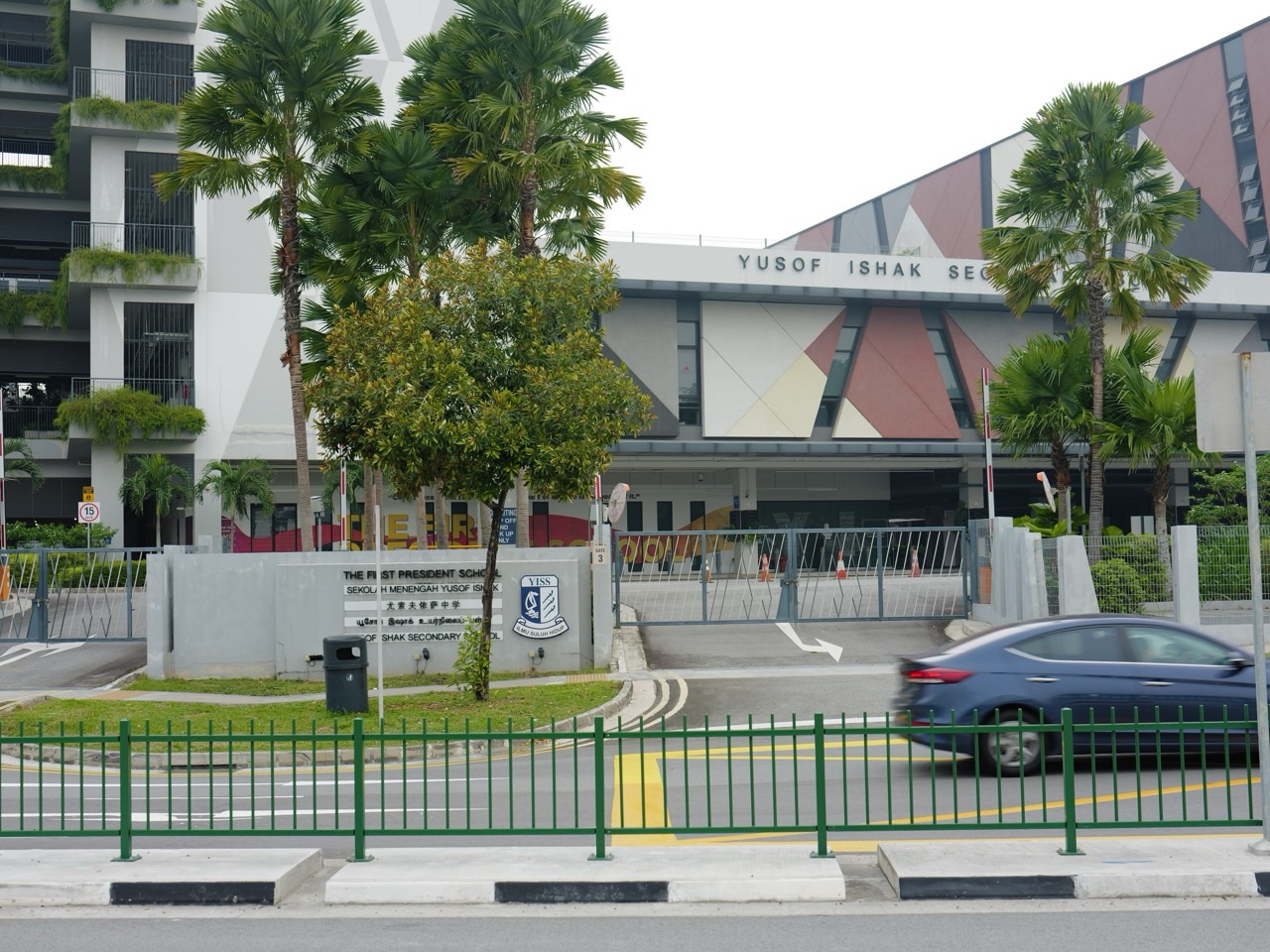
Families researching Edgefield Secondary, Greendale Secondary, Punggol Secondary and Yusof Ishak Secondary can consult current official school information and MOE SchoolFinder. Confirm the student’s actual combined-Humanities pairing, because national syllabus availability does not prove each school offers all combinations. Social Studies content is shared, while the elective partner has its own requirements.
Students can connect globalisation to everyday careers and education without treating one pathway as guaranteed. Punggol’s technology-related developments may inspire questions, but real employment claims need current official evidence. A balanced learning plan respects academic demands, wellbeing and the child’s interests.
Frequently asked questions and official references
Is Globalisation compulsory knowledge for G2 Social Studies? Yes, it is one of the three Issues. Is there a separate Globalisation examination paper? No; the Social Studies paper covers all Issues through source and structured formats. What drivers are named? Transport, digital technology and multinational corporations. What impacts and responses matter? Growth, vulnerability, employment opportunities and challenges, government support and individuals’ knowledge or skills. Does a globalisation source guarantee the structured questions are also on Issue 3? No; the same Issue is excluded from both sections in one sitting.
Consult the official 2027 G2 directory and the SEAB K229 Social Studies Issue 3 and examination scheme. For companion learning use Issue 2 Living in a Diverse Society, Source-Based Case Study and Structured-Response Q6/Q7. This week, draw one fictional international supply chain and explain one opportunity, one risk and one evidence-supported response.


