
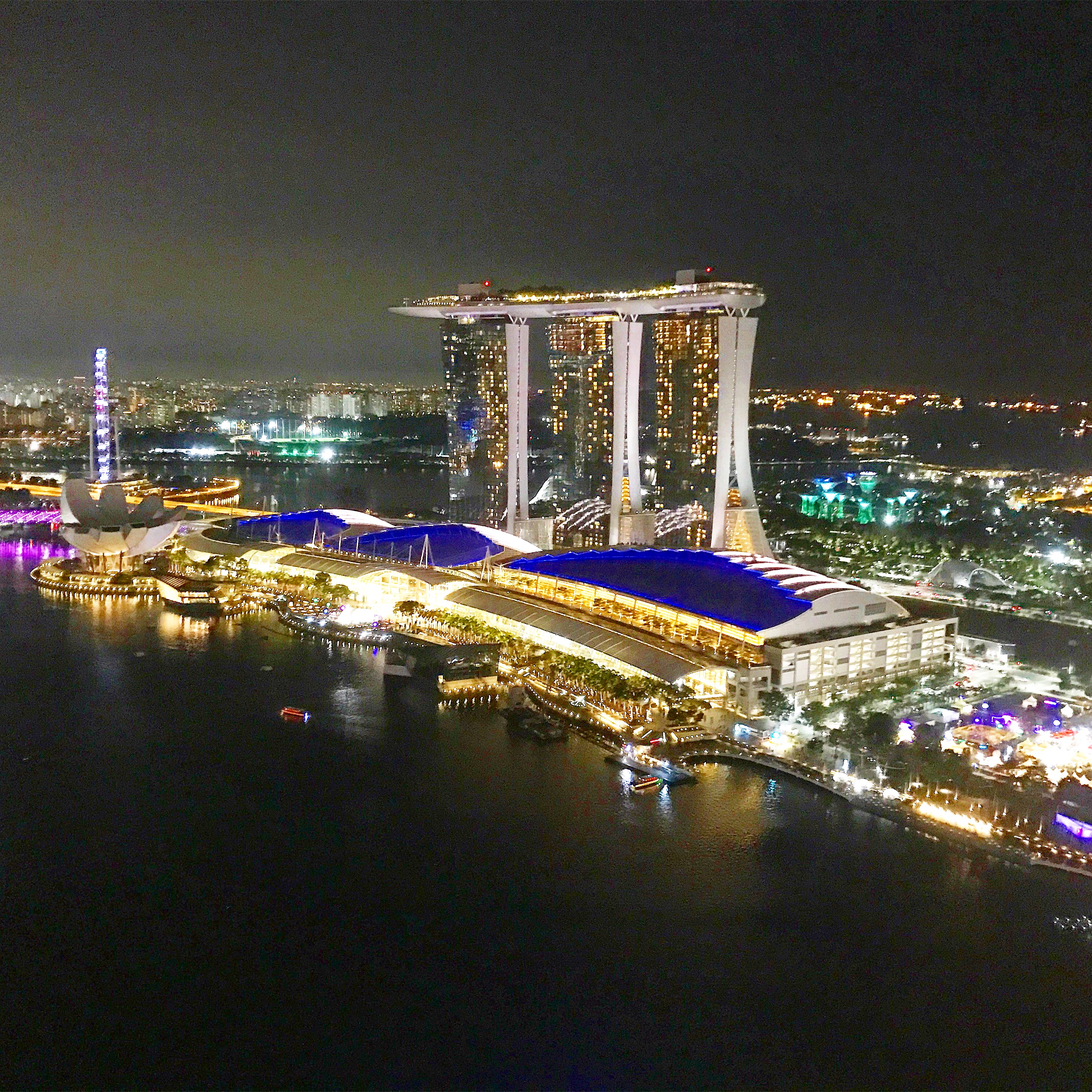
Dragonfly Lake is a free outdoor stop at Gardens by the Bay in Singapore. From Bayfront MRT, take Exit B, follow the underground linkway and use Dragonfly Bridge to get your bearings. The Gardens lists a 440-metre boardwalk for the lakes attraction. You can take a short walk at the water’s edge, then continue towards Supertree Grove or return to the MRT.
Allow about 20 to 40 minutes at Dragonfly Lake for an unhurried look, plus the time you need to walk from the station and on to your next stop. The operator lists daily opening hours of 5am to 2am. A bridge crossing, a boardwalk visit and a stop at Kingfisher Wetlands each give you a different view. Use the current Gardens map to find the paths that are open on your visit in 2027.
- Admission to Dragonfly and Kingfisher Lakes is free. Published hours are 5am to 2am daily.
- Bayfront MRT Exit B is the simplest approach if Dragonfly Lake is your first stop.
- The listed 440 metres refers to the boardwalk. Your walk from the station, across the bridge and onwards is a separate distance.
- Choose daylight for plants and wildlife. Choose the later part of the day for skyline and Supertree photos.
- Use the current Gardens map for an open connection to Supertree Grove or Kingfisher Wetlands.
1. How to walk there from Bayfront MRT Exit B
Follow the underground linkway towards the Gardens
Bayfront station serves the Circle and Downtown lines. Look for Exit B and follow the underground linkway. The Gardens by the Bay directions name Dragonfly Bridge and Meadow Bridge as approaches from this side. For the first view of Dragonfly Lake, follow Dragonfly Bridge signs if that route is open. A useful meeting instruction is ‘Bayfront MRT Exit B linkway, before the bridge’ or another exact landmark agreed with your group.
Bayfront MRT and Gardens by the Bay MRT are different stations. If your first goal is Dragonfly Lake, using the Bayfront approach puts the bridge early in the walk. Gardens by the Bay station on the Thomson–East Coast Line is useful when your plan begins at a different part of the grounds or when you want to finish near that side. Look at both stations on the Gardens map before planning a route that ends somewhere other than where it started.
Use the bridge to see the shape of the lake
Take a moment from a safe place on the bridge to identify the water’s edge and the direction of Supertree Grove. The height of the crossing helps you understand where the lake sits in relation to the paths. Then use the signs or map to reach the open boardwalk. Do not assume the first turn after the bridge is the connection your group needs, particularly if someone is using a wheelchair or pushing a stroller.
The transition is part of the walk. Under the linkway you are mainly following signs. Above ground you can see broad landmarks. On the boardwalk you are close enough to notice water plants. A visitor who has never been to the Gardens may find the outing easier to remember as those three changes of view rather than as a sequence of small turns.
Keep the return as simple as the arrival
For a short outing, retrace the marked approach to Bayfront. If you continue farther into the Gardens, confirm which MRT station suits your next trip while you still have time to choose. With separate groups, share a named destination and a meeting time. ‘At the bridge’ is easy to misunderstand when the map shows two nearby bridges.
2. Is Dragonfly Lake free and how much walking should you expect?
The Gardens by the Bay lists Dragonfly and Kingfisher Lakes as free, open from 5am to 2am daily. A visit to the lake does not require a Flower Dome, Cloud Forest or Floral Fantasy ticket. Add those only if you intend to enter them. The same principle applies to the paid elevated attractions at Supertree Grove. You can walk into the outdoor Grove and look up from ground level.
The Gardens lists the boardwalk at 440 metres. Use that number as a description of the boardwalk itself. A route from the station includes the linkway and bridge approach, the part of the boardwalk you choose, and a return or onward walk. A short out-and-back on one stretch can be easier for a group than committing to a loop that also includes a farther attraction.
Three ways to set a realistic time allowance
If the lake is a stop between other activities, plan 20 to 40 minutes after you have arrived near it. Choose one viewpoint on the bridge and one at lake level. If your schedule is particularly tight, use the bridge for the overview and keep the boardwalk for another day. A look at the water on the way to Supertree Grove still helps you understand where you are.
If the lake is the outing itself, allow closer to an hour in the area. Walk slowly enough to watch one patch of water for a little while. Bring a water bottle and choose a break spot before the group gets tired. A quiet half hour at the boardwalk and some time taking in the bridge views can fill a visit even if you never reach the far end.
If you have an admission booking at a different attraction, keep the time between venues separate from your lakeside time. Set a latest departure time from the lake and find the named entrance for your ticket. People often allow for the walk to a building but forget the time needed to locate its actual entry point or join a queue. A clear finish time leaves room for both.
Contents · Previous section · Next section
3. What to see on Dragonfly Bridge and at the water’s edge
The bridge is for orientation and wider views
From a clear stopping point, look across the water and pick out a building or a Supertree as an anchor. If you are taking photos, try one wide frame showing water and the surrounding structures. Give the water enough room in the picture to explain why you stopped there. A narrow photo of a single building can be made from many places around Marina Bay. Including the edge of the lake makes the place easier to recognise.
Sunlight can change the order in which you want to photograph things. If the bridge view faces a bright sky, try a second angle from the water’s edge before deciding which view you prefer. A quiet reflection can work even on a cloudy day. Keep a group portrait for a section with enough space for other people to pass, and put the phone down while moving through a crowded section.
The boardwalk is for small details
Look along the boundary where open water meets vegetation. The edge may have different colours and textures over just a few metres. A shadow across the surface can make a moving insect easier to see. The Gardens suggests looking for dragonflies and points visitors towards binoculars for a closer view. Wildlife activity varies. Give the search a few minutes, then turn your attention to a plant or reflection if nothing appears.
A child who expects a dragonfly to sit still for a close photo may have a better time looking for movement first. Ask where it went and whether it came back to the same perch. If you see several insects, choose one to watch. Once it moves out of sight, note one thing about the place it used. Those observations work even when you cannot identify the species.
A three-picture visit
Make one picture from above, one at water level and one looking back at the route you walked. The first explains where you were. The second explains what you noticed. The third shows how the garden sits beside the city. The accompanying archive photograph shows the wider Marina Bay setting. The Gardens map is the reference for the precise lake, bridge and boardwalk locations.
Contents · Previous section · Next section
4. How the lakes help filter and reuse water
The lake system does work that a casual visitor might miss. Gardens by the Bay says that the lakes help filter water from the surrounding catchment and that the water is also used to irrigate the Gardens. It describes several elements in the system, including filter beds, planted drainage channels called bioswales, and floating islands. Aquatic plants can take up excess nitrogen and phosphorus from the water.
A catchment is the area that drains towards a body of water. Imagine a shower falling across nearby paths, planted slopes and open ground. Some of that rain moves towards the lakes, carrying material picked up on the way. A planted strip changes the route water can take. The larger system uses physical structures and plant growth together, which is one reason the plants along a lake edge can be worth looking at in their own right.
Give children a job that takes two minutes
Find a planted edge and an open stretch of water. Ask which one has more places for a small animal to hide and why. Look for differences in leaf height, shade and space between stems. An older child can draw the rain’s route with four labels. Start with rain on the Gardens, then show runoff, a planted area and the lake. Add irrigation as a separate use of the water. The sketch is a way to recall the idea after the walk, so it can be made at home.
The operator also points visitors to QR codes with information about the lake system. Scan one if it is easy to reach and see whether you can match something it describes to a feature in view. When a sign describes several functions, pick one and explain it in a sentence. A simple example is that the planted areas help manage what reaches the water.
Pay attention to variety along a short stretch
Water that appears similar from the bridge can contain several kinds of habitat close up. Dense plants give small animals more cover. Open water lets you scan for movement. Leaves and stems above the surface give insects perches. If you have a child with a notebook, let them make two columns for the shaded edge and the open edge. One observed detail in each column is enough to start a discussion about why the edges look different.
Contents · Previous section · Next section
5. Dragonfly Lake, Kingfisher Lake and Kingfisher Wetlands
The Gardens presents Dragonfly and Kingfisher Lakes together on its attraction page. The map labels individual landmarks, including Dragonfly Bridge and Kingfisher Lake. It also labels Kingfisher Wetlands. Put the exact destination into your route plan. If you arranged to meet at the wetlands but somebody stops at the first lake from Bayfront, the two groups may be looking at different stretches of water.
Choose Dragonfly Lake for a first visit from Bayfront
Dragonfly Lake suits a short visit that already uses Bayfront MRT. You get an overview from the bridge and can choose a closer view once you reach the boardwalk. It pairs naturally with a visit to Floral Fantasy near Bayfront Plaza or a walk on to Supertree Grove. If someone joins after you start, tell them which side of the lake you are on and share a pin.
Choose Kingfisher Wetlands for a longer nature stop
The Gardens describes Kingfisher Wetlands as a freshwater sanctuary with streamlets, cascades and native mangrove plantings. It has its own free entry information and is worth a deliberate stop for someone interested in plants or birdwatching. Choose daylight for that part of the outing. Look for the way water and vegetation shape pockets of habitat, and treat any particular bird or insect sighting as a bonus.
If both stops are on your list, use the current map to draw a one-way walk that suits your next destination. Someone who mainly wants to see the Supertrees may prefer a short lake walk first and a different day for the wetlands. Someone who brings binoculars may want to start at the nature stop and end with the bridge and city view. Let the slower part of the visit set the pace.
Decide what you want to compare
At Dragonfly Lake you can compare wide urban views with the details close to the water. At Kingfisher Wetlands, you can give more attention to planting and small changes in water movement. If you visit both, choose a theme such as reflection or shade and look for one example in each location. The theme helps children remember which place gave them each observation.
Contents · Previous section · Next section
6. Pair Dragonfly Lake with Supertree Grove or Floral Fantasy
An outdoor route from the MRT to Supertree Grove
Start at Bayfront MRT Exit B. Take the linkway and Dragonfly Bridge if open, then visit a suitable stretch of the boardwalk. When you are ready to leave the water, use the Gardens map and signs for Supertree Grove. The Grove is a good second stop because it gives you a view of the structures that were visible from a distance. Start at ground level and decide there how long you want to stay.
If Garden Rhapsody is the reason for your evening visit, check the show schedule for your date. Work backwards from the show and allow time to walk from the lake and find a viewing spot. If you plan to pay for the OCBC Skyway or Supertree Observatory, check each attraction’s own opening times and last admission. Those visits involve a separate decision about time, tickets and the weather.
A shorter indoor and outdoor pairing
For a group meeting at Bayfront Plaza, Floral Fantasy can be the fixed part of the day and Dragonfly Lake the flexible part. Check what is showing inside Floral Fantasy when you travel. Put the lake first if you have a comfortable gap before admission and want daylight at the water. Put the indoor visit first if you want to give the boardwalk time without watching the clock before a booking.
If you only want a short free outing, take the bridge and boardwalk and leave the ticketed attractions for a separate day. This is an easy route to adapt to visitors of different ages. Children can look for movement near the plants. Someone with a camera can frame the lake with a landmark. Another person can enjoy the bridge view and choose an earlier return to Bayfront.
A practical sunset plan
If both the lake and Supertree Grove matter, reach the lake with enough daylight to see the edge of the water. Stop at the bridge or boardwalk before moving to the Grove. Try a wide photo before the sky gets dark and then compare it with a later view of the Supertrees. Allow time for others moving in the same direction, particularly if a show is due to start. If you want more space to make pictures, give yourself more time at the lake before joining the evening crowd.
Contents · Previous section · Next section
7. Rain, accessibility and visits with children
The lake, bridge and boardwalk are outdoors. The underground approach from Bayfront provides cover for part of the journey. Plan the exposed walk according to the weather and signs on the day. If the boardwalk is wet or you arrive during a downpour, take time to reassess before continuing. A short visit from an open viewpoint is easy to fit into the next clear spell.
Check the path from station to viewpoint
For a wheelchair or stroller outing, plan the entire approach and return. Check the station’s lift route, the selected bridge approach, how you will reach the lake-level viewpoint and whether the path you are counting on is open. The operator’s published boardwalk length says little about the gradient or turns on your complete route. If needed, confirm the details with the venue for your date.
A visitor who tires easily can plan around a single viewpoint and one optional section. Choose the shorter part first. Walk from the meeting point to that view, stop long enough to enjoy it, then decide whether to continue. A family with a stroller can use the same approach after a long museum visit or before an evening meal. It keeps the return manageable without requiring anyone to set a firm distance in advance.
Give children one task near the water
Try asking a child to pick a favourite reflection and remember where they stood to see it. Another child can choose the shape of a leaf that they want to draw later. Keep them close near the water, leave the plants and wildlife alone, and move to an open spot before gathering around a phone. These tasks work on a short visit and give the whole group a natural point to turn back.
Take the walk that fits the day
On a warm weekday morning, the lake can be the first and only stop. On a clear evening with visitors from overseas, it can be the opening stretch of a Supertree outing. After an indoor visit, it can be a short walk back towards Bayfront. In each case, use the same landmarks to orient yourself and decide on one reason to pause. A closer view of the water, the city reflected in it or the route through the gardens can each be enough for a first visit.
Contents · Previous section · Next section
8. Three return routes for different kinds of day
Return to Bayfront after the lake
This is the clearest choice if you have an appointment in another part of town or are meeting people at Marina Bay Sands. Start the return from a landmark you recognised on the way in. Walk back to the bridge approach, then use the station signs. If you changed direction to see the boardwalk, compare your location with the map before assuming the closest bridge leads to your intended meeting point.
Leave time for a meal or another indoor stop
Someone heading to Marina Bay Sands after the lake should think of it as a separate part of the outing. Give the group a place to regroup near the Bayfront approach, especially if half the party walked to Supertree Grove and the others took a shorter turn at the lake. A named indoor meeting point gives everyone somewhere to go if the outdoor part finishes at different times.
Exit through a different station after a longer Gardens visit
If you continue beyond the Grove or into another part of the Gardens, compare the walk back to Bayfront with the route to Gardens by the Bay MRT. That second station is on the Thomson–East Coast Line. Your next destination may decide which route is easier even when one station appears closer on the map. Save the rail route and the walking map separately so you can check each in a few seconds.
If your group moves at different speeds, plan the point at which the short and long versions of the walk split. Everyone can cross the bridge together, share a stop beside the water, then choose whether to continue. It keeps the lakeside part shared while letting each group decide how much of the wider Gardens to cover.
Contents · Previous section · Next section
Frequently asked questions
Is Dragonfly Lake free?
Yes. The operator lists free admission to Dragonfly and Kingfisher Lakes. Ticketed Gardens by the Bay attractions have separate admission.
Which MRT exit should I use?
Take Bayfront MRT Exit B and follow the underground linkway. The Gardens lists Dragonfly Bridge and Meadow Bridge approaches from there.
Is Dragonfly Bridge the boardwalk?
The bridge is a crossing and a place to get an overview. Use the map to find the available boardwalk at lake level.
How long is the Dragonfly Lake boardwalk?
The Gardens lists a 440-metre boardwalk. The MRT approach, bridges, other garden paths and return walk add to that distance.
Can I visit Dragonfly Lake at night?
Yes, the Gardens publishes 5am to 2am daily for the lakes. Check access notices and your return transport if you go late. Visit in daylight for plants and wildlife.
Can I walk to Supertree Grove from Dragonfly Lake?
Yes. Use the Gardens map and signs for the open connection. Ground-level access to the Grove is free.
Is Kingfisher Wetlands the same as Kingfisher Lake?
The Gardens map labels them separately. Use the full name of the specific stop when arranging a meeting or plotting a route.
What can I do if I have just half an hour?
Start at Bayfront and choose the bridge overview or a short stretch of boardwalk. Allow for the route back or on to your next stop.


