
Singapore City Gallery has a phased revamp in 2027. URA says the gallery will be partially closed from 1 December 2026 through 30 April 2027 and fully closed from 1 May 2027 while work continues. URA expects a refreshed gallery in the fourth quarter of 2027. Check the latest notice before travelling, especially if you want to see a particular exhibit or plan to visit during the expected reopening period.
The gallery is normally free and is at The URA Centre, 45 Maxwell Road, near Maxwell MRT. When access is limited or the gallery is closed, you can still make a short public walk around Maxwell and the edge of Chinatown. Use the URA Centre as a landmark, then look at the street around Maxwell Food Centre and the shophouses nearby. The walk offers a way to explore the neighbourhood without entering the gallery.
- Partial closure: 1 December 2026 to 30 April 2027.
- Full closure starts 1 May 2027. URA expects the refreshed gallery in Q4 2027, with the actual reopening date to be confirmed.
- Ordinary hours when open: Monday to Saturday, 9 am to 5 pm. Closed on Sundays and public holidays.
- Admission is normally free. Groups of more than 20 need an advance booking when visits are operating.
- Maxwell MRT and a short public street walk are a useful alternative during the revamp.
Read the closure schedule before travelling
January through April 2027
URA describes partial closure through 30 April 2027. If you plan to go during this period, check which areas are accessible on your date. A partially open gallery can still be a worthwhile outing if you know what you can see. If the trip depends on a specific display, call or consult the current official notice before setting out. The general opening hours do not tell you which exhibit will be available.
Keep the date and exhibit name in the same note. A visitor who wants to see an architectural model has a different question from someone who is happy to browse any open section. Ask about the exact model, show or level. If there is no confirmation for your date, plan the Maxwell walk as the main trip and treat available exhibits as an extra.
For a school or large party, check whether group visits are offered during the phase you are considering. Give URA the number of visitors, intended date and any access requirements. A small group travelling independently may be able to change plans easily. A teacher arranging transport and supervision needs a confirmed venue and a prepared alternative.
May onward and the expected fourth-quarter reopening
URA says the full closure begins on 1 May 2027. The expected refreshed gallery is in Q4, which means October through December as a planning period. Use the latest reopening notice before choosing a date. If the date is not confirmed yet, schedule your Maxwell outing independently. A date in the quarter can be useful for checking again, while a confirmed opening is what you need for a group visit.
Save the official Plan Your Visit page rather than an older review or map listing. The URA Centre, the gallery and the street around it can have different access arrangements. Seeing the building marked on a map does not establish that the exhibition is open. If someone else is arranging the outing, send them the live notice and the date you intend to go.
If you are visiting Singapore for a short period, check the notice again close to the day. During the full closure, use the walk as the central plan. If reopening has been announced and the date suits you, choose the gallery and use the walk as an optional second activity.
Get to 45 Maxwell Road and plan entry when open
Maxwell MRT and the public approach
Take the Thomson–East Coast Line to Maxwell MRT if it suits your journey. Use the current station map and pedestrian signs towards Maxwell Road and The URA Centre. Save the address, 45 Maxwell Road, Singapore 069118. If you are already in Chinatown, choose a public walking route from the side you are on and allow time for crossings.
For a drop-off, URA identifies Kadayanallur Street in its visitor directions. Check the current guidance before arranging a ride or coach. A driver needs the designated approach, while a group coming by MRT needs the nearest useful lift or exit. Agree on a place to meet clear of the drop-off and main pedestrian flow.
If coming from Punggol, compare the rail route that best serves both your arrival and return. You may finish at Maxwell or another station depending on your final stop. Give yourself time to orient the group on the street. The walk is compact once you find the right side of Maxwell Road.
Admission, group bookings and access
URA normally lists free admission and hours of 9 am to 5 pm from Monday to Saturday, with Sundays and public holidays closed. Those ordinary hours apply only when the gallery is operating. The revamp schedule takes priority. Check both the opening notice and any special instructions for the day.
For groups of more than 20 visitors, URA normally asks for an advance booking. Its guidance allows up to 50 visitors per time slot and asks larger groups to use multiple slots. If arranging a school visit, verify current availability, allocate a responsible adult to each group and use the time URA confirms. Keep the closure notice in mind before making transport arrangements.
URA’s visitor information normally describes lifts to all gallery levels, wheelchair-friendly toilets, a manual wheelchair on request at the ground-floor counter, and a nursing room and stroller parking on the second floor. During a phased closure, confirm the specific facility you need. Give yourself time to use a different approach if one route is temporarily unavailable.
What to look for if the exhibits you want are open

Use a model to understand the shape of the city
The gallery introduces Singapore’s urban planning through models and interactive displays. URA’s general highlights mention a projection mapping show and exhibits on infrastructure and conservation. During the revamp, confirm what is available before promising a particular experience. Once you have a verified choice, spend time with one model or exhibit instead of rushing through everything that is open.
If a model is available, pick one place you can identify from the street, a map or a photograph. Look at what is next to it. Ask which routes bring people into that area, where open space appears and what changes when buildings are larger or smaller. These are useful questions for an adult or a child because they use the model to explain a real place.
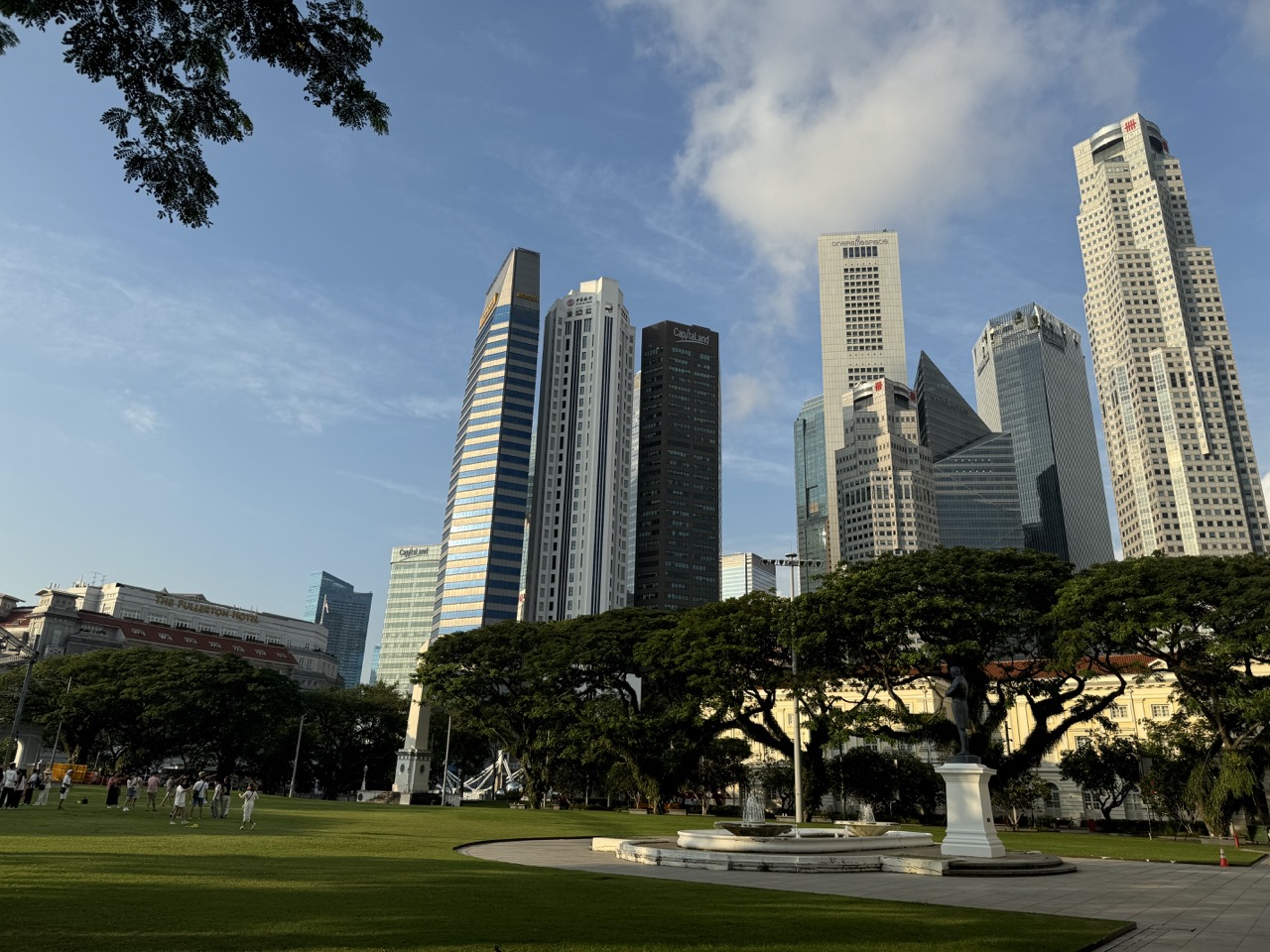
The photographs in this guide show the city skyline and a different model at Punggol Discovery Cube. The Punggol model is there to illustrate how a town model can be read. Check URA’s current gallery material for the actual displays in Maxwell. If you want a particular model, make its current availability part of your enquiry.
Pick one planning question and test it outside
A useful first question is how people get from a rail station to the places they want to visit. Look for lines and access points on a map or model, then walk one real segment outside. Notice when the distance feels easy and when waiting at a crossing or changing levels affects the trip. A model helps show the layout, while the walk reveals how the route feels.
A second question is why a market, food centre or row of shops can work well next to a rail station or a bus route. Use the Maxwell area to look at entrances, street corners and the routes people follow. A child can identify one way a public building or a crossing makes everyday movement easier. An older visitor can think about what would improve an approach for someone using a wheelchair.
Save the broader history for a follow-up if it interests the group. A single observation made carefully can give a first-time visitor more to remember than a long list of planning terms. A student can connect the question to a map and explain what the map shows and what had to be checked on foot.
Do a free public Maxwell walk during the full closure
The URA Centre and Maxwell Food Centre
Start near Maxwell MRT and make The URA Centre your first outside landmark. Look at its approach from the street and decide how you would tell someone else to reach it. Then take the appropriate public route towards Maxwell Food Centre. You can pause for a meal if the group wants one, or use the food centre as a public reference point and continue when the route allows.
Notice how the food centre serves people arriving from different directions. A short visit is enough to see why location and entrances matter. Choose an appropriate place to stand without interrupting people queuing or passing. If you eat there, check individual stall hours and give yourself time to find seats. A food stop is easiest when it fits the group’s pace and budget.
This is a public neighbourhood walk. The route around the URA Centre does not require access to the gallery. If building work or a temporary route change affects the approach, use the signed public paths and adjust the itinerary. You can still look at the street and compare the buildings from a place where you are allowed to stand.
Add one shophouse street
From the Maxwell area, use a current map to choose a short approach towards a nearby row of shophouses, such as along the South Bridge Road side or towards a suitable Chinatown street. Use designated crossings and give yourself time to choose a public viewpoint. Look at how doors and shopfronts are set along the pavement. Then compare that street edge with the entrance to the larger URA Centre.
Give children a small task. Ask them to spot one feature that repeats and one feature that changes between neighbouring buildings. Adults can compare signs, rooflines or how the pavement is sheltered. Follow the public route, respect premises and keep group stops out of doorways. A short street segment is enough for this comparison.
If you want to add a temple, museum or exhibition, check the particular venue’s opening arrangements, attire and any admission details. Make it a separate decision. An outdoor route with one street comparison and a meal already makes a useful outing during the gallery closure.
Plan a visit for a family, a student or a group
A family with a short time window
If the gallery has confirmed an accessible exhibit, spend the first part of the visit there and pick one outside detail afterwards. If the gallery is closed, start with a public view of The URA Centre and choose one nearby stop. Keep the route short if the group needs a meal or has already been out in the heat. Let the child choose one landmark to describe at the end.
When planning for a stroller, save the station lift route and an appropriate return point. A lift inside the gallery is useful only when that part of the building is accessible. If your outing is outdoors, check public crossings and the approach to the food stop. A family that wants to avoid repeated changes of level can stay with a compact street route and return from Maxwell.
If the weather becomes difficult, choose a meal, an open indoor venue nearby or the return to the station. Give the group the next place name before moving. This matters when people are crossing a busy street and do not all walk at the same pace. A small change in the route is easier when the visit has one main purpose.
A student interested in planning or architecture
Ask the student to choose a question before arriving. It might concern the relationship between a rail exit and a food centre, the reuse of a building or how a street serves different people. If the gallery is open and the right exhibit is available, start there. Otherwise, use an official map and the Maxwell streets as the field visit. Let the student record what they can observe directly.
At the end, distinguish between three things: what the group saw, what it inferred and what requires another source. For example, you can see where an entrance is and infer that it serves people walking from the station. You would need further evidence to know why the entrance was designed that way. This simple distinction helps a student use the outing for a school task without claiming more than the visit shows.
A school or community group
Book only after URA confirms that the intended date and group size can be accommodated. If you use the public walk instead, split the party into manageable groups and choose a gathering point with space. Give everyone the same start and finish. Set a clear rule about where groups can stop to record observations and where they need to keep moving.
Turn the closure into a short urban planning field visit
Compare two entrances and the routes to them
Begin outside The URA Centre and observe one public approach. Choose a place where you can stop without blocking the entrance. Look at the relationship between the pavement, the building frontage and the nearest crossing. Ask a student to identify which part makes it easy for a first-time visitor to find their way. Then compare that with an approach to the food centre from the station side.
A simple sketch can show the order of features. Draw the station exit, crossing, pavement and entrance. Mark the part where you had to make a decision. Was there a sign, a clear landmark or a change in level? Someone visiting with a stroller might notice a different detail from someone arriving on foot without bags. Record the actual route your party used rather than assuming it works the same way for every visitor.
Give each person one question. A child might choose where to meet a friend. A teenager might consider which point serves people arriving from several directions. An adult can look at how a public space handles people who are moving and people who need to wait. Each person can describe one example without trying to explain the whole neighbourhood.
Read a block of shophouses from the public pavement
Choose a short section of street and look at the ground floor first. Notice where people enter, where they can pause and how close one entrance is to the next. Then look at the upper floors and roofline from a suitable position. A shophouse row and a large public building can sit near each other while using the street in different ways. Their entrances, scale and ground-floor activities help you compare them.
Ask what the difference means for someone walking past. A succession of small doors can make it easy to identify individual shops. A larger building may use a clear sign or a prominent entrance that can be seen from farther away. Check whether these impressions match what you observe on the actual street. There may be exceptions, and those are worth noticing.
You can finish this exercise with a picture of one street segment and a short sentence about it. Include a detail that was visible at the time, such as a repeated opening or a change in shelter. Keep the distinction between public features and private premises clear. Use the public pavement and be considerate when photographing occupied spaces.
Add one observation about the food centre
A food centre has to accommodate people who come for different lengths of time. Some are crossing the area. Some are looking for a stall, waiting to order or trying to find seats. Watch from a suitable spot and see what part of the layout helps people choose a direction. Keep the observation brief and move if you are taking up space near a queue.
During a meal, ask what made the place easy or difficult for your group to use. Was the route from the station straightforward? Did you find a place to sit without much walking? Would a different time make the visit more comfortable? These are small examples of how public places and transport affect daily choices. They can be easier for children to understand than a general explanation of planning.
Compare the walk with the refreshed gallery later
Save one question you could take to the gallery after reopening. A student might want to know how URA explains the relationship between streets and transport. A family might want to compare a real row of buildings with a city model. Look up the refreshed exhibits when URA publishes the details. Pick a display that actually answers your question.
If you will only be in Singapore during the full closure, you can still use URA’s public information to give the walk context. Read a brief overview first and take the street observations as the main activity. The outing has a useful result when you can point to a real place and explain one part of how it serves the people using it.
For a group project, compare two individual sketches after returning. See whether people chose the same landmark or found a different point confusing. Identify one question that requires a map and one that requires asking the venue. This keeps the visit practical and gives the group a reason to check current information before a future trip.
Use three date-based examples
A visit in March or April
Check the partial-closure notice and ask whether your chosen exhibit is available. Plan the public walk either before or after the gallery depending on what is confirmed. If travelling with a child, give them a route that works even if the main model cannot be seen. A meal and one street observation can be useful even when the time in the gallery is short.
A visit in June or September
Use the published full closure as your starting point. Plan Maxwell as an outdoor visit with a food or other venue stop that has verified hours. If your main purpose is to see the City Gallery, choose a different date once URA confirms reopening. Keep the two decisions separate so the Maxwell plan remains useful.
A visit near the end of the year
Check for an explicit reopening announcement and the new operating information. The quarter mentioned in the revamp notice is an expected period. Use the confirmed date, hours and group arrangements once they are published. If the gallery is open, choose an exhibit and give yourself time to enjoy it. If you still cannot confirm access, use the short Maxwell walk and save the gallery for another date.
Make the route work for heat, rain and slower walkers
Take the most useful route first
If you have a fixed booking, reach the venue first and leave time for the public walk afterwards. If there is no booking, take the route that gives your group the shortest comfortable approach from the station. Decide early whether the gallery, the street comparison or the meal is the most important stop. This prevents a minor delay from using all the time you had for the visit.
Look at how much of the route is exposed. Bring suitable weather protection and plan a pause if the group needs it. For someone using a wheelchair or stroller, check the step-free path and crossings for the exact places you intend to use. Some streets can feel much busier at mealtimes. Choose a stop that gives the whole group room to wait without crowding the pavement.
Save only what you need on the day
Keep the URA closure notice, the address, the station route and the name of the next place you want to visit. If you booked a group slot, add the confirmation and meeting instructions. If you are walking during the full closure, save one open meal or indoor option that works for the group.
When you finish, ask which street detail made the area easier to understand. You can return for the refreshed gallery when access is confirmed and compare what you observed with an exhibit. A visit during the revamp can still make later displays easier to understand because you have already spent time on the actual streets.
Frequently asked questions
Is Singapore City Gallery open in early 2027?
URA lists partial closure through 30 April 2027. Confirm access to the part or exhibit you want before travelling.
When does the full closure start?
URA lists 1 May 2027 as the start of full closure while work continues.
What is the reopening date?
URA expects a refreshed gallery in Q4 2027. Check for an announced reopening date before choosing your visit.
Is admission free when the gallery is open?
Yes. URA lists free admission. Its usual hours are Monday to Saturday, 9 am to 5 pm, excluding public holidays.
Which MRT station should I use?
Maxwell MRT is a practical approach. Use The URA Centre at 45 Maxwell Road as the exact destination.
Can I book for a school group?
URA normally requires advance bookings for groups of more than 20. Verify whether bookings are available for your date and phase of the revamp.
What can I do if the gallery is closed?
Take a public walk around Maxwell, use the URA Centre as an exterior landmark and choose a food or heritage stop with confirmed hours.


