
Start at City Hall MRT, visit the public areas of CHIJMES and continue to Raffles Arcade for a short heritage walk in Singapore in 2027. The route gives you two different historic settings within a compact part of the city. Allow about an hour for the public architecture stops, or longer if you add a meal, a shop or a booked activity.
At CHIJMES, look for the former convent chapel and Caldwell House from the public areas available on the day. At Raffles, choose the Arcade as your visitor destination and use its current public entrances. A hotel’s public arcade, guest areas and separately booked venues have different access rules. Keep the outing to places where you are allowed to go.
- Use City Hall MRT and save CHIJMES and Raffles Arcade as separate pins.
- Start at CHIJMES for the former convent setting and a short public look.
- Continue to Raffles Arcade using signed public crossings.
- Check chapel, photography, venue and hotel access separately.
- Choose a meal or one public stop as the fallback in wet weather.
EDUKATE PUNGGOL · SINGAPORE 2027
Find the part you need
- Find the right City Hall meeting point
- Look at the former convent setting at CHIJMES
- Walk from CHIJMES to Raffles Arcade
- Check photography rules before making it a shoot
- Frequently asked questions
First stops and visit planning

CHIJMES’s visitor information lists City Hall MRT as a nearby station. Use the station signs and check the current pedestrian route to the complex before setting off. Give your party an exact meeting point near the station or inside a public area. “City Hall” can mean the train station, the wider Civic District or a particular historic building, and those directions lead to different places.
Use CHIJMES as your first venue pin and Raffles Arcade as the second. The name Raffles can refer to the hotel, City Hall area landmarks or Raffles Place, which is a different station. Sending the full venue name helps someone who is arriving separately. If a friend is only joining for food, give them the exact restaurant and address rather than asking them to find you somewhere along the walk.
Keep the first approach simple
Take the main signed public route and use controlled crossings where appropriate. Allow time for lights, lifts or a short wait for your group. A building that is visible across the road can still take several minutes to reach by the suitable crossing. An accurate map pin helps with orientation, while current signage determines the approach you can actually use.
If you are walking with children, tell them which landmark will be first and where you will stop. That gives the walk a clear purpose. If you have a stroller or need step-free access, check the current venue guidance and allow more time. You can shorten the public viewing portion and still keep the main route between the two places.
The National Heritage Board identifies the Former Convent of the Holy Infant Jesus Chapel and Caldwell House as national monuments within the complex now known as CHIJMES. Use NHB’s information to understand what the buildings were used for and how they relate to the surrounding area. Their present-day setting includes commercial venues and events. A look from a public point can give you the contrast between the older buildings and their current uses.
Start by noticing how the complex is set apart from the surrounding roads. A visitor may first see an entrance, a courtyard or the chapel silhouette. Check which public areas are accessible and choose a suitable place to pause. If an area is reserved or closed, use the public view available. An exterior look can be enough for a first visit.
Separate the chapel exterior from event access
CHIJMES Hall can be used for events. A public route around the complex does not establish that the hall is open for a casual interior visit. Check the relevant venue and event information if entering the hall is important. On an ordinary walk, look at the building from an appropriate public position and continue when your group is ready.
A child can compare the outline of the chapel with another building in the complex. An older visitor may notice the way entrances, windows or open spaces guide people. Use the official history to identify any feature you want to name. You can talk about what it looked like without guessing the meaning of each architectural detail.
Contents · Previous section · Next section
When you finish at CHIJMES, use the public pedestrian route to Raffles Arcade. The venues are in the same central area, but road crossings and entrances still affect the route. Do not cut through a private or closed area to follow the shortest line on a map. Save the Arcade or a confirmed shop as the destination rather than relying on a general hotel pin.
A group with limited time can spend a little longer at the first venue and make the second a short look. If an arcade shop is the reason you are coming, check its exact address, hours and approach before leaving home. Some businesses have different schedules from the surrounding building. A shop visit can be part of the walk without requiring a hotel stay.
Respect the difference between visitor and hotel areas
Use the Arcade’s visitor information and follow hotel signage. Public shops and a booked restaurant have their own conditions, while hotel guest and restricted areas follow separate rules. If you are unsure whether an entrance is for visitors, ask staff and use the public route they recommend. The architecture can be enjoyed from the exterior and appropriate public spaces without treating the hotel as an open museum.
If someone wants to book a meal or activity at the hotel, build the walk around the confirmed booking and entrance. Arrive early enough to find it. A public walk can be the first part of the outing, followed by the booked venue. A person who only wants the walk can finish at the exterior without committing to the meal.
Contents · Previous section · Next section
CHIJMES brings a former convent setting into today’s city. Raffles Singapore’s official history describes a historic hotel with a different purpose and story. Ask how each place welcomes or directs people now. At one stop, the courtyard and hall may help orient you. At another, the public shops and hotel entrances have different routes. Look at the signs and how people move without assuming why a particular person is there.
Pick one visible detail at each location. It could be a roofline, opening, column or approach. Describe it without using a label you have not checked. Then look at the operator or NHB account to understand more. This is an easy way to make the outing interesting for children and adults with different levels of interest in architecture.
Give children a short activity that fits the public route
Ask a child to point to the part of a building they would draw first. At the second stop, ask whether they would choose the same kind of detail. A preschooler can name a shape. An older child can describe what helped them recognise the building. A teen can compare the setting of a public entrance and how it connects to the street. Save any longer drawing or discussion for a suitable place afterwards.
The activity still works if you only see the exterior of both places. A photograph or official account can fill in background later. The public walk gives the family real objects and spaces to discuss. You do not need to enter a private or ticketed area for that purpose.
Contents · Previous section · Next section

CHIJMES publishes separate guidance for professional or organised shoots and for different managed areas. Read the current venue instructions if photography is a main reason for your visit. An ordinary public walk should use suitable viewpoints, leave entrances clear and follow any event or venue direction. If an area is busy or reserved, keep moving and choose another public spot.
At Raffles, use the current property and Arcade guidance. Ask before photographing where you are unsure, and respect the people using the space. Leave room for other visitors and avoid photographing guests at close range. The archive photos in this guide show the wider Civic District, rather than the interiors of either venue. Use the linked official sources to identify the exact heritage buildings.
Choose a context view and a closer detail
A context view helps show how the building sits in the city. A closer view can show a shape, surface or architectural feature. Take the closer view from an appropriate distance instead of moving into an area that is closed or in use. If the public path is crowded, choose one quick photograph or save the stop for another day. The walk can be enjoyable without producing a full photo set.
Write down the correct venue and date if you plan to share a picture. A view of the surrounding street can help a friend recognise the area. A specific photo of the chapel or Arcade can help them find a landmark. Label those images clearly. The distinction makes your directions useful and avoids attributing a nearby building to the wrong place.
Contents · Previous section · Next section
A restaurant at CHIJMES or a booked venue at Raffles can be the main finish. Use the current venue information and allow time to find the right entrance. If the family has only an hour, keep food optional or choose a place near the station. If the meal is the reason several people are joining, let them meet you there and keep the walk as a separate earlier activity.
For a longer public itinerary, use the rest of the Civic District on another day or choose one nearby stop. The Asian Civilisations Museum and river walk covers a different part of the district, while National Gallery’s Keppel Centre gives families an indoor art option. Check actual hours and entry requirements if you plan to combine them. A short architecture outing does not need to turn into a full museum day.
Fit the return around weather and walking pace
The route between venues is outdoors in parts. If a storm is in progress, use an appropriate indoor venue and save the exposed walk. If you are already at CHIJMES and the group mainly wants to eat, it can stay there when a suitable venue is available. If you are meeting someone at Raffles, go to the confirmed public entrance when conditions allow. Keep the connecting walk flexible.
A mixed-age group may want more time for crossings or a seated break. Choose one place to pause before adding the next stop. If someone only wants a brief exterior view, agree where to regroup. The simplest trip can be one public view at each venue and a return to City Hall. You can add the longer stop when time and access make it worthwhile.
Contents · Previous section · Next section
CHIJMES lists its address as 30 Victoria Street. Use that address or the venue’s current visitor directions when someone is coming by car or looking for the public approach. Raffles Arcade lists 328 North Bridge Road, Singapore 188719, on its contact page. It has its own contact and shop information. Save the actual visitor entrance or shop you intend to use. Someone meeting at a restaurant should look up the reservation’s address and entrance rather than using a general district pin.
The two stops sit near each other, but each has different circulation inside and outside. Check a map at the first venue before moving on. Use the public crossing and confirm which side of the next building you want. The guide is short enough to reverse if your first commitment is at Raffles. Give the group the actual first stop and finish time rather than assuming everyone will take the same route.
Choose a public meeting point you can describe clearly
If your group is coming by MRT, choose a signed point near the station or meet once you have reached the first venue. If someone is arriving with a stroller or mobility aid, check the step-free approach in the current venue information. If the person is coming only for lunch, give them the restaurant and a time. Each person can reach the part they will actually share without looking for the rest of the group on a busy street.
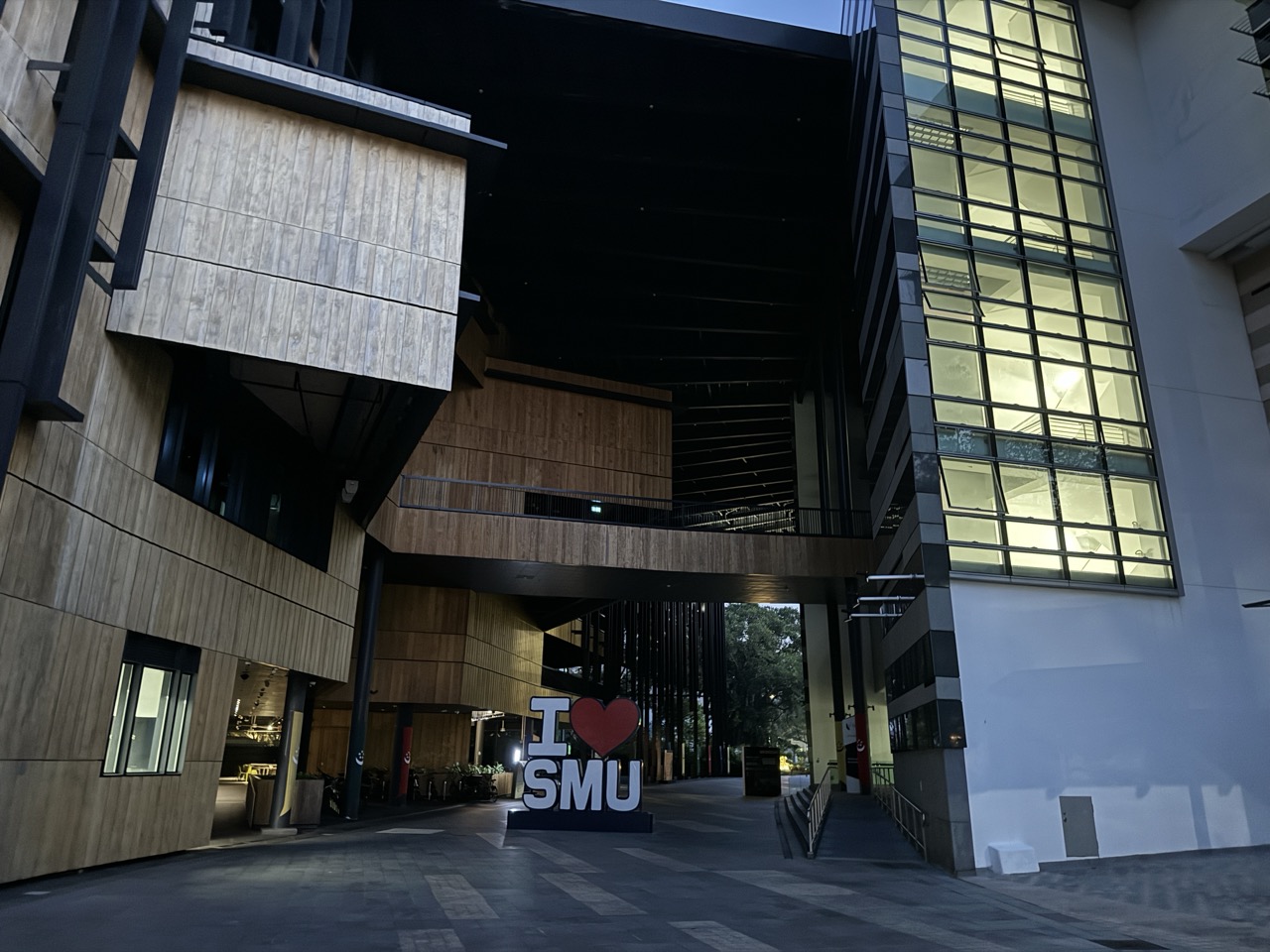
A photograph of a surrounding street can help orientation, but use current venue names for directions. The original Civic District photos in this guide show public surroundings including Singapore Management University and Parliament House. Neither is a photograph of the CHIJMES chapel or a Raffles Arcade interior. The official venue pages and NHB records provide the identified views and route information for the two heritage stops.
Contents · Previous section · Next section
At CHIJMES, use NHB’s account of the former Convent of the Holy Infant Jesus Chapel and Caldwell House. They are named monuments with related but distinct histories. A family can choose one detail to look at from a public point and then check what NHB says about the building. If a visitor sees a space currently used for a meal or event, describe that as a present use. Let the historical source explain how the earlier institution used the site.
At Raffles, use the hotel’s official history and NHB’s monument account. The hotel began operating in the late nineteenth century, and the historic complex is associated with Singapore’s development as a place of travel and hospitality. A visitor can look at the scale of the public approach and then consider the difference between a place people stayed and a place that served a convent and school community. That gives the walk a clear comparison without requiring access to private rooms.
Compare how each building meets the street
Ask where you can see a boundary, an entrance or a sign directing visitors. One venue may be easiest to understand from its courtyard and another from the public arcade or exterior approach. The visitor’s route is only one part of how the building works. Guests, staff and event participants may use different routes. Read the signs and let each venue tell you where you can go.
A child can make a two-box drawing after the visit. Draw one entrance or roof shape in each box and label it with the correct venue. A teen can add a question about how the buildings’ different purposes might have affected their design. Use the official sources to check a detail if they want to learn more. The activity works even if you choose an exterior-only route.
Contents · Previous section · Next section
About 45 minutes when you already know City Hall
Go from the station to CHIJMES, take one short public look, then continue to Raffles Arcade and finish near your onward route. Keep photographs and shops optional. If a crossing, lift or event takes longer than expected, shorten the second stop rather than hurrying the group. This version suits a visitor with an appointment elsewhere in town.
About an hour for first-time visitors
Allow time to find the right public approach at each venue. Spend the longer part of the visit with the first place the group wants to see. At the second, choose one view or shop that is open. Agree where you will leave from and whether you will return to City Hall. You can use the same start and finish even if one public area is unavailable.
About two hours with a meal
Choose the meal venue first and check the booking or opening time. Then decide which direction to walk. If lunch is at CHIJMES, you could start at Raffles and return there afterwards. If it is at Raffles, visit CHIJMES first. Give the group enough time for the crossings and do not assume an event or private space can be used as a shortcut.
Contents · Previous section · Next section
At CHIJMES, an event can change access or how people move through a public area. At Raffles, a business or part of the property can have its own hours or access. If a place is unavailable, choose the nearest suitable public view and continue. The walk does not depend on one entrance or interior. Use current venue instructions rather than an older photo showing someone in a different part of the site.
If the closed area was the main reason you came, choose whether to use a meal, the second venue or a return on another day. A family with limited time may prefer to finish at the first place it can use. A group of visitors can still learn something from two exterior views. Give the public architecture enough time to be enjoyable, then leave the restricted part to another visit or a confirmed event.
Keep professional photography separate from a casual walk
CHIJMES publishes specific rules for professional and organised photography. If someone is planning a formal shoot, look up the conditions for the exact area and contact the relevant venue. Do not use a family walking guide as evidence that a shoot is permitted. Different parts of a property can have different management and terms, including the hall and its immediate surroundings.
For an ordinary visit, follow signs and staff instructions, stay away from active event or guest routes and make any photo stop brief. A photograph from the public approach can be enough to remember what you saw. If you need time to review images or make a sketch, move away from a through-route. Your group can still compare the buildings without standing at the busiest entrance.
Contents · Previous section · Next section
Leave the decision to add an outdoor stretch until you see the conditions. If there is a storm, remain in appropriate indoor shelter. You can choose a meal at your current venue or return to the station when the public route is suitable. A short visit can end after CHIJMES or Raffles Arcade alone. Choose the one that fits the group and save the connecting walk for a clearer day.
With grandparents or a young child, give a seated break a place in the itinerary. A ten-minute architecture stop can be enough when the rest of the outing is a relaxed meal. If relatives are coming from different directions, agree where to regroup after the walk. Keep the final stop near the station or agreed pickup if the group wants to leave without another street crossing.
Choose a different nearby outing for a different purpose
National Gallery Singapore and the Civic District riverfront provide different reasons to visit the city. If the main purpose is an indoor art activity, check the Gallery rather than planning on a historic chapel interior. If the goal is a museum and a walk by the water, use the Empress Place route. CHIJMES and Raffles Arcade make the most sense when you want two historic public settings close together and an easy meal or station return.
The routes can be combined across a longer day, but give each one a separate purpose. Start with the activity that has the least flexible schedule and add a short walk if the group still wants one. This helps a visitor get more out of two places than they would from rushing through several. Save the name of the particular entrance and one feature you noticed so you can describe the walk later.
Contents · Previous section · Next section
A child may ask why people go to a former convent for a meal today. Use the question to distinguish the original institution from the present complex. Look at the parts the official history identifies, then think about how people use the public area now. The same building can be meaningful for its earlier role and for the activities around it today. Use the history source for earlier dates and the venue page for current access.
At Raffles, look at how the hotel, Arcade and streets connect. A public shop can serve someone who is passing through, while a hotel entrance has a different purpose. Ask which signs help you tell the difference. This gives the family something to notice that relates directly to how it is using the area. The history is easier to remember when you can connect it with the route you actually walked.
Keep your descriptions specific when you share the outing
A caption that says “public approach to CHIJMES, Victoria Street” gives readers a useful location. A caption for a view of the Arcade should say which part of the Arcade it shows. If you use a photo from a different street, label it as context. If someone asks whether they can enter a particular venue, point them to the current operator rather than assuming access matches your earlier trip.
Check the two different returns
The group can return to City Hall MRT from either venue using the public pedestrian route, or choose an onward destination if that fits the day better. Check the route from your actual last stop. A meal inside either complex may leave you closer to a different entrance than the one you used on arrival. Give the group enough time for a crossing and a clear way to get back to transit.
With a group of first-time visitors, send the two addresses and let everyone know which one comes first. If a friend arrives late, give them the second venue instead of asking them to retrace the route. That helps keep the trip within the hour you planned and gives each person a chance to enjoy a public stop before going home.
Contents · Previous section · Next section
Which MRT should I use for CHIJMES and Raffles Arcade?
City Hall MRT is a practical start. Check current signs and use exact venue pins.
Is the public walk free?
The public outdoor and visitor route has no attraction ticket. Food, shopping, programmes and booked venues have separate terms.
Can I enter the CHIJMES chapel?
Check the hall’s current event and venue arrangements. An exterior visit can be completed from suitable public areas.
Can non-guests visit Raffles Arcade?
Use the Arcade’s public visitor and shop information. Follow signs distinguishing the Arcade, hotel guest areas and separately booked venues.
Can I take photographs?
Check current venue rules, especially for professional or organised photography. Respect events, guests and public circulation.
How long does the walk take?
Allow about an hour for two short public stops and the crossings. Add time for a meal or booked activity.
Contents · Previous section · Visitor information


