
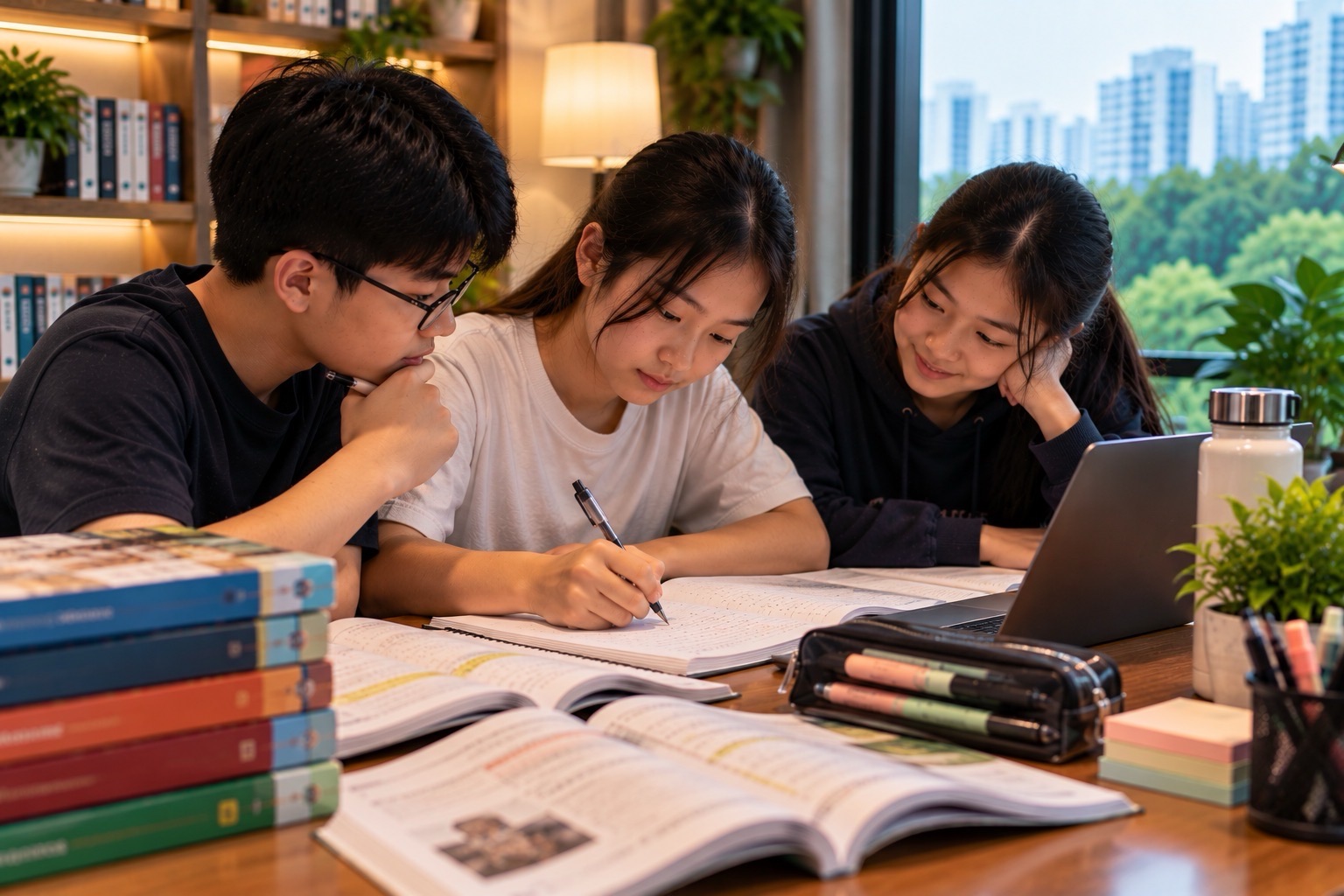
Home-Based Learning (HBL) days are school days, not holidays. Singapore secondary schools use regular HBL as part of blended learning, commonly around once a fortnight, to help students develop self-directed learning skills. A PG3 student may need to complete teacher-assigned work through the Student Learning Space (SLS) and other approved online or offline activities, plus time for Student-Initiated Learning (SIL). Each school publishes its own HBL timetable, attendance procedures, completion deadlines and arrangements for students who need help or a suitable place to work.
For Punggol families, the immediate planning questions are practical. When is the next HBL day? Does the child have a charged school-approved Personal Learning Device (PLD), working access to SLS and a quiet place to learn? If parents are at work, who knows where the child will be, what tasks need completion and whom to contact if the internet fails? HBL need not mean continuous video lessons. MOE’s blended-learning approach includes both independent online work and offline activities. The right preparation reduces stress without turning the family home into a second full-time classroom.
Quick parent information:
- PG3 describes the admission Posting Group; HBL participation is part of the secondary-school experience across subject levels.
- Frequency: regular secondary HBL is generally around once a fortnight, but exact dates and arrangements depend on the school and year.
- HBL is not leave: students remain responsible for their school’s assigned learning, attendance reporting and deadlines.
- SLS: the Student Learning Space is an MOE platform through which teachers may provide learning materials, quizzes, assignments and feedback.
- Offline work counts: HBL can include textbooks, written assignments, projects and other teacher-directed tasks, not just live online lessons.
- SIL: Student-Initiated Learning gives students a structured opportunity to explore interests with greater independence.
- Timing: school examples set aside about an hour or more for SIL, subject to their own level-specific arrangements.
- Technical problems: report SLS access, device or internet difficulties promptly through the school’s specified route.
- Home environment: schools may provide on-campus HBL arrangements where students lack a conducive place or working connectivity, as described in school policies.
- 2027 schedules: do not reuse a 2026 HBL calendar; check the child’s actual school notices.
What exactly is Home-Based Learning?
Home-Based Learning means that a school organises part of its curriculum for students to learn outside the ordinary classroom timetable, often from home. It is part of blended learning, which combines in-person lessons with deliberate opportunities for independent study. The model helps students practise planning tasks, using resources, checking understanding and seeking help without relying on a teacher to direct every minute.
HBL does not have to be a continuous sequence of video conferences. A Mathematics teacher may assign an SLS lesson followed by independent written questions. An English teacher may ask the student to read a text, complete a response and evaluate their own draft. A Humanities lesson may involve interpreting a source or conducting a safe observation activity using provided materials. Teachers design tasks that suit the subject and level.
Parents sometimes worry that a child who is not on a video call must not be learning. That assumption is too narrow. Independent reading, writing, solving problems and reviewing feedback are genuine learning activities when appropriately planned. The student should be able to show what they learned, not merely how long the device was switched on.
Why does MOE include regular HBL days?
Blended learning is intended to help students become more self-directed. In school, a teacher often establishes the pace of the day. During HBL, students have greater responsibility for understanding instructions, allocating time and checking that work is complete. These abilities matter for later education, where students must learn from written instructions, lectures, research materials and their own mistakes.
A 2026 Queenstown Secondary School HBL guide explains that regular HBL forms part of about 10% of annual curriculum time and generally takes place around twice a month. Other schools publish different calendars and delivery details. The policy’s educational purpose is consistent, but families must not infer the exact HBL date or tasks from another school’s website.
The aim is neither to replace teachers nor to transfer all teaching work to parents. Teachers remain responsible for setting the learning objectives and providing suitable materials. Parents can help ensure that the child has time, access and an appropriate place to work, without turning every task into an adult-led lesson.
Does PG3 mean harder HBL than PG1 or PG2?
PG3 is the Posting Group used for admission under Full Subject-Based Banding. G3 is an academic subject level. Students can take subjects at different levels as appropriate. HBL activities normally follow the actual subject class and level the student studies, not simply the Posting Group label. A PG3 student in G3 Mathematics should follow their teacher’s assigned G3 Mathematics task; a classmate taking G2 Mathematics may have different work.
Students still share form-class and common-curriculum experiences. Some HBL tasks may be common across form classes, while others differ by subject teacher or level. This is why a parent should read the student’s personalised timetable and SLS assignment list rather than download a generic PG3 worksheet from the internet.
Workload should also be considered realistically. A student taking several G3 subjects may have demanding independent tasks, but those should be planned within the school’s HBL schedule. Parents should seek clarification when instructions are unclear or when assignments appear impossible to complete in the available period.
When are HBL days scheduled in 2027?
There is no responsible way to give one universal 2027 secondary-school HBL calendar for every Punggol family. Schools use their own timetables and may adjust dates for orientation, examinations, school events or specific year groups. A schedule for a Secondary 4 examination cohort may also differ from that of incoming Secondary 1 students.
For example, Hougang Secondary School’s public 2026 HBL page lists dates by term and year group, and notes that its online HBL is generally asynchronous. Chua Chu Kang Secondary School publishes a more detailed 2026 timetable along with student instructions and deadline expectations. The differences demonstrate why parents must check the current school notice rather than assume all schools observe the same Fridays.
Before the 2027 year begins, make a family calendar with three pieces of information: the confirmed HBL date, the child’s school work or reporting requirement, and the supervision or care arrangement that will apply. Update it when the school publishes a revised schedule. Do not book leave from work based solely on an older article.
What is SLS, and what might a PG3 student see there?
The Singapore Student Learning Space is MOE’s online learning platform. Teachers can assign readings, videos, quizzes, open-ended questions and feedback activities. Some school tasks use additional approved platforms or written resources. A student’s HBL schedule may identify which SLS lessons to open and by what time each task should be completed.
A learner should not assume that opening the SLS page counts as completing the lesson. Some activities require answers to be submitted, quizzes to be attempted or reflections to be written. Others may have a separate offline task to photograph or hand in later, according to the teacher’s instructions. The exact completion status and assessment consequences depend on the school and assignment.
Teach the child to read the full instruction before starting. Is the task compulsory? Is it a graded assessment or practice? Is a calculator allowed? Must the answer be completed independently? What constitutes successful submission? A student who knows these details is far less likely to spend the afternoon working on the wrong problem.
Does HBL have to be online?
No. MOE’s HBL guidance describes a mixture of online and offline learning, depending on the educational activity. A student may use a printed worksheet, textbook, notebook, household observation task or other appropriate resources. Not every assignment needs a screen, webcam or constant internet connection.
For Mathematics, a written solution often reveals more thinking than repeatedly clicking an option. For English, drafting a paragraph offline before submitting it digitally can support careful revision. For Science, a teacher may ask the child to interpret an existing data table rather than conduct an unsupervised experiment. Students should follow the task as designed rather than substitute a different activity without approval.
Parents can help by setting aside basic materials: paper, a pen, school textbooks and an organised folder for completed work. The objective is a stable learning environment, not an expensive home studio full of devices.
What is Student-Initiated Learning?
Student-Initiated Learning (SIL) creates time for learners to explore a topic or skill beyond the teacher’s immediate instruction, often during HBL. The school may offer suggested areas such as sports, the arts, community service, reading, coding or other personal interests. Students may be expected to plan an activity, carry it out, document what they learned and reflect. The exact activities and format vary by school and year level.
Hougang Secondary’s October 2026 HBL page states that an hour is set aside for SIL on HBL days. Chua Chu Kang Secondary’s 2026 guide similarly explains that SIL time follows curriculum-based learning and that incoming Secondary 1 students begin SIL from Term 2 in that school’s arrangement. These are examples of current practice, not national promises that every child will start SIL on exactly the same date.
Good SIL is not an excuse to avoid academic work. It is an opportunity to learn how to set a personal goal and evaluate progress. A student who practises guitar can record what new skill became possible. A student interested in nature can identify a question, observe safely and explain what evidence would support an answer. A student exploring coding can test whether a simple program works and correct an error.
Is SIL the same as CCA?
Not necessarily. A CCA is part of the school’s co-curricular programme, with organised participation, teachers-in-charge and activities that contribute to the broader school experience. SIL is a distinct opportunity for student-directed exploration during blended learning. A student might explore an interest connected with CCA, but the school can set separate expectations for SIL work and documentation.
A child who attends badminton CCA might use permitted SIL time to learn about exercise science or analyse a safe training routine. That can be related to their interest without automatically counting as official CCA attendance or LEAPS 2.0 recognition. The school decides what counts for each programme.
Parents should ask whether a SIL activity needs prior approval, a reflection form or a particular record of learning. Keeping a simple learning log can help the child explain progress without turning the activity into a new source of unnecessary paperwork.
Ten practical SIL ideas for a Punggol student
- Read an unfamiliar book. Record a question or idea that changed during reading rather than just listing pages finished.
- Explore a local walking route. Observe how shade, drainage and transport connections affect everyday movement, without photographing strangers or entering unsafe places.
- Learn a simple coding skill. Write a small program and explain one mistake corrected during testing.
- Practise a musical passage. Record which technique improved and how the student knows.
- Investigate a family recipe. Understand measurement, proportion and food safety under appropriate adult supervision.
- Create a short original story. Revise character motivation, clarity and narrative structure.
- Explore local history. Use library or museum resources to distinguish a historical claim from the evidence supporting it.
- Design a simple product sketch. Explain whom it serves and what problem it solves.
- Build a personal fitness log. Set age-appropriate, safe activity goals and track effort or learning without unsafe extremes.
- Learn basic budgeting. Compare the costs of an ordinary family activity and explain the trade-offs.
These are illustrative possibilities, not a published list of approved activities for every school. The child should follow the school’s SIL guidelines and any safety or documentation requirements.
Does an HBL day count towards school attendance?
HBL is an organised school learning day, and students remain responsible for the school’s specified participation and reporting. However, the exact attendance method differs by school. Some schools may use a digital check-in, completion of tasks, a form or teacher monitoring. Parents should not assume that the child’s first SLS login is the only attendance requirement.
Ask the student to read the day’s official HBL notice. If the student is ill, follow the school’s absence and medical-document procedures. If the child has internet problems, contact the school promptly and ask how the student should continue learning. A technical failure is not automatically the same as an approved medical absence, but neither should a student be left with no way to report the problem.
A parent should also check how overdue assignments are treated. Some tasks may have a same-day deadline, while others may be submitted after the HBL day. The school’s actual instructions take priority over general advice.
What if parents are at work on HBL day?
Many Punggol parents cannot be at home for every fortnightly HBL day. The important issues are the child’s age, independence, home safety, available adult support and the school’s expectations. Parents should not assume that the school provides all-day childcare as part of HBL, nor that every Secondary 1 student can manage a full day without a clear plan.
Prepare the day before. Confirm where the child will be, what they will eat, how they can reach a responsible adult and what happens if an unexpected situation occurs. Agree on a practical timetable and a reasonable check-in plan. If the student needs a more conducive environment, ask whether the school offers a supervised on-campus HBL option and how to request it.
Hougang Secondary’s published guidance states that students who lack a conducive home environment can inform their Character Coaches so that arrangements can be made for them to return to school for HBL. Chua Chu Kang Secondary also notes an in-school option when students lack adequate Wi-Fi. These examples show that support may exist, but the family must check the child’s own school instead of assuming an automatic place.
What if the PLD is broken or cannot charge?
A school-approved Personal Learning Device can help with SLS and other digital assignments. If it fails, the student should report the problem through the school’s official IT support or teacher channel. Do not give the child another student’s password or attempt to bypass device management restrictions. A broken charger, damaged screen or non-starting device is a practical issue to document, not a reason to copy the entire day’s answers from a friend.
Before HBL, check that the device charges, its permitted software opens and the child knows how to sign in. Keep a safe charging place and avoid using damaged electrical equipment. If the school provides an equipment-repair or temporary-loan process, follow it. Parents should not assume that buying an expensive new device is always necessary before contacting the school.
Ask the teacher whether any work can be completed offline while the issue is resolved. Paper-based work may be suitable for some subjects but not for every digital activity, so do not substitute it without permission.
What if the internet fails halfway through an assignment?
First, avoid panic. Note the time, task and error message, if possible, then follow the school’s troubleshooting and reporting route. A student may be able to complete an offline section while waiting for connectivity. If the task requires online submission and the network remains unavailable, contact the relevant teacher promptly using a verified communication channel.
Do not invent a technical workaround that compromises school security or shares a login. The SLS account belongs to the student, and the school may have reset or support processes. If the issue affects the whole family, the parent can also ask about an approved school-based learning space or another arrangement for the day.
Keep evidence proportionate. A single factual message with the task name and problem is more useful than sending the teacher twenty screenshots. The goal is to ensure the student can continue learning and submit work appropriately, not to win an argument about technology.
What if the child forgets the SLS password?
Use the official recovery procedure provided by the school or the SLS student user guide. A student may have configured approved password-recovery methods, but the exact process can depend on their account and school policies. Parents should not use another student’s credentials, share a class password in group chats or enter school credentials into an unfamiliar link sent by a stranger.
If self-service recovery is unavailable, contact the school’s designated IT coordinator or teacher. Explain that the child has an HBL deadline and needs access. Where appropriate, ask what learning can continue while the login is restored. The student should learn the secure recovery process rather than become dependent on a parent permanently holding every password.
For wider support, see the Punggol PG3 guide to SLS, personal learning devices and digital research.
Can students use ChatGPT or other AI during HBL?
The answer depends on the teacher’s instructions, the student’s age and the school’s acceptable-use policy. A student may be allowed to use an AI-enabled SLS feature or an approved resource to receive hints or feedback. That does not mean they can submit an automatically generated essay or a copied mathematical solution as independent work.
Encourage a sequence of independent attempt, permissible hint, verification and independent retry. Students should not upload classmates’ private information, identifiable school records or examination materials to an unapproved external tool. If a task prohibits AI assistance, follow the rule even when the student is working at home rather than in a supervised classroom.
Read our PG3 AI homework guide for a detailed distinction between learning support, plagiarism and genuine independent thinking.
A realistic HBL timetable for one family
The following is an illustrative routine, not an MOE timetable. At 8:30 a.m., the student checks the school’s HBL notice and writes down the tasks and deadlines. From 9:00 to 10:00, they work on the most demanding independent subject while attention is fresh. After a short break and movement, they complete another assigned subject and check any teacher feedback. Around midday, they take a proper meal break.
In the early afternoon, the student finishes remaining school-directed activities and uses the allotted SIL period for an approved personal project. Before the family evening, they check that all required submissions are complete, note unanswered questions and prepare for the next in-person school day. This may be too long or too short for a particular school’s actual workload; the official HBL timetable controls.
The key features are planning, breaks, independent work and a final submission check. A student should not spend the entire day staring at an unfinished first task or remain awake late at night because no one clarified the deadlines.
Fictional case: Kai finishes every worksheet but learns little
Kai, a fictional Punggol PG3 student, learns that he can copy a model solution for his G3 Mathematics HBL questions. He finishes the worksheet quickly and reports that he has completed all tasks. The next day, the teacher gives a similar problem with different numbers. Kai cannot explain why the original algebra step worked.
His parent changes the routine. Before viewing a hint, Kai writes his own first attempt and circles where he became uncertain. He then checks the relevant lesson material, revises the method and solves a new problem without looking at the answer. The process takes more thought but produces evidence of learning.
The example illustrates why a completed submission alone is not the full measure of HBL success. A student should gradually become more capable of working independently.
Fictional case: Alicia’s parents both work on HBL day
Alicia’s parents work outside the home, and her HBL day coincides with a busy period. They initially assume that because Alicia is in Secondary 1 she should be able to manage the entire day alone. She is responsible but unfamiliar with the SLS timetable and becomes anxious when an assignment will not load.
The family makes a simple plan the evening before. Alicia knows which adult can be contacted, where she will study, what food is available and how to use the school’s IT support channel. Her parent checks in at one agreed time rather than sending constant messages that interrupt her concentration. They also ask the school about on-campus support if the home arrangement proves unsuitable.
The aim is growing independence with an appropriate safety net, not expecting a young teenager to handle every disruption perfectly from the first attempt.
Fictional case: Ryan chooses a meaningful SIL project
Ryan enjoys geography and wants to understand why some walking routes around Punggol feel hotter than others. For an approved SIL activity, he compares a few publicly accessible routes using safe observation, records when shade is available and considers what else might affect comfort. He does not collect strangers’ personal information or enter unsafe locations.
He writes a short reflection about what he noticed and what a more reliable investigation would require. Perhaps the routes were observed at different times, so the comparison cannot prove the effect of trees alone. Recognising that limitation is part of genuine learning. The project connects curiosity with evidence and gives Ryan a reason to keep exploring.
Other students may choose music, sports, reading or coding. The best SIL activity is not necessarily the most complicated; it is one the learner can describe, evaluate and improve.
Fictional case: Mira misses the submission deadline
Mira assumes that HBL work can be submitted at any time because no teacher is standing in front of her. She completes an English task but overlooks the stated SLS submission time. Rather than inventing a false technical problem, she tells the teacher what happened and follows the school’s late-submission instructions.
At home, her family helps her build a five-minute end-of-session check. She reviews the task list, confirms what is submitted and writes down anything needing clarification. The routine is small, but it teaches the independence HBL is meant to develop.
The school will determine any consequences under its own rules. The educational response should help Mira manage instructions accurately next time.
Why HBL should not become an extra tuition day
Parents sometimes see HBL as free time in the child’s calendar and schedule multiple enrichment sessions across the day. That can crowd out the school’s curriculum tasks and leave the child rushing assignments at night. HBL is already part of the formal school programme. Treat it as learning time, with appropriate breaks and a manageable amount of SIL.
If the student needs external help in Mathematics or English, it should solve an identified learning problem rather than consume every available hour. A teacher or tutor can review errors from an actual assignment later, but students should still attempt required independent tasks in the manner the school specifies.
Protect downtime and movement. A day dominated by digital assignments can be tiring, especially when the child has little opportunity for face-to-face interaction. Breaks, food and a sensible stopping time support sustained attention.
How HBL interacts with school phone and PLD rules
MOE extended restrictions on personal smartphone and smartwatch use during secondary school hours from January 2026, including recess and school activities. HBL at home is a different practical setting, but the school’s digital-use expectations and acceptable-use policies still apply. A student may need a school-approved PLD for lessons without being entitled to unlimited personal phone or entertainment use.
MOE also changed the default evening Device Management Application sleep time for PLDs to 10:30 p.m. from January 2026. The practical implication is that a student should not assume all homework can be delayed until the last hour of the evening. Parents should check their school’s actual device management and assignment rules and plan important work earlier.
The central issue is purposeful technology use. A child can use a device to learn, then leave it aside for a break or an offline SIL activity. More screen time is not automatically more learning.
A four-week HBL independence plan
Week 1 — Set up access. Check the school’s HBL timetable, SLS login, device charging, Wi-Fi and backup contact procedures. Teach the child where to find tasks and deadlines. Agree on a safe home learning arrangement if parents will be away.
Week 2 — Practise planning. Let the student create a short task list with approximate work periods and breaks. Encourage them to start with the most demanding independent task. Review the plan after the day without taking over the entire schedule.
Week 3 — Improve help-seeking. Teach the student how to describe a technical problem or a confusing assignment clearly to a teacher. If AI or online hints are permitted, explain how to verify them and retry independently. Keep passwords and personal data secure.
Week 4 — Review learning. Ask what the child remembers from HBL, whether submissions were completed and what their SIL project taught them. Check whether the family timetable is sustainable. This is a suggested household routine, not an official MOE four-week programme.
Ten questions parents can ask the school
- What are the confirmed 2027 HBL dates for my child’s year level?
- How does the school record attendance or participation on HBL days?
- Which tasks are completed through SLS, and which are offline?
- What time are assignments due, and where does the student check completion?
- Does the student have any live classes, or is learning asynchronous?
- What SIL activities are approved for Secondary 1 and when do they start?
- How should students report device, password or internet problems?
- Is an in-school HBL learning arrangement available for students who need one?
- What are the rules for using AI or outside digital resources on HBL assignments?
- Who should parents contact when their working hours make the home arrangement difficult?
Frequently asked questions
Is HBL a school holiday?
No. Students complete school-organised learning and follow the school’s attendance and submission requirements.
Do PG3 students have more HBL days than PG2 students?
Not as a general rule based on Posting Group. The school publishes its timetable, while subject-level tasks may vary according to the student’s actual classes.
Are secondary HBL days every Friday?
Not universally. Schools set their own dates and may change them by term or cohort.
How often does HBL normally happen?
Regular secondary HBL is generally scheduled around once a fortnight, but the actual year-level calendar should be verified with the school.
Does my child have to join a video call all day?
No. HBL can include asynchronous online lessons, offline assignments and other teacher-directed learning. The specific task controls.
What is Student-Initiated Learning?
It is designated time for independent exploration of interests under school guidance. Its requirements vary by school.
Can SIL time be used to finish ordinary homework?
Follow the school’s SIL instructions. It is intended for student-directed learning and should not automatically be replaced with overdue assignments.
What if both parents are at work?
Prepare a safe arrangement appropriate to the child’s age and needs, and ask the school whether on-campus HBL support is available when necessary.
What if SLS is down?
Follow the school’s technical reporting procedure, document the specific problem and seek instructions for continuing work or submitting later if applicable.
Can my child work offline?
Yes, when the school’s HBL tasks include or permit offline work. Do not substitute paper work for a required digital activity without approval.
How does the school know my child attended HBL?
Attendance and participation monitoring are school-specific. Check the current HBL notice for login, check-in or assignment completion requirements.
Does a missed HBL deadline mean a zero?
Not automatically. Schools apply their assessment and submission policies. Ask the teacher for the relevant rule and a realistic correction plan.
Are AI tools allowed on HBL days?
Only when permitted by the school and the assignment instructions, subject to age and privacy requirements. HBL does not eliminate academic-integrity rules.
Where can I check the official 2027 timetable?
Use the child’s actual school’s website and Parents Gateway notices. Do not reuse another school’s 2026 calendar.
Official school examples and related Punggol reading
- Hougang Secondary: 2026 HBL and SIL Arrangements, Including In-School Support
- Chua Chu Kang Secondary: 2026 HBL Timetable and Student Instructions
- Queenstown Secondary: Regular HBL and Blended Learning Purpose
- MOE Singapore Student Learning Space: Learning and User Resources
- eduKatePunggol: HBL Days, SLS and Student-Initiated Learning
- eduKatePunggol: HBL Days When Parents Have to Work
- eduKatePunggol: PG3 Personal Learning Devices and SLS
- eduKatePunggol: PG3 AI Homework and School Rules
What makes an HBL day successful?
A successful HBL day is not measured by how many hours a device was switched on. The child should understand what they were asked to learn, attempt the work independently, seek appropriate help, complete the required submissions and explain at least one new idea. SIL adds room to explore an interest and reflect on progress. These habits help students become more capable of learning beyond the classroom.
Parents can support that independence without becoming substitute subject teachers. Confirm the school timetable, provide a practical home environment, know the contact routes and set boundaries for screen use and rest. A calm, well-planned day is more valuable than a crowded schedule that turns every HBL morning into an emergency.
Updated 6 November 2026 using current MOE-school HBL and SIL guidance. School examples are from 2026 and are not universal 2027 dates or attendance rules; families must confirm their child’s own school arrangements.


