
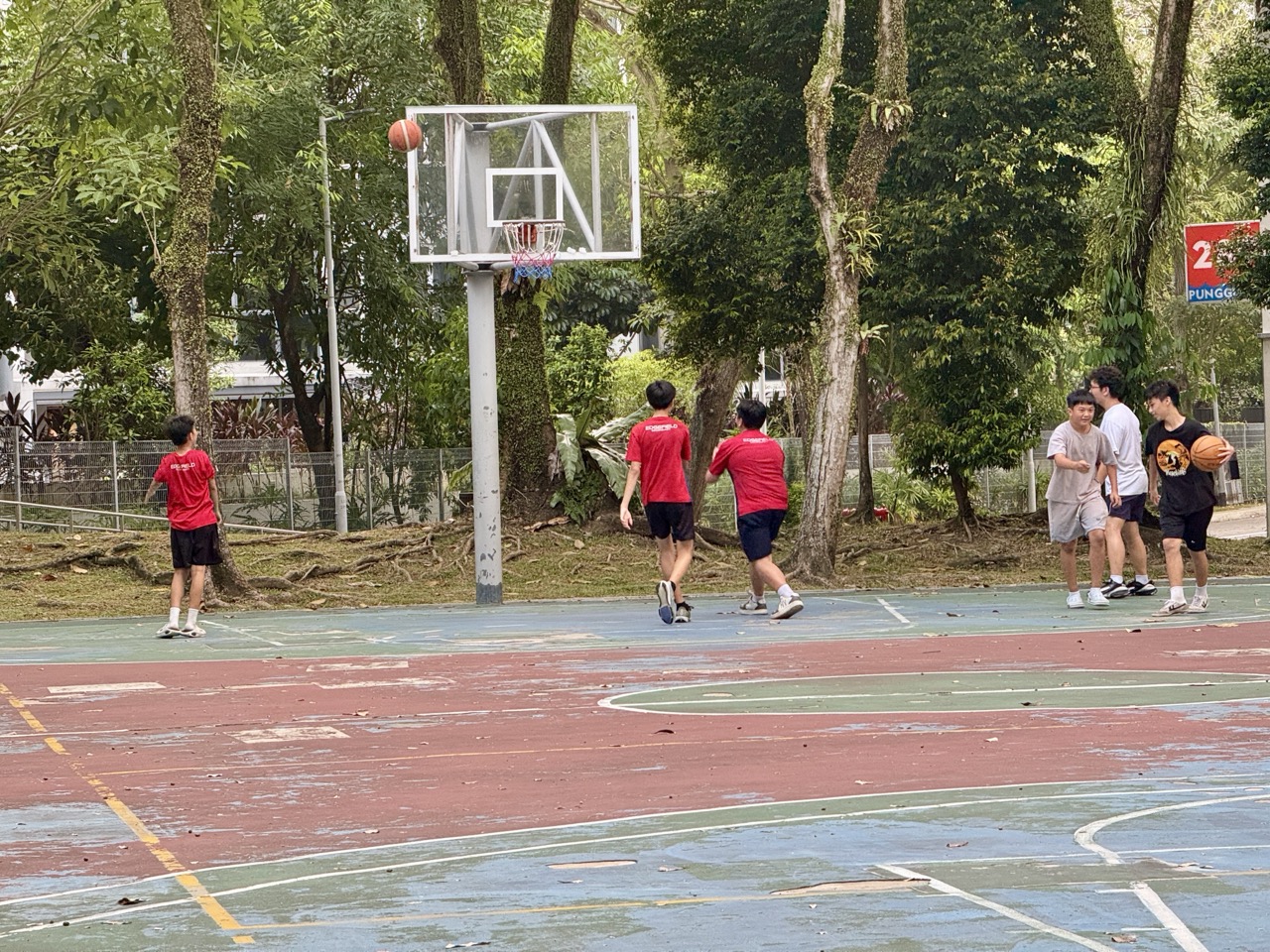
Does a student entering Secondary 1 through Posting Group 1 (PG1) have to take the full NAPFA test immediately? Generally, the full National Physical Fitness Award (NAPFA) six-station test in Singapore secondary schools is administered to Secondary 2, 4 and 5 students, not as a standard compulsory full test for all new Secondary 1 pupils. Secondary 1 students still attend Physical Education (PE), take part in appropriate school activities and may complete school fitness checks or selected test stations according to local practice. A pupil’s Posting Group does not create a different national fitness standard.
For Punggol parents, the best Secondary 1 preparation is to build safe, enjoyable physical activity rather than train a child aggressively for a six-station test they may not yet need to sit. The full NAPFA framework commonly involves sit-ups, standing broad jump, sit-and-reach, age-appropriate inclined pull-ups or pull-ups, a 4 × 10-metre shuttle run and a 2.4-kilometre run or walk. The precise assessment instructions, age-appropriate station and scheduling come from the school’s current PE department. If the child has an injury, health condition or access need, speak to the school and an appropriate healthcare professional before participation; do not assume a parent message automatically grants a medical exemption.
Quick answers for parents:
- PG1 versus PG2/PG3: school admission groups, not separate fitness grading categories.
- Full six-station NAPFA: schools’ current guidance generally identifies Secondary 2, 4 and 5 as the tested year groups.
- Secondary 1: PE and physical learning continue; some schools run selected fitness stations or internal assessments before full NAPFA years.
- Six stations: sit-ups, standing broad jump, sit-and-reach, inclined pull-ups or pull-ups according to the applicable standard, shuttle run and 2.4 km run/walk.
- Not military IPPT: school NAPFA and Singapore’s pre-enlistment IPPT are different assessments.
- Fitness scores: age and applicable standard matter; do not compare pupils using a random chart from another year or age group.
- Physical activity: Singapore guidance for children aged 7–17 recommends an average of about 60 minutes of moderate-to-vigorous activity a day across the week, adjusted for individual suitability.
- Medical concerns: seek the school’s required documentation and professional advice; safety comes before a test score.
- CCA: sports and non-sports CCAs offer activities, but NAPFA performance is not the same calculation as LEAPS 2.0 CCA attainment.
1. Why parents should separate Secondary 1 PE from NAPFA
A child’s first year of secondary school brings many changes: a new timetable, different teachers, a longer journey, unfamiliar school subjects and new friendships. Physical Education is part of the normal school curriculum and is intended to build movement competence, safe habits, teamwork and an understanding of a healthy lifestyle. NAPFA is a specific fitness assessment. They are related, but they are not identical.
Some parents hear that schools conduct an annual NAPFA season and assume every student in every level must attempt all six stations each year. Sembawang Secondary School’s PE page, updated May 2026, says the full NAPFA test is conducted annually for Secondary 2, 4 and 5. Similar school guidance distinguishes other years. That is why an incoming Secondary 1 child normally should not be told that a single six-station national test in the first weeks will determine their worth or academic prospects.
However, schools may conduct selected fitness stations, classroom checks or PE activities during Secondary 1. St Gabriel’s Secondary’s published NAPFA reference describes three stations that Secondary 1 and 3 pupils may attempt in its programme. A parent should therefore not interpret “not the full official six-station cohort” as “there will be no fitness activities or measurements at all”.
The proper reference is the receiving school’s current PE notice, which can state the actual year, dates and requirements. The child’s PG1 status does not replace or alter those instructions.
2. What happens in Secondary 1 PE?
PE lessons can introduce games, movement skills, fitness concepts, safe exercise habits, teamwork and opportunities to develop coordination. Depending on the school’s curriculum, pupils may participate in sports activities, outdoor education, mass runs or school games. The learning goal is broader than how quickly a pupil can finish 2.4 kilometres.
A student who has rarely exercised may learn how to move with balance, warm up appropriately and work with others. A pupil who is already an enthusiastic athlete may learn to apply tactical judgement, respect safety rules and support classmates. These are meaningful learning outcomes even when the students begin with very different fitness levels.
Parents can prepare by checking the school’s required PE attire, footwear, water-bottle guidance and any medical declaration procedures. They need not buy premium sporting equipment before reading the actual instructions. Ordinary suitable shoes and correctly sized clothing may be all that is needed for many activities.
PE should not become a competition between parents over their children’s body shape or running time. Encourage the pupil to describe what they learned and how they improved. A school fitness result can be useful feedback without becoming a label attached to a teenager’s identity.
3. What is NAPFA, and how is it different from a sports CCA?
The National Physical Fitness Award is a structured assessment of several aspects of physical fitness. Its stations evaluate different capabilities rather than only one talent. Cardiovascular endurance, strength-related performance, flexibility, speed and explosive movement all appear in the framework. This helps explain why a pupil who is very good at a ball game may still find a particular station challenging.
A school sports CCA, by contrast, is a continuing programme with training, participation and perhaps competition. A student in a badminton CCA practises sport-specific movement, strategy and teamwork over time. NAPFA is a scheduled measure of particular fitness components, not the whole story of the child’s sport or health.
Under LEAPS 2.0, school CCA attainment considers Leadership, Achievement, Participation and Service. A student should not assume that winning a NAPFA award automatically gives the maximum CCA bonus points or that completing CCA attendance automatically earns a NAPFA Gold. They are different frameworks with different criteria.
Parents can appreciate both. The CCA develops sustained commitment and social skills, while fitness assessments may provide information useful for improving an appropriate exercise routine. Neither should be used as an excuse to force the child into an unsafe or exhausting timetable.
4. The six NAPFA stations, explained in plain language
| Station | What it assesses | What the child should understand |
|---|---|---|
| Sit-ups | Abdominal muscle endurance | Correct, controlled movement is more important than reckless speed in practice. |
| Standing broad jump | Explosive lower-body power | Take-off, balance and safe landing matter. |
| Sit-and-reach | Flexibility within the test procedure | Avoid painful forcing or bouncing to achieve a greater distance. |
| Inclined pull-ups or pull-ups | Upper-body strength and endurance | Use the age- and sex-appropriate school standard and supervised technique. |
| 4 × 10 m shuttle run | Speed, agility and change of direction | Controlled turns and a safe running surface matter. |
| 2.4 km run/walk | Cardiorespiratory endurance | Pace appropriately and follow school safety instructions. |
This is the familiar school NAPFA framework described in current MOE school materials. Details such as how many attempts are allowed, whether full pull-ups apply to particular age groups, the order of stations and how the 2.4 km event is scheduled must be checked against the current school’s published standard. Some older sources show different exercise variants, so parents should avoid using an unrelated chart as the definitive current rule.
The essential idea is balance. A high score in one station does not mean the pupil is equally strong in every fitness component. A child can be fast over a short distance and still need to build endurance; another may have good flexibility but find explosive jumping unfamiliar. Preparation should be varied and age-appropriate.
See Pasir Ris Crest Secondary’s PE curriculum and NAPFA station list for a school-based reference.
5. Does a pupil in PG1 take a different NAPFA paper?
NAPFA is a physical assessment, not an SEC subject paper or a G1 Mathematics examination. Posting Groups are used for admissions and initial academic subject-level arrangements. A child’s fitness test is administered according to the applicable physical assessment standards, not a special PG1 version of the test. Academic performance cannot be used to predict running speed, flexibility or the ability to perform a pull-up.
This is especially important in mixed form classes under Full SBB. Students may share PE experiences, learn games and participate in school-wide events alongside classmates who entered through different Posting Groups. Their participation should be guided by safety, developmental needs and the school curriculum.
Do not tell a child, “You are PG1, so you should automatically be good at sports.” That stereotype is as inaccurate as assuming a PG3 student has no creative or practical ability. A pupil’s physical strengths develop through many factors, including experience, opportunity, health and suitable practice.
Recognise a student’s own progress. If the child learns to run comfortably for longer than last month, that is a meaningful gain even if a classmate is faster. Assessment numbers can help track improvement, but they do not explain the whole child.
6. Why a good 2.4 km time does not happen overnight
The 2.4 km run/walk tests endurance. Pupils who have not been exercising regularly may find it uncomfortable, especially if they start too fast and cannot sustain their pace. A safer foundation is consistent, moderate activity that the child can manage, with gradual increases where suitable. There is no need to schedule repeated maximum-effort timed runs just because the school has mentioned fitness testing.
A parent can help the child learn the idea of pacing. Walking briskly, cycling, swimming or joining a suitable game can build general activity habits. A student who is new to sustained running may alternate comfortable walking and jogging under appropriate supervision, taking account of their health and development. The purpose is to become capable and confident, not to chase a particular time from an older teenager’s benchmark chart.
Weather matters in Singapore. Heat, humidity, thunderstorms and haze conditions can affect the safety of outdoor activity. Follow school guidance and appropriate weather advisories. A parent should never push a child to continue exercising through chest pain, severe dizziness or breathing difficulty merely to finish a target distance.
For a student with a known condition, get individual advice from a qualified healthcare professional. This article explains general school expectations, not a personalised exercise prescription.
7. How sit-ups and pulling exercises should be approached
Strength-related stations are useful because they assess abilities different from running. A pupil who enjoys football may find an upper-body station unfamiliar. That is not evidence of laziness. It simply indicates a skill or strength component that may not have been practised in the same way.
Parents should seek the school’s demonstration of correct technique before attempting to reproduce the assessed movement. The school may use a particular range of motion, hand position, bar height or timing method. Practising a different version at home can create confusion and, if poorly supervised, increase injury risk.
Use age-appropriate general activities that build control. A child can benefit from games and ordinary movements that require safe pushing, pulling and balanced posture, as well as adequate rest. There is no need to buy gym machines or impose intense exercise targets on a younger teenager who is still growing.
Where a pupil experiences pain, unusual weakness or another physical limitation, stop the activity and seek appropriate advice. The purpose of school PE is healthy participation and learning, not making a child endure injury for a certificate.
8. Why the standing broad jump is not just a leg-strength test
The standing broad jump combines strength, coordination, balance and technique. A student must prepare the movement, coordinate the take-off and land safely. A pupil who has rarely jumped in a structured setting may improve noticeably when they understand the mechanics, even before their physical strength changes greatly.
Parents should avoid using unsafe surfaces or crowded neighbourhood walkways for unplanned maximal attempts. School PE teachers can demonstrate the correct assessment technique and advise when practice is appropriate. General playground games, supervised jumping activities and coordination exercises may be useful foundations, but the child does not need to reproduce the official test every afternoon.
A good learning conversation asks the pupil what changed between attempts. Did they feel better balanced? Did they understand where to place their feet? Was the landing controlled? This links physical activity to observation and feedback, the same habits that support learning in academic subjects.
The resulting distance is only one measure. Children develop at different rates, and the goal should be safe improvement rather than comparison with a friend whose growth and training history differ.
9. Sit-and-reach: flexibility without forcing
The sit-and-reach station assesses flexibility within a defined movement. Some children are naturally more flexible in particular joints and muscle groups than others. A lower score should not automatically be interpreted as poor effort or a personal failing. Mobility can be affected by experience, growth and individual body structure.
Useful preparation involves safe, comfortable movement and regular activity. A pupil who is unusually stiff or has pain should not be forced to reach farther through discomfort just because another child’s score looks impressive. Stretching should be age-appropriate and consistent with the school’s PE instruction and the student’s health.
Parents should remember that flexibility scores are not a complete assessment of health. A child may have excellent endurance and still be less flexible in a particular movement. The objective of PE is a balanced understanding of physical fitness and safe participation in activities.
Ask the teacher what the station measures and how a student should practise correctly if the school is preparing a class for the test. Avoid interpreting an online video as personalised medical or exercise advice.
10. Shuttle run: speed, turns and safe decision-making
The 4 × 10-metre shuttle run is not simply a short straight sprint. It requires changing direction and controlling movement while keeping speed. A child who tries to turn too sharply or ignores the running surface may slip. The skill includes knowing how to accelerate, decelerate and change direction safely.
Children develop these movement patterns in many games. Tag games, appropriate ball activities and school PE drills can provide opportunities to practise controlled stopping and turning. A parent does not need an expensive specialised coach merely because the station appears in a NAPFA list.
Again, the school’s actual instructions matter. The number of attempts, turning procedure and timing method follow the defined test. Practising with random cones at home may help general coordination but does not guarantee an identical official score. The family should avoid promising that a stopwatch measurement taken on uneven ground will match the school assessment.
Good movement is controlled movement. A small technical improvement is worthwhile when it makes the child safer and more capable, even if the official fitness season is not yet approaching.
11. Are NAPFA Gold, Silver and Bronze the same as academic grades?
No. NAPFA awards recognise fitness performance under the applicable station and age-based standards. They are separate from school examinations at G1, G2 and G3, and separate from the LEAPS 2.0 aggregate for co-curricular attainment. A pupil may earn a strong fitness award while still finding academic subjects difficult, or achieve excellent school grades while needing to improve physical endurance.
Some school handbooks publish scoring tables for Bronze, Silver and Gold, including minimum performances at individual stations and point totals. However, parents should use the current school and year standards rather than apply a random age chart from an old handbook. Different requirements can apply to the relevant age and station variant.
It is not sensible to motivate a child solely through the threat of failing to earn Gold. Ask which component they understand, what progress is realistic and how to train safely. An award may be satisfying, but consistent physical activity is useful even when the child does not reach a particular award band.
A fitness result is not a diagnosis, a measure of moral worth or a prediction of future National Service performance. The school NAPFA and military IPPT serve different purposes.
12. What is the difference between NAPFA and IPPT?
National Service-related fitness discussions often mention the Individual Physical Proficiency Test (IPPT). This is not the same assessment as school NAPFA. MINDEF has explained that NAPFA measures a broad set of fitness components through six stations, while the military pre-enlistee IPPT has its own structure and purpose.
A parent of a twelve-year-old boy may hear older relatives discuss National Service standards and assume they should immediately train for an adult military test. That approach ignores the child’s age, growth, school curriculum and individual fitness needs. Secondary-school PE should focus on healthy development, safe movement and sustained activity.
Parents should also avoid treating NAPFA results as guaranteed proof of future exemption from any military physical training arrangement. Policies, tests and individual circumstances differ. The appropriate information should be checked from MINDEF when the student is actually reaching the relevant stage.
For now, encourage a balanced routine that includes study, movement, social participation and enough rest. A healthy teenager does not need to behave like a full-time competitive athlete.
Reference: MINDEF on the difference between NAPFA and IPPT.
13. How much activity should a school-age child aim for?
Singapore’s integrated activity guidance for school children and youth aged 7–17 recommends accumulating an average of at least 60 minutes of moderate-to-vigorous activity each day across the week, alongside suitable strengthening activities and adequate sleep. This is a broad population guideline, not a personalised prescription for every child or a minimum number of minutes that must be performed all at once.
Movement can be spread across the day and can include school PE, appropriate games, safe cycling, brisk walking or a sport the child enjoys. A family living in Punggol may find it easier to build active habits around familiar community spaces rather than formal expensive programmes. The emphasis should be regularity and variety, not whether the activity looks impressive.
Children with medical conditions, disabilities or significant fitness limitations may need individual professional advice about what is safe and suitable. Where the child is recovering from illness or injury, it is important not to treat the general population target as a reason to ignore their actual needs.
Physical activity also interacts with sleep and sedentary time. A pupil who spends the evening on screens and goes to bed very late may struggle to enjoy morning PE even if they occasionally exercise intensely. A balanced family routine can make everyday movement more sustainable.
See the Singapore Integrated 24-Hour Activity Guidelines summary.
14. School days, homework and the importance of adequate sleep
Secondary 1 pupils often feel that every part of the day must be used efficiently: school, CCA, homework and perhaps outside tuition. That can leave little time for exercise that is not associated with marks or a formal activity. Yet the child needs sleep, movement and recovery as well as academic work. A chronically exhausted pupil may find both PE and Mathematics harder.
Parents can start by examining the ordinary school week. How much time is spent commuting? Does the child eat after CCA? Is homework organised or repeatedly delayed by searching for missing instructions? Are digital devices used late into the night? Small adjustments can create opportunities for ordinary activity without adding another paid commitment.
There is no need for every evening to include a hard workout. Some days will involve school sports or active travel. Other days may require gentle movement and rest. The balance depends on the child’s health, school programme and actual workload. The purpose is a sustainable habit over months and years.
Do not shame a child for being tired after a new Secondary 1 timetable. Instead, make sure the daily routine is realistic and adapt the level of activity appropriately with school or professional guidance where necessary.
15. What if the child has asthma, an injury or another medical concern?
Schools have procedures for students with medical conditions or temporary injuries that may affect PE and fitness testing. Parents should inform the school through its authorised channel and provide the medical documentation requested. The school can then advise what participation, modification or exemption is appropriate in the particular case. A casual assumption that a student should simply “sit out” every lesson may not match the school’s learning or safety arrangements.
For a pupil with asthma or another diagnosed condition, obtain guidance from the child’s treating professional about safe activity, symptoms to watch for and any relevant school plan. A student with an acute injury may need a temporary adjustment rather than a permanent fitness exemption. The medical advice and school procedure should work together.
Do not encourage a child to hide symptoms to avoid disappointing a coach or to keep a CCA place. Severe breathing difficulty, fainting, chest pain or other serious symptoms require prompt medical attention. In a medical emergency in Singapore, seek urgent help through the appropriate emergency service.
Parents should ask how absences or adjusted participation will be recorded and whether a later test date is possible when medically appropriate. The answer depends on the school and the student’s circumstances, not a universal rule found in a social media comment.
16. What if a pupil has a physical disability or special educational need?
Meaningful inclusion in physical education may require modifications to activities, equipment, instructions or supervision. A pupil with a physical disability should not be assumed incapable of participating in every PE lesson. Equally, the school should not require unsafe participation in a task that is unsuitable for the child’s individual condition.
Parents can discuss specific needs with the PE department, form teacher and relevant school support personnel before the activity. A student may need accessible facilities, adapted movement tasks, additional explanation or a different way to demonstrate a curriculum learning outcome. Medical or professional advice should inform decisions where necessary.
NAPFA awards and official station standards are distinct from PE lesson participation. An adapted classroom activity does not automatically grant an official NAPFA grade. Ask the school how the student’s circumstances affect any assessment that applies to their cohort.
Most importantly, preserve dignity. Do not force a child to explain a private health condition to classmates simply to justify a modified exercise. Adults can arrange support through appropriate channels while encouraging the student to participate socially and safely.
17. Where Punggol families can build regular activity habits
Punggol offers a range of everyday opportunities for movement, including neighbourhood courts, sheltered walkways, park paths and recreational spaces. A family does not have to travel to a premium sports club to encourage an active lifestyle. The important factor is whether the chosen activity is suitable, safe and realistic to repeat throughout the school term.
For example, a child might enjoy an ordinary walk beside Punggol Waterway with family, a supervised game at a neighbourhood court or a suitable school CCA. These experiences can build confidence and familiarity with movement. However, do not assume every public court is free at all hours or that a particular facility is open without checking its current rules.
Try to choose activities the child wants to repeat. A pupil who dislikes running laps may enjoy swimming or a ball game. Another may prefer cycling with family. The goal is varied movement and enjoyment, not a strict imitation of a NAPFA station every day.
Use safe public routes, obey facility rules and consider Singapore’s weather. For more school activity ideas, see eduKate Punggol’s PG1 CCA and school sports guide.
18. A fictional pupil who thinks PE is not for them
Imagine fictional student Kai, who enters through PG1 and feels self-conscious about being slower than classmates during running games. He begins to say he is “bad at sports” and avoids any activity that might make others notice his performance. His parents initially respond by telling him to run much faster immediately, which increases his anxiety.
A more useful approach is to ask what activities Kai enjoys and what makes school PE difficult. With appropriate teacher guidance and a safe routine, he may begin with regular walking, movement games and gradual endurance work. The family focuses on how he feels and what he can manage independently rather than comparing him with the fastest student in the class.
When Kai later faces an age-appropriate fitness assessment, he understands what each station measures and has developed habits that make participation less intimidating. His progress does not require him to win an award. Confidence grows when a child sees that practice can lead to change without humiliation.
This example is fictional. Any exercise adjustment for a real child with symptoms or health concerns should follow professional and school advice.
19. A second example: a student talented in sport but tired all week
Imagine fictional student Aisha who is selected for a demanding sports CCA and wants to earn strong LEAPS 2.0 recognition. Her family is pleased and adds outside training on several more evenings. Within weeks she is arriving home late, struggling with schoolwork and sleeping poorly. Her parents initially interpret this as insufficient determination.
The more useful question is whether the total timetable is realistic. A student can be motivated and still need appropriate recovery. The family reviews CCA training, outside enrichment, travel, homework and sleep. They seek the school’s advice rather than trying to maximise exercise hours in every available slot.
NAPFA readiness is not the same as the amount of paid coaching a pupil receives. Good physical education develops varied competence, healthy habits and the ability to manage effort over time. A pupil should have opportunities for friendships and rest as well as organised training.
Again, the example illustrates a decision framework, not a clinical assessment or guaranteed result.
20. Four-week Secondary 1 fitness preparation plan
Week 1 — Understand the actual school requirements
Read the PE notice and ask whether the child’s Secondary 1 level has a full NAPFA test, selected stations or ordinary classroom fitness checks. Confirm the correct attire, footwear, activity schedule and any medical declaration process. Do not assume that a generic online NAPFA chart is the school’s current instruction.
Week 2 — Choose a safe, repeatable activity routine
Help the child select everyday movement they enjoy, such as appropriate walking, cycling, school games or recreation. Start from what they can comfortably do and seek professional guidance if there is a relevant medical condition. The goal is regular engagement rather than an immediate maximum-effort test.
Week 3 — Learn technique through appropriate instruction
Use PE teaching or supervised activities to understand safe running pace, posture, balance and movement skills. Ask what the child learned and which exercise feels unfamiliar. Avoid privately attempting high-intensity strength work or painful stretching without appropriate knowledge.
Week 4 — Review sleep, confidence and school routine
Talk about how activity fits around homework, transport and CCA. Ask whether the child has become more comfortable participating and whether any safety concerns remain. Make one manageable adjustment for the next month. Fitness develops through consistency, not fear of a result.
21. Does outside tuition make sense when PE and schoolwork compete for time?
Some families respond to Secondary 1 academic anxiety by adding so much tuition that physical activity disappears. Others focus heavily on sport and leave insufficient time to repair foundational English or Mathematics gaps. The right schedule considers the whole child. Sleep, school attendance, movement, social participation and academic learning all matter.
At eduKate’s small-group tuition in Punggol, academic support is most effective when a specific learning gap is identified. A pupil struggling with algebra needs conceptual explanation, worked examples and independent corrections. A student who is exhausted after late CCA may first need a better timetable. A tuition package cannot replace adequate sleep or safe PE participation.
Sign up for Mathematics tuition only after the student’s starting position is clear. Parents can ask what the support will change and how the child will demonstrate independent progress. Extra learning should reduce unnecessary stress rather than consume every remaining hour of the week.
A good Secondary 1 routine builds capability across different parts of life. The child should not have to choose between becoming more physically confident and understanding school subjects well.
Frequently asked questions about PG1, NAPFA and PE
Do all Secondary 1 students take the full six-station NAPFA?
Not as the usual full NAPFA cohort. Current secondary-school guidance identifies Secondary 2, 4 and 5; schools may conduct other fitness checks for Secondary 1.
Can a school assess selected NAPFA stations in Secondary 1?
Yes. Some schools publish selected-station or internal fitness arrangements for other years. Check the current PE notice.
Does PG1 have an easier national NAPFA test?
Posting Group is an academic admission arrangement, not a separate national fitness category.
How many stations are in the standard NAPFA test?
Six: sit-ups, standing broad jump, sit-and-reach, pull-up variant, shuttle run and 2.4 km run/walk.
Do all teenagers perform the same pull-up variant?
No. School guidance can differentiate inclined pull-ups and full pull-ups by the applicable age- and sex-based standard.
Does NAPFA Gold automatically give two LEAPS 2.0 bonus points?
No. NAPFA and LEAPS 2.0 use different assessment frameworks.
Is the NAPFA 2.4 km run the same as the military IPPT?
No. The school fitness test and military IPPT have different purposes and assessment structures.
Can the 2.4 km event be held on a different day from other stations?
School handbooks describe this as a common arrangement. The current PE department gives the actual schedule.
Should a child practise by running 2.4 km at maximum effort daily?
No. A safe, varied and sustainable routine is preferable; individual health and readiness matter.
What if my child has asthma or an injury?
Notify the school and follow medical and school guidance on safe participation, modifications and relevant documentation.
Does a parent’s message automatically exempt a child?
Not necessarily. The school can explain the required medical document and assessment procedure.
Can a child with a physical disability participate in PE?
Suitable participation or adaptations may be possible; discuss the student’s individual needs with the school.
How much activity do Singapore’s youth guidelines recommend?
An average of at least 60 minutes a day of moderate-to-vigorous movement across the week for healthy children aged 7–17, with individual adjustments where required.
What should parents focus on before any fitness score?
Safety, regular movement, confidence, suitable challenge, adequate rest and the child’s enjoyment of activity.
Official references and connected eduKate Punggol reading
- Sembawang Secondary PE: NAPFA tested in Secondary 2, 4 and 5 (May 2026)
- Pasir Ris Crest Secondary PE: six-station NAPFA and age-appropriate pull-ups
- MOE school PE page: NAPFA fitness assessment years and stations
- Singapore Integrated 24-Hour Activity Guidelines
- MINDEF: NAPFA versus pre-enlistment IPPT
- eduKate Punggol: CCA, LEAPS 2.0, attendance and bonus points
- eduKate Punggol: Secondary 1 school health screening
Reviewed 6 November 2026. This independent education article is not a personalised fitness or medical programme. Consult the school PE department and qualified professionals for the child’s actual assessment, health restrictions and safe activity arrangements.


