
Schools and education at Punggol continue after PSLE through Secondary 1 Posting and Full Subject-Based Banding. Eligible families ordinarily submit six secondary-school choices in ranked order using their child’s official PSLE Score and Posting Group eligibility. The order can matter in tie-breaks, but previous years’ SchoolFinder cut-off points are only references, not guaranteed admission thresholds. Posting Groups 1, 2 and 3 facilitate entry, while G1, G2 and G3 describe subject levels that can differ across a pupil’s secondary timetable.
This guide explains the six choices, historical PSLE Score ranges, boundary eligibility, official tie-breakers, how DSA applicants are treated differently, and what to do after a school is allocated for Secondary 1 entry in 2027. It is focused on decisions after PSLE results rather than the earlier DSA trial or Primary 6 revision process. Punggol-area schools offer different programmes, routes and supports, so families must use current MOE and receiving-school information without assuming any named school has a vacancy.
- S1 Posting uses **six ranked school choices** for ordinarily eligible applicants.
- The child’s official PSLE Score and personalised eligibility govern options.
- SchoolFinder cut-off points describe the previous cohort, not guaranteed current admission.
- Tie-breakers can involve citizenship, school choice order and computerised balloting.
- Posting Groups 1–3 facilitate entry and starting subject levels under Full SBB.
- Secondary G1, G2 and G3 are subject levels, not fixed lifelong streams.
- Some boundary-score pupils may choose between eligible Posting Groups.
- The chosen Posting Group applies across all six choices under the S1 internet-system guide.
- Successful DSA allocations follow separate rules and do not complete ordinary six-school choices.
- After allocation, confirm the actual secondary school’s subject, uniform, transport and orientation requirements.
Definition lock: Posting Group, subject level, S1 Posting and cut-off point
Secondary 1 Posting is MOE’s ordinary process allocating eligible pupils to secondary schools after their PSLE results and ranked preferences. Posting Groups facilitate admission and guide starting curriculum levels. G1, G2 and G3 are General subject levels under Full Subject-Based Banding, allowing pupils to develop different strengths. A cut-off point is a score boundary observed after a posting exercise, not a fixed promise made in advance. DSA-Sec is a separate talent-based route with binding commitments for successful allocations.
Seven decisions a Punggol P6 family should separate
- Understand the official PSLE result and personalised Posting Group eligibility.
- Use the actual six-choice rules rather than DSA rules.
- Treat previous SchoolFinder score ranges as indicative only.
- Compare schools’ real subjects, CCAs, support and safe travel.
- Check whether a boundary Posting Group option is available and appropriate.
- Submit and retain the official verification slip through the authorised system.
- After posting, follow the receiving school’s current 2027 onboarding instructions.

1. The PSLE result determines eligibility, not the full secondary school experience
After the Primary School Leaving Examination, a pupil receives an overall PSLE Score and relevant eligibility information for Secondary 1. Families can use that information to consider actual school choices, Posting Group eligibility and any specific options described by MOE. The score matters administratively, but it is not a permanent description of the child’s intelligence or the exact subject levels they will take throughout secondary school. Full Subject-Based Banding is intended to allow greater flexibility as strengths and needs develop.
MOE’s Full SBB framework, implemented across secondary schools from 2024, replaces the older distinction between Express, Normal (Academic) and Normal (Technical) academic streams. Posting Groups 1, 2 and 3 facilitate admission and guide starting subject levels. Students can learn in mixed form classes and may take different subjects at G1, G2 or G3 levels under current criteria. A family should not simply rename the old streams and treat everything about the curriculum as unchanged.
An actual parent decision and its consequences
The first parent task is to understand the official result and eligibility letter. A hypothetical child with a total score of twenty-two may have an option involving more than one Posting Group under current rules, while another child may have one eligibility. That must be read from the official personalised information, not calculated using an outdated screenshot. The parent’s school-selection plan should begin with confirmed eligibility and the actual school’s programmes.
Some families immediately search for ‘top secondary school cut-off 2027’ as soon as results approach. But a future posting cut-off point is not fixed in advance. It emerges after actual applicants submit choices and places are allocated. MOE’s SchoolFinder provides previous cohort PSLE score ranges for reference. Treating those historical figures as guaranteed admission thresholds is a common and consequential mistake.
What to avoid and an unfamiliar example
A child should participate in the decision. Travel time, school culture, co-curricular interests, learning support, subject offerings and friendships can influence whether a place is suitable. Parents can explain the choices without making the pupil feel they must defend a score or apologise for its effect on family ambition. A realistic list is part of responsible planning, not a judgement of human worth.
For transfer, give an invented family a pupil’s official eligibility and an older table of school ranges. Which is the confirmed fact and which is a historical reference? The family should not promote a previous year’s cut-off into a guaranteed current-year outcome.
2. Six ranked school choices are different from the unranked DSA application
MOE’s guide to the Secondary 1 Internet System instructs eligible applicants to select six secondary-school choices in order of preference. That is different from the earlier DSA-Sec application, where schools and talent areas are initially chosen under separate rules. For ordinary S1 Posting, order matters in the allocation and tie-break process. A parent should not copy the advice about unranked DSA choices into the ordinary posting submission.
A sensible family can start by listing eligible secondary schools and comparing their actual characteristics. MOE’s parent guidance encourages using all six options and including a range of schools based on indicative cut-off points. This can reduce the risk of selecting only historically very competitive options. The list should still reflect genuine preference, because the ranking is not merely a mathematical exercise in maximising past-year probabilities.
An actual parent decision and its consequences
Families sometimes put a school first solely because its published historical range is associated with a lower PSLE Score. That can overlook suitability. A pupil may value a programme, travel arrangement or support environment at another school. A thoughtful ranking explains why each choice is acceptable, which trade-offs exist and whether the family would be prepared to take up the place if offered.
One mistake is believing that a school at the bottom of the six choices is unimportant. If earlier options cannot be allocated, later choices may determine the result. Parents should therefore select realistic and acceptable alternatives rather than fill remaining lines with schools they have not investigated. Using all six choices is helpful when the options are considered meaningfully.
What to avoid and an unfamiliar example
The official S1 internet system includes verification and acknowledgement steps. An unfinished online form or abandoned browser session is not the same as an accepted submission. Families should follow the current instructions, retain appropriate confirmation privately and avoid publishing the student’s identification number or S1 PIN in a group chat. Administrative accuracy protects the child’s opportunity.
For transfer, imagine a fictional family with three preferred schools and three empty slots. How should they proceed? Use official information to identify acceptable additional choices rather than assume that leaving half the list blank is a harmless way to express high standards.
3. SchoolFinder cut-off points describe last year’s outcome, not this year’s promise
MOE explains that PSLE Score ranges shown on SchoolFinder are derived from the first and last pupils admitted in the previous year’s S1 Posting exercise, with appropriate presentation for different groups. These figures depend on previous applicants’ scores, choices and available places. They are reference information, not cut-off points predetermined for the current cohort. A school that admitted a pupil with a certain score last year may have a different final range after the next exercise.
A fictional school may have a previous cut-off point of nineteen in a particular Posting Group. A child with an overall score of eighteen may reasonably investigate the option, but no guaranteed offer follows from the comparison. Another child with a score of nineteen should not assume admission is certain either. Selection depends on the actual current cohort and applicable posting rules. Historical figures support planning, not certainty.
An actual parent decision and its consequences
Different schools may have distinct score ranges for the relevant Posting Groups and any applicable affiliation conditions. A parent should not combine figures from different groups or years and publish one universal school ranking. Check whether the number comes from SchoolFinder, which cohort it describes and which admission group applies. An unattributed screenshot can hide all three dimensions.
School reputation and location are also often simplified into one score. A school offering appropriate subjects, CCAs and support may suit a particular pupil even if its historical cut-off appears less competitive. The family can compare official programme pages and realistic travel demands alongside previous score ranges. The child’s daily experience matters after the posting exercise is over.
What to avoid and an unfamiliar example
Some online articles announce ‘confirmed 2027 COPs’ before the actual 2026 S1 Posting concludes. Such claims should be questioned. A precise cut-off for the new intake cannot be known simply because the previous year’s list is visible. A responsible publisher labels historical data and updates the guide after official results rather than inventing live admissions numbers.
For transfer, give the learner two SchoolFinder tables labelled for different years. Can they explain why the older one is a reference and what additional information is needed for a current choice? The skill is reading administrative data without overstating what it proves.
4. Tie-breakers involve citizenship, choice order and possible balloting
MOE’s posting guidance explains that pupils are considered based primarily on academic merit through the PSLE Score, subject to relevant eligibility and posting rules. Where applicants with the same score compete for the last available places in a school, the tie-breakers include citizenship, order of school choice and computerised balloting. School choice order matters precisely because two equally scored applicants may have ranked a school differently.
The sequence should not be reduced to a universal guarantee that putting a school first overrides a substantially different PSLE Score. A tie-breaker is applied under specified conditions. The academic score and eligibility framework still operate. A family must understand when order becomes relevant rather than believe a first-choice position is a magic admission token.
An actual parent decision and its consequences
MOE’s information on SAP schools also describes a specific advantage for eligible Higher Chinese Language grades under the relevant tie situations. This is not a general rule giving every HMTL pupil priority for every school. The conditions and subject matter, and current programme criteria, must be read accurately. Parents should avoid combining distinct special provisions into an invented all-purpose points bonus.
Computerised balloting can occur when earlier criteria do not resolve competition for the final place. Families should not assume every application at a school uses balloting or that a past balloting outcome predicts a future one. It is a defined tie-break mechanism, not the default method for allocating the whole cohort. The official explanation matters more than a dramatic story in a parent forum.
What to avoid and an unfamiliar example
A practical discussion might compare two fictional applicants with the same PSLE Score and citizenship who both qualify for the last place. If one ranked the school first and the other ranked it fourth, choice order is relevant under the described rule. But the outcome cannot be inferred from choice order alone without confirming all applicable conditions.
For transfer, change the fictional scenario so the applicants have different PSLE Scores. Should the tie-breaker be treated as the first factor? No. The relevant main posting criterion must be considered first. Recognising sequence prevents misleading advice to other families.
5. Posting Groups guide entry while subject levels may be mixed
Posting Groups 1, 2 and 3 help allocate students into secondary schools and guide the initial subject levels they may study. Full Subject-Based Banding then offers opportunities for more flexible subject-level arrangements. G1, G2 and G3 refer to General subject levels rather than separate permanent school streams. A pupil may enter through one Posting Group and have strengths that qualify them to study selected subjects at a different level under current MOE criteria.
Families should avoid describing a child as permanently ‘G2’ in every aspect of school. The student’s form class, subject-level combination and later progression depend on actual school arrangements. Mixed form classes allow pupils with different starting levels to learn together, while subjects are organised according to the relevant level requirements. The daily timetable and subject grouping need to be obtained from the receiving school.
An actual parent decision and its consequences
MOE’s Full SBB infographic gives examples of pupils taking different combinations of G-level subjects. It also illustrates how certain PSLE scores at the boundary may make applicants eligible for more than one Posting Group. A family should consult its own child’s personalised eligibility rather than treat one example as a universal rule for everyone with a similar-looking school assessment result.
A child strong in Mathematics may be ready for a different challenge from one who needs additional support with English comprehension. The system recognises the possibility of subject-specific strengths, but a particular change is not automatic simply because the pupil or parent requests it. The school and MOE criteria determine initial choices and subsequent review. Formal academic decisions deserve accurate guidance rather than status-driven pressure.
What to avoid and an unfamiliar example
Some families interpret the ability to take a higher-level subject as evidence that all other learning demands should also increase. That can create an unsustainable workload. A suitable programme considers the child’s actual readiness and learning needs across subjects. Education is not a competition to gather as many G3 labels as possible; meaningful understanding matters within the chosen levels.
For transfer, imagine a pupil who studies a more demanding Mathematics subject than another subject in Secondary 1. Does this contradict Full SBB? No. Different subject levels can be part of the flexibility, under the authorised criteria. The parent should ask what each subject requires rather than impose an identical label across the timetable.
6. Boundary scores and choice of Posting Group require deliberate review
MOE’s Full SBB guidance describes situations where pupils at certain PSLE Score boundaries may be eligible for more than one Posting Group. The official examples include scores of twenty-one or twenty-two at the Group 2 and Group 3 boundary and score twenty-five at the Group 1 and Group 2 boundary. Eligibility must be checked against the actual result and current official rules rather than inferred from a primary school’s preliminary test.
The S1 Internet System guide explains that an eligible family choosing between two Posting Groups must make a selection, and the chosen group applies to all six school choices entered in that submission. That is a significant administrative decision. A parent should not assume that each school can independently be assigned a different Posting Group within the same form. Read the personalised eligibility and official instructions carefully.
An actual parent decision and its consequences
Selecting a group involves considering the child’s learning readiness, the available school options and the starting subject-level demands. A more advanced starting level might be appropriate for one pupil and unnecessarily demanding for another. The choice should not be reduced to a social preference for a higher number. The family can ask the primary school for guidance based on the child’s actual strengths and progress.
Some online calculators present a boundary score as automatically assigning a school or course. That is misleading because the score may offer a choice of Posting Group rather than a fixed destination. The subsequent school allocation still depends on the official posting process. A boundary option should be considered alongside the six ranked choices and the child’s wellbeing.
What to avoid and an unfamiliar example
Families also need to understand that later subject-level opportunities are governed by criteria and school arrangements. Choosing an initial Posting Group does not guarantee every future G-level subject will remain fixed or automatically be changed. The student’s progress and the secondary school’s official guidance will matter after admission.
For transfer, consider a fictional pupil eligible for two Posting Groups whose parent wants to select one for the first choice and another for the third. Is that how the described S1 system works? No. The chosen Posting Group is applied across the submitted school choices. Accurate form interpretation comes before speculation about advantage.
7. The ordinary S1 Internet System differs from successful DSA allocation
Families who have participated in DSA-Sec may encounter different instructions when PSLE results are released. The official S1 Internet System guide states that successfully allocated DSA applicants do not fill in the ordinary six-school choices. Their DSA allocation is reflected in the relevant personalised information. This is because successful DSA placement carries its own school commitment under MOE rules. The family should not attempt to submit ordinary choices in hopes of changing a confirmed allocation.
An unsuccessful DSA application is a different situation. A pupil who did not receive a DSA allocation can use the regular S1 Posting route if otherwise eligible. A parent may feel disappointed but can still make thoughtful school choices using the actual PSLE Score, official eligible groups and current SchoolFinder information. DSA outcomes should not be treated as a judgement that the pupil lacks ability or a future.
An actual parent decision and its consequences
Some DSA applicants may still have relevant Third Language procedures. The internet system guide describes how successful DSA pupils with the appropriate eligibility may need to make a Third Language selection where interested. The precise instructions should come from their personalised option form and the live MOE guidance. Do not tell every successful DSA family to skip all administrative action simply because regular school choices are closed to them.
Parents should protect login credentials and posting forms. A personalised S1 option form contains sensitive information, including a PIN and identifiers used for the official online system. Sharing a screenshot publicly so that other parents can evaluate the score may compromise privacy. A family can ask a general question about rules without disclosing the child’s full account details.
What to avoid and an unfamiliar example
MOE’s official guide advises families to review the entered information and retain the verification slip after submission. The administrative confirmation matters; an unsaved screen does not establish successful completion. Families should not rely solely on a remembered list or a forwarded message that says the form probably went through.
For transfer, compare two fictional pupils who received PSLE results: one has a confirmed DSA allocation and another was unsuccessful in DSA. Which pupil normally enters six ranked choices? The latter under ordinary eligibility, while the former follows the DSA allocation and any remaining applicable instructions.
8. SchoolFinder can help compare programmes, support and actual travel
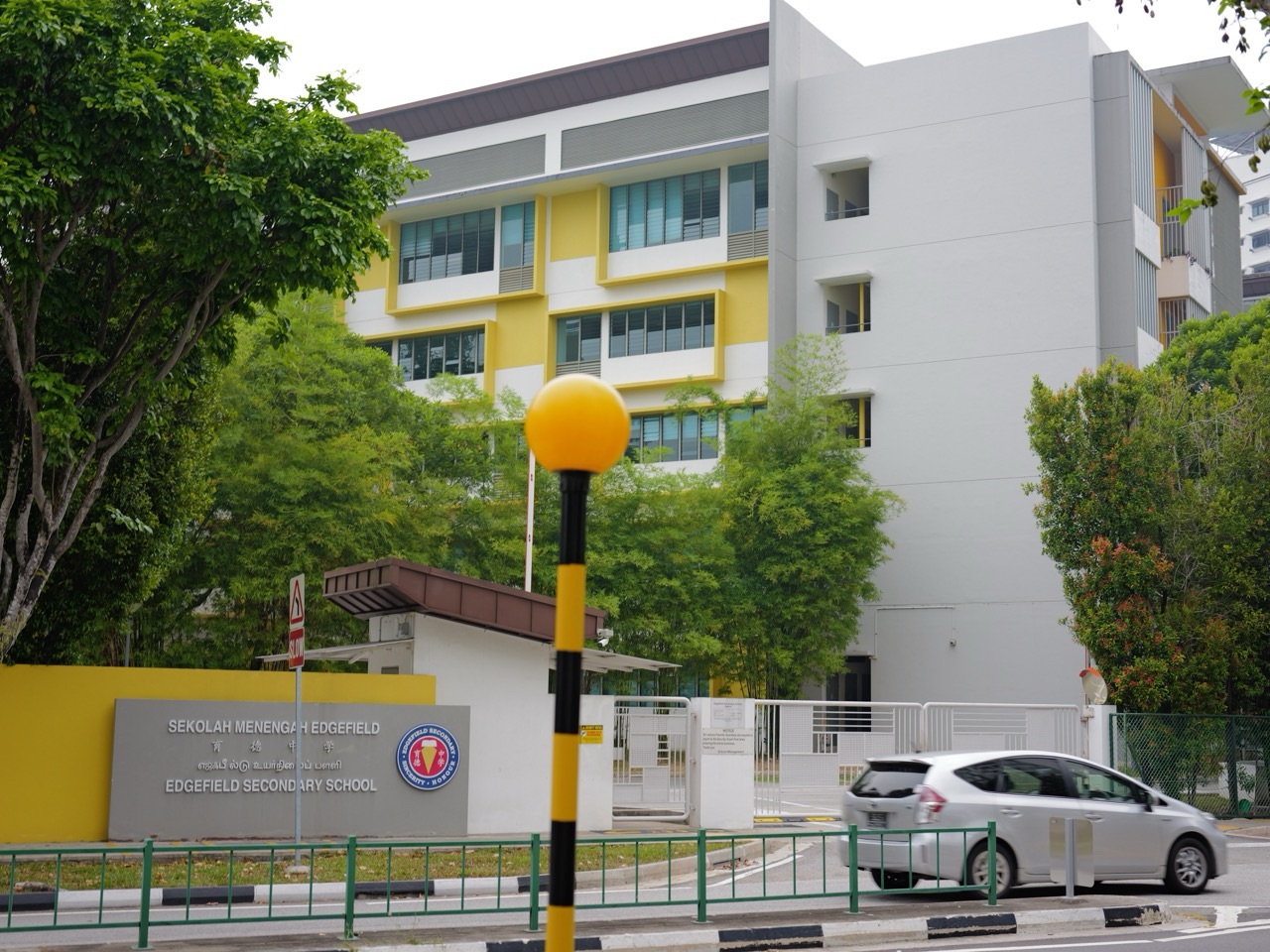
MOE SchoolFinder provides official information about secondary schools and their educational offerings. For Punggol families, local options can include Punggol Secondary, Edgefield Secondary, Greendale Secondary, Yusof Ishak Secondary and suitable schools in nearby estates. A school should not be recommended as eligible for a particular pupil without comparing current admission data and the student’s actual result. The list of nearby campuses is a research starting point, not a guaranteed admissions shortlist.
Look beyond the headline score range. School programme pages can describe Applied Learning Programmes, Learning for Life Programmes, sports, performing arts, clubs and support services. A pupil interested in coding or design may want to understand one school’s relevant opportunities, while another may prioritise a manageable commute or a supportive environment. The actual offerings and access arrangements should be verified rather than assumed from a name or old publicity poster.
An actual parent decision and its consequences
Travel matters because Secondary 1 may involve earlier starts, CCAs, activities or later dismissal than a child’s primary routine. A school that seems close by car might require a complicated public transport journey. Parents should examine safe routes and the pupil’s independence, accounting for weather and different arrival times. A school is not automatically suitable simply because a map shows a short straight-line distance.
One useful exercise asks the child to identify three factors that would make a school a good daily fit. The parent can add practical costs, travel and current eligibility. This gives the learner a meaningful role without expecting them to become an admissions expert. Adult decisions should still follow official requirements and available places.
What to avoid and an unfamiliar example
Do not use isolated reviews as definitive evidence about school culture. A personal experience can be relevant but does not represent every pupil or cohort. Official information, visits and thoughtful questions provide a broader foundation. Families should not describe other schools as inferior based solely on a cut-off point. Different students can thrive in different environments.
For transfer, compare two fictional secondary schools with similar historical cut-off points but different travel times and CCA offerings. Which one is best? The answer depends on the child’s interests, real logistics and actual eligibility rather than one number alone.
9. Posting results need an administrative plan before buying supplies
After the official Secondary 1 Posting outcome is released, the family should follow MOE and the posted school’s reporting and onboarding instructions. A result slip identifies the allocated school, but it does not automatically purchase textbooks, register the child for transport or establish the correct Secondary 1 subject package. Those practical tasks may have separate deadlines and approved forms. Parents should act from the confirmed school information rather than buy every possible subject material in advance.
Secondary school uniforms, booklists, digital learning device arrangements, financial support and payment systems can differ from the primary campus. A family should wait for the actual receiving school’s current documentation before placing large orders. A pupil entering under Full SBB may need materials suited to particular G-level subjects, so a generic G3 package can be wrong. The school’s specific instructions determine what is necessary.
An actual parent decision and its consequences
Transport should be reviewed early, especially if the new school is outside easy walking distance. Pupils may need to learn a new LRT or bus journey, and after-school CCAs can affect return times. Parents should practise the safe route under suitable supervision and establish what the child does if a bus or train service is disrupted. A public transport route suggestion is not a school handover plan.
Student Care Centre arrangements generally belong to primary-age provision, so families should not assume a primary SCC place continues at the secondary school. Depending on the student’s age and family needs, a different after-school plan may be appropriate. The family should confirm authorised supervision and travel without making the pupil responsible for improvising arrangements on the first day.
What to avoid and an unfamiliar example
School information platforms may also change. Parents Gateway communication, SLS accounts and school-approved systems should be checked during onboarding. Families should use the new institution’s instructions and protect all personal identifiers. A successful posting does not mean the old primary-school WhatsApp group is the right source for current secondary notices.
For transfer, imagine a family receiving a confirmed secondary allocation but finding an advertisement for generic 2027 G3 books. Should they order immediately? Not before confirming the pupil’s actual school subject levels and the authorised booklist. The administrative result and material requirements are distinct.
10. The first month in Secondary 1 should build independence, not new labels
Moving from Primary 6 to Secondary 1 involves different teachers, subjects, peer groups and daily expectations. Under Full SBB, students may learn in mixed form classes and attend subject-specific groups. The family should help the child understand the timetable, find a trusted adult and organise materials without turning every early challenge into a prediction of future SEC examination performance. Adjustment is part of the educational transition.
Children may be curious or anxious about meeting peers whose initial subject levels differ. Parents can explain that Posting Groups facilitate admission and G-level subjects reflect particular curricular demands. They should not encourage children to rank classmates by group. A respectful school environment helps pupils focus on learning, interests and friendships rather than a permanent social hierarchy based on one primary examination.
An actual parent decision and its consequences
At home, one practical task is planning the next day’s materials from the current timetable. Another is practising a question to ask when a classroom changes or an instruction is unclear. The pupil should gradually develop independence while knowing where adult support remains available. A new school may provide orientation or mentoring, but the actual arrangements need confirmation rather than assumption.
Families should protect time for sleep and ordinary activities alongside schoolwork. Secondary 1 may include unfamiliar academic subjects and longer days, but not every free hour needs to be filled with extra tuition. A child who struggles with a specific concept can receive targeted support. Broad anxiety about a new school should be discussed appropriately rather than addressed by buying every examination guide in advance.
What to avoid and an unfamiliar example
The family’s first review can ask what is going well, which routine remains confusing and what evidence of learning is visible. Avoid comparing the child constantly with friends who received different schools. A suitable school experience depends on engagement, teaching, relationships and support over time. One posting result is a starting point, not the finished story.
For the final transfer check, give a fictional Secondary 1 pupil a timetable with different classroom locations and subject-level lessons. Can they identify the relevant learning materials and whom to ask when uncertain without using Posting Group as a label for personal worth? That is genuine transition readiness.
Worked fictional choice list: why cut-off references are not guarantees
Imagine a hypothetical pupil who receives PSLE Score 20 and is eligible for a particular Posting Group. The family reviews six suitable school options with previous-year ranges, travel times, relevant programmes and the pupil’s interests. They rank schools in genuine order of preference, including choices with a range of historical cut-off points. A school whose previous cut-off was 20 is not thereby guaranteed, nor is a school with a different historical figure automatically impossible under every future circumstance. The family follows the current official S1 process, then waits for confirmed allocation before buying the final subject-level materials. This example makes no claim about a real Punggol school’s past or future score range.
Four-week post-PSLE family decision sequence
Week one: check the official result, eligible Posting Groups and current MOE instructions. Week two: compare six genuine choices using SchoolFinder and actual school information, recognising the limits of historical scores. Week three: review the order and any group option carefully, then submit through the official internet system within its published window and retain the verification slip. Week four, after allocation: complete the receiving school’s onboarding, travel and learning arrangements. These steps follow actual result and posting dates rather than a guaranteed four-week national timetable.
Frequently asked questions
How many secondary schools do families normally choose in S1 Posting?
MOE’s internet-system guidance instructs eligible applicants to list six secondary schools in order of preference, subject to actual personalised eligibility.
Is the list of six choices ranked?
Yes. Unlike the initial DSA application, ordinary S1 Posting uses an ordered list, and choice order is relevant to the official tie-break mechanism.
Are school cut-off points for the coming intake fixed already?
No. SchoolFinder’s score ranges are historical references from the previous cohort; current cut-offs are determined by actual applicants and available places.
What is Full Subject-Based Banding?
A secondary-school framework using mixed form classes and subject levels G1, G2 and G3, rather than assigning pupils permanently to the old Express or Normal streams.
Can some pupils choose between two Posting Groups?
Yes, under specified boundary-score eligibility. The family’s official letter and current MOE rules identify the options.
Can each of the six choices use a different Posting Group?
MOE’s S1 Internet System guide says a selected Posting Group, where a choice is available, applies to all school choices in that submission.
What is the tie-break order for pupils with the same PSLE Score?
The published rules describe citizenship, choice order and then computerised balloting under applicable conditions; academic merit and eligibility come first.
Do successful DSA applicants complete six ordinary school choices?
No. They follow their confirmed DSA allocation and any other applicable official instructions, rather than normal S1 school-choice submission.
Does posting group decide every subject level forever?
No. Full SBB permits subject-specific levels and opportunities for changes subject to current school and MOE criteria.
Your Next Step
Use your child’s official PSLE result and personalised eligibility information when the 2026 posting exercise opens. Compare actual schools and rank all six acceptable choices thoughtfully, using past cut-off points only as references. Check any boundary Posting Group option and the separate DSA rules before submitting. After confirmed posting, obtain the receiving school’s current 2027 subject and orientation information without assuming an old primary timetable still applies.
Official sources and connected Punggol guides
- MOE Secondary 1 Posting: Current Official Process and Dates
- MOE S1 Internet System Guide: Six Choices, Eligibility and Verification
- MOE PSLE Scoring and Full Subject-Based Banding
- MOE SchoolFinder: Secondary Schools and Historical Score Ranges
- MOE Explainer: Why Past School Score Ranges Are Only References
- MOE Full SBB: Posting Groups and Subject Level Examples
- MOE DSA-Sec: Separate Committed Admissions Route
- Schools and Education at Punggol | DSA-Sec 2027 Entry
- Schools and Education at Punggol | Primary 6 PSLE Year
Editorial reference: 6 November 2026. The article explains established MOE rules and does not predict 2026 PSLE results, actual school allocation or future 2027 cut-off points. Every pupil and score example is hypothetical. Confirm the current posting exercise and any revised details with MOE.


