
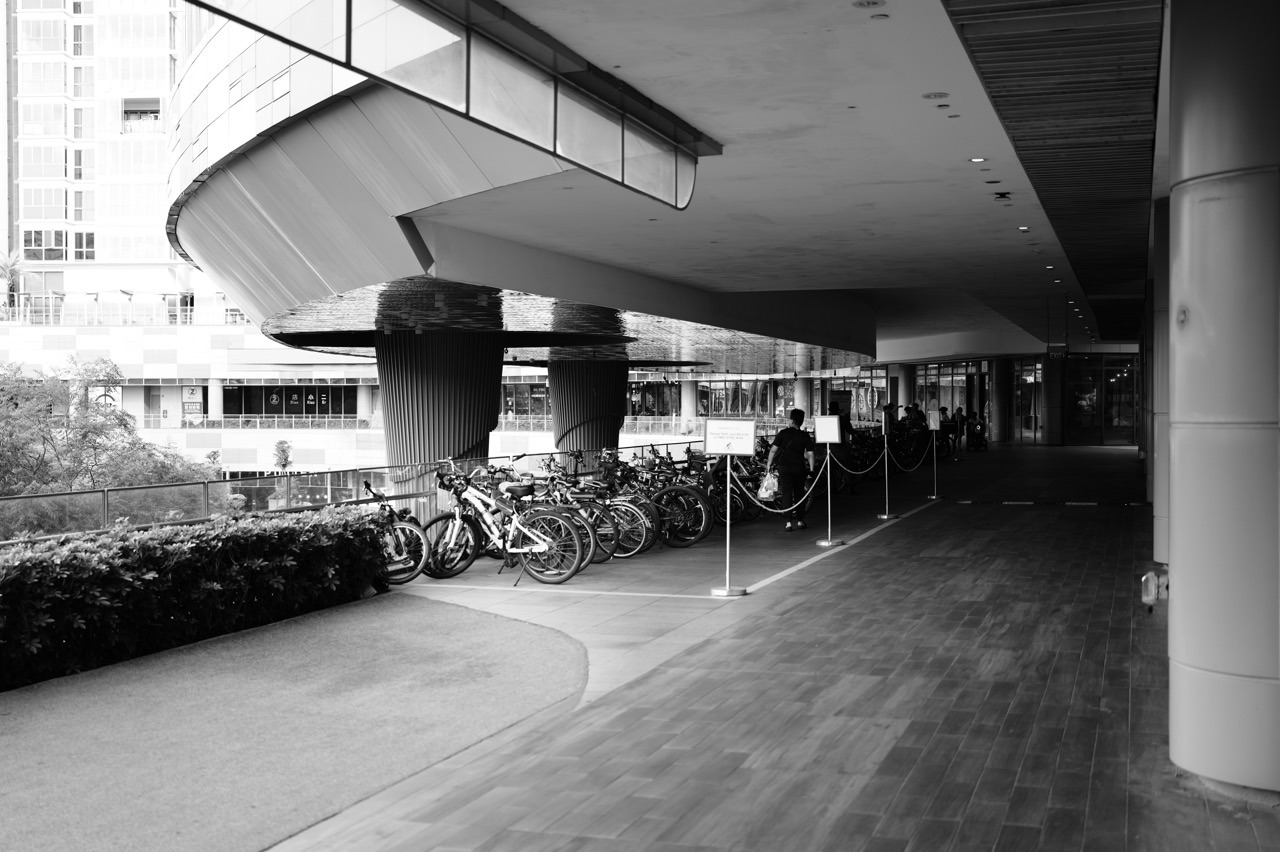
A bicycle rack in Punggol may look like a convenient place to end a ride, but a loose U-shaped stand, broken bracket or damaged double-tier lifting mechanism can put cyclists and pedestrians at risk. If a rack rocks, tilts into the walkway or has exposed sharp metal, avoid using it and choose another authorised parking space. Do not pull on the rack to ‘test’ its strength, try to bend it into shape, or lock a bicycle to a clearly unstable anchor.
Singapore’s Land Transport Authority (LTA) encourages cyclists to use designated bicycle parking spaces such as racks and marked parking zones, and to secure bicycles appropriately. Punggol has cycling links to transport stops, neighbourhood centres, parks and public facilities, but not every rack is managed by the same agency. A stand inside an HDB precinct, one near an MRT entrance and one within a shopping centre may require different maintenance contacts. This guide explains how to recognise a defect, avoid obstructing others and report the correct location without pretending to diagnose structural damage.
- Avoid obvious damage: do not lock a bicycle to a visibly loose, tilted or sharp-edged rack.
- Do not load-test it: shaking a stand or pulling it with force can create injury.
- Park lawfully: use another designated rack or parking bay rather than blocking paths, tactile paving or fire access.
- Check which operator owns the site: Town Council, LTA, NParks, MCST or mall management may be involved.
- Record details: rack type, nearest landmark, exact parking row, observed defect and time.
- Report safely: use property management, LTA or OneService as appropriate; urgent hazards deserve direct contact.
- Distinguish theft: a broken rack and a stolen bicycle require separate evidence and reporting.
- Follow up: keep the case reference and do not assume repainting has resolved an unstable mounting.
1. Why a parking rack matters after the ride
A bicycle parking rack is more than a decorative metal loop. It offers a defined space in which cyclists can leave their bicycles without blocking walkways, and a secure fixed point to which a properly selected bicycle lock may be attached. A rack that moves or is missing important parts may fail to support that purpose.
LTA’s cycling information describes a network of public bicycle parking lots at transport nodes, housing areas and parks. Those facilities help people combine cycling with daily travel. Maintaining them is part of making that movement practical, rather than simply providing more painted parking spaces.
2. What an unstable rack can look like
A rack may lean noticeably, rock under ordinary contact, have visible damage at its base, or be detached from the surface on one side. A sharp broken edge, protruding metal fixing or bent arm can be a hazard to both people walking past and the cyclist trying to lock a bicycle.
A visible defect is enough reason to avoid relying on that particular rack. Do not shake or pull it to determine how much load it can bear. Maintenance personnel can inspect anchors, welds and the supporting ground using appropriate methods. A resident should report the appearance rather than claim a particular engineering failure.
3. Surface rust does not prove a structural failure
Outdoor bicycle racks are exposed to moisture, rain and everyday wear. Discolouration can appear before any serious damage, but severe corrosion may also be associated with deterioration. A passer-by cannot determine remaining strength or structural adequacy from colour alone.
Report the actual condition: rust staining at the base, flaking metal, visible holes, cracking or movement. Do not assert that an entire rack will collapse tomorrow based on a photograph of orange staining. Likewise, do not dismiss an obviously moving rack because it still looks solid from a distance. An inspection should distinguish cosmetic maintenance from a safety concern.
4. Why sharp edges change the urgency
A broken section of metal or a protruding bolt can catch clothing, cut skin or interfere with a bicycle wheel. This may be hazardous even if the remaining rack stands upright. The problem is especially easy to miss in dim light, after heavy rain or at a busy station entrance.
Keep children clear and avoid handling the damaged part. Tell the facility operator about the sharp or protruding component and the number or location of the affected stand. If the defect lies along an accessible path, explain that other users may be unable to go around it safely.
5. Different racks work differently
Singapore parking facilities may include U-shaped racks, double-tier arrangements and other approved designs. LTA has highlighted U-bar parking racks with lot markings intended to improve ease of use. A rack designed to hold a bicycle in a double-tier system may require a different operating procedure from a low U-bar.
A damaged lifting arm in a multi-tier rack is not the same problem as a loose U-shaped stand. Report the design and the visible fault so the repair team knows which components to assess. Do not attempt to repair a spring, counterweight or moving part yourself.
6. The difference between a rack and a yellow parking box
A marked yellow box is a designated bicycle parking area, while a physical rack provides an object for suitable locks and support. Some areas have both; others have only one arrangement. A cyclist should follow the current signs and parking rules for the specific location.
LTA’s active mobility code of conduct tells users to park devices at designated locations such as bicycle racks or marked boxes. A bicycle left in a place that looks open is not automatically parked lawfully. A faulty rack does not create blanket permission to block an adjacent pavement.
7. Why a secure lock needs a secure anchor
A bicycle lock may be durable but provide poor protection if fastened to a rack that can be lifted from the ground. A cyclist should assess visibly obvious damage before choosing a parking point, without testing the anchor by force. Locking to a loose metal loop could undermine the whole security plan.
Use a sound, authorised rack and a lock suited to the bicycle. Follow reputable security advice about securing the frame, while recognising that no lock guarantees protection against every type of theft. A public maintenance article should not promise that moving to another rack eliminates all risk.
8. The operator may not be LTA
A rack inside an HDB estate may be maintained under Town Council or HDB arrangements. A rack within a private condominium is likely to involve the MCST or managing agent. A mall might have its own facilities provider. A rack near a transport station or on a public path may come under a different authority.
Identify the precise location before reporting. Do not assume that every rack within walking distance of Punggol MRT is owned by the station operator. A clear address, floor or deck, nearest entrance and photograph can help the receiving organisation route the concern.
9. The role of OneService
The OneService App and chatbot are intended for municipal issues such as damaged public facilities and related neighbourhood concerns. They can be useful when the rack is within a common public area and its managing body is unclear.
The current OneService reporting guidance asks for a description, precise location, time observed and a supporting photo. If a close image would be dangerous, a generic location photograph with a detailed explanation can be more appropriate. OneService routes reports; it does not itself make every physical repair.
10. LTA’s responsibilities for public cycling infrastructure
LTA plans and oversees important parts of the public cycling and bicycle parking network. Its contact page accepts active mobility enquiries and lists the local customer-service number 1800 2255 582. That is a useful place to ask about a rack associated with LTA-managed facilities.
The precise operator may still differ by site. If the rack belongs to an HDB estate or a private property, LTA may not be the repair contractor. State the location and ask for referral rather than assuming the name of the nearest agency settles responsibility.
11. Racks at Punggol MRT and LRT connections
Cyclists may park near rail stations before continuing to work, school or another destination. A damaged rack close to a busy station can affect many commuters and may leave bicycles in the pedestrian flow. A clear report should identify the relevant station entrance and which group of parking stands is affected.
Do not put a bicycle in front of a fare gate, emergency exit, lift or tactile guiding surface because the usual rack cannot be used. Look for an authorised alternative nearby, and if none is available, plan another lawful option rather than creating a new obstruction.
12. Racks beside malls and neighbourhood centres
A shopping centre may provide racks at different entrances, including service roads or basement levels. Those facilities can be privately managed even when the public is welcome to use them. A loose rack inside a mall car park needs a different contact from a broken stand on a public park connector.
Look for the mall’s customer service or facilities desk. Describe the exact parking area and bay. If the defect is near loading traffic, stay clear while reporting it. Do not move to a service area or staff-only ramp to find another place to lock the bicycle.
13. Parking at an HDB void deck
HDB residential blocks may have designated bicycle parking areas at void decks or nearby communal spaces. A resident who notices a damaged rack should report it to the relevant estate management contact. The exact block, precinct and location within the void deck are more useful than saying ‘the rack near home’.
Avoid attaching new chains or homemade brackets to the common structure without authorisation. A damaged rack is a maintenance issue; an unauthorised improvement can interfere with fire access, estate rules or other residents’ use of the space.
14. Park connector and waterfront parking
Punggol’s parks and waterfront routes encourage cycling for recreation and short trips. Some parking points may lie near NParks-managed areas, while adjoining paths or commercial premises may have other owners. The nearest park name is a clue, not conclusive proof of ownership.
When the rack is inside a park or park connector, check the official notice and feedback arrangements. NParks’ Park Connector Network notices help explain temporary closures and safety information, but do not establish who owns every adjacent bicycle rack. Provide the exact landmark.
15. A rack leaning into the footpath
A rack may be physically within a designated parking area but tilt into the route beside it. That can catch a pedestrian or narrow the space available for wheelchairs and strollers. It is a more immediate issue than an old paint finish.
Report the degree and direction of the obstruction as you can observe safely. Do not ask a wheelchair user to pass close to sharp metal so you can measure the clearance. A maintenance team can inspect the actual installation and any needed temporary protection.
16. When a rack is full rather than broken
A completely occupied rack may be inconvenient, but it is not necessarily damaged. Do not report a full facility as a structural defect. Instead, a request for more parking capacity or an access review is a different type of feedback.
If parked bicycles spill into a walkway, the report should explain whether the issue is overcrowding, improper parking or a broken component. An operator might need parking management as well as physical maintenance. The correct solution depends on the facts.
17. Shared bicycle parking is different
A shared bicycle from a licensed operator may need to be returned to a designated zone with QR-based parking verification. This is not always the same as locking a personal bicycle to a rack. A public yellow box might be suitable for a shared bicycle but not provide the physical lock anchor preferred by a personal bicycle owner.
For app end-trip problems, see Punggol | Shared Bicycle Ride Will Not End. Do not assume a damaged U-bar rack automatically invalidates every shared-bike parking record in the area.
18. When a personal bicycle has already fallen
If your bicycle falls because a rack has moved, assess the immediate scene for hazards before handling it. Avoid touching sharp metal or entering a vehicle lane to retrieve the bike. If anyone is injured, seek appropriate assistance. A damaged wheel, brake or handlebar should be checked before riding again.
Record the location and observable condition without asserting legal liability from one photograph. If a property-damage claim arises, the relevant owner or insurer may ask for evidence and applicable terms. A guide cannot guarantee reimbursement or determine fault.
19. Reporting a suspected rack failure
A useful report describes the rack design, what was loose or bent, the part of the installation that moved if observed during ordinary use, and the precise location. If an injury or damage occurred, note the time and the people involved through appropriate private channels.
Do not conduct further load tests to reproduce the problem. A clear account is sufficient for the operator to arrange inspection. Repeatedly leaning on the rack to make a video can worsen the fault and create unnecessary risk.
20. What to photograph
An overview image should show the rack, its immediate surroundings and a recognisable fixed landmark. A closer image can document a visible detached base or sharp edge when safely possible. Do not move other people’s bicycles to expose the mounting.
Photos should avoid unrelated faces, vehicle registration details and personal property identifiers where possible. If the rack is in use, it may be safer to photograph from a distance or wait rather than handle someone else’s locked bicycle.
21. Location detail that matters
A row of twenty racks may contain only one defective stand. Specify whether it is the first, centre or last rack, and describe the nearest entrance, pillar or lot marking. In a multi-storey car park, include the deck and side of the building.
A map pin alone can be ambiguous near roads, footbridges or overlapping property boundaries. A short written direction and safe photograph will often help the repair team find the correct installation more quickly than a bare coordinate.
22. What to do if the rack is near a road
Do not park a bicycle on the carriageway or investigate a damaged rack from a vehicle lane. If the rack is along a roadside path, remain on the footpath and keep away from traffic. A fallen metal stand can be especially hazardous when cars are reversing or buses approach nearby.
Call the relevant public authority directly if the obstruction creates an immediate danger. For routine damage, use the responsible property manager or municipal reporting channel. The category and urgency should match the actual condition.
23. Wet weather and slippery surfaces
Heavy rain can make the area around racks slippery, conceal protruding fixings or reduce visibility of a damaged base. Water accumulation may also make it harder to move a heavy bicycle safely. Avoid standing in a puddle while touching exposed sharp metal.
Describe any water ponding separately from the rack damage. A drainage issue and a broken anchoring point may require different technical teams. Do not assume rain caused the damage simply because you first noticed it during a storm.
24. When a repair area is cordoned off
A management team may temporarily restrict access while replacing a rack or assessing the surface. Respect barriers and posted signs, even if the stand appears usable. An open maintenance area can have exposed bolts, drilling debris or unset foundations.
Do not move a cone to reach your preferred rack. Ask the site operator where lawful alternative parking is available. A temporary inconvenience is preferable to injury or interference with repair work.
25. If a bicycle is locked to the unsafe rack
A rider may discover the rack is loose only after returning to retrieve a bicycle. Do not assume it is safe to pull the bicycle hard or twist the rack to free the lock. If the position creates a hazard, inform the operator and seek authorised assistance.
The lock belongs to the cyclist, while the rack may be common property. A professional may need to decide how to handle the installation without damaging other bicycles. Record the circumstances and ask the owner for a suitable retrieval process.
26. Avoid cutting another person’s lock
A rack defect does not give a resident permission to cut a neighbouring lock, move an abandoned-looking bicycle or dismantle a shared installation. Such action could interfere with another person’s property rights and complicate maintenance.
Report any bicycle that obstructs access and let the responsible operator follow its approved procedure. If a rack is being replaced, management should coordinate notice and handling of affected bicycles in accordance with the property’s rules.
27. How to avoid creating a new obstruction
If one rack becomes unsafe, cyclists may be tempted to park beside a tree, lamp post, railing or lift entrance. LTA’s rules direct users to designated places and to avoid blocking pedestrian routes. A broken rack does not remove that responsibility.
Find another marked rack or authorised parking bay. If the alternative is further away, allow time to walk. Do not leave a bicycle across tactile paving or a fire exit simply because the closest stand cannot be used.
28. Tactile paving and wheelchair access
A bicycle leaned across tactile paving can disrupt a route used by someone with visual impairment. A rack or bicycle that reduces an accessible passage can also affect wheelchair users and parents with strollers. That is why parking design must work together with pedestrian circulation.
Report an obstruction without naming or photographing vulnerable users. Describe the physical issue: an unstable rack protrudes into the step-free route, or parked bicycles have blocked the path. The owner can decide on the appropriate corrective arrangement.
29. A child parking outside a school activity
A student riding to a community activity may choose the nearest rack without checking whether it is sound. Parents can teach a brief visual scan for obvious damage and the habit of using an authorised, accessible parking spot. Children should not be asked to shake racks or test sharp fittings.
If a stand looks defective, the child should avoid it and tell a responsible adult or venue staff. The point is to develop safe judgement, not to make children responsible for engineering inspections. A short report from an adult can protect other users.
30. A family near Waterway Point
Imagine a family ending a ride near a mall. One rack visibly leans and its base appears detached. They keep bicycles away from the stand, use another designated place and inform the mall or property operator. They do not attempt to bend the metal back or lock the bikes to a nearby emergency fixture.
This is a hypothetical example and does not identify a real damaged rack. It illustrates how safe alternative parking and precise reporting can resolve an everyday inconvenience without creating a second hazard.
31. A senior with a folding bicycle
An older resident may find it difficult to lift a bicycle into a high double-tier rack. That is not automatically a maintenance fault: the equipment may be working as designed but unsuitable for the person’s needs. A bent or jammed moving section, however, is a separate physical defect.
The resident can report whether the problem is accessibility, damaged equipment or both. A management body may consider whether lower-level or alternative parking is available. The article should not promise that every Punggol location provides the same type of rack.
32. How a rack maintenance team investigates
A qualified contractor may need to examine the rack, its fixings and the supporting surface. The problem could require tightening authorised components, replacing damaged hardware, repairing the ground or installing a different arrangement. Which remedy is appropriate depends on inspection findings.
Residents should not prescribe a particular bolt size, welding method or foundation depth from a photograph. A safe outcome is a rack that functions for its intended use and does not obstruct people. The owner should ensure the relevant work is properly completed.
33. Cosmetic repainting versus a real repair
A coat of paint may improve appearance and help protect metal from weathering, but it does not necessarily address loose anchors or damaged joints. A rack that moves should not be declared safe solely because it looks newly painted.
If the original report was about instability, follow up on whether that condition was assessed and resolved. The operator can provide appropriate maintenance confirmation without giving the public access to technical installation details.
34. What if the fault returns after repair?
A recurring defect at the same stand may require closer review of its installation or use. Record the earlier case number, repair date if known and new observations. The operator can decide whether further inspection or a replacement is warranted.
Avoid creating an accusation of negligence without evidence. A repeated problem is meaningful when documented accurately. Reports become more useful when they reveal the same location and symptom rather than scattered, unlinked complaints.
35. A rack near a construction site
Construction activities may temporarily remove or relocate parking. A missing rack inside a cordoned work area is not necessarily vandalism or a defect. Follow the posted notices and approved routes. Do not enter construction zones to recover an old parking location.
If temporary parking is unclear or a displaced rack blocks the path, report the actual condition. The contractor or property operator should manage safe access and communicate available alternatives. Residents should not move worksite barriers or tools.
36. Why public bicycle parking needs upkeep
A network of cycling paths and racks supports daily trips only when people can finish journeys conveniently and safely. A single damaged stand may not be a town-wide infrastructure crisis, but it can create a meaningful barrier at a busy transport connection.
LTA’s bicycle parking programme includes multiple rack types to support different users. Maintaining these facilities, keeping access clear and responding to defects helps realise the benefit of the larger network. Accurate reporting is a useful contribution to the town.
37. A report that is easy to act on
Write: ‘At [Punggol site], beside [entrance or landmark], the second U-shaped rack from the walkway appears loose at the left base and tilts into the pedestrian path. I observed it at [time]. Please inspect and secure or replace the rack.’ The placeholders should be filled with actual observations.
This is stronger than ‘all racks here are dangerous’. It names the location, object, symptom and practical risk. The operator can send the relevant maintenance team and ask for further information if needed.
38. After a bicycle has been stolen
A person may discover a bicycle missing from a rack and immediately assume the rack was faulty. Theft and rack damage are separate questions. Report suspected theft through the appropriate police and property-management channels and provide evidence of ownership, time and location.
Do not accuse an identified person without evidence. A loose rack may be relevant to a later investigation, but it does not prove how the bicycle was removed. Keep purchase, serial and lock details securely where available.
39. What not to do
Do not pull on a rack to test its strength, force moving parts of a double-tier stand, cut a stranger’s lock, weld a common installation, attach homemade fixings or park across an accessible route. These actions can cause injury, damage property or create more complicated disputes.
Do not promise that the responsible agency will reimburse a stolen bicycle or finish a repair by a particular date. The safer approach is to avoid the suspected defect, report precisely, keep the case reference and choose lawful alternative parking.
40. The decision that matters most
Before locking a bicycle, ask whether the stand is visibly intact and whether using it would obstruct another person. If a defect is obvious, avoid that rack and find an authorised alternative. A quick visual observation is sufficient; users should not undertake structural tests.
If the rack is already damaged, the next step is reporting through the correct facility operator. If the bicycle or a person has been harmed, seek the relevant assistance and document the facts. Maintenance, accessibility, security and legal questions may overlap, but they should not be confused.
A simple five-step reporting method
- Stop using the suspect rack and keep others clear if doing so poses no risk.
- Find another designated parking place before leaving a bicycle.
- Identify the exact site, row, rack and nearest entrance or landmark.
- Photograph obvious damage from a safe position without touching other bicycles.
- Report to the responsible operator, describe any accessibility hazard and save the case reference.
Frequently asked questions
Is a rusty bicycle rack automatically unsafe?
Not necessarily. Rust colour can be cosmetic or associated with deterioration. Report visible movement, cracking, holes or other damage and allow the owner to inspect it.
Can I tighten a loose rack myself?
No. Public and common racks belong to a managing body. Alterations to anchors or fixings need appropriate authorisation and professional assessment.
Who fixes an HDB bicycle rack in Punggol?
Use the relevant Town Council or estate-management contact for the block. Include the exact rack location; a site may have multiple parking areas.
What if the rack is at a mall?
Contact the mall’s facilities desk or property manager. Do not assume LTA maintains every privately provided parking stand.
What if the rack is on a park connector?
Check NParks or the relevant path operator, with the specific landmark and a safe photograph. Some neighbouring facilities may have different managers.
Is a yellow bicycle box the same as a physical rack?
No. A marked designated parking zone provides an authorised area, while a rack offers a physical support or locking point. The applicable parking rules depend on the location and device.
Can I lock a bicycle to a tree if the rack is broken?
Do not assume that is permitted. Follow designated parking rules, avoid damaging trees and keep footpaths clear.
What if the only rack is full?
Use another authorised parking place. Full capacity and physical damage are different maintenance or planning questions and should be described separately.
Does a strong bike lock make a loose rack safe?
No. A lock may be compromised if its anchor is unstable. Choose an intact, authorised structure and follow sensible bicycle-security practices.
Can I move an apparently abandoned bicycle off the rack?
Do not damage someone else’s lock or property. Report an obstruction to the responsible operator, which can use its authorised process.
Can I claim compensation if a bicycle falls?
Any claim depends on facts, relevant terms and applicable law. Keep evidence and contact the manager or appropriate insurer; no compensation is guaranteed by this guide.
What if the rack protrudes into tactile paving?
Report the actual accessible-route obstruction promptly. Do not ask a visually impaired person or wheelchair user to pass close to sharp metal to demonstrate the problem.
Does a shared bicycle need the same lock procedure?
Not necessarily. Shared bicycles may use an app, designated zone and parking QR code, so follow the operator’s end-trip rules. A personal bicycle lock and a shared-bike digital return are different processes.
How do I describe a double-tier rack fault?
Identify the exact rack, level and visible component, such as a bent support or jammed moving section. Do not force its mechanism or conduct a test.
Should I call the police about a loose rack?
A routine maintenance concern usually belongs with the facility operator or municipal feedback channel. Call the appropriate emergency service for an immediate threat or relevant incident, and report suspected bicycle theft separately.
Can OneService help?
Yes, OneService supports many municipal maintenance reports, but routing depends on the site. Provide a detailed location and image without entering an unsafe area.
How do I know the repair is complete?
Follow the owner or managing agent’s official update. A resident can observe whether an obvious problem remains from a safe distance, but cannot certify the rack’s structural safety.
What if somebody’s bicycle is still locked to the damaged stand?
Inform the operator and let authorised staff coordinate any necessary access or repair. Do not cut locks, twist the rack or move another person’s bicycle without permission.
Official sources and local guides
- LTA — Cycling Infrastructure and Bicycle Parking
- LTA — Active Mobility Rules and Designated Parking
- LTA — Active Mobility Feedback
- OneService — Municipal Maintenance Reports
- OneService — Report Details and Photos
- NParks — Park Connector Notices
- eduKate Punggol — Shared Bicycle Trip Ending Problems
- eduKate Punggol — Broken Cycling Path Bollards
- eduKate Punggol — Local Information Hub
Reviewed 6 November 2026. This public guide is not a structural assessment of any rack, a theft investigation or a guarantee of repair, insurance or compensation. Follow the actual site’s parking and maintenance instructions and report hazards safely.


