
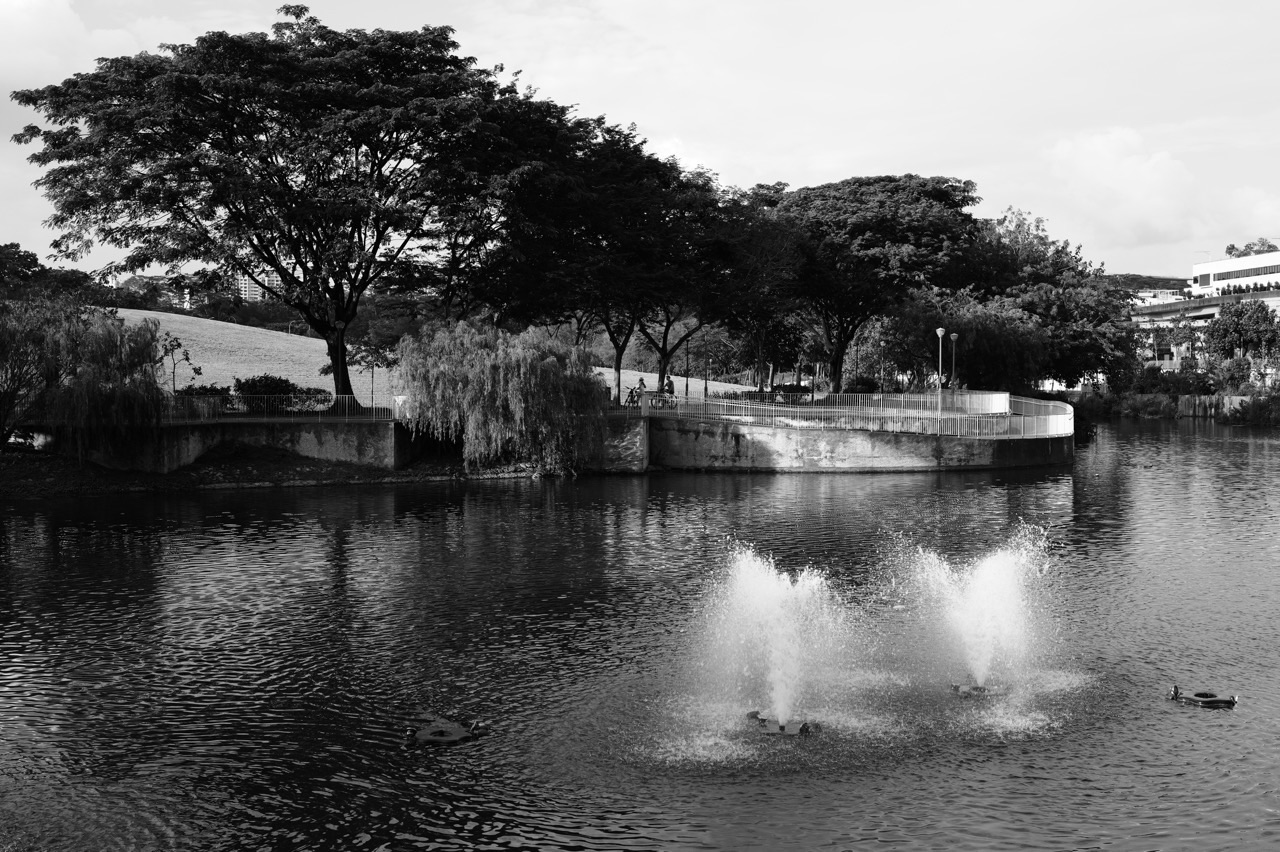

Singapore Education 2027: Students interested in sustainability can choose between environmental science, ecology, marine conservation, landscape operations, green buildings, facilities management and environmental services. These are not identical degrees or job titles. ITE College East offers Higher Nitec in Landscape Management & Design; Republic Polytechnic offers Diploma in Environmental & Marine Science (R62) and Diploma in Sustainable Built Environment (R61); adult learners can also investigate RP’s part-time environmental services and sustainability qualifications.
Quick answer: Decide whether you want to understand natural systems, manage buildings and energy, or operate environmental services. R62 includes ecology, marine science, conservation, environmental testing and sustainability reporting. R61 studies building systems, energy management, building information modelling and smart facilities. ITE Landscape Management develops practical skills for maintaining greenery and landscapes. Applicants entering post-secondary courses in 2027 must follow the rules for their intake, while students taking the first 2027 SEC examinations will use the changed admission arrangements in 2028.
- ITE option: Higher Nitec in Landscape Management & Design at ITE College East, with a published 24-month route.
- Ecology and environmental science: RP Environmental & Marine Science (R62) and its practical fieldwork, laboratory and industry-learning components.
- Buildings and energy: RP Sustainable Built Environment (R61), including building systems, design and facilities.
- Adult learning: RP Diploma in Applied Science (Environmental Services and Management) and specialist sustainability study, with intake conditions to verify.
- What to compare: laboratory versus outdoor work, Mathematics and Science requirements, internships, safety, data, environmental reporting and course costs.
- Do not assume: any course with the word ‘green’ in its title guarantees an environmental profession, consultancy licence or graduate job.
What sustainability means in everyday life
A city consumes electricity and water, uses materials, produces waste, moves people and goods, and depends on functioning ecosystems. Sustainability concerns how those systems can continue to meet needs without creating unnecessary harm or moving costs onto other people or future generations. Students encounter it in ordinary Punggol life: a park that manages rainwater, an HDB block that uses energy, a shopping centre that handles packaging and a waterway that supports public space.
A meaningful environmental education begins by identifying the actual system. Is the problem water quality, energy use, waste collection, biodiversity, tree health or measurement of emissions? Different questions require different scientific models and different kinds of evidence. A water sample does not tell a student everything about climate change; an energy bill does not by itself measure biodiversity. Precision about the problem is the start of useful learning.
Three different ‘green’ careers that are often confused
An environmental scientist or laboratory technologist may collect samples, evaluate evidence, analyse ecological or chemical variables and prepare reports. A sustainable-built-environment technician or engineer may help assess building systems, energy use, cooling, equipment and digital models. A landscape manager may coordinate tree, turf, nursery, planting and maintenance work in parks, estates or commercial spaces.
All three can contribute to sustainable development, but their daily tasks and entry qualifications differ. A student who enjoys studying marine wildlife may prefer ecological fieldwork; one who likes Mathematics and electrical systems may find building-energy technology more attractive; one who enjoys supervised outdoor work may prefer landscape operations. Choosing by actual work prevents the vague ambition of ‘doing something green’ from becoming a costly wrong turn.
ITE Higher Nitec in Landscape Management & Design
ITE College East’s Higher Nitec in Landscape Management & Design is a published 24-month full-time programme. Its course description includes plant propagation, nursery work, tree-health and arboriculture support, skyrise greenery, turf maintenance, landscape scheduling, design drawings and coordinating work crews. ITE describes collaboration with relevant sector organisations and experience through practical projects.
This is not simply a gardening hobby. Trees and green roofs involve maintenance, public safety, climate exposure, equipment and technical design. Working near roads, at heights or around machinery carries occupational risks that require trained supervision. Students must learn to read plans, identify hazards, document inspections and communicate with colleagues.
Candidates should inspect the current course’s admission criteria, physical and practical requirements, campus, equipment, fees and training structure. A qualification with a familiar word like ‘landscape’ may include far more administration and technical work than a teenager expects. Actual understanding of the work should guide the application.
RP R62: Environmental & Marine Science
Republic Polytechnic’s Diploma in Environmental & Marine Science (R62) combines foundational laboratory science with ecology, conservation, resource management and sustainability. Its official course list includes Chemistry, Molecular Cell Biology and Biochemistry, Mathematics for Applied Science, Sustainability and Climate Change, Marine Ecology, Microbiology, Biodiversity, Environmental Testing, Data Analytics, Sustainability Reporting, Aquaculture and Circular Economy.
The range of modules reveals an important idea: environmental science requires quantitative measurement and explanation as well as enthusiasm for wildlife. A student investigating a change in water quality needs sampling procedures, units, controls, appropriate analytical methods and a cautious interpretation. An attractive photograph of an animal is not evidence that a particular intervention has improved the ecosystem.
RP describes learning opportunities through field trips, its research facilities and industry attachments. Students should ask which opportunities are part of the ordinary curriculum, which require selection and which are optional. A career in environmental science may involve sampling, laboratory reports and detailed data work rather than spending every week outdoors.
RP R61: Sustainable Built Environment
The Diploma in Sustainable Built Environment (R61) approaches sustainability through the built environment. RP lists modules in Smart Facilities Management, Building Electrical Systems, Energy Management and Sustainability, Green Building Technology and Design, Building Information Modelling, Air-Conditioning and Mechanical Ventilation, Project Management and digital building systems.
This programme may appeal to students who prefer engineering and practical problem solving. Buildings are large interacting systems: an efficient cooling strategy must still maintain safe indoor conditions, a control system depends on reliable sensors, and design decisions affect maintenance over time. The student should enjoy using numbers and evidence to make systems work better.
The green-building pathway is not the same as Marine Science. A candidate who wants to become an ecologist should compare R62 carefully; a candidate who likes building systems, engineering drawing or facility operations should examine R61. Both require Mathematics, but apply it differently.
The 2026 JAE scores published on course pages are historical
RP’s 2026 admissions information lists reference score ranges for several diplomas, including R62 and R61. Those ranges describe students admitted through a previous Joint Admissions Exercise, not a promise about the applicant’s next cohort. The institution also publishes subject minimums, which are eligibility conditions rather than guarantees of admission. Parents should not present a past-year cut-off as a fixed entrance mark for 2027.
Students taking the first SEC in 2027 will follow the new post-secondary admission system from 2028. Their actual subject levels, grading interpretation and course rules need to be read under that scheme. Avoid carrying an old O-Level admissions chart forward without checking the new cohort-specific instructions.
Adult courses: environmental services and sustainability management
Republic Polytechnic’s continuing-education catalogue includes a part-time Diploma in Applied Science (Environmental Services and Management), a Specialist Diploma in Environmental and Corporate Sustainability, and a work-study route linked to environmental-services training for eligible candidates. The part-time diploma covers areas such as environmental hygiene, waste handling, recycling, sanitation, pest management, environmental assessments, analytics and safety compliance.
The specialist qualification focuses on a different kind of professional development, with topics such as climate change and sustainability reporting. An applicant already working in facilities, operations or related industry may benefit from formalising existing skills. Someone with no relevant foundation should read the prerequisites rather than assuming a specialist diploma is the best place to start.
Course pages may display ‘Open for Registration’ at a given moment, but the actual course-run dates, fees and entry conditions must be checked before paying. A 2027 planning guide cannot promise a later class will definitely begin, especially where the provider reserves the right to amend or reschedule a run.
Sustainability reporting: explain measurements, not slogans
Reporting a company’s sustainability performance requires definitions, reliable data, boundaries and an understanding of which claims can be supported. A statement that an organisation is ‘zero waste’ has little value if no one has defined the period, processes or measurement method. A student can learn to ask where the information came from, how it was verified and what the figures do not show.
The most useful school project is often modest. Take fictional electricity data for two buildings with different sizes, compare consumption per unit area under clearly stated assumptions and explain why the comparison may still be incomplete. This develops the reasoning that later supports energy audits and reporting, without making unsupported regulatory claims.
Climate, marine science and urban resilience
For Singapore, sustainability can include drainage, flood resilience, urban greenery, water management, waste systems and protecting natural habitats. Different agencies and professions work on different parts of that system. The point of studying science is to see how a decision affects people and the environment, rather than memorise a single slogan about caring for nature.
A waterway may appear attractive but require ongoing maintenance, measurement and decisions about public access and ecology. A landscaped rooftop can help a building but creates technical demands around planting, drainage, load and maintenance. Students should learn to identify the trade-offs, then consult the relevant professional standards before making claims about real projects.
From secondary school to a green qualification
- Primary and lower secondary: build number sense, observational science, reading comprehension, data interpretation and the ability to explain cause and effect.
- Upper secondary: take Mathematics and relevant Science seriously; use available subject combinations to support the intended diploma or JC pathway.
- ITE: compare outdoor landscape and other technical programmes by actual skill, campus and progression mapping.
- Polytechnic: contrast environmental ecology, building technology and broader applied science instead of assuming all green diplomas are identical.
- University: explore relevant disciplines such as environmental science, engineering, planning, ecology or business sustainability using the current degree prerequisites.
- Workplace: consider further qualifications and supervised practice if the role requires auditing, specialist safety or regulated work.
A real-world project that builds environmental reasoning
Take a class to observe two public spaces from a safe, authorised location. Record shade, surface material, visible planting, litter and general activity using a clear checklist. Do not collect identifying information about people or remove animals or plants. The students should ask which differences are directly observed and which are only possible explanations.
After making observations, ask them to propose a small improvement and identify what would need to be measured before anyone could judge whether it worked. That is the beginning of scientific inquiry: a problem, evidence, a testable claim, and a willingness to revise it. It is not necessary to pretend a school exercise constitutes a professional environmental assessment.
What applicants should ask before enrolling
- Which actual environmental problem will the course train me to investigate or solve?
- Does it involve laboratory chemistry, ecology, fieldwork, engineering systems, landscape operations or corporate reporting?
- What Mathematics, Science and English prerequisites apply to my actual qualification?
- What supervised practical work, field trips or internships are compulsory?
- Is the course’s stated professional outcome a job possibility, an accredited qualification or a regulated authorisation?
- What will tuition, equipment, transport and fieldwork cost after confirmed assistance?
- What later diploma or degree accepts the qualification under the current course mapping?
- How does the course assess students’ evidence, analysis and independent reasoning?
What not to do in 2027
- Do not choose a course solely because its title contains sustainability or green.
- Do not treat a previous year’s JAE score range as a guaranteed cut-off.
- Do not describe a school fieldwork activity as a professional ecological or building safety inspection.
- Do not assume all programmes involve studying animals rather than technical systems or industrial services.
- Do not present an announced 2027 course or 2028 SEC pathway as an unconditional admission offer.
- Do not assume a part-time adult course will be open on a future date without confirming the live intake.
- Do not interpret an environmental report or carbon claim without checking its definitions and evidence.
Frequently asked questions
Does ITE offer environmental courses?
ITE College East publishes Higher Nitec in Landscape Management & Design, which includes practical greenery, maintenance and design. Other technical courses can also involve sustainability, but their curriculum and entry conditions differ.
What is the difference between RP R62 and R61?
R62 emphasises environmental and marine science, ecological systems and testing; R61 emphasises sustainable buildings, energy, facilities and engineering technology.
Can adults retrain for environmental services?
RP offers relevant part-time and specialist qualifications. Individuals should verify the actual course run, prerequisites, fees and employment goals before applying.
Official sources and related eduKate guides
- ITE — Higher Nitec in Landscape Management & Design
- RP — Diploma in Environmental & Marine Science R62
- RP — Diploma in Sustainable Built Environment R61
- RP — Continuing-education sustainability course catalogue
- RP — Part-time Diploma in Environmental Services and Management
- MOE — Current post-secondary education overview
- MOE — Post-secondary admissions changes beginning in 2028
- eduKate Punggol — Engineering and environmental systems
- eduKate Punggol — Polytechnic diplomas
- eduKate Punggol — Financial assistance
Reviewed 5 November 2026. Course descriptions are grounded in official provider pages; the actual future intake, subject requirements, campus, assessments, course fees and professional obligations must be confirmed with the institution.


