
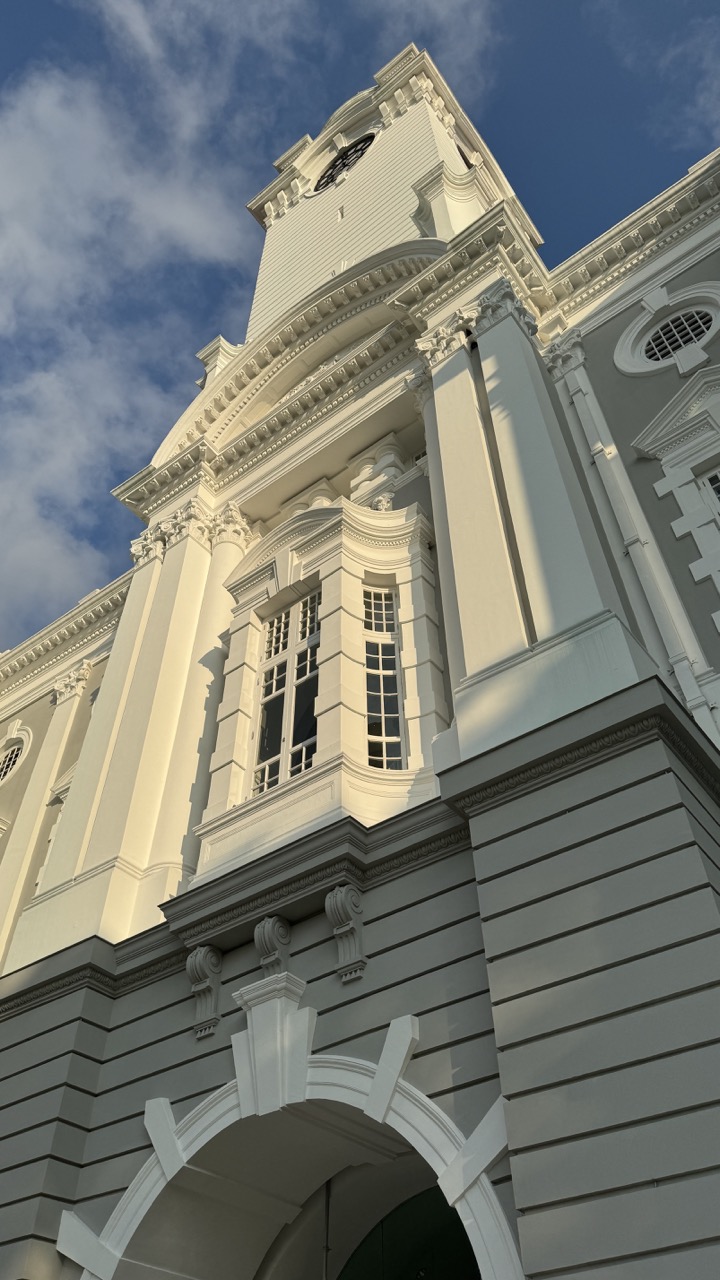

Singapore Education 2027: Creative education in Singapore extends well beyond drawing lessons or performing at a school concert. Students may explore School of the Arts (SOTA) at secondary level, specialised diplomas at Nanyang Academy of Fine Arts (NAFA) or LASALLE College of the Arts, and degrees conferred by the University of the Arts Singapore (UAS) through its founding institutions. Other polytechnics and universities also offer design, media, architecture-related and creative courses. These choices lead to different qualifications, portfolios, work environments and professional possibilities.
Quick answer: For entry in 2027, SOTA’s Year 1 admissions were conducted largely through its 2026 Talent Academy/DSA process, with any supplementary intake dependent on vacancies. LASALLE’s published August 2027 admissions information indicates an application window beginning 1 October 2026, with a general closing date of 25 January 2027 and specific later dates for certain Music programmes. NAFA’s application portal lists its August 2027 admission window from 1 October 2026 to 31 March 2027, subject to programmes closing earlier. Applicants need the correct portfolio, audition, academic qualification and financial plan.
- Secondary: SOTA’s specialised arts pathway combines academics with a chosen arts discipline and may lead to an IB qualification.
- Diploma: LASALLE and NAFA offer different courses in fine art, design, digital media, music, theatre, dance and arts management.
- Degree: UAS is Singapore’s first arts university, formed through LASALLE and NAFA, and awards validated degree programmes.
- 2027 action: use official institutional application dates, not the assumption that every programme closes at the same time.
- Portfolio: present authentic work and process, not a purchased selection of polished artwork.
- Audition: performing arts may require demonstration of skill, interpretation and responsiveness.
- Careers: creative competence can lead to practice, design, production, education, arts management and related fields, but no qualification guarantees employment.
Why an arts pathway can be intellectually serious
A designer starts with a problem, investigates an audience and develops a form that works. A musician studies structure, interpretation, technique and how to communicate through sound. A theatre practitioner may analyse a script, work with others and construct a performance for a particular audience. An artist may investigate memory, material, place or ideas through visual work. These are disciplined activities involving research, practice, feedback and revision.
It is tempting to divide education into academic subjects and creative subjects as though one requires thinking and the other requires talent alone. In reality, creative work often needs reading, mathematics, technology, ethics, planning and clear argument. The student must be able to show why a choice was made, explain a process and accept critical feedback.
A good arts course helps a student move from inspiration to reliable practice. The learner should gain skill with materials or instruments, develop a vocabulary for evaluating work and learn how to meet a brief or develop an original inquiry. A beautiful final image without evidence of process may not demonstrate this capability.
School of the Arts: the specialised secondary-school route
SOTA offers a specialised arts education combined with mainstream academic subjects. It has a six-year structure in which students develop arts skills alongside language, Mathematics, Humanities and Science learning, leading to specified pre-university options in the later years. SOTA’s current programme information includes International Baccalaureate-related pathways and arts disciplines such as Dance, Literary Arts, Music, Theatre and Visual Arts.
Families should understand that SOTA is not simply a school that allows more time for the arts after a regular timetable. Artistic development is a substantial part of the curriculum and admissions process. The student should want to practise, learn technique, work on projects and receive feedback over several years.
SOTA’s Year 1 admission uses its Talent Academy process, with portfolio presentation, auditions or interviews and other assessments as relevant. The institution states that applicants do not apply via the ordinary MOE DSA-Sec Portal. This is a critical distinction for families who otherwise might complete the wrong online application.
2027 SOTA admission dates: which cohort is affected?
For the 2027 academic year entry, SOTA’s admissions page lists a 2026 Talent Academy application period from 30 March to 8 May 2026. These dates are now in the past. The school may conduct a supplementary intake for a limited number of eligible applicants after PSLE results, but only if vacancies and the relevant art forms are available. The family should not rely on an assumed second round.
A Primary 6 student in 2027 who aims for Secondary 1 entry in 2028 will need to monitor a later Talent Academy cycle. Applying in the right calendar year matters just as much as choosing the correct arts discipline. SOTA’s admission FAQs set out further rules for eligible local and non-MOE-school applicants.
SOTA allows eligible Year 1 applicants to apply for up to two art forms in one application, subject to restrictions such as the specific Music tracks. The application should be genuine; applying for two disciplines without sufficient preparation in either may be unhelpful. Check the school’s current candidate guide and prepare required evidence before the portal closes.
What is the University of the Arts Singapore?
UAS is Singapore’s first arts university. It was formed through an alliance of LASALLE College of the Arts and the Nanyang Academy of Fine Arts, which continue to operate as distinct institutions. UAS began awarding specified degree programmes from the August 2024 intake. The institutions also maintain their own diploma programmes; a diploma awarded by a constituent college should not automatically be called a UAS university degree.
UAS lists degree programmes across design, fine art, film and media, performance, arts management, creative writing, arts pedagogy and emerging interdisciplinary fields. Applicants should inspect the precise awarding qualification, teaching institution and course structure. The name of the overarching university does not tell a student whether they will be studying mainly in a studio, rehearsal room, workshop or seminar.
LASALLE diplomas and degrees: August 2027 applications
LASALLE’s official 2027 intake page states that the next August intake opens for applications on 1 October 2026. The general deadline is 25 January 2027, while BA (Hons) Music and Diploma in Music have a stated closing date of 28 February 2027. Some postgraduate programmes have different dates. An applicant must check the specific programme rather than assume the general date applies to every course.
LASALLE’s diploma admissions page describes three-year diploma study with technical, vocational and academic development. Diploma graduates may be considered for further degree study within a relevant discipline, including the possibility of advanced standing where the institution’s rules permit. That possibility is not a guarantee of Year 2 entry into every BA programme.
Applicants should check whether they need a portfolio, audition, interview, written work or other evidence. For example, a design applicant may be asked to show sketches, prototypes and a process. A music applicant may need performance or musicianship evidence. A candidate should know exactly which route their chosen programme uses.
NAFA diplomas and the important 2027 progression announcement
NAFA’s official August 2027 application system states a window from 1 October 2026 to 31 March 2027, subject to capacity and earlier closure for selected programmes. It offers diplomas in areas including Design, Digital Illustration, Media Experience and Innovation, Fine Art, Fashion, Dance, Music, Theatre and Arts Management.
One particularly useful 2027 change is NAFA’s published direct pathway for eligible students from certain three-year full-time Higher Nitec courses. The institution says applicants with a final CGPA of 2.7 or above, and whose prior courses map to its specified eligible diplomas, may be able to complete the NAFA diploma in 1.5 to 2 years rather than the normal full duration. It also describes study awards of up to S$3,000 per year for this eligible group.
This is a course-specific route and not a blanket entitlement for every ITE learner. The full entry table, relevant prior courses, portfolio or test requirements, fees and actual award conditions must be checked. A student with Higher Nitec in an unrelated discipline should not assume the accelerated programme applies.
NAFA Foundation Programme: who should investigate it?
NAFA also operates a Foundation Programme for eligible students as an alternative entry corridor to further arts study. Its application portal identifies a March 2027 intake application period from 18 December to 28 December 2026. Those are specific published dates, not a universal application calendar for NAFA degrees or diplomas.
Families should distinguish the qualification awarded by the foundation route from the diploma or degree the student hopes to pursue next. A foundation programme prepares a student for further study under its own requirements; it should not be described as an automatic diploma place until the institution confirms how progression works.
Portfolio versus audition: what does each reveal?
A portfolio should show a person’s ability to develop and evaluate work over time. Instead of submitting ten unrelated finished images, a student can include a few carefully explained projects: what question motivated the work, which ideas were considered, how feedback changed it and what the final result achieved. The reader should understand the student’s decisions.
An audition demonstrates how the applicant performs, interprets, prepares and responds under the assessment conditions. A musician may be evaluated on technique and musicianship; an actor on interpretation, listening and collaboration; a dancer on practice and movement. Formal certificates can support an application but may not be compulsory in every route. The school’s current rules are the authority.
A student should not pay for a fake portfolio, pretend to have completed a group project alone or exaggerate competition experience. Such tactics hide the true level of skill and make it harder for the admissions panel to judge whether the applicant can benefit from the course.
What about arts careers outside performance?
The creative economy includes work beyond becoming a celebrated artist or musician. Potential roles can involve arts administration, curatorial practice, museums, exhibitions, design strategy, digital interfaces, motion graphics, video production, production management, arts education, event technology and creative entrepreneurship. Actual career access depends on capability, portfolio, employer needs and professional requirements.
A student who enjoys the arts but dislikes performing in public may prefer arts management, design research or technical production. Another who is strongest at communication may explore curatorial or arts education work. A broad list of courses only becomes meaningful when the student investigates what they will actually do each day.
How to choose a creative course with a realistic budget
Arts education may require materials, instruments, equipment, software, studio access and substantial time beyond formal lesson hours. Calculate tuition after applicable government subsidies, travel, portfolio production expenses and materials. Check the correct bursary or scholarship rules directly with LASALLE, NAFA or UAS. A future award or a headline percentage is not confirmed financial assistance until the applicant meets the criteria and receives approval.
Students should also understand that arts and creative-industry income can vary with employment type. Some graduates work in salaried positions, others take freelance assignments or combine employment with personal practice. Rather than assuming a course guarantees fame or a fixed salary, ask what skills, work experience and professional networks can be built during the programme.
A practical 2027 application plan
- Identify the intended stage: SOTA secondary entry, NAFA Foundation, specialist diploma, UAS degree, postgraduate study or continuing education.
- Check the actual 2027 intake and application closing date for the selected institution and course.
- Read the course modules and the qualification it awards, including whether a degree is conferred by UAS.
- Prepare genuine work samples, audition pieces, written reflections or personal statements according to the institution’s published requirements.
- Ask the school which academic grades, language prerequisites or qualifications apply to the student’s admission group.
- Compare programme workload, facilities, internships, assessment and realistic progression after graduation.
- Budget for fees, supplies, equipment, living expenses and any eligible financial support.
- Keep a second course choice that the student would genuinely want to attend.
What not to do
- Do not treat SOTA, NAFA, LASALLE and UAS as one institution with a single admissions portal.
- Do not tell a Primary 6 student in 2027 that they can use SOTA’s 2026 application dates for entry in 2028.
- Do not assume every NAFA or LASALLE diploma is itself a UAS bachelor’s degree.
- Do not assume an ordinary design diploma has the same portfolio or admission process as a Music performance course.
- Do not describe NAFA’s accelerated 2027 Higher Nitec route as available to every ITE graduate.
- Do not buy portfolio achievements or invent authorship to impress a selection panel.
- Do not assume an arts degree guarantees immediate work as a freelance artist or salaried designer.
- Do not ignore the costs of equipment, practice space and materials when comparing courses.
Frequently asked questions
Are LASALLE and NAFA the same as UAS?
LASALLE and NAFA are the two distinct institutions founding UAS. UAS validates and confers the degree programmes offered through them, while each college continues to operate and offer its own courses.
Are applications for 2027 arts diplomas already open?
As of 5 November 2026, LASALLE and NAFA have published application windows for August 2027 intake beginning 1 October 2026. Closing dates differ, and selected courses may close earlier. Always verify the actual programme’s status.
Can students from ITE progress into an arts diploma?
Yes, where they meet the intended programme’s entry and assessment conditions. NAFA has announced a new accelerated diploma route for eligible students from certain three-year Higher Nitec courses in August 2027, subject to relevant-course mappings and CGPA.
Does SOTA use the ordinary MOE DSA application portal?
SOTA states that its Talent Academy applicants use the school’s own process rather than the general MOE DSA-Sec Portal. Check its current admission guide before applying.
Official sources and further 2027 education guides
- SOTA — Talent Academy admissions and 2027 entry information
- SOTA — Year 1 DSA and application rules
- LASALLE — August 2027 intake and application dates
- LASALLE — Diploma admissions and progression
- NAFA — 2027 diploma admissions and accelerated Higher Nitec pathway
- NAFA — August 2027 online application portal
- NAFA — 2027 foundation programme application portal
- UAS — Degree programme directory
- UAS — Founding colleges and degree-awarding arrangement
- eduKate Punggol — DSA, PSLE and school choice
- eduKate Punggol — IB and Integrated Programme
- eduKate Punggol — Polytechnic diploma and admission choices
- eduKate Punggol — Education financing and bursaries
Information checked 5 November 2026. The dates stated relate to published 2027 entry routes and may be changed or closed earlier by the institutions. Application status, course recognition, offers, scholarships and places must be verified using the live official portals.


