
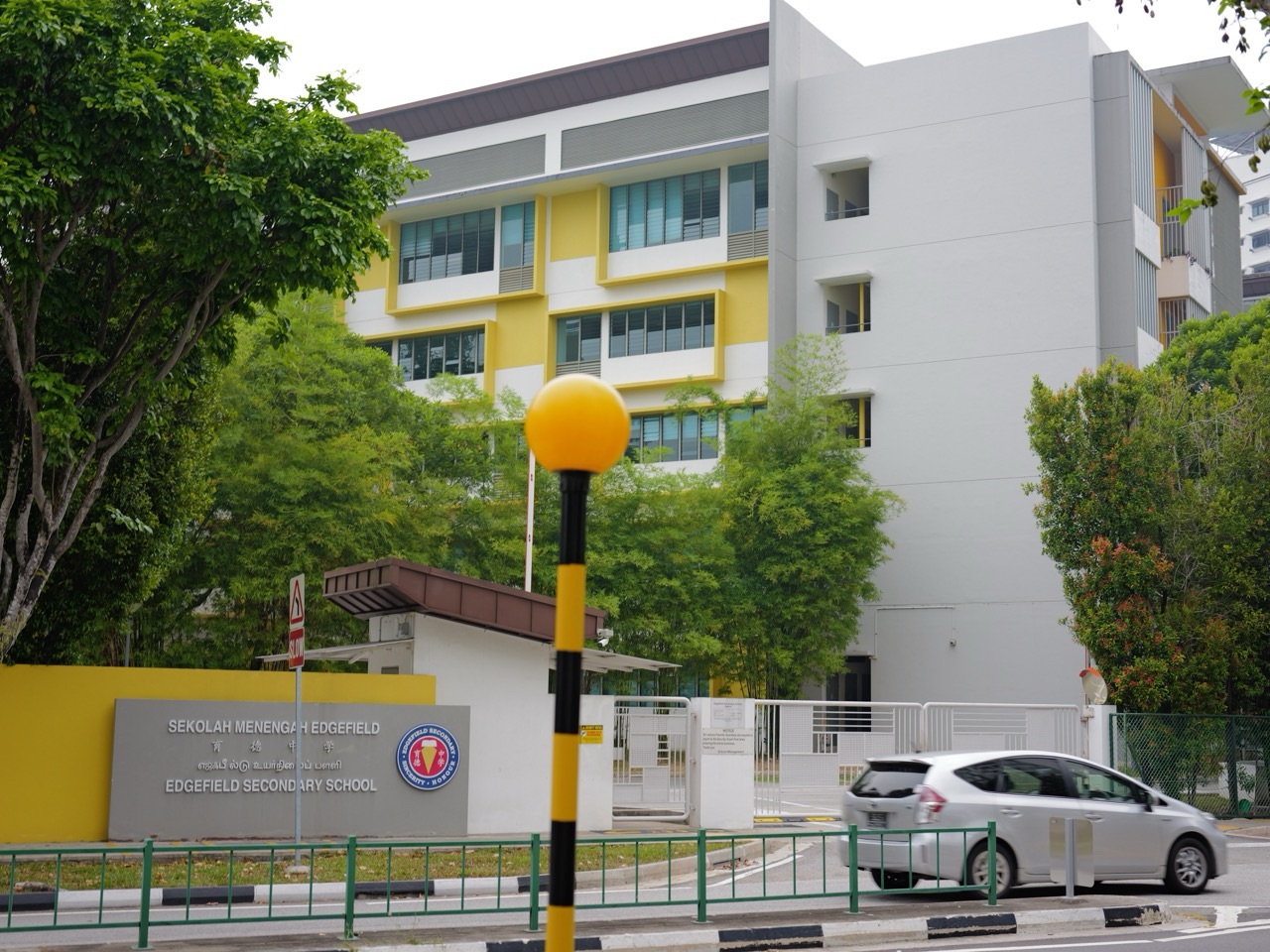
Singapore Education 2027: An international family moving to Singapore should first find out which admission exercise applies to the child. Admissions for foreign students are not the same as Primary 1 registration for Singapore Citizens and Permanent Residents, nor are they the same as Secondary 1 posting after PSLE. For many children seeking a place in a mainstream government school, the relevant routes are the Admissions Exercise for International Students (AEIS) and, where eligible, the Supplementary AEIS (S-AEIS).
Quick answer: AEIS generally seeks admission to Primary 2–5 and Secondary 1–3 in the following academic year. S-AEIS seeks admission to Primary 2–4 and Secondary 1–2 in the same academic year. Both are competitive, subject to eligibility and vacancies. A child hoping to enter school in January 2027 should follow the 2026 AEIS arrangements; a family planning for January 2028 should monitor the 2027 AEIS announcements instead. Do not borrow one exercise’s registration dates or test requirements for another.
- First question: Is the child a Singapore Citizen, Singapore Permanent Resident or international student? The correct admission channel depends on status.
- Primary 1: International students follow a separate Primary 1 process, not the P2–P5 AEIS test route.
- AEIS: Usually for P2–P5 and S1–S3 admission in the next academic year.
- S-AEIS: Supplementary midyear route, where available, for P2–P4 and S1–S2 within the same academic year.
- School place: Passing a test does not guarantee a particular school or an offer; available places and MOE’s placement arrangements matter.
- Documentation: Passport and identity documents, age eligibility, English qualifications for the primary pathway and genuine contact details must be checked.

Why an international family must start with the child’s exact status
A family may live in Singapore on a work arrangement, have one child who is a Permanent Resident and another who is not, or be considering a move before the new academic year. The child’s own status is the relevant starting point. Singapore Citizens and PRs have different school-admission procedures from international students, even when families live in the same neighbourhood. It is therefore risky to apply the P1 registration phases or PSLE S1 posting rules to a child entering from an overseas school.
The word international is also not the same thing as a school that offers an international curriculum. A child attending a private international school is following that school’s admissions and fee arrangements; AEIS is an MOE mainstream-school admission exercise. A family’s decision between mainstream and other school options involves the child’s language preparation, age, qualification goals, finances and ability to adapt.
AEIS versus S-AEIS: the difference in one clear example
Imagine a student living overseas who wants to enter Secondary 2 in Singapore at the start of the 2028 academic year. The family should monitor the AEIS administered in 2027, because that exercise is designed for admission in the following academic year. If the child is instead applying during 2027 for admission later that same academic year, the family needs to check S-AEIS eligibility and the exact levels available. These are not two interchangeable dates for the same application.
SEAB’s 2026 official overview says AEIS is for P2–P5 and S1–S3. Its separate S-AEIS overview says the supplementary exercise is for P2–P4 and S1–S2. The difference matters to families with an older applicant: do not assume an S3 place can be sought through S-AEIS merely because S3 appears in the main AEIS list.
The calendar must also be interpreted correctly. School entry in January 2027 follows the application and test cycle administered in the preceding year; a test in 2027 may instead serve the 2028 cohort. Unless MOE has published the dates for the relevant exercise, future registration and examination windows should be described as to be confirmed.
How the primary-level AEIS test works
A key feature that parents may miss is the Cambridge English Qualifications (CEQ) requirement for primary-level AEIS applications. For the 2026 AEIS, SEAB’s application guide requires the applicant’s statement of results for the relevant CEQ test taken in the specified qualifying period. Primary applicants then sit the appropriate mathematics assessment; they are not simply assessed through the same written English examination used for secondary-level AEIS candidates.
The relevant CEQ grade and qualification depend on the child’s age and applied school level. Families should read MOE’s current age/level table and CEQ instructions before booking an English qualification test, rather than guessing from a tuition-provider advertisement. A result obtained outside the accepted date window or in the wrong qualification could make an application unusable.
For the mathematics assessment, SEAB advises applicants to study the MOE curriculum for the level preceding the level sought. An applicant aiming for Primary 3 should be comfortable with Primary 2 concepts as specified for the AEIS P2/3 assessment. The assessment tests reasoning and method, not merely the ability to memorise arithmetic answers. SEAB’s published test details also state that calculators are not allowed for the primary test.
How the secondary-level AEIS test works
For Secondary 1–3 applications under AEIS, SEAB’s official assessment information describes both English Language and Mathematics tests. English includes composition writing and comprehension/language use. The mathematics paper includes multiple-choice, short-answer and open-ended work, with the relevant level of mathematical content drawn from the preceding Singapore school year.
The secondary English composition task expects a coherent piece of writing rather than the reproduction of a memorised template. A candidate should practise selecting relevant ideas, organising paragraphs, developing examples and checking sentence clarity. Comprehension questions demand accurate reading, inference and an understanding of language in context. Reading a few Singapore school texts regularly is often more useful than hoarding lists of unusually difficult words.
For mathematics, students should be comfortable explaining their working. A student who has memorised a formula but cannot identify when it applies may find unfamiliar problems difficult. Revisit fractions, percentages, geometry, algebraic reasoning and other relevant syllabus content, then practise mixed questions without chapter labels. Test arrangements, prohibited items and test durations should be checked from the current official SEAB guide.
Documents and online application process
SEAB’s 2026 AEIS application guidance instructs applicants to create an individual account in the Candidates Portal during the application window and to submit required documents. Common documents include the child’s birth certificate, a reliable English translation if necessary, the passport biodata page and a primary applicant’s required CEQ statement of results. The passport should satisfy the validity requirements stated in the official instructions.
- Go to the MOE international-student admissions page and identify the correct AEIS or S-AEIS exercise, age range and school level.
- Check the actual registration dates and published applicant instructions rather than using a previous year’s screenshot.
- Prepare the exact documents in the formats accepted by the Candidates Portal. Verify name spelling, birth date, passport details and current contact email.
- If applying for primary school, confirm the qualifying CEQ test, achievement level and accepted result date window before paying for the English assessment.
- Submit the registration and applicable non-refundable fee through the official service. Save the transaction and application reference.
- Monitor portal remarks and email. Submission alone does not mean the application has been approved.
- Once approved, retrieve the official examination entry proof and follow the test-venue and identity-verification instructions.
SEAB’s guidance says a completed registration can initially show a Pending status, and the review can take at least four weeks when documents are in order. Do not interpret ‘pending’ as acceptance or attempt to enter an examination venue without approved entry proof. If a document is missing, respond through the approved channel promptly.
Immigration permission is separate from examination registration
SEAB explicitly warns that MOE does not issue permits allowing overseas applicants to enter Singapore simply to sit AEIS or S-AEIS. Entry proof for the examination venue is not permission to enter Singapore. Families must check the Immigration and Checkpoints Authority’s prevailing entry, visa and immigration rules, and any relevant health conditions, independently.
Likewise, obtaining a mainstream-school offer is not a blanket guarantee about the child’s or parent’s long-term immigration status. Ask the appropriate authorities about the lawful basis for residence and study. A family should not book irreversible relocation arrangements solely because the child has submitted an AEIS application.
Can parents choose their preferred government school?
AEIS is not the same as applying directly for an ordinary school vacancy. For successful candidates, admission and posting depend on assessment results, places available and MOE’s placement arrangements, including the declared residential area. A family cannot reasonably promise a place at a famous or nearby school simply because they performed well in practice tests.
For a family settling in Punggol or Sengkang, research schools and realistic journeys but treat that research as a planning activity. A specific school may have no place in the relevant level. Consider where the family can live and travel sustainably while keeping the actual posting decision separate from personal preferences.
The public school at which a child ultimately studies may also offer unfamiliar routines, new rules and different subject combinations. Ask the school about orientation, English-language support, classroom expectations, Mother Tongue requirements, transport and the practical first-week arrangements once an offer is confirmed.
How and where AEIS offers are released
SEAB states that the AEIS outcome is released through the AEIS Internet System (AEIS-IS), not through the Candidates Portal used for application management. This distinction prevents a common error: families sometimes continue checking their application page and assume no outcome has been issued. Use the official results announcement to find the correct access period, authentication details and acceptance instructions.
If the outcome is unsuccessful, do not infer that a second attempt or a different school is automatically available. Investigate whether the child is eligible for S-AEIS, whether a later main exercise is appropriate, and what alternative schooling arrangements are lawful and suitable. Make the decision based on the child’s age, curriculum and circumstances, not merely the wish to re-sit an examination immediately.
Supporting a child who changes education systems
The largest difficulty may occur after admission. The child must interpret English instructions across subjects, adapt to the pace of teaching, understand classroom expectations and make new friends. A student may have been excellent in Mathematics in their home country but need time to understand word problems phrased in Singapore classroom English. That is a translation problem between education systems, not evidence that they lack mathematical ability.
Parents can help by reading the school timetable together, asking the child to explain a question in their own words, checking that they know how to seek clarification and arranging a manageable sleep and transport routine. Choose a few core misunderstandings to repair each week. It is unhelpful to fill every free hour with unfamiliar worksheets while the student is also adjusting socially.
What not to do for admission in 2027
- Do not confuse P1 registration for SC/PR families with the AEIS route for P2–P5 applicants.
- Do not assume AEIS and S-AEIS offer the same levels or admit students in the same part of the academic year.
- Do not book a CEQ test without checking MOE’s accepted qualification, level and result-date window.
- Do not treat an examination entry proof as a visa or entry permit into Singapore.
- Do not rely on an agent’s promise that a school place is guaranteed if a fee is paid.
- Do not assume a candidate portal status of ‘Pending’ is an approved test entry.
- Do not copy a 2026 examination timetable as a verified 2027 schedule.
- Do not expect a school placement solely because the family lives within walking distance.
Frequently asked questions
Can an international child apply directly for Primary 1 through AEIS?
No. Primary 1 for international students follows a separate MOE process. AEIS covers Primary 2–5 and relevant secondary levels. Start at the official MOE admission page and check the correct year.
Does a primary AEIS applicant take the same written English test as a secondary applicant?
No. Primary applicants have a specific CEQ requirement and mathematics test arrangement. Secondary AEIS candidates have English and Mathematics examinations under the published assessment format.
Is admission guaranteed after registering?
No. Registration approval, examination performance and available school places are separate stages. Successful admission is subject to MOE’s assessment and posting arrangements.
Can a candidate use the same exam proof to enter Singapore?
No. SEAB makes clear that examination entry proof is not immigration permission. Follow ICA requirements separately.
Official links and related reading
- MOE — International students’ mainstream school admission
- SEAB — AEIS overview and eligible school levels
- SEAB — AEIS registration, required documents and Candidates Portal
- SEAB — AEIS English and Mathematics test details
- SEAB — S-AEIS: supplementary exercise and eligible levels
- SEAB — Release of AEIS school offers
- Singapore ICA — Entry and residency information
- eduKate Punggol — Primary school and PSLE guide
- eduKate Punggol — Full SBB and secondary subjects
Information checked on 4 November 2026. AEIS and S-AEIS rules and examples are drawn from SEAB’s published 2026 guidance. Verify the dates, qualifying CEQ results, fees, ages and assessment arrangements for the actual 2027 exercise before applying.


