
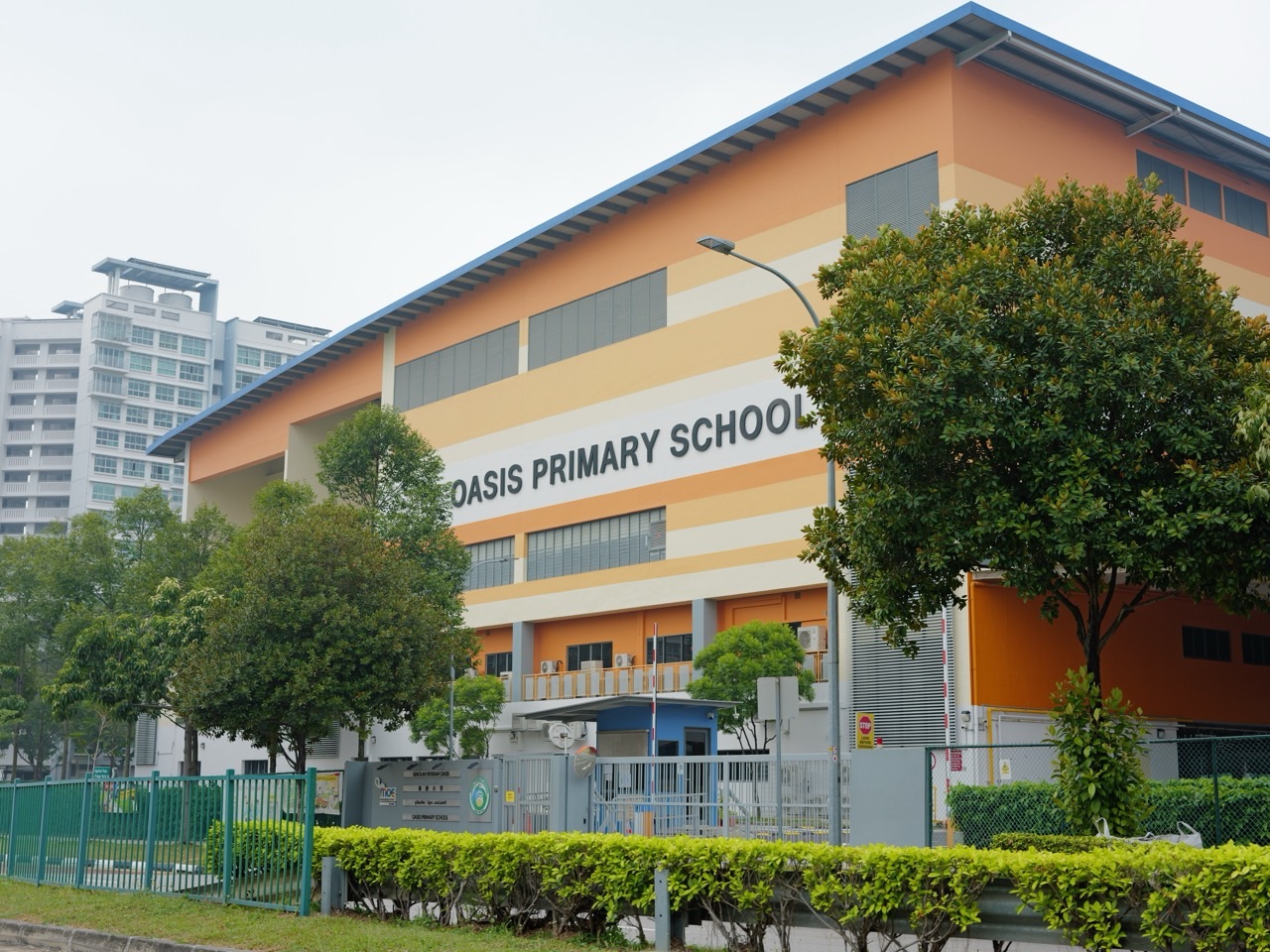
Schools and education at Punggol begin before Primary 1 through MOE Kindergarten programmes for K1 children turning five and K2 children turning six. MOE Kindergartens use a four-hour curriculum with HI-Light, Starlight Literacy and inquiry experiences such as Weeks of Wonder, focusing on communication, curiosity, values and age-appropriate independence. Families needing a longer day may consider Kindergarten Care (KCare), which has separate enrolment, operating hours and fees. A kindergarten place is not automatically a guaranteed place at the co-located primary school.
This guide compares the practical questions families should ask about local centres such as MK@Punggol, MK@Punggol Cove and MK@Oasis. MK@Punggol’s August 2026 page lists its morning programme and KCare operator, while other centres have their own local arrangements. The article explains K1 registration, partner Early Years Centres, care, costs and the K2-to-P1 transition, without treating preschool as an examination-preparation race. Current MOE and school notices must be checked before applying or planning daily care.
- K1: children turning five in the enrolment year; K2: children turning six.
- MOE Kindergarten provides a four-hour age-appropriate preschool curriculum.
- Flagship programmes include HI-Light and Starlight Literacy.
- Weeks of Wonder encourages safe curiosity and guided inquiry.
- Punggol MK locations include Punggol, Punggol Cove, Oasis and other school-linked sites.
- KCare is additional care for children enrolled in the associated MK.
- MK@Punggol’s 2026 KCare runs on weekdays subject to official closing days.
- MK fees, care fees and assistance require current confirmation and eligibility.
- K1 and Primary 1 registrations follow separate official processes.
- K2 readiness includes communication, routines and curiosity, not only advanced worksheets.
Definition lock: MK, K1, K2, KCare and Early Years Centre
MOE Kindergarten (MK) is Singapore’s MOE-run kindergarten programme, with Kindergarten 1 (K1) and Kindergarten 2 (K2) as the two preschool years before mainstream Primary 1. Kindergarten Care (KCare) provides additional supervision and development opportunities for enrolled MK children outside the four-hour kindergarten sessions. An Early Years Centre (EYC) may have a recognised partnership with an MK for admission under specific conditions. These programmes and their admission processes are not interchangeable with primary-school registration or primary student care.
A Punggol family comparison checklist
- Confirm which MKs currently offer places for the intended cohort.
- Check whether the child has an eligible EYC partnership.
- Compare actual MK session hours and daily travel.
- Ask whether KCare is needed and whether a place is available.
- Verify current fees, assistance and closure dates.
- Ask about HI-Light, Starlight and the child’s learning needs.
- Check the actual centre’s K2-to-Primary 1 transition arrangements.
- Keep registration and personal documents in authorised channels.

1. What K1 and K2 at an MOE Kindergarten are designed to achieve
MOE Kindergarten, commonly shortened to MK, is a preschool programme for children who turn five in the year they enter Kindergarten 1 and six in the year they attend Kindergarten 2. Its focus is a strong start in language, social-emotional development, values, curiosity and early learning dispositions. It is not simply a reduced Primary 1 classroom or a two-year course designed to complete an entire primary textbook syllabus before the child turns seven. The national framework helps families understand why purposeful play and relationships matter.
Families in Punggol may see MOE Kindergarten facilities located within or alongside primary-school campuses. That location can make some routines familiar but does not mean kindergarten lessons are identical to primary-school teaching. A five-year-old’s day should offer suitable exploration, conversation, stories and interaction with people and materials. Academic foundations can grow through meaningful experiences without the child having to sit through lengthy mock examinations to prove readiness.
A specific family decision or teaching example
Parents sometimes confuse a child’s ability to recite the alphabet or count to one hundred with overall school preparedness. Those abilities can be useful, but they do not reveal whether the child understands a story, can describe a problem, participates in suitable group routines or seeks help appropriately. Teachers can observe different kinds of growth through activities. A family should ask what the programme is helping the child understand and do rather than rely on one visible performance.
An illustrative activity involves children comparing two objects found in a safe classroom exploration. They may describe shape, colour or use, then ask a question about why the objects differ. That observation can support vocabulary, inquiry and listening. It does not require specialist laboratory equipment or a complicated report. The teacher’s guidance and careful selection of materials make the experience educational instead of merely entertaining.
A common misunderstanding and an independent check
One mistake is using the phrase learning through play to mean that any unsupervised activity is automatically educational. Purposeful play includes suitable conditions, interaction and opportunities to notice what happened. Another mistake is assuming that if a task is playful, it cannot develop serious foundations. A child sorting objects with a clear rule can be reasoning mathematically, while a story conversation can deepen language without a printed test.
For transfer, ask a child what changed when a fictional game uses a different rule or a new material. Can the learner describe the difference and adjust? That flexible explanation is a useful readiness signal, even when the child has not memorised a formal technical definition.
2. Which MOE Kindergartens are actually relevant around Punggol
Punggol contains several MOE Kindergartens attached to primary-school campuses, including MK@Punggol, MK@Punggol Cove and MK@Oasis. The official school sites provide information about their programmes, registration routes, KCare and parent resources. Other local MKs operate at schools such as Punggol Green, Punggol View, Northshore, Horizon, Greendale, Valour and Waterway. Parents should use MOE’s current MK locator for a complete and updated list rather than assume a photograph or an older list covers all available centres.
MK@Punggol’s official 2026 information identifies its location at Punggol Primary School, with a four-hour morning kindergarten programme and an associated Kindergarten Care service. MK@Punggol Cove has its own school page describing the programme, learning environment, KCare, centre information and Early Years Centre partnerships. MK@Oasis publishes separate open-house and contact information. These local examples show the importance of checking the actual centre rather than relying on an estate-wide operating timetable.
A specific family decision or teaching example
A useful shortlist considers which location is feasible for the child and caregiver, the current K1 admission process, whether a KCare place is needed and how daily travel would work. Distance can be relevant to admission priority and daily logistics, but a nearby centre is not automatically appropriate for every family. Its actual available places, programme, accessibility and childcare arrangements matter too. Families should not choose solely because a neighbour’s child attends it.
Current web pages can include past events. Punggol Cove and Oasis advertised open houses on 7 March 2026; those dates are already past as of November 2026. An archived poster remains useful evidence that a centre offered a tour then, but it is not a confirmed invitation for a future registration cycle. Check each centre’s latest announcements for new events and make no assumption about walk-in access on an ordinary school day.
A common misunderstanding and an independent check
One misconception is that all MK centres operate under exactly the same gate, orientation and holiday schedule because they share a national curriculum. Each school’s premises and operator arrangements can differ. Ask which entrance the family is permitted to use, which adult handles pickup and what the centre communicates about closures. A schedule copied from MK@Punggol should not be treated as an instruction for MK@Oasis.
For transfer, compare two fictional centres with similar programmes but different start times and care arrangements. Can the parent identify which information must be verified for each and which decision belongs to the family? That is a more useful comparison than ranking facilities by how attractive their publicity posters appear.
3. HI-Light, Starlight and Weeks of Wonder teach different things
MOE Kindergarten’s flagship curriculum includes the HI-Light Programme and Starlight Literacy Programme for English and Mother Tongue Languages. The HI-Light approach supports holistic development across learning areas and dispositions, while Starlight concentrates on early language and literacy through suitable interactions and materials. Weeks of Wonder, often shortened to WoW, gives children opportunities to explore questions and projects with peers and teachers. These experiences have related aims but should not be compressed into one generic claim that MK is primarily a phonics tuition centre.
Imagine a story about a fictional child who finds an unusual seed during a supervised garden activity. Starlight-related language work may involve naming objects, listening to an age-appropriate story or describing what was noticed. An inquiry-style project may invite questions about how a plant changes over time. Social and emotional learning may appear when children decide how to share materials and listen to each other. The same experience can support several capabilities without turning into an examination for five-year-olds.
A specific family decision or teaching example
MOE’s official programme materials emphasise a bilingual environment and language learning through meaningful experiences. That does not mean every child must become fluent in both languages by the end of K1. Children may start with different home-language exposure and move at different paces. Parents can ask teachers how the programme responds to those differences and which ordinary conversations or reading activities would be useful at home.
Weeks of Wonder is not a guarantee of a completed engineering prototype or a public showcase every term. A child’s inquiry may be modest and still educational. The key is identifying a question, considering possibilities, investigating safely and explaining what was learned. Parents should resist taking over a project to produce a more impressive final object. Adult supervision can maintain safety while leaving meaningful choices with the learner.
A common misunderstanding and an independent check
A common error is assuming that colourful classroom displays demonstrate every pupil’s individual understanding. Photographs show selected moments. A child’s own explanation, participation and teacher feedback provide more relevant information. Families should ask what was practised and which skill the next activity develops rather than compare how sophisticated two centres’ display boards look.
For transfer, give the child a different topic, such as shadows from two safe indoor objects. Can they ask one suitable question and say how they might notice a difference? That develops inquiry and language together without copying the earlier seed activity.
4. KCare is an additional care programme, not another four hours of kindergarten lessons
Kindergarten Care, or KCare, supports children enrolled in the linked MOE Kindergarten when families need longer daily supervision. It provides opportunities for care, rest, play and suitable experiences outside the four-hour MK curriculum. The distinction matters because a child cannot reasonably be expected to receive two full preschool academic programmes merely because they remain on the premises longer. The actual KCare operator has its own procedures, fees and closure arrangements.
MK@Punggol’s official August 2026 page identifies Raffles Student Care Centre as its KCare operator and says the service is available to children already enrolled at MK@Punggol. It describes operating hours from 7 a.m. to 7 p.m. on weekdays, including school holidays, subject to stated closure days. The MK curriculum at that centre runs from 8 a.m. to noon according to its current welcome page. Parents must check the exact handover times and terms rather than assume that every MK centre runs the same morning session.
A specific family decision or teaching example
KCare places are not identical to MK admission places. A family may qualify for a kindergarten seat yet still need to complete an additional care registration and receive confirmation. Parents should distinguish the education programme’s offer from the childcare operator’s acceptance and financial arrangements. A poster stating that KCare exists does not prove that a vacancy is currently available for the intended starting date.
Ordinary afternoon care can include meals, rest, play, social development and activities suited to the children’s age. It should be evaluated by safety, supervision, wellbeing and the child’s needs rather than the number of academic worksheets produced. A young child attending a long day may need time to recover from the structured curriculum. Families should discuss dietary, health or access needs privately with the centre.
A common misunderstanding and an independent check
Some parents confuse KCare with the school-based Student Care Centre for primary pupils. The services target different age groups and may have different operators or schemes even when they share a campus. KCare is attached to the MK programme; a Primary 1 pupil needs the relevant primary-school student-care arrangements. Automatic transfer from one service to the other should not be assumed.
For a changed-context check, consider a K2 child whose family needs care after noon this year and after Primary 1 lessons next year. Which enrolments require confirmation? Both the current KCare and the future primary SCC follow their own actual arrangements, so the family must plan the transition instead of treating one contract as universal.
5. Fees, subsidies and care costs should be checked by year and eligibility
MK@Punggol’s August 2026 fee page lists a monthly kindergarten fee of S$160 for Singapore Citizen children and S$320 for Singapore Permanent Resident children. It explains that the amount is calculated annually and spread across twelve months, including June and December holidays. Those are dated figures from the named centre, not a guarantee of fees in a future year or a substitute for MOE’s official conditions. A family should verify the current schedule when preparing an application.
The same page provides KCare fees by citizenship and notes that the Singapore Citizen figure shown already accounts for the basic KCare subsidy. Additional assistance may be available to qualifying families according to government criteria. Parents should not subtract the basic subsidy a second time or assume that every child receives the largest additional subsidy. The applicable household-income rules and formal decision determine the actual amount.
A specific family decision or teaching example
Financial planning should separate the four-hour MK programme, KCare, uniforms, transport and other legitimate expenses. An advertised combined daily schedule does not tell a parent how much every family will pay. School and care fees can have different charging structures, closing days and application processes. Ask for the current written amounts and effective months instead of relying on another parent’s receipt from a previous cohort.
Some families are eligible for additional Kindergarten Fee Assistance or KCare assistance, subject to relevant circumstances and terms. MOE’s official information should guide eligibility checks. A simple income estimate can be useful for deciding whether to apply but is not a guarantee. Families should keep personal financial documents private and use the authorised application route.
A common misunderstanding and an independent check
An error occurs when parents compare centres solely on headline monthly fees while ignoring travel, hours, care needs and actual subsidies. One centre may be cheaper but require a difficult handover during work; another may offer a suitable route but different closing arrangements. An informed choice weighs the child’s wellbeing and the family’s sustainable daily routine alongside confirmed cost.
For transfer, give a fictional family two separate fees and one unapproved assistance application. Which expense is confirmed, and which figure must remain provisional? The correct response prevents a household from budgeting against money that has not yet been approved.
6. K1 registration, partner Early Years Centres and KCare admission must be distinguished
MOE Kindergarten admission uses an official registration exercise with defined eligibility and priority rules. Children from qualifying partner Early Years Centres may have a pathway to the linked MK under the applicable criteria, while other families use the appropriate Open Admissions process. The two routes are not interchangeable, and a child who attended a nearby private preschool does not automatically receive a guaranteed seat at every MK. Check the current MOE registration webpage and the child’s actual EYC relationship before acting.
Punggol Cove’s 2026 official MK page describes its Early Years Centre partners and says eligible children from those centres can be offered a place under the partnership arrangements. The details depend on MOE’s rules, enrolment timing and the recognised partner. Families should not infer an unconditional guarantee based only on a centre’s name. If choosing a non-partner MK, the application follows the appropriate other route and may be subject to vacancies and balloting.
A specific family decision or teaching example
The MK registration exercise and Primary 1 registration are different processes occurring at different ages. Some children from a co-located MK may be eligible for a particular P1 registration phase under the current MOE rules, but that is not an unconditional promise of admission to the attached primary school. Phase eligibility, vacancies, balloting and actual cohort rules must be checked at the time. Parents should never tell a K1 child that their future Primary 1 place is already guaranteed solely because the classrooms share a campus.
School-based registration information may refer to a completed past exercise. A page mentioning the 2026 K1 registration opening date can show what happened then but does not provide a confirmed date for every subsequent year. Use current official announcements and the relevant registration form rather than submit personal details through an older third-party link. Deadlines should be recorded only after the responsible agency publishes them.
A common misunderstanding and an independent check
Parents can gather practical questions early: which programme and year is the child eligible for, is there a partner EYC, how is admission prioritised, what happens if there are more applicants than places, and what additional KCare steps are required? A clear checklist separates facts from assumptions. The family should not promise a result before official confirmation.
For transfer, present two fictional families: one is enrolled at a recognised EYC partner and the other is applying through open admissions. Can they explain why the routes differ without assuming either automatically receives every preferred place? That reasoning supports informed registration decisions.
7. The K2-to-Primary 1 transition is gradual, not a race through textbooks
K2 children begin preparing for a different school environment, but readiness involves more than advanced reading and Mathematics. The next year may require new arrival routines, recess purchases, larger groups and independent management of materials. The child benefits from opportunities to ask questions, follow suitable instructions, express needs and cope with small changes. These habits can be developed through everyday preschool experiences without turning the final K2 term into an academic contest.
MOE’s transition materials and local MK pages describe collaboration between kindergartens and co-located primary schools. A child may have opportunities to experience aspects of a primary campus under supervision. Those activities are helpful, but their exact format varies by centre. An MK open house or transition visit should not be treated as an official P1 orientation or proof that a primary admission has already been secured.
A specific family decision or teaching example
Parents can support independence through modest routines: packing one small bag, identifying personal belongings, explaining a simple problem to an adult and practising age-appropriate food ordering. A child who needs more help with one skill can learn it gradually with suitable support. There is no need to expect every K2 pupil to manage an entire school day without adult guidance before Primary 1 begins.
Language and friendship transitions matter too. A child may feel confident with familiar kindergarten peers yet nervous about new classmates. Adults can rehearse a greeting and a request to join a game while teaching that refusals and boundaries should be respected. A pupil who does not make a close friend immediately has not failed orientation. Adjustment can take time, and the receiving primary school can help where difficulties persist.
A common misunderstanding and an independent check
Some families feel pressure to buy advanced exam materials before the child has begun formal schooling. A better approach is to understand the child’s current strengths, support early literacy and numeracy meaningfully and preserve sleep and play. The primary teacher will introduce the actual curriculum. Parents should not confuse a commercial ‘Primary 1 readiness score’ with an official MOE evaluation.
For transfer, offer a fictional school morning where the classroom has changed and the child cannot find the usual bag hook. Can the learner ask an appropriate adult for help instead of wandering? That ability is useful in Primary 1 and more broadly throughout school.
8. Families can practise language and curiosity with inexpensive everyday tasks
Preschool learning need not depend on expensive enrichment. A caregiver can talk with a child about a meal, a bus journey, a picture book or an object seen from a safe public path. The adult’s questions can encourage descriptive vocabulary, classification, counting and explanation. The key is making the child an active participant who notices and decides rather than an audience for an endless stream of adult facts.
One language activity uses an age-appropriate story. The adult reads aloud, pauses at a meaningful choice and asks what the child thinks a character might do next. After reading, compare the prediction with the story. The child can practise identifying a reason without being judged on perfect grammar. This connects narrative understanding with reasoning and communication in a manageable amount of time.
A specific family decision or teaching example
A number activity uses five safe counters. The child can divide them into two groups and see that the total stays five. Change the split and ask what is different. This develops a part-whole idea rather than merely counting numbers aloud. An adult can model the first attempt, then invite the child to try a new arrangement independently. The exercise should remain playful and appropriate to readiness.
An observation activity might compare two different leaf shapes from published images or permitted safe views, without collecting living material or entering restricted areas. Ask what can be seen directly and what remains uncertain. If the child guesses an explanation, adults can distinguish the guess from an observation gently. The purpose is curiosity and careful language, not a formal scientific investigation with impossible standards.
A common misunderstanding and an independent check
Families who speak multiple languages can use ordinary interactions to support bilingual exposure. The child may learn that words change with context, audience and culture. Parents should not insist that every conversation becomes a graded translation drill. When an adult is uncertain about a formal expression, it is better to verify with a reliable resource or teacher than teach an incorrect rule confidently.
For transfer, introduce a new unfamiliar household object and ask the child to describe its shape, purpose and one question about it. The underlying abilities—observation, language and reasoning—can move to a new topic without additional equipment.
9. A sensible MK choice requires more than a prestigious name
Families comparing MK centres should consider actual eligibility, programme hours, care availability, location, accessibility, fees and the child’s readiness. A local centre may be convenient but have limited vacancies, while another may offer a different daily handover. The official curriculum provides common goals, but practical arrangements are specific. A parent should not choose solely because a neighbour praises an impressive event photograph.
Ask which school provides the current programme information and which operator manages KCare. Verify school-term and holiday arrangements, transport, meals and the policy for a child who needs individual support. When another parent reports a positive experience, treat it as that family’s perspective rather than a complete evaluation of every pupil’s experience.
A specific family decision or teaching example
Publicity may mention special projects or visits. Those can provide learning opportunities, but participation and content may vary by term. A child should not be promised a particular excursion without the current school’s confirmation. The family can ask what kind of inquiry and language experience the programme usually develops and how teachers communicate progress.
Parents should also preserve the child’s voice. A five-year-old may be able to describe whether the environment feels comfortable or which activity interests them, although adults remain responsible for decisions about safety, enrolment and affordability. Listening does not mean expecting the child to assess policy criteria. It helps the caregiver consider the whole child’s adjustment.
A common misunderstanding and an independent check
Another practical concern is documentation. Registration, financial assistance and authorised pickup require accurate information that should be submitted through approved channels. Do not publish a child’s birth certificate, identity details or daily location to parent groups when comparing options. Trustworthy school planning respects privacy from the first application onward.
For the final changed-context check, provide two hypothetical centres with different opening hours, fee structures and KCare availability. Can the parent identify what is confirmed, what is still subject to admission and which factors are non-negotiable for the family’s routine? That is a better decision than counting promotional photographs.
Worked example: four-hour MK versus MK plus KCare
Imagine two fictional families considering MK@Punggol. Family A can collect the child at the end of the four-hour morning MK programme. Family B needs a full working-day arrangement and asks about the separate KCare service. Both should confirm the child’s actual MK admission, current fee and pickup procedures. Family B must also confirm KCare availability and fees instead of assuming that the MK offer automatically includes care until 7 p.m. The families can compare sustainable travel and supervision without treating one schedule as educationally superior for every child.
Four-week K2-to-P1 preparation illustration
Week one: ask the child to explain one ordinary classroom or playground routine. Week two: practise an age-appropriate food-ordering and small-money task. Week three: let the child pack simple belongings using a picture or written checklist. Week four: present an unfamiliar change, such as a different classroom, and ask how the child can seek an authorised adult. This is an optional family routine, not an entrance test or an assessment of a named MK’s performance.
Frequently asked questions
What ages attend K1 and K2 at MOE Kindergarten?
K1 is generally for children turning five in the enrolment year and K2 for those turning six, under MOE’s current eligibility rules.
Does MK@Punggol run a four-hour programme?
Yes. Its August 2026 site lists a morning four-hour MK programme from 8 a.m. to noon; other MKs may have different session arrangements.
What is KCare?
Kindergarten Care offers longer supervision and age-appropriate care experiences for children already enrolled in the associated MOE Kindergarten, with separate enrolment and fee arrangements.
Is KCare the same as Primary School Student Care?
No. They serve different ages and have distinct admission, provider and administrative arrangements.
What are HI-Light and Starlight?
They are MOE Kindergarten flagship learning programmes supporting holistic development and early language and literacy in English and Mother Tongue Languages.
Does admission to an MK guarantee admission to its co-located primary school?
No unconditional guarantee should be assumed. P1 registration phase eligibility and balloting follow MOE’s current rules.
Can a partner Early Years Centre help with MK admission?
Eligible N2 children at recognised partner EYCs may receive a route to the linked MK under official criteria; confirm the relationship and conditions.
How should families choose among Punggol MK centres?
Compare current places, curriculum information, daily session, care, travel, fees and individual needs through each centre and MOE’s official registration pages.
Your Next Step
Open MOE’s current MK registration guidance and the official page of the Punggol centre you are considering. Confirm the child’s eligibility, session hours, any EYC partnership and whether KCare is needed. Ask the centre about current admission and pickup procedures before committing to transport or work arrangements. Support learning through conversation, stories and safe exploration while allowing the child to grow at an appropriate pace.
Official sources and related Punggol reading
- MOE Kindergarten: Overview, Curriculum, Centres and Registration
- MOE Kindergarten Current K1 Registration Exercise
- MK@Punggol: Welcome, Ages and Programme Hours, August 2026
- MK@Punggol: KCare Operator, Eligibility and Hours, August 2026
- MK@Punggol: MK and KCare Fees, August 2026
- MOE Kindergarten @ Punggol Cove: Programme, EYC and KCare
- MOE Kindergarten @ Oasis: School Information and 2026 Open House
- MOE Primary 1 Registration: Distinct Next-Stage Process
- Schools and Education at Punggol | Primary 3–4 Higher Mother Tongue
- Schools and Education at Punggol | Starting Primary 1 and First 30 Days
Editorial reference date: 4 November 2026. School hours, fees and eligibility are dated local references. The scenarios are hypothetical; actual MK/KCare places, subsidies and future Primary 1 admission are never guaranteed.


