
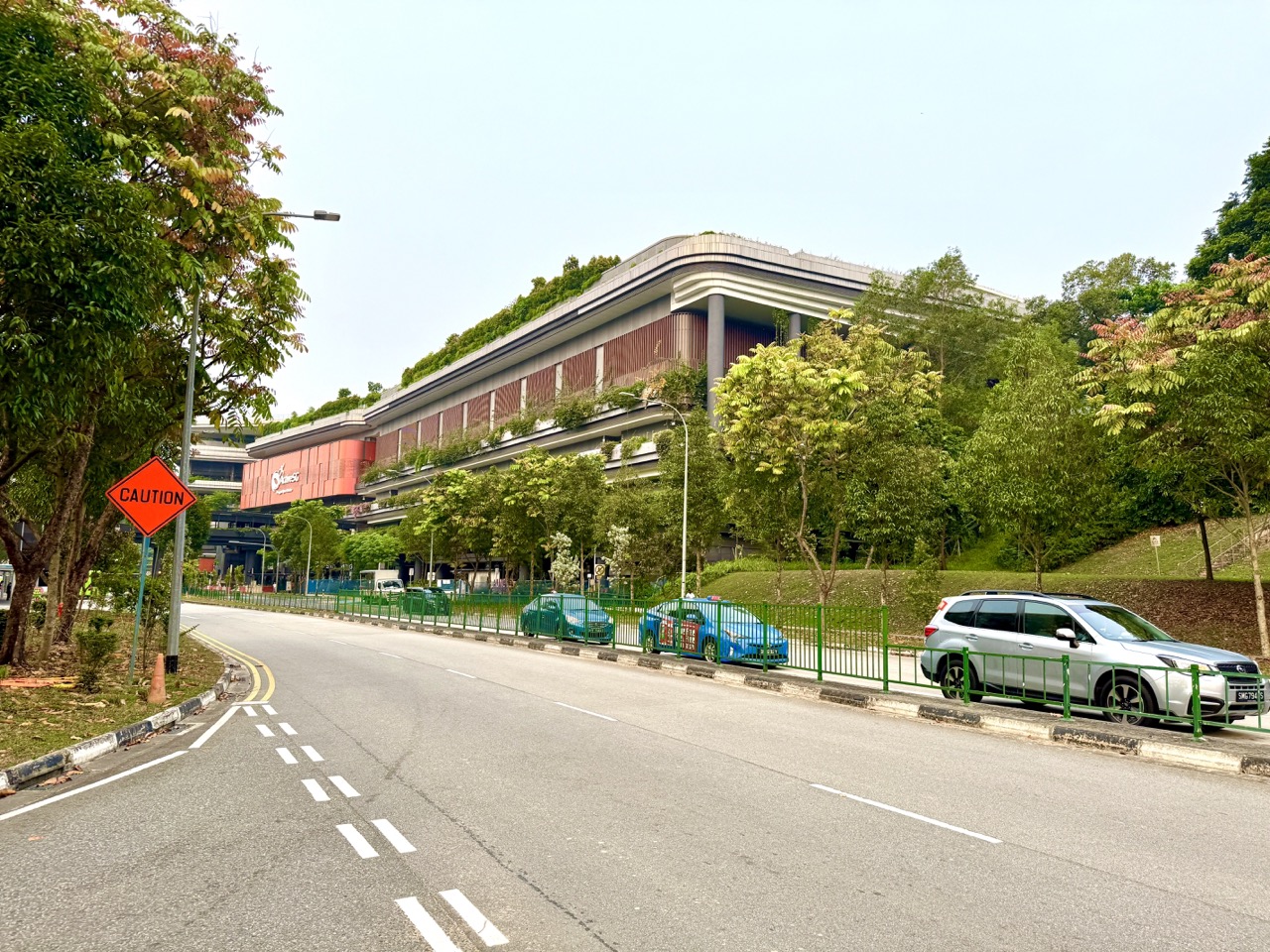
ActiveSG Punggol Sport Centre at 11 Sentul Crescent gives families an easy way to think about Acoustics, the science of sound. A badminton racket makes a short impact sound, sports shoes can squeak against a suitable floor, a ball may bounce with repeated impacts, and voices can sound different in an enclosed hall from how they sound outdoors. But this article does not claim to have measured actual sound levels, echo times or acoustic materials inside the new centre. Punggol entered selected public operations on 27 October 2026, ahead of its scheduled 22 November 2026 official opening, and individual facility access still depends on the actual listing at MyActiveSG+. You can learn the underlying science through quiet spoken demonstrations, diagrams and trusted educational resources at home; there is no reason to clap loudly in a sports hall or record other users without permission.
The central Physics explanation is that sound originates from vibration, travels through a material medium as a mechanical disturbance and may be transmitted, reflected, absorbed or scattered when it reaches surfaces. A large room can produce reverberation because many reflections arrive and decay over time, while a sufficiently delayed strong reflection may be perceived as a separate echo. Assumption English School’s Physics learning page covers vibration, longitudinal waves, sound transmission, pitch, loudness and echoes. The World Health Organization’s safe-listening advice explains why hearing risk depends on sound intensity, exposure duration and other circumstances. These facts help families distinguish science from guesswork: a squeaky shoe is not a decibel reading, a louder sound is not necessarily higher-pitched, and a general health example cannot establish the actual safety of one Punggol venue.
- Venue context: Punggol Sport Centre, 11 Sentul Crescent; no on-site acoustic testing or programme is promised.
- Sound source: vibration from an object or surface creates disturbances that can travel through suitable media.
- Medium: sound requires matter for transmission; it does not travel through a vacuum.
- Wave vocabulary: frequency, period, amplitude, wavelength, speed, compression and rarefaction.
- Pitch versus loudness: pitch is linked to frequency; perceived loudness is related to sound level and hearing, not frequency alone.
- Echo: a sufficiently separated reflection heard after the direct sound.
- Reverberation: persistence of sound involving multiple reflections and gradual decay.
- Room design: hard and soft surfaces can reflect, absorb or scatter sound differently; actual Punggol construction details require evidence.
- Hearing safety: avoid unnecessary loud exposure; do not turn headphones up to drown out venue noise.
- Privacy: do not record conversations, children or athletes without appropriate permission.
- This article: sound-wave fundamentals, original calculations, safe home activities, room-acoustics questions, listening habits and a four-week learning plan.
Definition lock: acoustics is the study of sound
Acoustics investigates sound production, propagation and interaction with environments and receivers. A child hearing a sharp racket impact is experiencing an acoustic event, but the sound alone does not reveal every physical detail of the racket or hall.
Different questions belong to different subjects. Physics explains the vibrating source and sound waves. Biology explains how the auditory system receives sound. Music explores how humans organise sound for expression. Public policy and venue operations govern which activities are authorised in shared spaces.
This article focuses on the Physics and practical listening implications. A useful explanation identifies which mechanism is being studied rather than using “noise,” “echo” and “volume” interchangeably.
Why the Punggol sports setting is relevant
The new Sport Centre brings indoor, sheltered and other sporting spaces into a regional development. Such environments may contain bouncing balls, shoe friction, conversations, whistles and mechanical equipment. Those everyday examples make sound science relatable.
But a six-level building photograph does not reveal reverberation time, wall absorption coefficients or the measured sound pressure at a player’s ear. Those conclusions would require appropriate information and testing.

A family can therefore use the setting as inspiration while learning the science from reputable materials and safe home models. Curiosity does not justify unauthorised testing in occupied facilities.
Vibration is where sound begins
A vibrating object moves back and forth around an equilibrium position. Its motion can disturb surrounding matter and create a propagating sound wave. A racket string, table-tennis ball, loudspeaker membrane or human vocal folds may act as part of a vibrating system.
For a safe demonstration, an adult can gently pluck a suitable loose elastic band stretched around a small object, under appropriate supervision and away from faces. A diagram is also sufficient, especially for younger children or where small-part hazards exist.
The point is not to produce maximum noise. It is to connect the audible sound to a physical change over time.
Sound is not the same as air moving across the room
In a longitudinal sound wave in air, molecules oscillate around their local positions while a pattern of pressure disturbances travels through the medium. The air does not need to move as one solid block from the source all the way to the listener.
This is a common misconception: students may imagine one particular air molecule leaving a racket and arriving inside a distant ear. A simpler model shows neighbouring particles passing a disturbance through successive compressions and rarefactions.
The model is useful but idealised. Real sound fields can contain complex reflections and multiple frequencies, which require more advanced descriptions.
Compressions and rarefactions
A compression is a region of higher pressure or particle density relative to the local average in an idealised sound wave. A rarefaction is a region of lower pressure or density. These regions propagate as the sound travels.
A teacher-approved slinky demonstration can illustrate longitudinal disturbances, provided the equipment is handled safely and not stretched toward people. A diagram of alternating crowded and spaced dots is another suitable option.
The child should recognise that the physical medium carries a disturbance. The dots in the diagram are not permanently migrating with the wave from one end to the other.
Sound needs a material medium
Sound travels through gases, liquids and solids because particles or structures transmit mechanical disturbances. In an ideal vacuum, ordinary sound cannot propagate because there is no material medium to carry it.
This does not mean every medium transmits sound with the same speed or attenuation. Properties such as elasticity and density matter, and interfaces can change how much energy is reflected or transmitted.
The learner can compare textbook descriptions of air, water and solids without placing electronic equipment in water or conducting unsafe public tests. Understanding the principle does not require a hazardous experiment.
Why a swimming-pool example needs care
A pool setting can prompt questions about how sound travels in water, but Punggol’s swimming areas have separate operational and safety conditions. A science article should not invite children to submerge phones, shout underwater or conduct improvised pool experiments.
The necessary Physics can be studied through diagrams and official learning materials. Sound propagates in water, but underwater perception and practical safety are more complicated than a simple claim that it is “louder”.
An educational question must not be treated as permission to enter a pool or test sensitive equipment. Scientific curiosity works within venue and safety boundaries.
Frequency describes cycles per second
Frequency is the number of oscillations per second, measured in hertz (Hz). If a source completes one hundred cycles in a second, its frequency is 100Hz. For a simple periodic wave, higher frequency generally corresponds to higher perceived pitch, within the person’s hearing range.
But a real racket impact is not a single perfect sine wave. It contains a mixture of frequencies and changes over a short time.
The useful basic task is to distinguish frequency from volume. A sound can be high-pitched and quiet, or low-pitched and loud. These properties should not be mixed up.
Pitch is a perception related to frequency
Pitch is the auditory quality that lets many listeners distinguish relatively high and low tones. Frequency strongly influences pitch for simple periodic tones, while complex sounds can involve more complicated relationships.
A child’s voice may have a different pitch from an adult’s, but that does not mean it is always louder. Similarly, a shoe squeak may be high-pitched without giving any reliable estimate of decibel level.
An educational exercise can compare two comfortable spoken or hummed tones in a private environment. Avoid high-volume sound generators or forcing vocal strain to demonstrate a high pitch.
Amplitude is not frequency
For a simple sound wave model, amplitude describes the size of the oscillation or pressure variation. Frequency describes how often the wave repeats. These are independent parameters even when real sound sources sometimes change several qualities together.
Students can draw two sine-wave diagrams with the same frequency but different amplitude, then another pair with the same amplitude but different frequency. Label what changes.
The diagrams are simplified models, not measured waveforms from the new Sport Centre. They help separate two concepts that everyday words like “strong” or “sharp” can obscure.
Loudness and sound level
Perceived loudness depends on the listener and the acoustic signal, including its level and frequency content. Sound pressure level is a physical quantity commonly expressed in decibels. A listener’s perception is not identical to a single sound-level number.
This is why a person cannot reliably measure the acoustic level of a public sports hall just by saying “it sounded loud to me.” Such a report may accurately describe personal experience, but it is not a calibrated measurement.
When discussing hearing safety, avoid using personal impressions as a substitute for appropriate instruments and qualified assessment.
The decibel scale is logarithmic
Decibels use logarithms to express ratios. For acoustic intensity, a difference of 10dB represents a tenfold ratio under the standard definition. But this does not mean a 10dB increase is heard as exactly ten times louder by every person in every situation.
The relationship between measured signal and perceived loudness is more complicated. Students should also distinguish acoustic intensity from sound pressure when discussing different decibel formulas.
A useful classroom answer names which quantity is being compared and avoids treating the decibel as an ordinary linear unit.
Why adding decibels is not ordinary addition
Two identical independent sound sources do not generally double the decibel reading by simple arithmetic. Under appropriate assumptions of uncorrelated sources with equal sound pressure level, combining them gives approximately a 3dB increase, not twice the numerical decibel value.
This is a more advanced concept than a Primary child needs. It helps older learners recognise why the logarithmic scale requires care.
Do not use a theoretical calculation to declare the measured sound at a Punggol event. The result depends on actual levels, source relationships, geometry and environment.
Wavelength connects speed and frequency
For a simple travelling periodic wave, the relationship is wave speed = frequency × wavelength. In symbols, v = fλ. A student can use a hypothetical example: if the wave speed is taken as 340 metres per second and the frequency is 170Hz, the wavelength is 340 ÷ 170 = 2 metres.
This is an illustrative calculation for sound in air under assumed conditions. Actual speed varies with temperature and medium.
The objective is to understand how the quantities relate. A formula becomes meaningful when the student can identify each unit and explain what changes if frequency increases while speed remains fixed.
Period is the time for one cycle
The period of a periodic wave is the time taken for one complete cycle. It is the reciprocal of frequency: T = 1/f when the frequency is nonzero and the periodic model applies.
For a 100Hz tone, the period is 1/100 second = 0.01 second. A student should distinguish the time between cycles from the total duration of a piece of music or a sports rally.
A racket strike may last only a brief moment and contain many frequencies, so it does not necessarily have one easily defined single period. The model’s limits matter.
Sound can reflect from a surface
When a sound wave reaches a boundary between media or encounters a surface, some energy may be reflected back. Large hard surfaces can produce noticeable reflections. Siemens Stiftung’s sound-reflection learning resource illustrates the principle.
Reflection is not proof that every wall will behave like a perfect mirror for every sound frequency. Geometry, material properties and frequency all matter.
A student can use a paper arrow diagram showing incoming and reflected paths rather than testing with loud claps against public walls.

What an echo is
An echo is a reflected sound perceived as separate from the original after a sufficient delay and strength. A large reflecting surface far enough away may provide the necessary travel time. In more enclosed spaces, reflections may blend with the original event rather than be heard as distinct repeats.
For an older learner, a hypothetical echo calculation can show why sound travels to a boundary and back. If the assumed speed is 340m/s and the echo returns after 0.2 seconds, the reflecting distance in an ideal straight-path model is 340 × 0.2 ÷ 2 = 34 metres.
This is not a measurement of any wall in Punggol Sport Centre. It is a simplified mathematical illustration.
Why the distance is divided by two
In an echo calculation, the measured delay typically includes sound travelling outward to the reflecting surface and returning to the receiver. If the source and receiver are in the same place and the path is idealised, the total travel distance is twice the one-way distance.
That is why we divide the distance calculated from speed times time by two. Forgetting the return journey produces a result that is too large.
Real rooms may involve angled paths and multiple reflections, so the simple formula should not be applied blindly to determine the actual location of a reflecting surface.
Reverberation is different from a separate echo
Reverberation is the persistence of sound as many reflections continue and decay after the source has stopped. Rather than hearing a clearly separated repetition, a listener may perceive a lingering or blended sound.
A large enclosed space with many reflective surfaces can have more noticeable reverberation than an outdoor open area, though the actual result depends on room geometry and materials. The Physics Classroom’s echo and reverberation explanation discusses the distinction.
Do not assume that every sports hall has the same reverberation time. Actual measurements are required to compare specific venues.
Why a hall can make speech harder to understand
Strong late reflections and competing background noise can reduce how clearly a listener hears spoken instructions. The issue is not always that the speaker is too quiet; the room and other sound sources contribute.
A teacher or coach may need to use appropriate clear phrasing, quieter conditions or a suitable communication method. Simply shouting louder may not solve the problem for every participant and may inconvenience others.
This is one way Acoustics connects with accessibility. A person may require written or visual instructions even when the speaker believes they are speaking loudly enough.
Reverberation time is a measured property
Acousticians sometimes use RT60, the time associated with a 60dB decay in sound level under a defined measurement method, to describe room reverberation. It is not something that can be reliably estimated by counting how long one child’s clap “seems to linger.”
Different room uses may call for different acoustic conditions. A concert space and a speech-focused classroom may be designed with different goals.
This article does not claim a particular RT60 value for Punggol Sport Centre. Without facility acoustic reports or properly authorised measurements, that detail is unknown.
Absorption reduces reflected sound energy
When sound interacts with a material, some energy may be absorbed rather than reflected. The degree of absorption can depend on frequency, material construction, thickness and placement. A thick porous panel may behave differently from a large bare hard surface.
Students should avoid the sweeping rule that “every soft material absorbs all sound.” Real acoustic materials have frequency-dependent performance and must be selected for their intended application.
The family can study diagrams and authoritative resources without cutting wall panels or touching the Sport Centre’s installed surfaces. Material choice in building acoustics is a professional engineering task.
Reflection, absorption and scattering can occur together
A surface may reflect some sound energy, absorb some and scatter sound in different directions. The outcomes are not always exclusive. Textured or irregular surfaces can influence the distribution of reflected energy.
An elementary diagram can show incident sound reaching a wall with arrows representing different possibilities. The figure is conceptual, not a measured energy balance for a specific building.
The important skill is to avoid claiming one surface simply “bounces all sound back” because it appears smooth. Geometry and materials interact in ways that require actual evidence.
Why curtains and walls behave differently
A heavy curtain and a hard wall generally have different acoustic properties, but the exact effect depends on frequency, material, thickness, spacing and installation. In some settings, absorptive or diffusive elements help improve speech clarity or control reverberation.
A student should not propose hanging unapproved material inside a sports hall or blocking fire and ventilation systems to conduct an experiment. Such modifications are outside a visitor’s authority.
Use the room-design question for discussion rather than an unauthorised intervention. Building safety and acoustic design have to be considered together.
Indoor and outdoor sounds behave differently
Outdoors, a sound may spread without returning from surrounding walls in the same way as it can in a large enclosed room. Nearby buildings and ground surfaces may still reflect sound, however, so outdoor spaces are not reflection-free.
A sheltered court may have a roof and partially open sides, creating different conditions from a fully enclosed hall. The actual experience depends on the construction and environment.
Do not claim the new Punggol sheltered courts are automatically quieter than indoor courts without comparable evidence. The difference is a valid scientific question, not a confirmed conclusion.
A ball’s bounce produces a transient sound
A bouncing ball creates a brief impact as the ball and surface interact, exciting vibrations. The sound can vary with ball material, floor construction, impact speed and the surrounding acoustic environment.
A higher-pitched bounce is not automatically proof that a ball was struck harder or that a floor is unsafe. Several factors can influence what the listener hears.
A student can study textbook impact-wave explanations without bouncing hard balls repeatedly in a shared public area to collect recordings. Scientific questions must remain compatible with safety and venue rules.
Why sports shoes sometimes squeak
Squeaking can arise from frictional vibration and interactions between footwear and a surface. The exact mechanism depends on shoe material, condition, load, movement and floor properties. The presence of a squeak does not guarantee suitable grip or indicate a specific decibel level.
A shoe can be unsafe for indoor play despite making a familiar squeak, while a correctly fitted shoe may not produce a loud sound. Footwear selection should follow venue rules and appropriate advice.
Do not intentionally create excessive squeaking or dangerous sliding to generate a science demonstration. A diagram and explanation are sufficient.
The badminton impact has many frequencies
A racket striking a shuttlecock creates a short complex sound involving the equipment, contact and surrounding air. It is not normally one perfect musical note with a single frequency. A microphone signal might contain a range of frequencies and transient features.
A student should therefore avoid labelling its “pitch” as a single exact number without a defined measurement method and appropriate equipment. The perceived sound also depends on distance and room reflections.
This is a useful distinction from a simple sine-wave lesson. Ideal periodic waves explain fundamentals, but real sporting sounds are often much more complex.
Sound intensity decreases with distance under conditions
In an ideal open environment with a point-like source radiating uniformly, intensity decreases with the square of the distance. Real sports halls depart from that ideal because walls reflect sound, sources are directional and people and equipment affect the acoustic field.
A student can use the inverse-square relationship as a model, but should not promise that moving twice as far from a sound always reduces exposure by a fixed amount inside every building.

The correct scientific habit is to state the assumptions. A model can be valuable and still have important limits in a real room.
Background noise changes communication
A coach speaking in a quiet room may be easy to understand, while the same voice can be harder to follow if many games and conversations occur simultaneously. The difference involves the relative levels and characteristics of target speech and interfering sounds.
People also vary in hearing, attention and language familiarity. A first-time participant may need a shorter or written instruction even when the overall volume is acceptable.
Clear communication is therefore an acoustical and social consideration. Good coaching does not assume that everyone who misses an instruction simply was not listening carefully.
Why shouting is not the default solution
Shouting can increase the speaker’s sound output but may introduce distortion, strain and additional noise. It may also make some listeners uncomfortable. A concise instruction delivered at an appropriate moment, with a visual demonstration, may be more effective.
In some environments suitable amplification or professional acoustic design is appropriate, but a casual court visitor should not install speakers or alter facility systems.
The person leading an activity should follow operator guidance and consider the participants’ actual communication needs instead of assuming louder always means clearer.
A sound-level meter needs a method
A calibrated sound-level measurement requires appropriate equipment, placement, weighting, averaging period and procedure. A smartphone app may give an approximate indication under some conditions but cannot automatically certify a venue’s acoustic safety.
The microphone, software, distance from source and background noise affect results. One peak reading does not describe an entire session’s exposure. A student’s phone cannot replace professional occupational or environmental measurement.
Do not conduct unauthorised sound surveys inside the Sport Centre. For school learning, use published hypothetical readings and focus on interpreting the measurement method.
A photo cannot prove an acoustic rating
A room may look visually impressive while its sound characteristics remain unknown. Decorative panels, roof shapes and finishes can affect acoustics, but an image alone cannot reveal their tested absorption or transmission properties.
Do not assert that Punggol Sport Centre’s roof is soundproof, that its courts have a specific echo duration or that its partitions meet a particular decibel target without official technical evidence.
The appearance of a building and the performance of its materials are separate questions. This is a useful lesson in evaluating architecture and public claims responsibly.
Listening safely involves level and duration
The WHO explains that exposure risk depends on sound level and how long a person listens, as well as factors such as the characteristics of exposure. Its safe-listening guidance provides examples showing that allowable listening time decreases as sound intensity rises.
These examples are general health guidance, not a claim that Punggol’s courts reach those measured levels. No Sport Centre sound-pressure measurement was performed for this article.
Families should avoid deliberately increasing volume to test tolerance. Hearing safety is not a competition, and a child should not be asked to endure uncomfortable noise for a science project.
The WHO’s 80dB and 90dB examples
WHO’s safe-listening guidance provides illustrative weekly exposure times: 80dB for up to around 40 hours and 90dB for around four hours under its stated general assumptions. Those figures show the steep effect of level on permissible exposure.
They are not a personalised medical guarantee or a substitute for occupational standards, and they do not describe the Punggol venue. Different real exposures and individual circumstances may change risk.
The school lesson is that sound dose depends on both intensity and duration. Repeating one numeric threshold without context is misleading.
Headphones can hide a noisy environment but increase risk
A person may turn up headphones to overpower background noise. That can increase personal listening exposure even when the external environment remains unchanged. WHO recommends managing volume and exposure duration for safer listening.
Do not tell children to increase volume until the sports hall sounds disappear. If speech must be heard for safety, headphones may also reduce awareness of important instructions.
Appropriate listening choices depend on the environment and activity. A public sports facility is not automatically the right place for immersive headphone use during active play.
Earplugs are not a universal sports requirement
Suitable hearing protection can be important in certain loud environments, but a blog should not prescribe a particular earplug type for every person playing badminton. Protective devices can affect hearing and communication, and some situations have specific requirements.
If someone has a diagnosed hearing condition, unusual sensitivity or concerns about exposure, qualified advice can help determine suitable measures. Venue operators also have their own risk-management responsibilities.
The educational goal is understanding sound exposure, not promoting an unverified product or claiming that every court is dangerous.
Hearing differences need respect
Not everyone hears speech or environmental sound in the same way. Deaf and hard-of-hearing participants may prefer written instructions, appropriate visual cues, signed language or other agreed methods. Do not assume one solution works for all users.
Ask the person about preferences and use appropriate support when necessary. A multilingual or noisy environment can create additional barriers unrelated to effort or motivation.
Inclusion depends on clear communication and respect. An acoustics lesson should not treat hearing difference as a reason to exclude a participant from suitable recreation.
A loud crowd is not one measurable source
A cheering crowd includes many people producing sound at different positions and times. Its overall acoustic effect depends on the number of sources, their levels, room reflections and the receiver’s position.
A student cannot infer the measured dB level simply from the number of spectators in a photograph. Nor can they calculate the exact sound level by adding decibel numbers as ordinary whole numbers.
Complex sound fields require appropriate measurement and modelling. A careful article should not invent a stadium acoustic rating from its planned seating capacity.
Why quiet equipment can still be useful
Some sports products may be marketed as quieter than others. Such claims can be meaningful if supported by suitable comparative measurements, but they should not be accepted solely because a brand uses the word silent.
A student should ask what was compared, under which conditions, at what distance and using which metric. A product may reduce one kind of impact sound without eliminating all noise.
Do not conduct head-to-head trials in a public court without authorisation. Manufacturer claims can be evaluated through published evidence and careful questions at home.
Sound complaints and physical safety are different issues
A resident may dislike a particular impact sound, while a player may be concerned about a slippery floor. These are different problems that should be reported through appropriate channels. The presence of noise does not automatically indicate a maintenance defect.
If a sound is associated with visibly damaged equipment or an immediate safety concern, stop using the item and tell staff. If it concerns routine ambience or possible disturbance, use the operator’s proper feedback process and provide factual observations.
Avoid accusing other users of wrongdoing based solely on an unfamiliar sound. Clear classification helps responsible staff respond.
The opening ceremony is a separate sound context
ActiveSG’s official listing schedules the Sport Centre’s formal opening for 22 November 2026 with tryouts and activities. An event day may involve different sound and crowd conditions from an ordinary weekday gym session, but no particular measured level is established by the announcement.
A family should not use a special-event video to claim that every regular session has the same acoustics or noise exposure. The event and a quiet training session are different contexts.
This is another example of why time and operational circumstances matter when making factual claims.
An echo diagram can be drawn at home
Draw a source, a reflecting wall and a receiver on paper. Use arrows to represent a sound path to the wall and back. Label the distance and, for an older learner, calculate an illustrative echo delay using a stated wave speed.
Explain that the diagram assumes a simple path, while real rooms have multiple reflecting surfaces. No physical echo experiment is needed.
This is enough to teach reflection and travel time. It avoids repeated loud claps that might disturb neighbours or become uncomfortable for children.
A paper demonstration of absorption ideas
Students can compare conceptual diagrams of hard reflecting surfaces and more absorptive treatments. If a school conducts a sound-control practical, it should follow its safety and apparatus requirements. Home experiments that depend on loud music, exposed wiring or modified walls are unnecessary.
Ask which evidence would be required to claim one material improves speech clarity. A mere impression is not a comprehensive acoustic measurement, particularly when background conditions change.
The value is in planning an appropriate comparison, not producing a dramatic noise.
How to interpret a sound recording responsibly
A recording may capture a sound, but microphones, compression algorithms, recording distance and playback volume can change the listener’s experience. A clip cannot establish a true original dB level without a proper calibrated measurement chain.
Privacy matters as well. Do not record other court users, children or conversations without appropriate authorisation. A recording can contain personal information even when the main target is a sports sound.
For educational work, use licensed source material or original private recordings of consenting people if appropriate, or avoid recording entirely.
Frequency plots and waveforms are models
A waveform plot shows a signal varying with time. A frequency spectrum shows how a signal’s content is distributed across frequencies under a particular analysis. Students should not confuse the two simply because both look like graphs.
A short impact might produce a waveform pulse and a broad frequency spectrum. A pure periodic tone would have a more regular pattern under ideal conditions.
The concepts can be introduced through published educational diagrams rather than scraping recordings from the Sport Centre or claiming to have measured equipment there.
Acoustics and Music ask different questions
Music may organise rhythm, pitch, dynamics and timbre for artistic expression. Acoustics studies the physical sound signal, how it propagates and how rooms and receivers influence it. A musical performance can be analysed using both perspectives, but the questions are not identical.
A student may describe the timbre of a racket impact in a Music lesson, then use Physics to explain vibration and reflection. The same sound becomes a source for two different kinds of reasoning.
Keeping the disciplines distinct prevents the claim that every rhythmic sports noise is a song or that all sound science is musical performance.
Acoustics and Biology meet at hearing
Physical sound waves reach the ear and are processed through the auditory system. The biology of hearing involves delicate structures and neural pathways. A physics lesson cannot determine the health of those structures from a room’s appearance or one person’s report.
If a child has persistent hearing concerns, ear pain, ringing or related symptoms, seek appropriate medical advice rather than conduct home exposure tests. Hearing symptoms have many possible causes.
Responsible teaching recognises when the question has moved from describing waves to individual healthcare.
Case study: a badminton hall with an imagined echo
A fictional pupil imagines a shout in a large empty hall and predicts that hard walls might reflect sound. The student then draws possible sound paths and explains that multiple reflections could contribute to reverberation.
They do not claim that Punggol’s actual indoor courts have that exact behaviour, because no acoustical measurements are available in the project. The pupil identifies what evidence would be needed to compare real rooms.
This is a successful science outcome: a mechanism explained with a model and an explicit limitation.
Case study: two friends hearing the same squeak
Two fictional friends hear a shoe squeak. One calls it high-pitched; the other says it seems very loud. They are not necessarily disagreeing about the same property. Pitch and loudness describe different perceptual dimensions.
The student can draw two waveform models to discuss frequency and amplitude, while noting that a real squeak is complex. The explanation does not assign an actual frequency or decibel reading without measurement.
The case teaches how scientific vocabulary can clarify an ordinary conversation rather than make it more complicated.
Case study: a coach’s instruction is missed
A fictional beginner fails to hear the next rotation because several games are occurring nearby. The organiser initially assumes the child was inattentive, then realises the instruction may have been unclear in the noisy environment.
A better response is to repeat the important information concisely, use an appropriate written schedule and confirm comprehension. The group should not shout at the child.
The case connects acoustical conditions with human communication, without pretending to diagnose hearing loss or blame the actual Punggol venue.
Case study: a student sees a noisy event clip
A student watches a short video of spectators at a sports event and writes that the sound must have been 100dB. That numerical claim is unsupported because the recording was not calibrated and the original microphone and playback conditions are unknown.
The student revises the statement to describe an audible crowd and notes that a verified sound level would require proper measurement. This is a stronger and more scientifically honest interpretation.
Media clips can illustrate what happened, but they cannot automatically provide the quantitative evidence needed for acoustics.
Primary-level sound learning
Younger pupils can learn that vibrating sources produce sound and that different sources make different sounds. Use suitable classroom demonstrations or quiet home observations, guided by the child’s syllabus.
Avoid asking them to calculate logarithms or high-level reverberation formulas before they understand vibration. A simple drawing and a clear question are enough.
The important first step is separating what is heard from an assumption about the source. A child can understand that sound travels without needing to become a sound engineer.
Lower Secondary sound learning
Lower Secondary students can study longitudinal waves, frequency, pitch, amplitude, sound transmission and reflection. Assumption English School’s Physics teaching resource offers relevant concepts and diagrams as a school-based source.
The student should state what each variable represents and how a simple sound wave differs from a complex transient sports sound. A diagram can make the relationship visible.
Use original numerical examples with clearly stated assumptions. No real venue measurement, personal hearing test or loud physical experiment is necessary.
Upper Secondary extensions
Older students may explore wave speed, wavelength, echoes, logarithmic sound level, absorption, room reverberation and model assumptions, according to their actual syllabus. Not every topic is required for every school route.
They should recognise that a simplified echo formula depends on path geometry and that an inverse-square model depends on environmental assumptions. Real rooms require more complex acoustic analysis.
A strong answer does not merely substitute numbers into a formula; it explains why the formula fits the scenario and what its limitations are.
A four-week acoustics learning plan
Week one: identify vibrating sources and explain why sound needs a medium. Week two: distinguish frequency, pitch, amplitude and loudness with simple paper wave diagrams. Week three: learn reflection, echo, reverberation and absorption through textbook models. Week four: discuss sound exposure, hearing safety and why real-world measurements need a proper method.
The plan can be completed without a sports booking, a recording device or loud demonstrations. Each week should use age-appropriate concepts and safe learning methods.
The objective is conceptual clarity and responsible observation, not a report claiming acoustic measurements inside Punggol Sport Centre.
Common acoustics misconceptions
Sound is not a visible object flying across a room. Loudness and pitch are not the same thing. A squeaky shoe is not a calibrated reading. Every reflection is not perceived as a distinct echo. A room’s visual design cannot prove its acoustic performance. A smartphone recording is not automatically a trustworthy measurement of original sound level.
Another misconception is that increasing volume always makes instructions clearer. Background noise, reverberation, hearing differences and message complexity all affect understanding.
Science becomes more useful when the learner identifies which mechanism is involved rather than relying on a broad word such as “noise”.
Frequently asked questions
Does ActiveSG Punggol have a measured echo or reverberation time published here? No. This article does not claim an authorised on-site acoustic survey or a verified numerical room result.
What creates sound? Vibrating sources create mechanical disturbances that can propagate through suitable material media.
Can sound travel in a vacuum? Ordinary mechanical sound cannot travel without a material medium.
Is high pitch the same as loudness? No. Pitch is strongly related to frequency, while loudness concerns perceived sound level and other factors.
What is an echo? A reflected sound perceived separately from the original after sufficient delay.
What is reverberation? The persistence of sound resulting from multiple reflections and gradual decay.
Is a hard surface perfectly reflective? Not automatically. Real surfaces can reflect, absorb, transmit or scatter sound to different degrees.
Can a phone recording prove actual decibels? Not without appropriate calibration and method. Playback volume and recording processing can change what listeners experience.
Must children perform loud clapping tests at the sports centre? No. Use safe diagrams, appropriate school resources and quiet home examples.
Does hearing safety depend on time as well as level? Yes. WHO’s guidance explains that listening duration and sound level both influence risk.
Official sources and your next step
Read Assumption English School’s Physics sound-learning resources, Siemens Stiftung’s sound-reflection explanation, The Physics Classroom’s echo and reverberation lesson and WHO’s safe-listening guidance. Use MyActiveSG+ and SportSG’s official opening information for actual venue details. Separate eduKate Punggol guides explain Music through sports rhythms and forces, friction, bounce and spin.
Your next step: draw a vibrating source, a sound wave travelling through a medium and one reflecting surface. Explain which part represents frequency, which represents amplitude and why a reflection does not always become a distinct echo. Use a safe paper model; the physics is meaningful without producing disruptive noise.
Editorial note: Independent acoustics education guide prepared 4 November 2026. No actual Punggol sound readings, room materials or health outcomes have been measured or certified. Follow current facility rules, protect personal hearing and respect other visitors’ privacy.


